
ViATOM Checkme O2 (PO6B)
ViATOM Bluetooth Pulse Oximeter User Manual
Model: Checkme O2 (PO6B)
1. Introduction
The ViATOM Bluetooth Pulse Oximeter is a compact, non-invasive device designed for spot-checking and continuous monitoring of blood oxygen saturation (SpO2), pulse rate (PR), and perfusion index (PI). Utilizing advanced infrared light technology, it provides accurate and reliable measurements for health monitoring. This device is suitable for use by adults and children in home environments, sports, or aviation. It features an OLED display for clear readings and can connect to a mobile application for data storage and trend analysis.

Image 1.1: The ViATOM Bluetooth Pulse Oximeter alongside a smartphone displaying its connected application, showing real-time and historical SpO2 and pulse rate data.
1.1 Key Features
- Accurate and Fast Measurement: Advanced finger sensor uses infrared light to capture body movements and collect precise SpO2, PI, and heart rate information.
- APP for iOS & Android: Receives data from the oximeter and automatically saves it (only when the APP is running) to display real-time data, graphical reports, and trends.
- Instant Start: Simply wear the oximeter to begin. O2, pulse rate, and PI values are measured and displayed on the clear OLED screen.
- Alarm for Abnormal Readings: Screen flashes to warn you if values are outside preset thresholds.
- Built-in Memory: Stores up to 12 groups of records directly on the device. Unlimited historical data can be saved via the APP.
- Auto On & Off: Device automatically powers on when a finger is inserted and off when removed.

Image 1.2: A visual summary of the oximeter's key features, including real-time data, continuous monitoring, built-in memory, automatic power management, alert functions, smart app integration, graphical reporting, and data sharing capabilities.
2. Safety Information and Precautions
- Do not use the oximeter in an MRI or CT environment.
- Do not use the oximeter in situations requiring sterile conditions.
- The oximeter is not intended for continuous monitoring in critical care settings.
- Keep the device away from water and moisture.
- Avoid strong electromagnetic interference.
- Do not attempt to repair or modify the device yourself. Contact customer support for assistance.
- Ensure the finger is clean and dry before measurement. Nail polish or artificial nails may affect accuracy.
- Prolonged use on a single finger may cause discomfort or pressure marks. Change fingers periodically.
- This device is not a substitute for professional medical advice or treatment. Consult a healthcare professional for any health concerns.
3. Package Contents
Please check the package contents upon unboxing to ensure all items are present:
- 1 x ViATOM Bluetooth Pulse Oximeter
- 1 x User Manual (Instruction Guide)
- 1 x Lanyard
- 2 x AAA Batteries
- 1 x Storage Pouch

Image 3.1: A visual representation of the ViATOM Pulse Oximeter package contents, showing the device, user manual, lanyard, and two AAA batteries.
4. Device Overview
Familiarize yourself with the different parts of your ViATOM Pulse Oximeter:

Image 4.1: A detailed diagram illustrating the various components and display indicators of the ViATOM Pulse Oximeter, including SpO2, Pulse Rate, PI, pulse waveform, battery indicator, and the single operation button.
- OLED Display: Shows SpO2, Pulse Rate, PI, pulse waveform, and battery status.
- Finger Chamber: Where the finger is inserted for measurement. Contains the infrared sensor.
- Operation Button: Used to turn the device on/off and cycle through display modes (if applicable).
- Battery Compartment: Located at the back, holds two AAA batteries.
- Lanyard Hole: For attaching the included lanyard.
5. Setup
5.1 Installing Batteries
- Open the battery cover on the back of the device.
- Insert the two AAA batteries provided, ensuring correct polarity (+/-).
- Close the battery cover securely.
5.2 Downloading the ViHealth App
The ViATOM Pulse Oximeter connects to the ViHealth app for iOS and Android devices, allowing for data storage, trend analysis, and report generation.
- Search for "ViHealth" in the Apple App Store (for iOS) or Google Play Store (for Android).
- Download and install the application on your smartphone or tablet.
- Follow the on-screen instructions within the app to create an account or log in.

Image 5.1: Screenshots of the ViHealth application interface, demonstrating its capabilities for tracking oxygen levels, pulse rate, and displaying historical data in graphical reports.
5.3 Bluetooth Pairing
- Ensure Bluetooth is enabled on your smartphone.
- Open the ViHealth app.
- Insert your finger into the oximeter to turn it on.
- Within the app, navigate to the device connection section (usually indicated by a Bluetooth icon or "Connect Device").
- Select the ViATOM Pulse Oximeter from the list of available devices. The device name might appear as "Checkme O2" or similar.
- Once connected, the app will display "Connected" and begin receiving real-time data from the oximeter.
6. Operating Instructions
6.1 Taking a Measurement
- Ensure the oximeter has batteries installed and is clean.
- Open the clamp of the oximeter.
- Insert one of your fingers (preferably the index or middle finger) fully into the finger chamber, ensuring the nail is facing upwards towards the display.
- Release the clamp. The device will automatically turn on and begin measurement.
- Keep your hand still during the measurement. Movement can affect accuracy.
- Readings for SpO2, Pulse Rate, and PI will appear on the OLED display within a few seconds.
- The device features an "Auto On & Off" function, meaning it will automatically turn off after approximately 8 seconds of inactivity (when no finger is detected).

Image 6.1: A user demonstrating how to place a finger into the oximeter for a real-time measurement, with the accompanying app showing the live data feed.
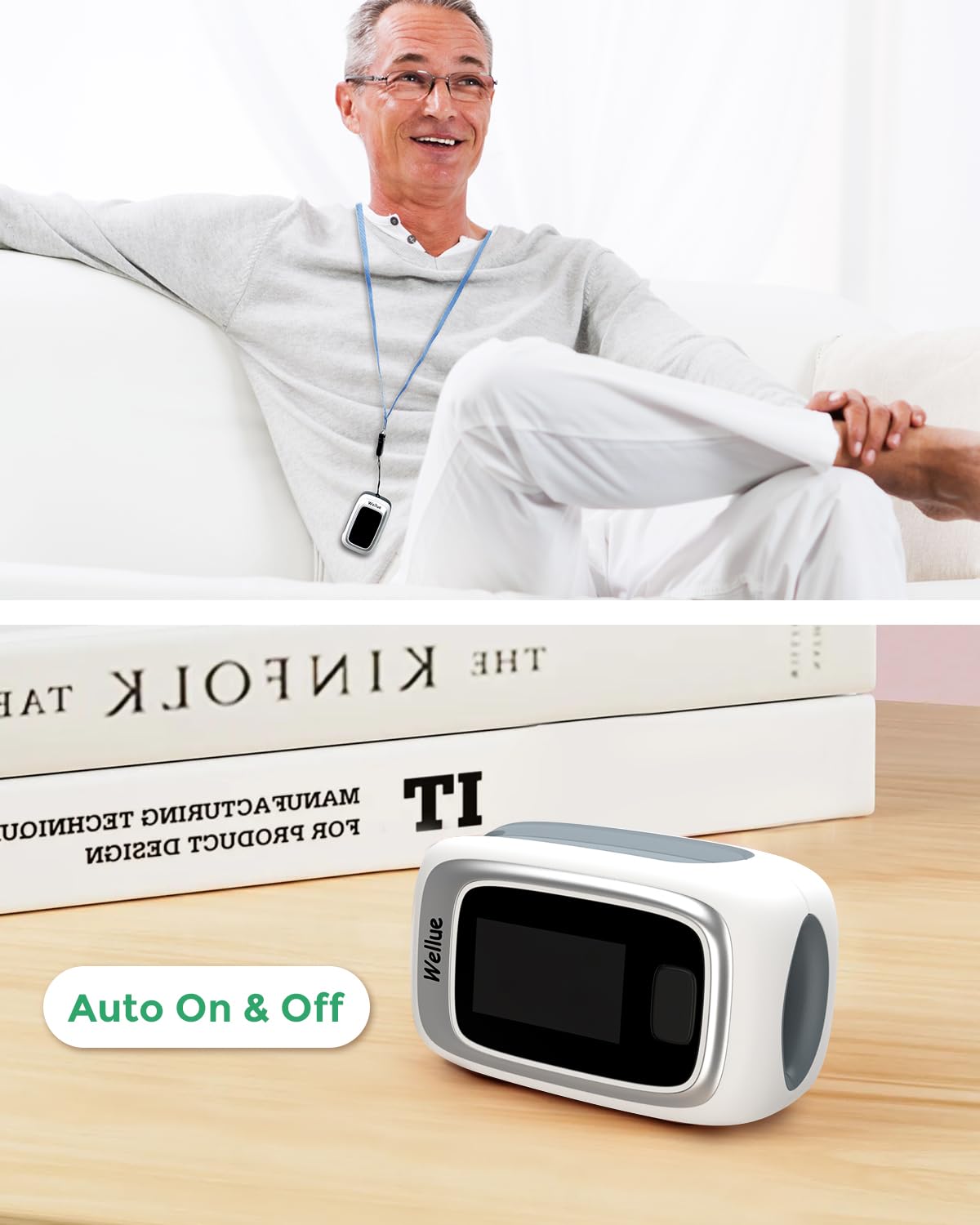
Image 6.2: The oximeter in use, demonstrating its automatic power management feature, turning on when a finger is inserted and off when removed.
6.2 Interpreting Readings
- SpO2 (%): Blood Oxygen Saturation. Normal values typically range from 95% to 100%.
- PR (bpm): Pulse Rate (Heart Rate) in beats per minute. Normal adult resting heart rate is usually between 60 and 100 bpm.
- PI (%): Perfusion Index. Indicates the strength of the pulse signal at the measurement site. Higher PI values generally indicate a stronger signal.
- Pulse Waveform: A graphical representation of your pulse, indicating the regularity and strength of your heartbeat.
6.3 Alarm for Abnormal Readings
The oximeter is equipped with an alarm function. If your blood oxygen saturation, pulse rate, or PI values fall below or rise above the preset thresholds, the oximeter's screen will flash to warn you. These thresholds can often be customized within the ViHealth app.

Image 6.3: The oximeter's display showing a measurement, with an overlaid text indicating an audible alert ("~beep") for abnormal readings.
6.4 Spot Check vs. Continuous Mode
The device supports both quick spot checks and continuous monitoring, depending on your needs and app settings.

Image 6.4: A visual comparison of the display modes, highlighting the difference between a single 'Spot Check' measurement and ongoing 'Continuous Mode' monitoring.
6.5 Using the ViHealth App
The ViHealth app enhances the functionality of your oximeter:
- Real-time Data: View live SpO2, PR, and PI readings directly on your phone.
- Data Storage: The app automatically saves measurement data (only when the app is running and connected). The oximeter itself has built-in memory for up to 12 groups of records, which can be browsed directly on the device. Unlimited historical data can be saved via the app.
- Graphical Reports: Generate and view graphical reports of your blood oxygen saturation and heart rate trends over time.
- Data Sharing: Easily share your graphical reports (as images) with healthcare professionals or family members.
- Settings: Adjust alarm thresholds, display brightness, and other device settings through the app.
7. Maintenance
7.1 Cleaning the Device
- Before cleaning, ensure the device is turned off and batteries are removed if storing for a long period.
- Wipe the surface of the oximeter with a soft cloth dampened with a mild disinfectant (e.g., 70% isopropyl alcohol).
- Clean the inside of the finger chamber with a cotton swab lightly dampened with disinfectant.
- Do not immerse the device in water or any cleaning solution.
- Allow the device to air dry completely before use or storage.
7.2 Storage
- Store the oximeter in a cool, dry place, away from direct sunlight and extreme temperatures.
- If the device will not be used for an extended period, remove the batteries to prevent leakage and damage.
- Use the provided storage pouch to protect the device from dust and scratches.

Image 7.1: The compact design of the oximeter allows for easy storage in a bag or pouch, highlighting its portability.
8. Troubleshooting
| Problem | Possible Cause | Solution |
|---|---|---|
| Device does not turn on. | Batteries are dead or incorrectly inserted. | Check battery polarity. Replace with new AAA batteries. |
| Inaccurate or unstable readings. | Finger not inserted properly; excessive movement; cold fingers; nail polish/artificial nails; strong ambient light. | Reinsert finger correctly. Remain still. Warm hands if cold. Remove nail polish. Shield from bright light. Try a different finger. |
| Bluetooth connection issues. | Bluetooth off on phone; app not running; device out of range; interference. | Ensure phone Bluetooth is on. Open ViHealth app. Keep device close to phone. Restart both device and app. |
| App not recording data. | App not running in foreground; device not connected; insufficient phone storage. | Keep app open during measurement. Ensure successful Bluetooth connection. Check phone storage. |
| Screen flashing/Alarm. | Readings are outside preset normal range. | This is a warning feature. Consult a healthcare professional if readings are consistently abnormal. Check app settings for alarm thresholds. |
9. Specifications
| Brand | ViATOM |
| Model Name | Checkme O2 (PO6B) |
| Measurement Range | SpO2: 35-100%, Pulse Rate: 25-250 bpm |
| Power Source | 2 x AAA Batteries (included) |
| Product Dimensions | 4 x 3 x 2 cm |
| Item Weight | 80 g |
| Connectivity | Bluetooth |
| Display Type | OLED |
| Included Components | Finger Pulse Oximeter, Instruction Manual, Lanyard, 2 AAA Batteries, Pouch |
10. Warranty and Support
ViATOM offers a 24-month worry-free service and technical support for this product. For any questions, issues, or warranty claims, please contact ViATOM customer service through their official website or the contact information provided in your product packaging.
For the latest information and support, please visit the official ViATOM website: www.viatomtech.com
Related documentsCheckme O2 (PO6B)


Ask a question about this manual
Ask about setup, troubleshooting, compatibility, parts, safety, or missing instructions. Manuals+ will review the question and use this page’s manual context to help answer it.