
1. Product Overview
The Salus 091FLRFv2 is a wireless digital thermostat designed for controlling heating and cooling systems. It features a weekly programming function, a clear LCD display, and a reliable 868 MHz radio frequency for communication between the thermostat unit and its receiver. This device is factory-paired for ease of installation.

Image 1.1: The Salus 091FLRFv2 Wireless Digital Thermostat (left) and its receiver (right).
2. Safety Information
- Read all instructions carefully before installation and operation.
- Installation should be performed by a qualified electrician or heating engineer.
- Ensure the main power supply to the heating system is disconnected before installing or servicing the receiver unit.
- Do not expose the thermostat or receiver to water or excessive humidity.
- Keep out of reach of children.
- Dispose of used batteries responsibly according to local regulations.
3. Components Included
The package contains the following items:
- Salus 091FLRFv2 Wireless Digital Thermostat Unit
- Salus 091FLRFv2 Receiver Unit
- 2 x AA Alkaline Batteries (for Thermostat)
- Instruction Manual
4. Technical Specifications
| Feature | Specification |
|---|---|
| Thermostat Power Supply | 2 x AA Alkaline Batteries |
| Receiver Power Supply | 230 V AC 50 Hz |
| Max Load | 16 (5) A |
| Output Signal | Voltage-free Relay NO/COM |
| Temperature Setting Range | 5 °C to 30 °C |
| Temperature Accuracy | 0.2 °C |
| Hysteresis | ± 0.25 °C or ± 0.5 °C |
| Radio Frequency | 868 MHz |
| Wireless Range | Up to 60 m (open space) |
| Thermostat Dimensions (L x W x H) | 154 x 80 x 30 mm |
| Receiver Dimensions (L x W x H) | 96 x 96 x 27 mm |
| Display Type | LCD (Backlit) |
| Special Features | Weekly Program, Frost Protection |
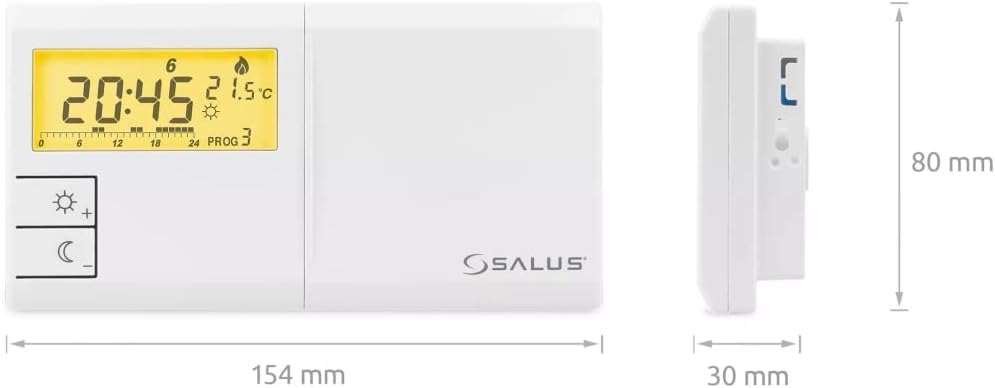
Image 4.1: Dimensions of the Salus 091FLRFv2 Thermostat unit.
5. Setup and Installation
5.1. Thermostat Unit Setup
- Battery Installation: Open the battery compartment on the back of the thermostat. Insert the two supplied AA alkaline batteries, ensuring correct polarity. Close the compartment.
- Placement: Place the thermostat in a central location within the heated area, away from direct sunlight, drafts, or heat sources. The integrated stand allows for desktop placement, or it can be wall-mounted.
5.2. Receiver Unit Installation
The receiver unit controls your heating/cooling system. It requires a 230V AC 50Hz power supply and should be wired by a qualified professional.
- Power Disconnection: Before any wiring, ensure the main power supply to your heating/cooling system is completely disconnected.
- Mounting: Mount the receiver unit in a suitable location near your heating/cooling appliance. It is designed for ceiling mounting or wall mounting.
- Wiring: Connect the receiver to your heating/cooling system according to the wiring diagram provided in the full installation guide (not included here, refer to manufacturer's detailed manual). The output signal is a voltage-free relay (NO/COM).
- Power Connection: Once wiring is complete and secure, restore the main power supply.
5.3. Factory Pairing
The thermostat and receiver units are factory-paired. No manual pairing is typically required for initial setup. If communication issues arise, refer to the troubleshooting section or the full manual for re-pairing instructions.
6. Operating Instructions
6.1. Basic Operation
- Power On/Off: The thermostat powers on automatically once batteries are inserted. The receiver powers on when connected to mains electricity.
- LCD Display: The backlit LCD displays current time, temperature, program status, and operating mode. The backlight duration is extended, returning to the main screen after up to 10 seconds of inactivity.
- Temperature Adjustment: Use the '+' and '-' buttons (often indicated by sun/moon icons for day/night modes) to manually adjust the desired temperature.
- Mode Selection: The thermostat supports both heating and cooling modes. Refer to the full manual for specific instructions on switching between modes.
6.2. Programming Weekly Schedule
The 091FLRFv2 offers 6 predefined programs and 3 user-definable programs. It features three temperature levels: Day, Night, and Anti-freeze.
- Accessing Program Menu: Press the 'PROG' button (or similar, refer to device specific button layout) to enter the programming mode.
- Setting Time and Day: Before setting programs, ensure the current time and day are correctly set. Use the appropriate buttons (e.g., 'SET', 'HOUR', 'MIN', 'DAY') to adjust.
- Selecting Program: Navigate through the predefined programs or select a user-definable slot.
- Defining Temperature Levels: For each time segment of the day, set the desired temperature level (Day, Night, or Anti-freeze).
- Saving Programs: Follow the on-screen prompts to save your programmed schedule.
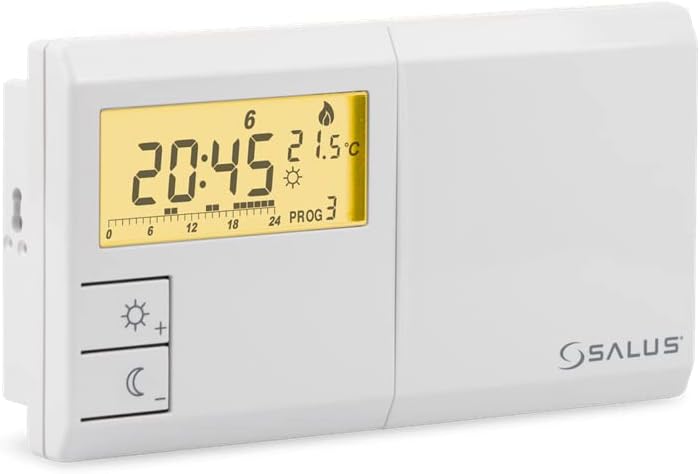
Image 6.1: Front view of the Salus 091FLRFv2 Thermostat, showing the LCD display and control buttons.
7. Maintenance
7.1. Battery Replacement
When the low battery indicator appears on the thermostat's display, replace the AA batteries promptly to ensure continuous operation. Use only alkaline batteries.
7.2. Cleaning
Clean the thermostat and receiver units with a soft, dry cloth. Do not use abrasive cleaners, solvents, or chemical sprays, as these can damage the plastic casing and electronic components.
8. Troubleshooting
- No Display on Thermostat: Check if batteries are correctly inserted and not depleted. Replace if necessary.
- No Communication with Receiver: Ensure the receiver is powered on. Verify that the thermostat and receiver are within the specified wireless range (up to 60m in open space). Obstacles like thick walls or metal objects can reduce range.
- Heating/Cooling Not Activating: Check the receiver's power supply. Ensure the thermostat is set to the correct mode (heating/cooling) and the desired temperature is above/below the ambient temperature.
- Changing Communication Code: The device allows changing the communication code without disassembling the units. Refer to the full manual for detailed instructions on this advanced feature if interference is suspected. The radio receiver supports up to 64,000 communication code combinations.
9. Warranty and Support
For warranty information, please refer to the documentation provided with your purchase or contact your retailer. For technical support or further assistance, please contact Salus customer service through their official website or the contact details provided in the product packaging.


