
1. Introduction
This manual provides essential information for the safe and effective installation, operation, and maintenance of the Schneider Electric TeSys D Contactor, model LC1D25G7. This device is a 3-pole contactor designed for AC-3 applications, rated for 25 Amperes at 440 Volts, and features a 120 Volts AC coil. Please read this manual thoroughly before proceeding with any work involving the contactor.
2. Safety Information
WARNING: Risk of Electric Shock or Arc Flash
- Installation, adjustment, repair, and maintenance must be performed by qualified personnel only.
- Always disconnect power before working on the contactor or associated equipment.
- Use appropriate personal protective equipment (PPE) and follow safe electrical work practices.
- Ensure all wiring conforms to local and national electrical codes.
- Do not operate the contactor if it is damaged or appears to be malfunctioning.
3. Product Overview
The Schneider Electric TeSys D Contactor LC1D25G7 is a robust electromechanical switch used for controlling electric motors, heating, lighting, and other electrical loads. It features three main power poles and auxiliary contacts for control circuit integration.

Figure 3.1: Front view of the Schneider Electric TeSys D Contactor LC1D25G7, showing the main power terminals (L1, L2, L3, T1, T2, T3) and control coil terminals (A1, A2), along with auxiliary contacts (NO, NC).

Figure 3.2: Side view of the contactor, displaying the product label with technical specifications, certifications (EAC, CE), and manufacturing details.

Figure 3.3: Bottom view of the contactor, showing the mounting points and the lower power terminals (2T1, 4T2, 6T3).

Figure 3.4: Top view of the contactor, illustrating the upper power terminals (1L1, 3L2, 5L3) and the general construction.
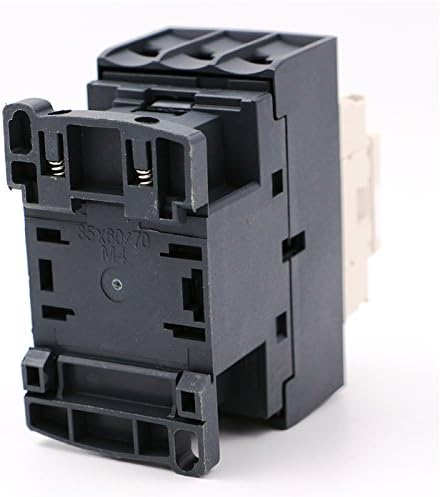
Figure 3.5: Another side view of the contactor, highlighting the DIN rail mounting mechanism and additional structural details.

Figure 3.6: The product packaging for the Schneider Electric TeSys D Contactor LC1D25G7, showing branding and key product identifiers.
4. Setup and Installation
Proper installation is crucial for the safe and reliable operation of the contactor. Refer to the wiring diagrams provided with your specific application or system documentation.
4.1 Mounting
- The contactor can be mounted on a 35mm DIN rail or directly to a panel using screws.
- Ensure adequate ventilation around the contactor to prevent overheating.
- Mount the contactor vertically on a flat, stable surface.
4.2 Wiring
- Connect the main power circuit to terminals 1L1, 3L2, 5L3 (input) and 2T1, 4T2, 6T3 (output).
- Connect the control circuit (120V AC) to the coil terminals A1 and A2.
- Utilize auxiliary contacts (e.g., 13 NO, 21 NC) for control logic as required by your application.
- Ensure all wire connections are tight and secure to prevent loose connections and potential arcing.
- Use appropriate wire gauges for the current ratings.
5. Operating Instructions
The TeSys D Contactor operates by energizing its coil, which creates an electromagnetic field that pulls the armature, closing the main power contacts. When the coil is de-energized, a spring returns the armature to its original position, opening the main contacts.
- Energizing the Coil: Apply 120V AC to terminals A1 and A2. The contactor will audibly click as the main contacts close.
- De-energizing the Coil: Remove the 120V AC supply from terminals A1 and A2. The contactor will release, and the main contacts will open.
- Status Indication: Some models may include a visual indicator to show the contactor's state (open/closed).
6. Maintenance
Regular inspection and maintenance can extend the lifespan of the contactor and ensure reliable operation.
- Visual Inspection: Periodically check for signs of wear, damage, discoloration, or loose connections.
- Cleaning: Keep the contactor free from dust, dirt, and debris. Use a dry, non-conductive cloth or compressed air. Do not use solvents.
- Contact Inspection: For critical applications, periodically inspect the main contacts for pitting or excessive wear. Replace the contactor if contacts are severely worn.
- Tightness Check: Re-tighten all terminal screws to the specified torque values (refer to product label or Schneider Electric documentation) during routine maintenance.
7. Troubleshooting
This section addresses common issues that may arise during the operation of the contactor.
- Contactor Does Not Energize:
- Check if 120V AC is present at coil terminals A1 and A2.
- Verify control circuit wiring for breaks or loose connections.
- Inspect the coil for damage (e.g., burnt smell, visible charring).
- Contactor Hums Excessively:
- Ensure the mounting screws are tight.
- Check for foreign objects obstructing the armature movement.
- Verify the coil voltage is within specifications.
- Contactor Overheats:
- Check for excessive load current exceeding the contactor's rating.
- Ensure proper ventilation and ambient temperature are within limits.
- Inspect main contacts for signs of pitting or high resistance.
- Main Contacts Fail to Close/Open Reliably:
- Inspect contacts for wear, welding, or foreign material.
- Verify coil voltage and ensure it is stable.
- Check for mechanical obstructions.
8. Specifications
| Specification | Value |
|---|---|
| Manufacturer | Schneider |
| Part Number | LC1D25G7 |
| Item Model Number | LC1D25G7 |
| Item Weight | 13 ounces |
| Package Dimensions | 4.45 x 3.66 x 2.05 inches |
| Material | Plastic |
| Voltage (Coil) | 120 Volts AC |
| Amperage Capacity (AC-3) | 25 Amps |
| Poles | 3P (3 NO) |
| Rated Operational Voltage (Ue) | Up to 690 V AC |
| Rated Insulation Voltage (Ui) | 600 V (UL/CSA), 690 V (IEC) |
| Rated Impulse Withstand Voltage (Uimp) | 6 kV |
9. Warranty and Support
Schneider Electric products are designed and manufactured to high-quality standards. For information regarding warranty terms, technical support, or service, please refer to the official Schneider Electric website or contact their customer service directly.
You can find more information and support resources on the Schneider Electric official website.


