1. Introduction
This manual provides detailed instructions for the installation, operation, and maintenance of your Zalman P50 DS Medium Tower Panoramic PC Case. Please read this manual thoroughly before beginning installation to ensure proper assembly and safe usage. Retain this manual for future reference.
The Zalman P50 DS is designed to showcase your PC components with its panoramic view, featuring two tempered glass panels. It supports ATX, Micro ATX, and Mini ITX motherboards and graphics cards up to 435mm in length. The case includes a real-time CPU and GPU temperature display and comes equipped with four 120mm ARGB fans for efficient cooling.
2. Safety Information
- Always disconnect the power supply from the wall outlet before installing or servicing any components inside the PC case.
- Handle tempered glass panels with care. They are fragile and can break if dropped or subjected to sharp impacts.
- Wear anti-static gloves or use an anti-static wrist strap to prevent electrostatic discharge (ESD) damage to sensitive electronic components.
- Keep small parts and screws away from children.
- Ensure proper ventilation around the PC case to prevent overheating.
- Do not attempt to modify the case structure or electrical components, as this may void your warranty and pose safety risks.
3. Package Contents
Please verify that all components are present before proceeding with installation.
- Zalman P50 DS PC Case (Black)
- Accessory Box (Screws, standoffs, cable ties, etc.)
- User Manual (This document)
- Pre-installed 120mm ARGB Fans (4 units)
4. Features Overview
- Panoramic View: Two tempered glass panels for a clear view of internal components.
- Real-time Display: Integrated screen for CPU and GPU temperature monitoring.
- Cooling System: Four pre-installed 120mm ARGB fans for optimal airflow.
- Motherboard Compatibility: Supports ATX, Micro ATX, and Mini ITX motherboards.
- GPU Clearance: Accommodates graphics cards up to 435mm in length.
- Tool-less Design: Screwless concept for certain components, facilitating installation.
- Front I/O: Includes USB 3.0 ports, Type-C port, audio jacks, and power/reset buttons.

Figure 4.1: Front-side view of the Zalman P50 DS PC case, showcasing the panoramic tempered glass panels and the illuminated ARGB fans. The front I/O panel is visible at the bottom.
5. Setup and Installation
5.1 Preparing the Case
- Place the case on a flat, stable surface.
- Carefully remove the tempered glass side panels. These are typically secured with thumb screws or a clip mechanism. Refer to the specific mechanism on your case.
- Unpack the accessory box containing screws and other small parts.
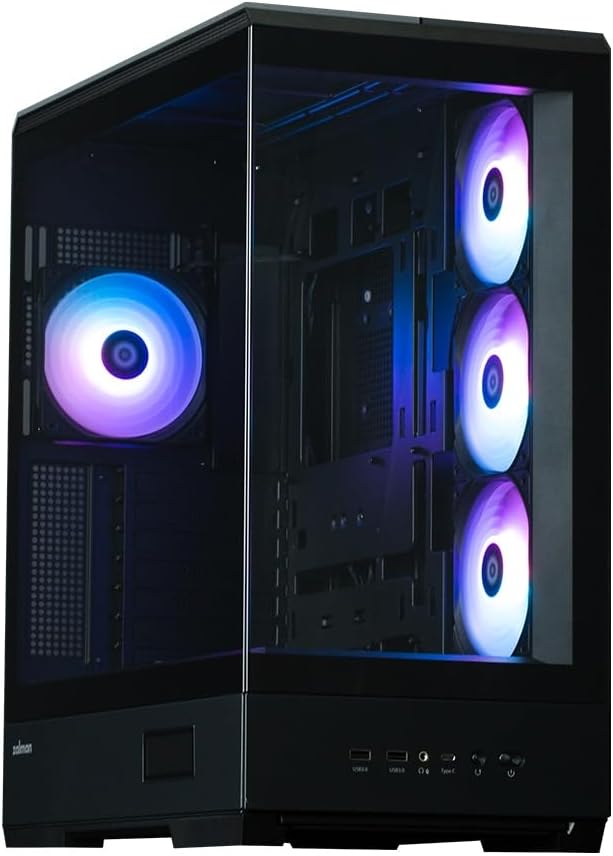
Figure 5.1: Angled view of the Zalman P50 DS PC case, highlighting the two tempered glass panels that provide a panoramic view of the internal components. The case is shown with its pre-installed ARGB fans.
5.2 Motherboard Installation
- Install the I/O shield into the rear opening of the case.
- Align your ATX, Micro ATX, or Mini ITX motherboard with the pre-installed standoffs. Ensure the screw holes on the motherboard match the standoffs.
- Secure the motherboard with the appropriate screws from the accessory box. Do not overtighten.

Figure 5.2: Internal view of the Zalman P50 DS PC case from the rear, showing the motherboard mounting area, expansion slots, and the rear exhaust fan. This image illustrates the layout for component installation.
5.3 Graphics Card (GPU) Installation
- Remove the necessary expansion slot covers from the rear of the case, corresponding to your GPU's size.
- Insert the graphics card into the primary PCIe slot on your motherboard. Ensure it is fully seated.
- Secure the graphics card to the case using the provided screws or tool-less retention mechanism.

Figure 5.3: An internal view of the Zalman P50 DS PC case with a fully assembled system, including a graphics card, CPU cooler, and memory modules. This demonstrates the ample space for high-performance components.
5.4 Storage Drive Installation (HDD/SSD)
The Zalman P50 DS offers various mounting options for 2.5" SSDs and 3.5" HDDs. Locate the drive cages or mounting points behind the motherboard tray or in the PSU shroud area.
- For 2.5" SSDs: Secure the SSDs to the designated mounting plates using small screws.
- For 3.5" HDDs: Slide the HDD into the drive cage bays and secure with screws or tool-less clips if available.

Figure 5.4: Rear interior view of the Zalman P50 DS PC case, revealing the cable management channels and dedicated bays for storage drives (SSDs and HDDs) behind the motherboard tray. This area is crucial for clean cable routing.
5.5 Power Supply Unit (PSU) Installation
- Mount the PSU into its designated compartment at the bottom rear of the case.
- Secure the PSU with screws from the outside of the case.
- Connect the necessary power cables to your motherboard, graphics card, and storage drives. Utilize the cable management features of the case to route cables neatly.
5.6 Connecting Front I/O Cables
Connect the front panel cables (USB 3.0, USB Type-C, HD Audio, Power Switch, Reset Switch, Power LED, HDD LED) to their corresponding headers on your motherboard. Refer to your motherboard manual for exact header locations.

Figure 5.5: Detailed view of the front I/O panel on the Zalman P50 DS PC case, showing two USB 3.0 ports, audio jacks, a USB Type-C port, and the power button. This panel provides convenient access to peripherals.
6. Operating Instructions
6.1 Powering On Your PC
After all components are securely installed and cables connected, replace the tempered glass panels. Connect your monitor, keyboard, mouse, and power cable to the PC. Press the power button on the front I/O panel to start your system.
6.2 Real-time Temperature Display
The Zalman P50 DS features an integrated display that shows the CPU and GPU temperatures in real-time. This display is located on the front lower section of the case. No additional software is typically required for its basic function, as it often connects directly to motherboard sensors or via a dedicated internal USB header.
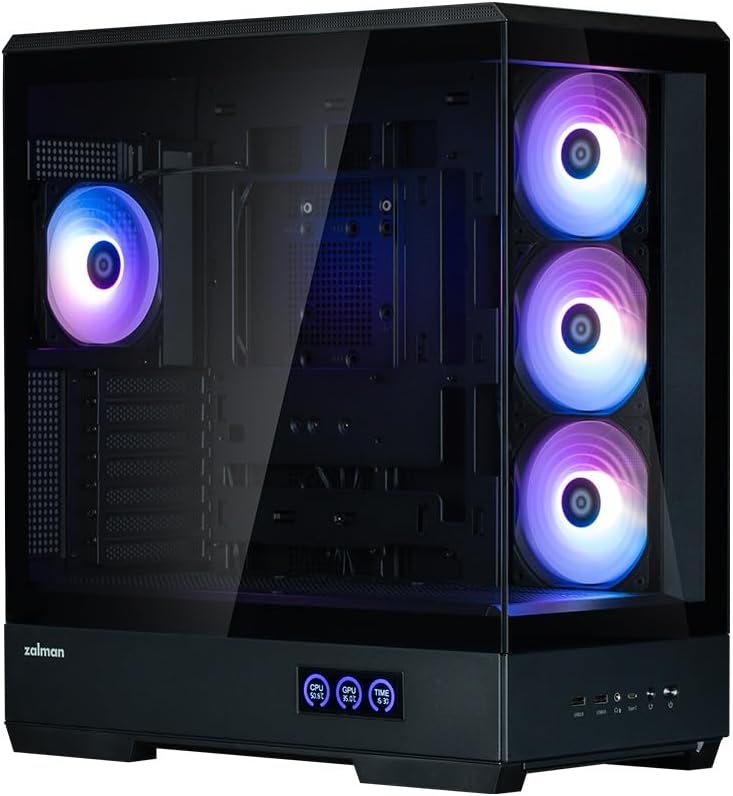
Figure 6.1: Close-up of the Zalman P50 DS PC case's integrated display, showing real-time CPU and GPU temperature readings. This feature allows users to monitor system thermals at a glance.
6.3 ARGB Fan Control
The pre-installed ARGB fans can be controlled via your motherboard's ARGB software (if connected to a compatible header) or through a dedicated controller if one is included or purchased separately. Refer to your motherboard manual or fan controller instructions for specific lighting effects and speed adjustments.
7. Maintenance
7.1 Cleaning the Case
- Exterior: Use a soft, damp cloth to wipe down the exterior surfaces, including the tempered glass panels. Avoid abrasive cleaners or solvents.
- Interior: Periodically open the case and use compressed air to remove dust buildup from fans, heatsinks, and other components. Ensure the system is powered off and unplugged before cleaning the interior.
- Dust Filters: The case may include removable dust filters. Clean these regularly by rinsing them with water and allowing them to dry completely before reinstallation.
8. Troubleshooting
- PC does not power on:
- Ensure the power supply is switched on and properly connected to the wall outlet.
- Verify all power cables (24-pin ATX, 8-pin CPU, PCIe power) are securely connected to the motherboard and graphics card.
- Check the front panel power switch cable connection to the motherboard.
- Fans are not spinning or RGB is not working:
- Ensure fan power cables are connected to the motherboard or fan controller.
- Verify ARGB cables are connected to a compatible ARGB header on the motherboard or controller.
- Check motherboard BIOS/UEFI settings or ARGB software for fan control and lighting settings.
- Temperature display is not working:
- Ensure the display's internal connection (often a USB header) is properly seated on the motherboard.
- Check for any specific software or driver requirements for the display, though most are plug-and-play.
9. Specifications
| Feature | Specification |
|---|---|
| Model Name | P50DS BK |
| Case Type | Mid Tower |
| Motherboard Compatibility | ATX, Micro ATX, Mini ITX |
| Dimensions (LxWxH) | 18.9 x 20.16 x 9.45 inches (480 x 512 x 240 mm) |
| Materials | Alloy Steel, Tempered Glass, Plastic |
| Pre-installed Fans | 4 x 120mm ARGB Fans |
| GPU Clearance | Up to 435mm |
| Front I/O Ports | 2x USB 3.0, 1x USB Type-C, Audio In/Out, Power, Reset |
| Power Supply Mounting | Bottom Mount |
| Item Weight | 30.1 pounds (13.7 kg) |
10. Warranty and Support
Zalman products are manufactured to high quality standards. For warranty information, technical support, or service inquiries, please refer to the official Zalman website or contact your local retailer. Keep your proof of purchase for warranty claims.
Official Website: www.zalman.com


