1. Introduction
This manual provides essential information for the safe operation, maintenance, and troubleshooting of your Garvee 7HP Plate Compactor Rammer, Model CNP60T. Please read this manual thoroughly before operating the machine to ensure proper use and to prevent injury or damage. Keep this manual for future reference.
2. Safety Information
Operating this equipment without understanding its safety requirements can lead to serious injury. Always adhere to the following safety guidelines:
- Read the User Manual: Always read and understand the entire user manual before operating the compactor.
- Personal Protective Equipment (PPE): Always wear appropriate hand and eye protective tools, such as safety glasses, gloves, and hearing protection, when operating the machine. Sturdy footwear is also recommended.
- Fuel Handling: Use unleaded 86+ octane gasoline for the engine. Handle fuel in a well-ventilated area, away from open flames or sparks. Do not refuel while the engine is running or hot.
- Check Before Operation: Before each use, inspect the machine for loose nuts, bolts, or any signs of damage. Tighten any loose fasteners immediately.
- Ventilation: Operate the compactor in a well-ventilated outdoor area. Engine exhaust contains carbon monoxide, which is a colorless, odorless, and deadly gas.
- Clear Work Area: Ensure the work area is clear of bystanders, especially children and pets. Remove any obstacles that could interfere with operation.
- Stable Ground: Operate the compactor on stable ground. Avoid steep slopes or uneven surfaces where the machine could tip over.
- Emergency Stop: Familiarize yourself with the location and operation of the engine stop switch.
- Maintenance Safety: Disconnect the spark plug wire before performing any maintenance or adjustments to prevent accidental starting.
3. Product Components and Overview
Familiarize yourself with the main components of your Garvee Plate Compactor.

Figure 3.1: Overall view of the Garvee 7HP Plate Compactor. This image shows the engine, handle, compaction plate, and transport wheels.
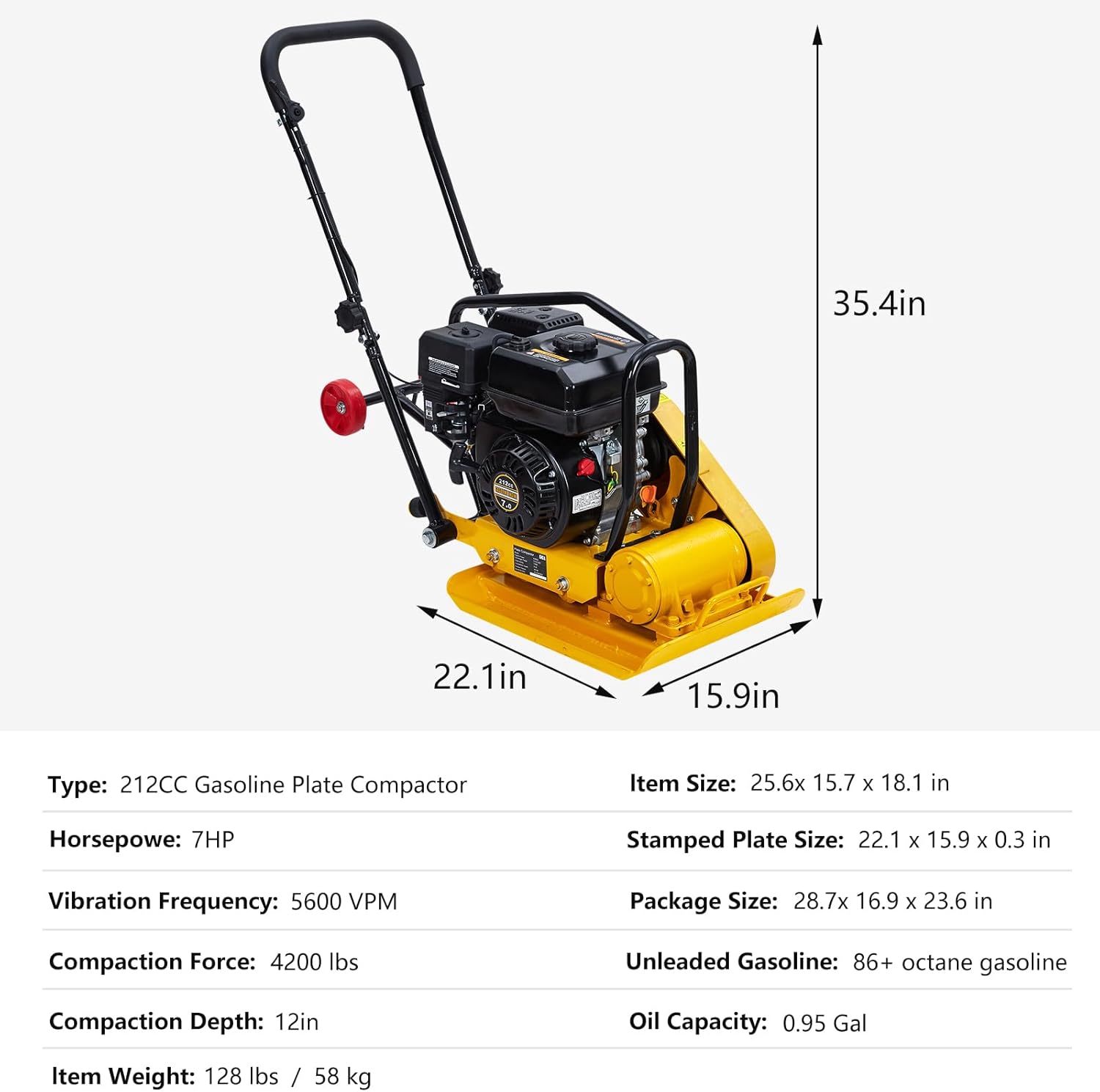
Figure 3.2: Key dimensions of the Garvee 7HP Plate Compactor, including overall height (35.4 inches), base length (22.1 inches), and base width (15.9 inches).
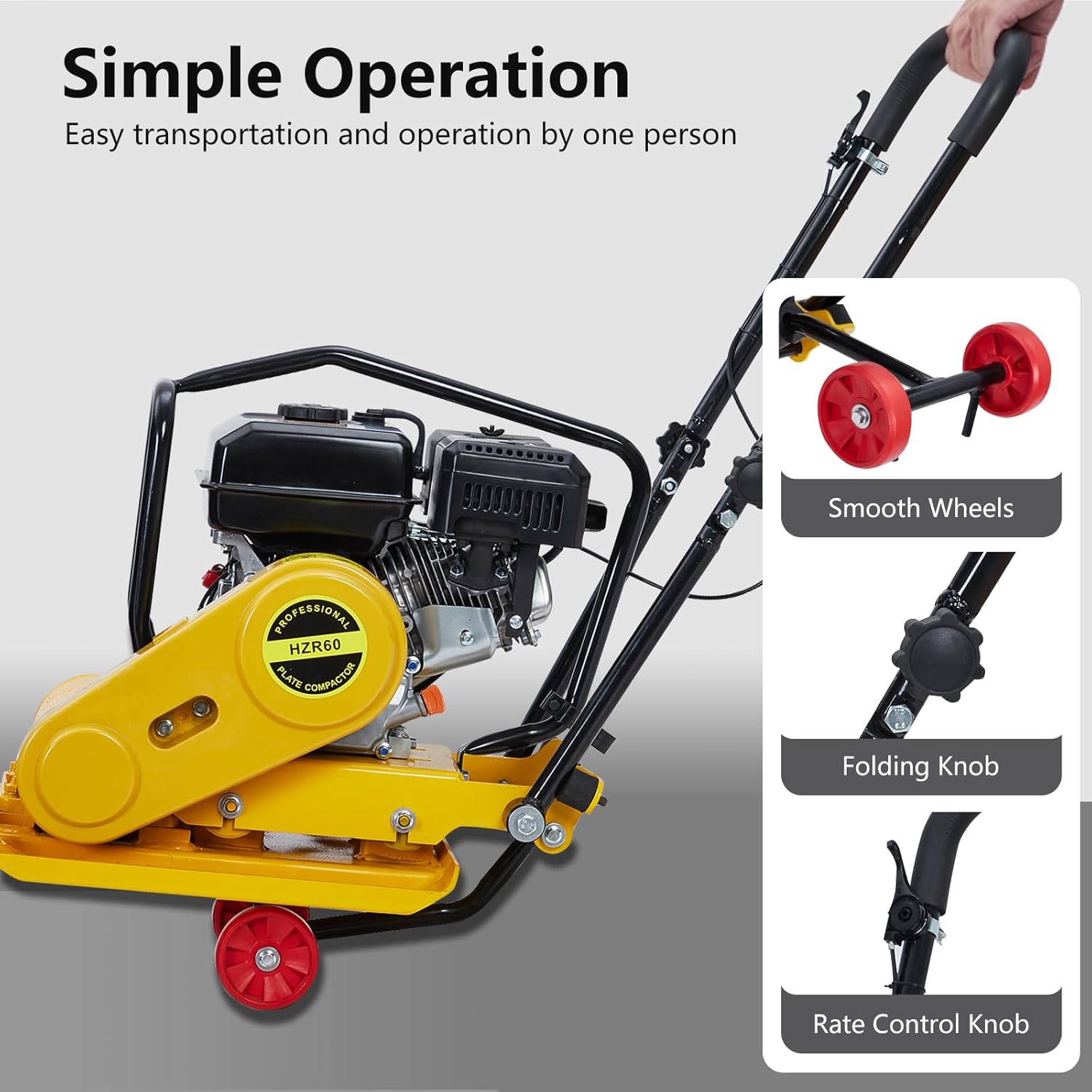
Figure 3.3: Close-up of the compactor's handle showing the smooth transport wheels, folding knob for handle adjustment, and the rate control knob for throttle adjustment.
4. Setup and Assembly
Your Garvee Plate Compactor requires minor assembly. Follow these general steps:
- Unpacking: Carefully remove all components from the packaging. Inspect for any shipping damage.
- Handle Assembly: Attach the handle to the main unit. Ensure all bolts are securely fastened. The folding knob (Figure 3.3) allows for handle adjustment and storage.
- Wheel Kit Installation: Install the transport wheel kit if not already attached. These wheels aid in moving the compactor.
- Fluid Checks:
- Engine Oil: Check the engine oil level and fill with appropriate engine oil (refer to engine manual for specific type and capacity) if necessary. Do not overfill.
- Fuel: Fill the fuel tank with unleaded 86+ octane gasoline. The maximum capacity is 0.95 gallons. Do not use E85 or other alternative fuels.
- Final Inspection: Before starting, re-check all connections, fasteners, and fluid levels. Ensure the spark plug wire is securely connected.
5. Operating Instructions
Follow these steps for safe and effective operation of your plate compactor:
- Preparation:
- Ensure the work area is clear and free of debris.
- Wear all recommended PPE.
- Verify fuel and oil levels are correct.
- Starting the Engine:
- Move the fuel valve to the "ON" position.
- Move the choke lever to the "CLOSED" or "START" position (if the engine is cold).
- Set the throttle lever to the "FAST" position.
- Pull the recoil starter handle firmly until the engine starts.
- Once the engine starts, gradually move the choke lever to the "OPEN" or "RUN" position.
- Compaction:
- Allow the engine to warm up for a few minutes.
- Adjust the throttle to the desired operating speed using the rate control knob (Figure 3.3). Higher RPMs generally result in greater compaction force.
- Guide the compactor over the material to be compacted. The machine is self-propelled, requiring minimal pushing.
- Overlap passes slightly to ensure uniform compaction.
- For deeper compaction, multiple passes may be required.
- Stopping the Engine:
- Reduce the engine speed to idle.
- Move the engine switch to the "OFF" position.
- Close the fuel valve.
6. Maintenance
Regular maintenance ensures the longevity and optimal performance of your compactor. Always perform maintenance with the engine off and cool, and the spark plug wire disconnected.
- Daily Checks:
- Inspect for loose fasteners and tighten as needed.
- Check engine oil and fuel levels.
- Clean debris from the engine and plate.
- Engine Oil Change: Refer to the engine manufacturer's manual for recommended oil change intervals and oil type. Typically, the first oil change is after 5-10 hours of operation, then every 25-50 hours.
- Air Filter: Clean or replace the air filter regularly, especially when operating in dusty conditions. A clogged air filter can reduce engine performance.
- Spark Plug: Inspect and clean the spark plug periodically. Replace if worn or fouled.
- Fuel System: Drain the fuel tank and carburetor if storing the compactor for an extended period (over 30 days) to prevent fuel degradation.
- Storage: Store the compactor in a clean, dry area, protected from weather.
7. Troubleshooting
This section addresses common issues you might encounter. For problems not listed here, contact customer support.
| Problem | Possible Cause | Solution |
|---|---|---|
| Engine does not start | No fuel; Fuel valve closed; Engine switch OFF; Choke incorrect; Fouled spark plug; Low oil level. | Add fuel; Open fuel valve; Turn engine switch ON; Adjust choke; Clean/replace spark plug; Fill oil to correct level. |
| Loss of power or rough running | Clogged air filter; Stale fuel; Incorrect throttle setting; Fouled spark plug. | Clean/replace air filter; Drain and refill with fresh fuel; Adjust throttle; Clean/replace spark plug. |
| Poor compaction | Insufficient passes; Material too wet/dry; Engine speed too low. | Make more passes; Adjust moisture content of material; Increase engine RPM. |
| Excessive vibration (beyond normal operation) | Loose components; Damaged vibration isolators. | Check and tighten all fasteners; Inspect vibration isolators for wear or damage and replace if necessary. |
8. Specifications
Technical specifications for the Garvee 7HP Plate Compactor (Model CNP60T).
| Feature | Detail |
|---|---|
| Model | CNP60T |
| Engine Type | 212cc / 7HP Gas Engine |
| Compaction Force | 4200 lbs |
| Vibration Frequency | 5600 VPM (Vibrations Per Minute) |
| Compaction Depth | 12 inches |
| Plate Dimensions (L x W) | 22.1 inches x 15.9 inches |
| Plate Thickness | 8 mm (High Carbon Steel) |
| Operating Weight | Approximately 129 lbs (58 kg) |
| Product Dimensions (Approx. L x W x H) | 22.1 inches x 15.9 inches x 35.4 inches |
| Fuel Type | Unleaded 86+ Octane Gasoline |
| Fuel Tank Capacity | 0.95 Gallons |
| Productivity | Up to 7300 ft²/h |
9. Warranty and Customer Support
For warranty information or technical assistance, please contact Garvee customer support. Keep your purchase receipt and product model number (CNP60T) readily available when contacting support.
Refer to the original purchase documentation or the Garvee official website for the most current warranty terms and contact details.


