
1. Introduction
This manual provides essential information for the safe and efficient use of your bokman Type 2 EV Charging Cable. Please read these instructions carefully before using the product and retain them for future reference. This cable is designed for charging electric vehicles (EVs) and Plug-in Hybrid Electric Vehicles (PHEVs) equipped with a Type 2 charging port, operating in Mode 3.

This image provides an overview of the bokman Type 2 EV charging cable.
2. Safety Instructions
Always follow these safety precautions to prevent injury or damage to the product and vehicle:
- Do not use the charging cable if it is damaged, frayed, or shows any signs of wear.
- Ensure the charging port and connector are clean and dry before connecting.
- Never force the connector into the charging port.
- Do not attempt to open, disassemble, or modify the charging cable.
- Keep the cable away from water, fire, and extreme temperatures. The cable is IP55 rated for water resistance, but avoid submerging it or using it in heavy downpours if possible.
- Ensure the cable is not a tripping hazard during use.
- Always disconnect the cable from the vehicle first, then from the charging station.
- This cable is designed for Type 2 charging infrastructure only. Do not attempt to use it with incompatible systems.
3. Product Features
- High-Speed Charging: Supports fast charging for electric vehicles, reducing charging time.
- Universal Compatibility: Compatible with all electric vehicles featuring a Type 2 charging standard (IEC 62196-2).
- Premium Quality Construction: Made with durable materials, high-quality copper wires, and a thickened insulation jacket for enhanced wear resistance.
- User-Friendly Design: Features ergonomic handles and easy-to-use connectors for hassle-free connection and disconnection. The flexible, tangle-free design aids storage.
- Enhanced Safety: Incorporates advanced safety features including over-voltage protection, over-current protection, and short-circuit protection.
- Durable Outer Cover: Designed to resist damage when dragged over rough surfaces.
- Pressure Resistance: The cable and connectors are built to withstand significant pressure, up to 2.5 tons.
- Water Resistance (IP55): Provides protection against dust and low-pressure water jets, allowing for charging in most weather conditions.
- Anti-Freeze Performance: Remains flexible and functional in cold weather conditions.
4. Package Contents

The package includes the following items:
- 1x Type 2 EV Charging Cable (5 meters)
- 1x Double-Sided Microfiber Towel
- 1x Transport Bag
This image illustrates the items included in your purchase: the charging cable, a microfiber towel for cleaning, and a convenient carrying bag for storage and transport.
5. Setup and Connection
Follow these steps to connect your bokman Type 2 EV Charging Cable:
- Inspect the Cable: Before each use, visually inspect the cable and connectors for any signs of damage, dirt, or moisture. Do not use if damaged.
- Connect to Charging Station: Take the male (charging station side) connector of the charging cable and firmly insert it into the Type 2 socket of the charging station. Ensure it clicks into place.
- Connect to Vehicle: Take the female (vehicle side) connector of the charging cable and firmly insert it into your electric vehicle's Type 2 charging port. Ensure it clicks into place.
- Initiate Charging: Follow the instructions on the charging station or your vehicle's infotainment system to start the charging process.

This image illustrates the Type 2 female connector for the electric vehicle and the Type 2 male connector for the charging station, highlighting their respective connection points.
6. Operating Instructions
Once connected, the charging process typically begins automatically or requires activation via the charging station's interface or a mobile application. Monitor the charging status through your vehicle's dashboard or the charging station's display.
Disconnecting the Cable:
- Stop Charging: End the charging session via the charging station or your vehicle's controls.
- Unlock Connectors: Ensure both the vehicle and charging station have unlocked the connectors. Do not pull forcefully if locked.
- Disconnect from Vehicle: Remove the female connector from your vehicle's charging port.
- Disconnect from Charging Station: Remove the male connector from the charging station.
- Store Cable: Coil the cable neatly and store it in the provided transport bag to protect it from damage and dirt.
7. Maintenance and Care
- Cleaning: Regularly clean the cable and connectors with a soft, dry cloth. For stubborn dirt, use the provided microfiber towel. Ensure connectors are completely dry before use.
- Storage: Store the cable in a cool, dry place, preferably in its transport bag, away from direct sunlight and extreme temperatures. Avoid kinking or bending the cable sharply.
- Inspection: Periodically inspect the cable for any signs of damage, such as cuts, cracks, or discoloration. If any damage is found, discontinue use immediately.

This image demonstrates the durable outer covering of the cable, designed to resist damage from rough surfaces.

This image illustrates the cable's excellent anti-freeze performance, maintaining flexibility in cold conditions.

This image shows the cable connected to an electric vehicle during rainfall, highlighting its IP55 water resistance.
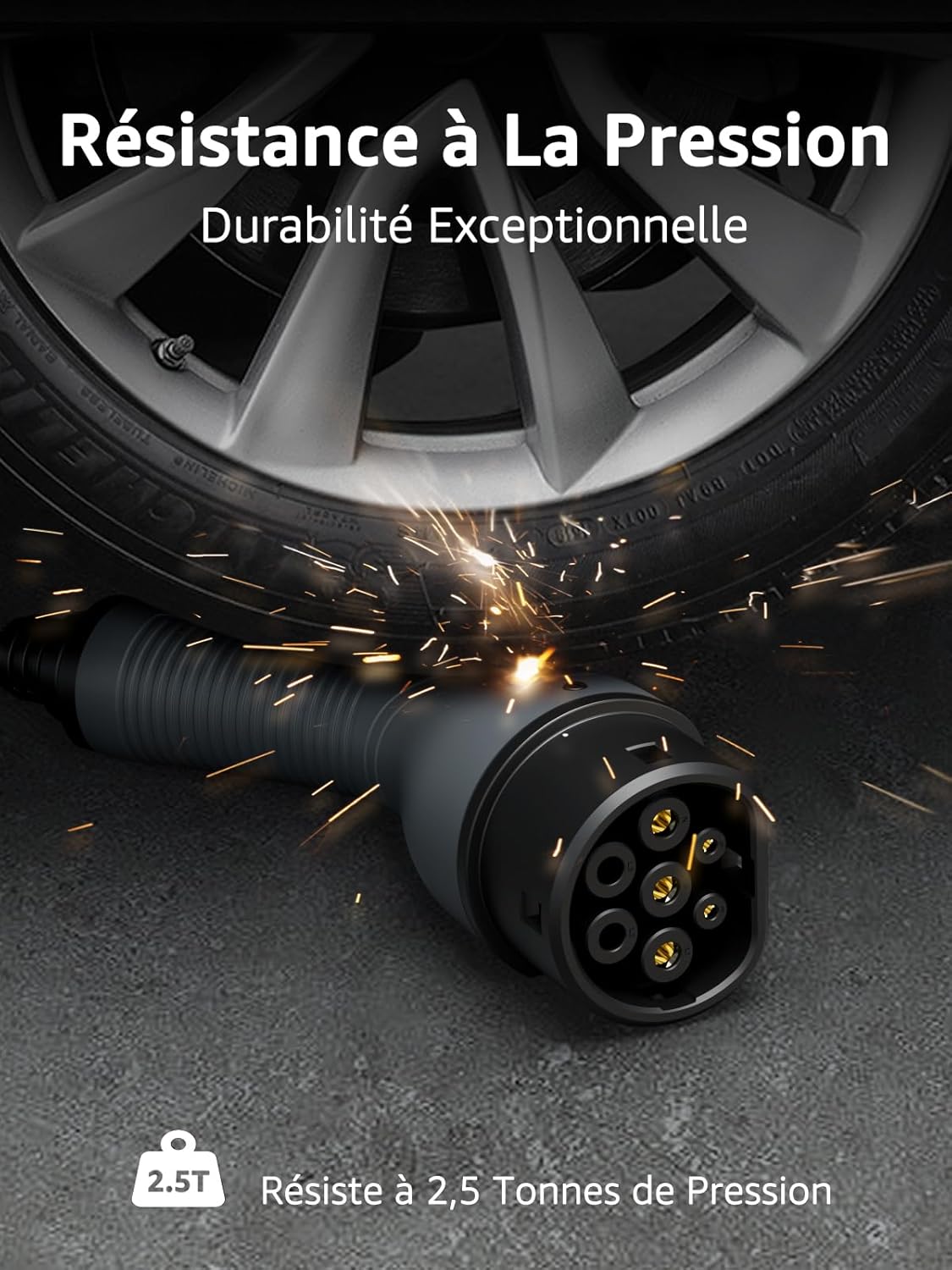
This image illustrates the cable's pressure resistance, capable of withstanding up to 2.5 tons.
8. Troubleshooting
| Problem | Possible Cause | Solution |
|---|---|---|
| Charging does not start. | Cable not fully inserted; charging station error; vehicle error; cable damage. | Ensure connectors are fully seated. Check charging station display for error messages. Restart charging session. Inspect cable for damage. |
| Slow charging speed. | Charging station limitation; vehicle settings; external factors (e.g., extreme cold). | Verify charging station output. Check vehicle charging settings. Charging speed can be affected by ambient temperature. |
| Connectors are stuck. | Connectors are locked; debris in port. | Ensure charging session is ended and connectors are unlocked by the vehicle/station. Do not force. Check for debris and clean if necessary. |
| Cable feels hot during charging. | Normal operation (slight warmth); excessive load; poor connection. | A slight warmth is normal. If the cable is excessively hot, stop charging immediately and inspect for damage or poor connection. Consult a professional if concerns persist. |
9. Specifications
| Feature | Detail |
|---|---|
| Brand | bokman |
| Model Number | BKM37205 |
| Connector Type | Type 2 (IEC 62196-2) |
| Connector Gender | Male to Female |
| Charging Mode | Mode 3 |
| Current Rating | 32A |
| Power Rating | 7.2 kW (Single-Phase) |
| Cable Length | 5 Meters |
| Item Weight | 2.88 Kilograms |
| Dimensions (L x W x H) | 35 x 32 x 8 cm |
| IP Rating | IP55 (Water and Dust Resistant) |
| UPC | 198168691410 |
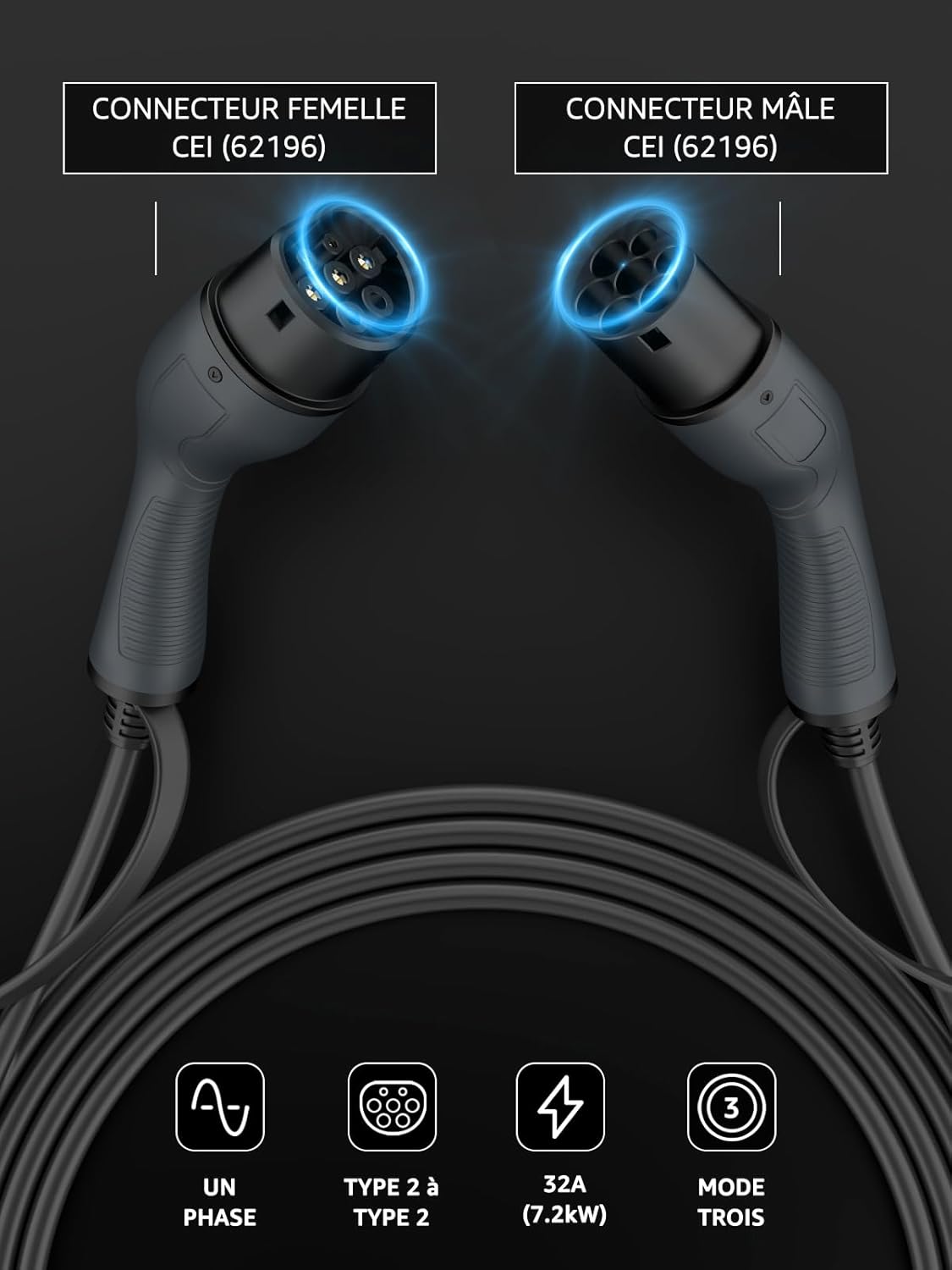
This image highlights key specifications of the charging cable, including its single-phase operation, Type 2 to Type 2 connection, 32A (7.2kW) capacity, and Mode 3 charging capability.
10. Vehicle Compatibility
The bokman Type 2 EV Charging Cable is compatible with a wide range of electric vehicles and plug-in hybrids that utilize the Type 2 (IEC 62196-2) charging standard. Below is a list of some compatible models:

This image displays a table of applicable EV models from various manufacturers that are compatible with this Type 2 charging cable.
For a comprehensive list or to confirm compatibility with your specific vehicle, please refer to your vehicle's owner's manual or contact your vehicle manufacturer.
11. Warranty and Support
For warranty information or technical support, please refer to the product packaging or contact bokman customer service through the retailer where the product was purchased. Keep your purchase receipt as proof of purchase.

