
Introduction
This manual provides comprehensive instructions for setting up, operating, maintaining, and troubleshooting your TP-Link Archer AX10000 WiFi 6 Tri-Band Gaming Router. Designed for large homes, this router offers advanced wireless capabilities, high-speed connectivity, and robust security features to ensure an optimal network experience.
Package Contents
Verify that all items are present in your package:
- WiFi 6 Gaming Router Archer AX10000
- Power Adapter
- RJ45 Ethernet Cable
- Quick Installation Guide
Product Overview
The TP-Link Archer AX10000 is a high-performance router featuring a distinctive design with multiple antennas for enhanced coverage. It is equipped with various ports for wired connections and advanced internal components for efficient data handling.

Figure 1: Top-down view of the TP-Link Archer AX10000 router, showcasing its eight extended antennas and central design.
Physical Connections
The rear panel of the router provides multiple connectivity options for both internet and local network devices.
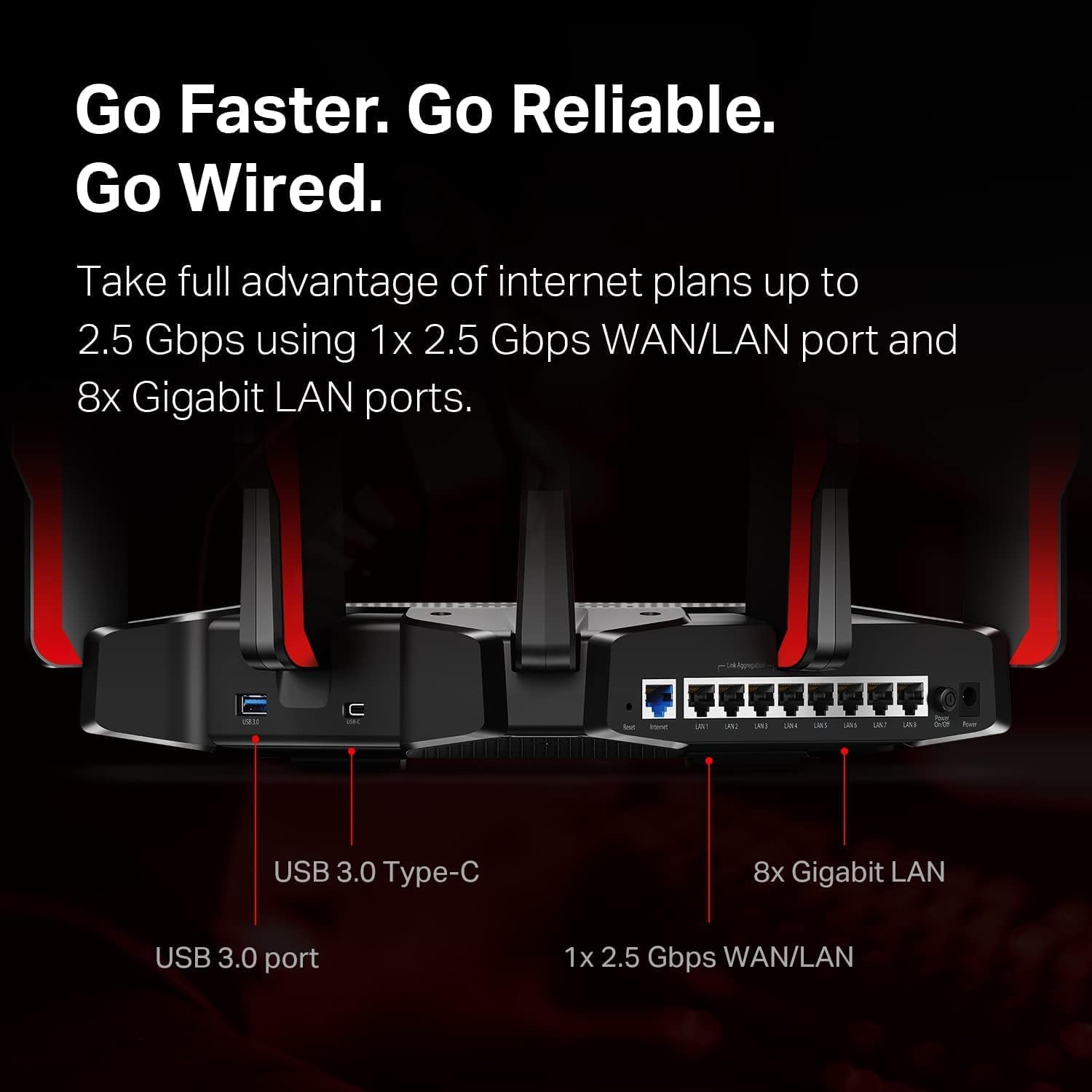
Figure 2: Rear panel of the router, highlighting the USB 3.0 Type-C port, USB 3.0 port, 1x 2.5 Gbps WAN/LAN port, and 8x Gigabit LAN ports.
The bottom label contains essential information for initial setup and network access.
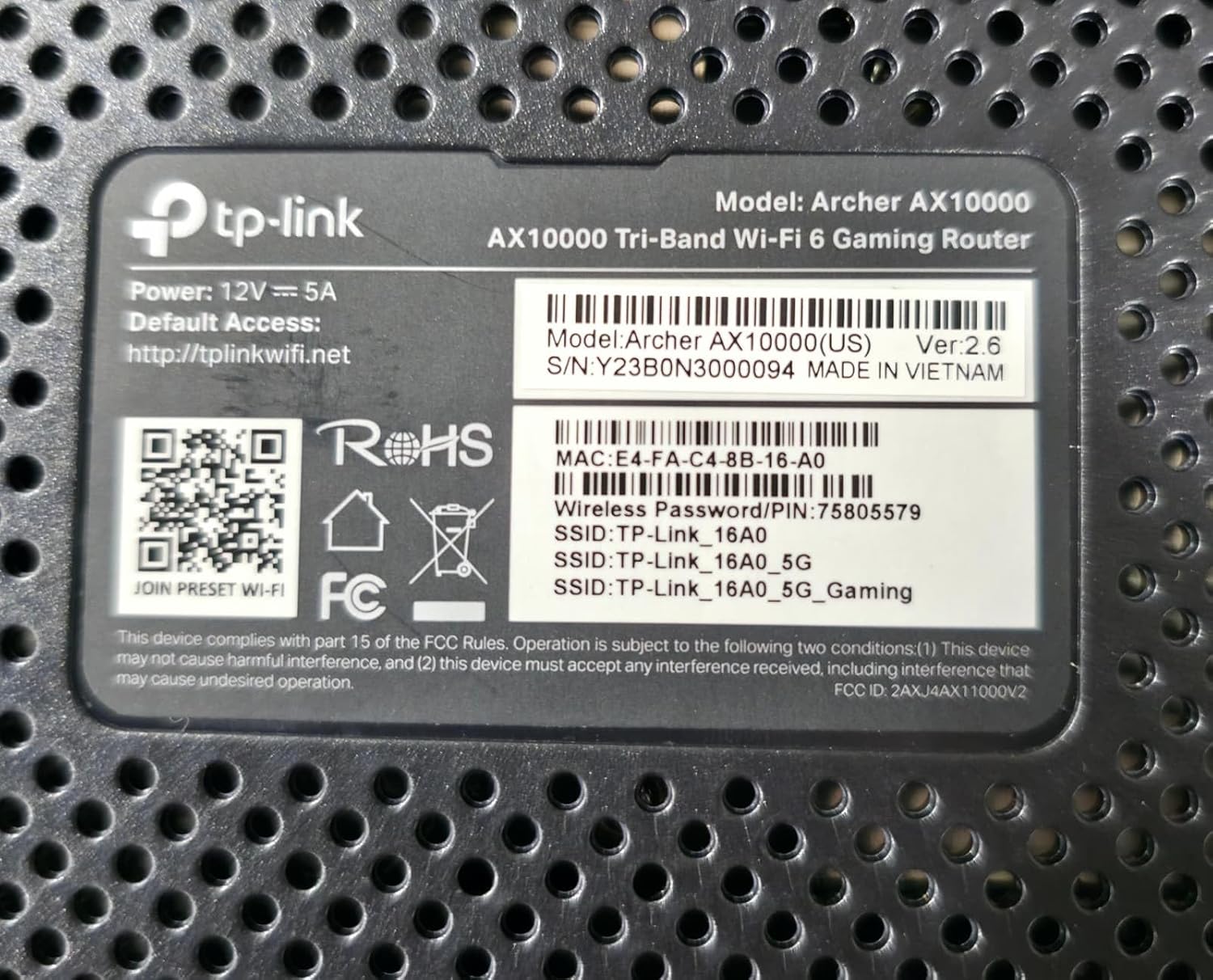
Figure 3: Product label on the bottom of the router, displaying model number, default access information, and wireless password/PIN.
Setup
Follow these steps to set up your TP-Link Archer AX10000 router:
- Unpack the Router: Carefully remove the router and all accessories from the packaging.
- Position the Router: Place the router in a central location in your home, away from obstructions and devices that may cause interference. Ensure antennas are oriented for optimal signal.
- Connect Hardware:
- Connect your modem's Ethernet cable to the router's 2.5G WAN/LAN port.
- Connect the power adapter to the router and plug it into a power outlet.
- Power on the router. Wait for the LED indicators to stabilize, typically indicating a successful boot-up and internet connection.
- Connect to the Router:
- Wireless: Connect to the default Wi-Fi network (SSID) printed on the router's label using the provided password.
- Wired: Connect a computer to one of the router's Gigabit LAN ports using an Ethernet cable.
- Configure the Router:
- Open a web browser and enter the default access address (e.g., http://tplinkwifi.net) or use the TP-Link Tether app.
- Follow the on-screen instructions to create a new password, set up your Wi-Fi network name (SSID) and password, and complete the initial setup.
Video 1: A user demonstrating the unboxing and initial setup of a TP-Link Tri-Band Wi-Fi 6 Router, highlighting its components and connectivity options.
Operating Instructions
Once your router is set up, you can optimize its performance and utilize its features:
- Accessing the Web Management Interface: Open a web browser and navigate to http://tplinkwifi.net. Log in with your router password to access advanced settings.
- Using the TP-Link Tether App: Download the TP-Link Tether app from your mobile app store. The app allows for easy management of your network, including device prioritization, parental controls, and guest network setup.
- Optimizing for Gaming: The Archer AX10000 features a dedicated gaming band. Ensure your gaming devices are connected to this band for reduced latency and improved performance. Utilize the router's Quality of Service (QoS) settings to prioritize gaming traffic.
- Expansive Coverage: The router's 8 high-performance antennas and Beamforming technology ensure strong and stable Wi-Fi signals throughout your home.
- Parental Controls: Configure parental controls through the web interface or Tether app to manage internet access times and filter content for specific devices.
- Guest Network: Create a separate guest Wi-Fi network to provide internet access to visitors without sharing your main network password.
- VPN Server: The router supports VPN functionality, allowing you to securely access your home network from remote locations.
- Enhanced Security: Your security is a priority with features like Game Protector and WPA3 encryption.
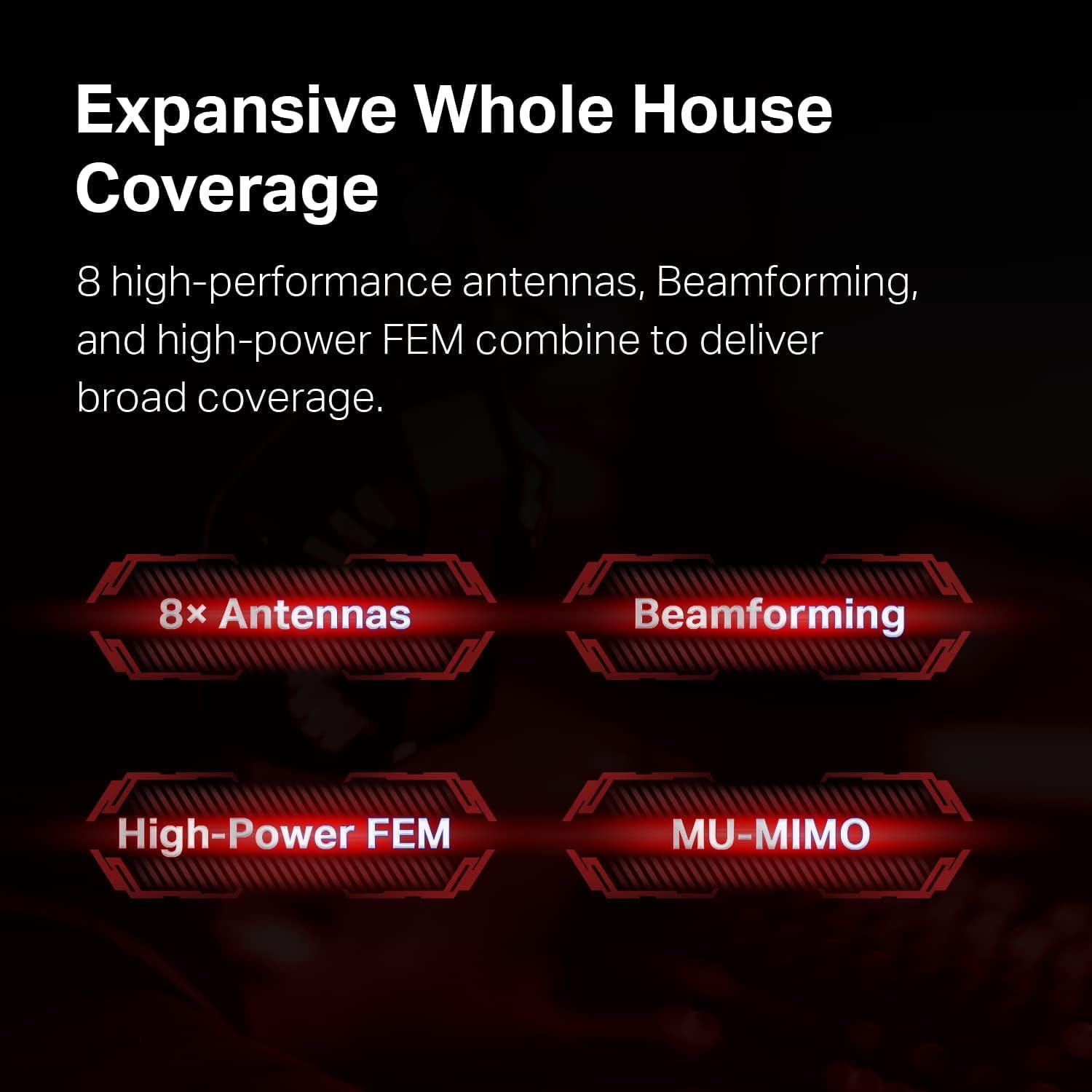
Figure 4: Illustration of the router's features contributing to expansive whole house coverage, including 8 antennas, Beamforming, High-Power FEM, and MU-MIMO.

Figure 5: Visual representation of the router's security features, HomeCare and WPA3, safeguarding connected devices.
Maintenance
Regular maintenance ensures optimal performance and longevity of your router:
- Firmware Updates: Periodically check for and install firmware updates through the router's web management interface or the Tether app. Updates often include performance improvements and security patches.
- Regular Reboot: Rebooting your router every few weeks can help clear its memory and resolve minor performance issues.
- Optimal Placement: Ensure the router remains in an open, central location, free from physical obstructions or electronic devices that could cause interference.
- Cleaning: Keep the router clean and free of dust to prevent overheating. Use a soft, dry cloth for cleaning.
Troubleshooting
If you encounter issues with your router, try the following solutions:
- No Internet Access:
- Check all cable connections between the router, modem, and power source.
- Reboot your modem and router.
- Verify your internet service provider (ISP) connection is active.
- Slow Wi-Fi Speed:
- Ensure your devices are connected to the appropriate Wi-Fi band (5 GHz for faster speeds, 2.4 GHz for wider coverage).
- Reduce interference by moving the router away from other electronic devices.
- Check for bandwidth-intensive applications running in the background.
- Update router firmware and device drivers.
- Frequent Disconnections:
- Ensure the router is placed optimally and not obstructed.
- Check for conflicting Wi-Fi channels and adjust if necessary via the router settings.
- Update router firmware.
- Cannot Access Router Management Page:
- Verify your device is connected to the router's network.
- Ensure you are using the correct default access address (http://tplinkwifi.net) and password.
- Try clearing your browser's cache or using a different browser.
Specifications
Detailed technical specifications for the TP-Link Archer AX10000 router:

Figure 6: Internal hardware specifications, highlighting the 1.8 GHz Quad-Core CPU and 1 GB RAM for robust performance.
| Feature | Detail |
|---|---|
| Product Dimensions | 12 x 10 x 4 inches |
| Item Weight | 5.7 pounds |
| Item Model Number | Archer AX10000 |
| Brand | TP-Link |
| Model Name | Archer AX10000 |
| Special Feature | WPS |
| Frequency Band Class | Tri-Band |
| Wireless Communication Standard | 2.4 GHz Radio Frequency, 5 GHz Radio Frequency, 802.11ax |
| Compatible Devices | Personal Computer |
| Recommended Uses For Product | Gaming |
| Included Components | Power Adapter, Quick Installation Guide, RJ45 Ethernet Cable, WiFi 6 Gaming Router Archer AX10000 |
| Connectivity Technology | Ethernet, USB, Wi-Fi |
| Color | Black and Red |
Warranty and Support
For warranty information and technical support, please refer to the following:
- Return Policy: This product is eligible for a 90-day refund/replacement return policy.
- Manufacturer: TP-Link. For detailed warranty terms and technical assistance, please visit the official TP-Link support website or contact their customer service.


