
HEIMAN 635PHW
HEIMAN Wireless Photoelectric Smoke Detector User Manual
Model: 635PHW | Brand: HEIMAN
1. Introduction
This manual provides essential information for the installation, operation, and maintenance of your HEIMAN Wireless Photoelectric Smoke Detector. This device is designed to detect smoke and alert occupants to potential fire hazards, providing crucial early warning. It features an advanced infrared photoelectric sensor to minimize false alarms and offers a loud 85 dB alarm sound.

Image 1.1: Overview of three HEIMAN wireless smoke detectors, illustrating their interconnected capability.
The HEIMAN smoke detector is compliant with the EN14604:2005/AC:2008 standard, ensuring high quality and reliability. It is equipped with an integrated lithium battery designed for a 10-year lifespan, providing long-term protection without frequent battery changes.
2. Important Safety Information
- Do not paint the smoke detector. Painting the device can interfere with the smoke sensing mechanism and reduce its effectiveness.
- Do not install in areas with high humidity or extreme temperatures. Avoid kitchens, bathrooms, and garages where steam, cooking fumes, or exhaust can cause false alarms.
- Regularly test the smoke detector. Press the test button weekly to ensure proper functionality.
- Replace the unit after 10 years. Even if the battery is still functional, the sensor's effectiveness may degrade over time.
- Ensure proper placement. Install smoke detectors in all bedrooms, hallways leading to bedrooms, and on every level of your home, including the basement.
- Keep away from direct airflow. Avoid placing detectors near windows, doors, or air vents that could dilute smoke or prevent it from reaching the sensor.
3. Package Contents
Verify that all items are present in the package:
- HEIMAN Wireless Photoelectric Smoke Detector (3 units)
- Mounting Bracket (3 units)
- Screws and Wall Plugs (for each unit)
- User Manual (this document)
- Integrated CR123A Lithium Battery (pre-installed in each unit)
4. Setup and Installation
4.1 Choosing a Location
For optimal protection, install smoke detectors in every sleeping area, outside each separate sleeping area, and on every level of your home, including the basement. For interconnected systems, strategic placement ensures that an alarm in one area triggers all connected alarms.

Image 4.1: Recommended smoke detector placement throughout a typical home. When one alarm activates, all interlinked smoke alarms will sound. A maximum of 40 wireless smoke alarms can be interconnected.
4.2 Mounting the Detector
- Prepare the mounting surface: Choose a flat ceiling or wall surface, away from corners or obstructions.
- Mark drill holes: Use the mounting bracket as a template to mark the positions for the two drill holes.
- Drill holes: Drill two holes at the marked positions. Insert the wall plugs if necessary.
- Attach the bracket: Secure the mounting bracket to the ceiling or wall using the provided screws.
- Attach the smoke detector: Align the smoke detector with the mounting bracket and twist it clockwise until it clicks securely into place. Ensure it is firmly attached.

Image 4.2: Smoke detector dimensions and EN14604 certification.
4.3 Interconnection (for multiple units)
The HEIMAN smoke detectors can be wirelessly interconnected, allowing all alarms to sound simultaneously when one detects smoke. Up to 40 units can be interconnected. Refer to the specific interconnection instructions provided with your multi-pack or contact customer support for detailed pairing procedures.
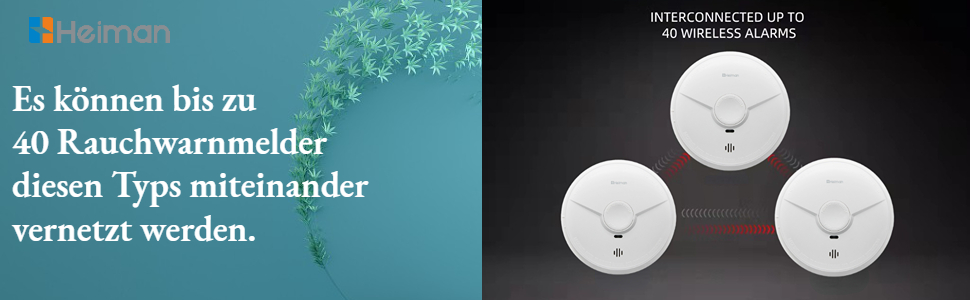
Image 4.3: Wireless interconnection capability for up to 40 alarms.
5. Operating Instructions
5.1 Normal Operation
During normal operation, the smoke detector will periodically flash its LED indicator to show it is functioning correctly. This flash is typically subtle and infrequent.

Image 5.1: The smoke detector's 360° smoke perception for sensitive and intelligent detection.
5.2 Test Function
To test the smoke detector's functionality, press and hold the large central button labeled "PUSH TO TEST WEEKLY". The alarm will sound loudly (85 dB) and the LED will flash. Release the button to stop the alarm. Perform this test weekly to ensure the detector is working correctly.

Image 5.2: The test button and internal components of the smoke detector, highlighting its 10-year battery life.
5.3 Alarm Indication
When smoke is detected, the alarm will sound continuously at over 85 dB, and the red LED indicator will flash rapidly. If multiple units are interconnected, all connected alarms will sound.
6. Maintenance
6.1 Low Battery Warning
The smoke detector is equipped with an integrated lithium battery designed for a 10-year lifespan. When the battery is nearing the end of its life, the smoke detector will emit a short beep and the LED will flash approximately once every 53 seconds. This indicates that the unit needs to be replaced soon.
6.2 Cleaning the Detector
Dust and debris can accumulate on the smoke detector and affect its performance. Clean the detector at least once a month by gently vacuuming the exterior with a soft brush attachment or wiping it with a clean, damp cloth. Do not use cleaning sprays or solvents on the detector.
6.3 Unit Replacement
Due to the integrated 10-year battery and sensor lifespan, the entire smoke detector unit should be replaced after 10 years from the date of manufacture or installation, whichever comes first. Refer to the date printed on the back of the unit.
7. Troubleshooting
| Problem | Possible Cause | Solution |
|---|---|---|
| Detector beeps every 53 seconds. | Low battery warning. | The integrated battery is nearing the end of its life. Replace the entire smoke detector unit. |
| Detector sounds alarm without visible smoke. |
|
|
| Detector does not sound alarm during test. |
|
|
8. Specifications
| Manufacturer | HEIMAN |
| Item Model Number | 635PHW |
| Product Dimensions (L x W x H) | 13 x 13 x 3 cm (5.12 x 5.12 x 1.18 inches) |
| Item Weight | 450 Grams (0.99 lbs) |
| Number of Items | 3 (for the set) |
| Color | White |
| Material | ABS |
| Shape | Circular |
| Power Source | Battery Powered (Integrated Lithium Battery) |
| Battery Type | 1 CR123A (integrated, non-replaceable) |
| Installation Method | Screw-in |
| Coverage Area | 20-50 m² |
| Sensor Type | Photoelectric |
| Alarm Type | Audible (>85 dB) |
| Operating Temperature (Max) | 50 Degrees Celsius |
| Usage | Indoor |
| Certification | EN14604 |
9. Warranty and Support
Specific warranty information for this product is not provided in the available documentation. For warranty claims or technical support, please contact your retailer or the manufacturer directly. Keep your proof of purchase for any warranty-related inquiries.
Spare Parts Availability: Information regarding the availability of spare parts for this product is currently unavailable.
Related documents635PHW


Ask a question about this manual
Ask about setup, troubleshooting, compatibility, parts, safety, or missing instructions. Manuals+ will review the question and use this page’s manual context to help answer it.