
1. Introduction
The ACKSKY 3-in-1 SD Card Reader is a versatile device designed for seamless data transfer between various memory cards and devices. It features dual card slots for SD and Micro SD cards, along with three different connector types: USB-C, USB-A, and Micro USB. This manual provides instructions for its proper use and maintenance.
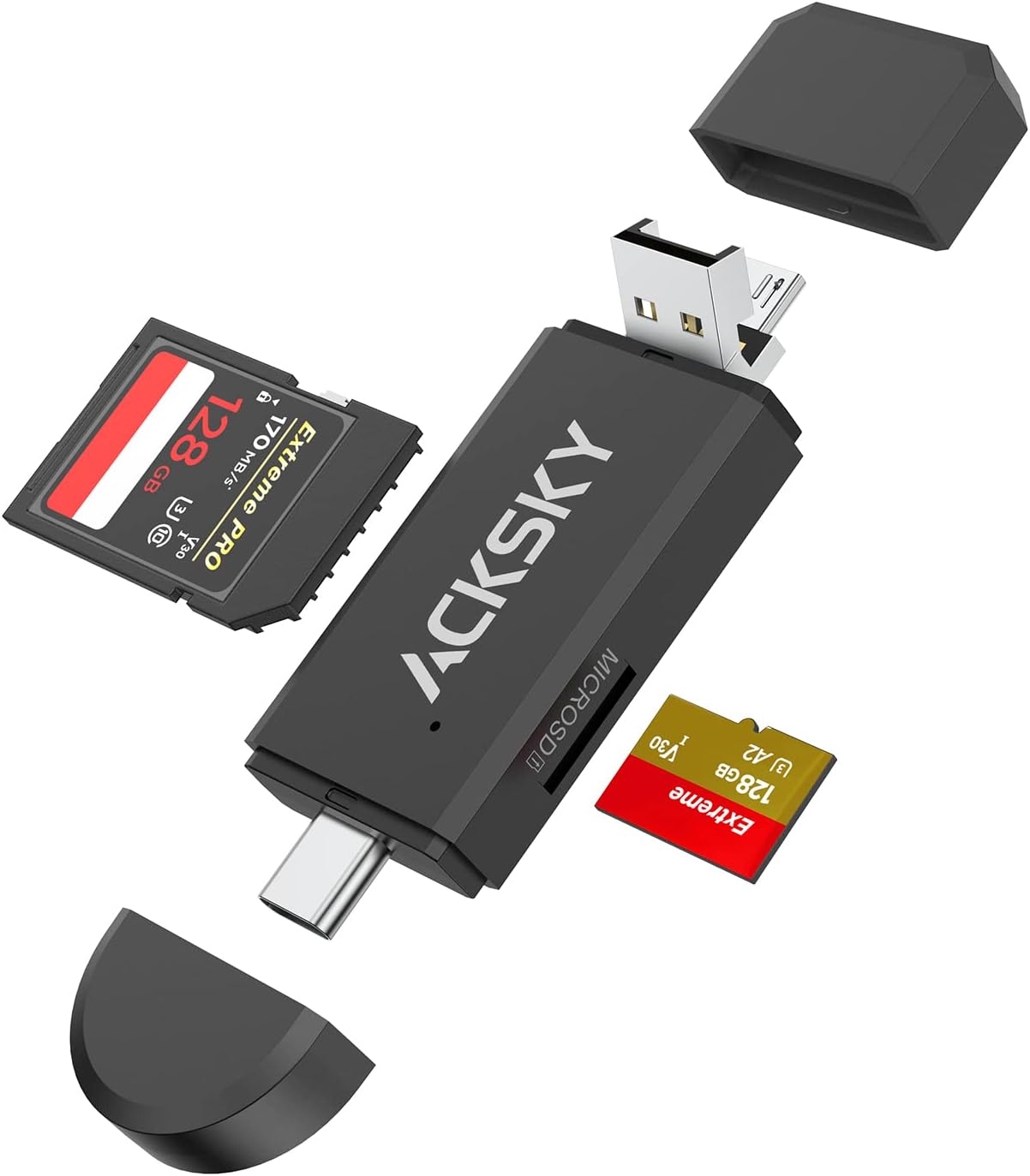
Image 1.1: The ACKSKY 3-in-1 SD Card Reader, showcasing its USB-A and USB-C connectors, along with slots for standard SD and Micro SD cards.
2. Product Features
- 3-in-1 Design: Equipped with USB-C, USB-A, and Micro USB plugs for broad compatibility.
- Dual Card Slots: Supports both standard SD cards (SD/SDHC/SDXC/MMC) and Micro SD cards (Micro SDHC/Micro SDXC).
- OTG Functionality: Enables direct access to memory cards on compatible Android devices.
- Plug-and-Play: No drivers required for most operating systems.
- Universal Compatibility: Works with Windows, Mac, Chrome OS, and Linux.
- Portable Design: Compact and durable for on-the-go use.

Image 2.1: Visual representation of the three integrated connector types: USB-A, Micro USB, and USB-C, highlighting the reader's versatility.

Image 2.2: An illustration detailing the dual card slots for SD and Micro SD, along with examples of compatible card formats like SD, SDHC, SDXC, MMC, and Micro SD variants.
3. Setup and Installation
The ACKSKY 3-in-1 SD Card Reader is designed for plug-and-play operation, requiring no additional driver installation for most compatible devices.
3.1 Inserting a Memory Card
- Identify the correct slot for your memory card: the larger slot for standard SD cards and the smaller slot for Micro SD cards.
- Gently insert the memory card into the corresponding slot until it clicks into place. Ensure the card is inserted in the correct orientation.
3.2 Connecting to a Device
- Determine the appropriate port on your host device (computer, laptop, Android phone): USB-A, USB-C, or Micro USB.
- Select the corresponding connector on the ACKSKY card reader. The USB-A connector is typically exposed, while the Micro USB and USB-C connectors may be protected by caps or integrated into a swivel design.
- Plug the chosen connector into your device's port.
- Your device should automatically detect the card reader and the inserted memory card. A new drive letter or notification may appear.

Image 3.1: The card reader connected to a laptop via its USB-A port, with an SD card inserted, ready for data transfer.
4. Operating Instructions
4.1 Accessing Data
Once connected, the memory card will appear as a removable storage device on your computer or Android phone. You can then:
- Open the drive to view, copy, move, or delete files.
- Transfer photos, videos, documents, and other data between your memory card and your device.
- For Android devices with OTG support, you can directly play media files from the card without transferring them to the phone's internal storage.

Image 4.1: The card reader connected to a smartphone, illustrating its On-The-Go (OTG) functionality for direct media access.
4.2 Safely Removing the Card Reader
To prevent data corruption, always safely eject the memory card or card reader before physically disconnecting it from your device:
- Windows: Click the 'Safely Remove Hardware and Eject Media' icon in the taskbar, then select the card reader.
- Mac: Drag the drive icon of the memory card to the Trash, or right-click (Control-click) the drive icon and select 'Eject'.
- Android: Go to Storage settings and unmount the USB storage device.
5. Compatibility
5.1 Supported Operating Systems
- Windows
- Mac OS
- Chrome OS
- Linux
- Android (with Type-C or Micro USB and OTG support)
5.2 Supported Memory Card Types
- SD Card
- SDHC (Secure Digital High Capacity)
- SDXC (Secure Digital eXtended Capacity)
- MMC (MultiMediaCard)
- RS-MMC (Reduced Size MultiMediaCard)
- UHS-I (Ultra High Speed - I)
- Micro SD Card
- Micro SDHC
- Micro SDXC
5.3 Incompatible Devices
This card reader is not compatible with:
- iPhone
- iPad
- Kindle devices
- Fire Tablets

Image 5.1: A clear visual indicating that the card reader is not compatible with Kindle, Fire Tablets, iPad, and iPhone devices.
6. Specifications
| Brand | ACKSKY |
| Model | 3-in-1 SD Card Reader |
| Connectivity Technology | Micro USB, USB Type A, USB Type C |
| Media Type Supported | SD Card, SDHC, SDXC, microSD, microSDHC, microSDXC, MMC, RS-MMC, UHS-I |
| Operating System Compatibility | Android, Linux, Mac OS, Windows, Chrome OS |
| Item Weight | 0.95 ounces (approx. 27 grams) |
| Product Dimensions (LxWxH) | 3 x 1.1 x 0.4 inches (approx. 7.6 x 2.8 x 1.0 cm) |
| Color | Black |

Image 6.1: A diagram illustrating the compact and portable design of the card reader, including its approximate dimensions.
7. Troubleshooting
7.1 Card Reader Not Detected
- Check Connection: Ensure the card reader is firmly plugged into the device's port. Try a different port if available.
- Try Another Device: Test the card reader on a different computer or compatible phone to rule out an issue with the host device.
- Restart Device: Sometimes a simple restart of your computer or phone can resolve detection issues.
7.2 Memory Card Not Detected
- Reinsert Card: Remove and reinsert the memory card, ensuring it is seated correctly in its slot.
- Check Card Compatibility: Verify that your memory card type (SD, Micro SD, SDHC, SDXC, etc.) is supported by the reader (refer to Section 5.2).
- Test Card Separately: If possible, test the memory card in another device or card reader to confirm it is not damaged.
- Clean Contacts: Gently clean the metal contacts on the memory card with a soft, dry cloth.
7.3 Slow Data Transfer Speed
- USB Port Speed: Ensure you are using a USB 2.0 or higher port on your computer for optimal speeds. While the reader is USB 2.0, older or less capable ports may limit performance.
- Card Speed: The transfer speed is also limited by the speed class of your memory card.
- File Size: Transferring many small files can be slower than transferring a few large files of the same total size.
8. Maintenance
- Keep Clean: Use a soft, dry cloth to clean the exterior of the card reader. Avoid liquid cleaners.
- Protect Connectors: Keep the USB-C and Micro USB connectors protected with their caps when not in use to prevent dust and damage.
- Avoid Extreme Conditions: Do not expose the card reader to extreme temperatures, humidity, or direct sunlight.
- Handle Gently: Avoid dropping the device or applying excessive force when inserting/removing cards or connecting to ports.
9. Warranty and Support
For warranty information and technical support, please refer to the product packaging or contact ACKSKY customer service through the retailer where the product was purchased. Keep your purchase receipt as proof of purchase.


