
1. Product Overview
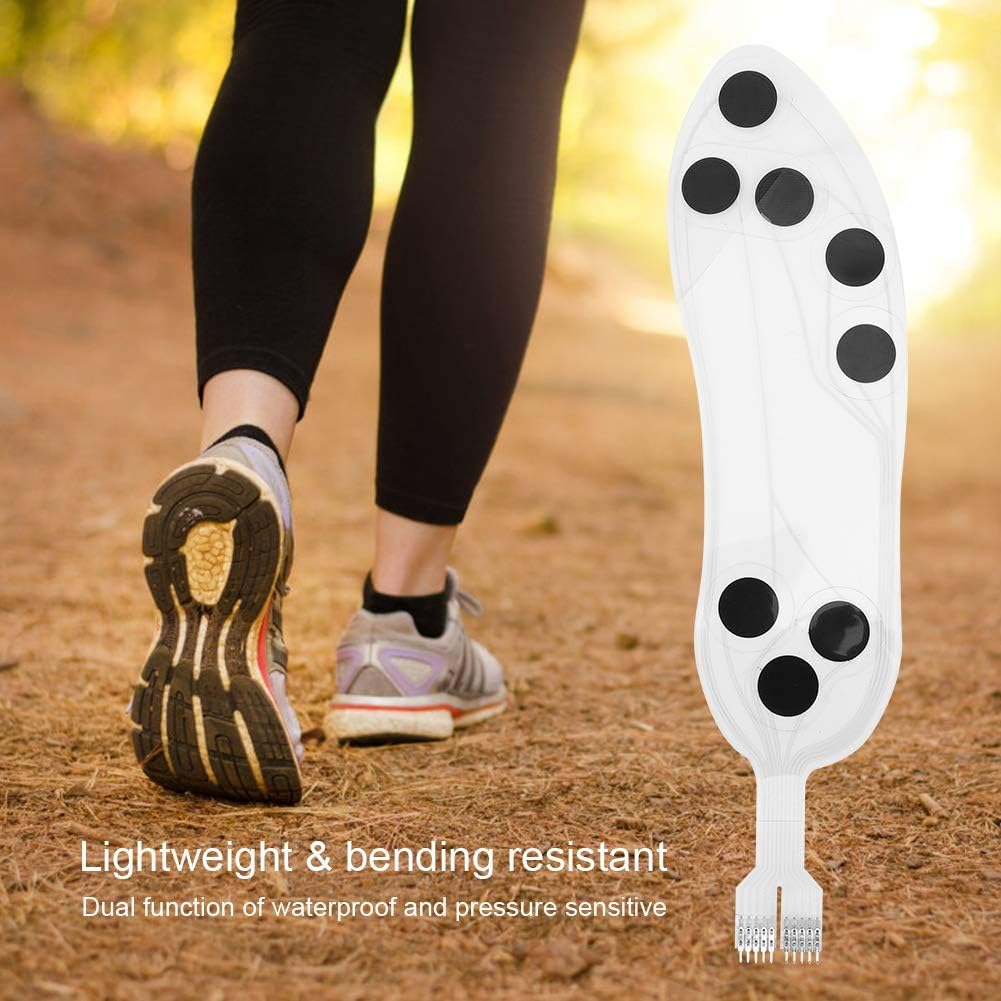
The Shanrya Flexible Thin Film Pressure Sensor, model ZNX-01, is an advanced sensing mat designed for integration into smart wearable products, particularly smart pressure-sensitive insoles. This sensor provides detailed data for various applications, from basic activity tracking to advanced gait analysis.
Key Features:
- Basic Functionality: Enables step counting and calorie consumption index tracking.
- High Sensitivity: Features small size, high sensitivity, light and thin construction, anti-bending properties, and pressure-sensitive capabilities.
- Multi-Functional Design: Supports diverse functional requirements and can be customized for various applications.
- Real-time Gait Monitoring: Capable of monitoring gait information in real time, including running posture, landing method, cadence, touchdown time, touchdown vacancy ratio, and knee load index.
- Durability: Designed for long life with over 1 million cycles, offering high sensitivity and resistance to bending.
2. Setup and Installation
This sensor is designed for integration into smart insoles or similar pressure-sensing applications. Proper installation is crucial for accurate data collection.
Installation Steps:
- Prepare the Insole: Ensure the smart insole or target surface is clean and dry.
- Position the Sensor: Carefully place the ZNX-01 sensing mat within the insole, aligning it to cover the primary pressure points of the foot. The sensor is designed to conform to the foot's shape.
- Connect to Control Unit: Connect the sensor's flexible connector pins to your designated control or data acquisition unit. Refer to the 'Reference Circuit' diagram in Section 3 for typical wiring.
- Secure the Sensor: If necessary, use appropriate adhesive or securing methods to prevent the sensor from shifting during use. Ensure the method does not impede the sensor's flexibility or pressure-sensing capabilities.
- Initial Calibration: Follow the instructions provided with your control unit for initial calibration to ensure accurate readings.

3. Operating Instructions
The ZNX-01 sensor operates by detecting pressure applied to its surface, converting it into an electrical signal that can be read by a compatible control unit. The output signals (Vout1-Vout8) correspond to different sensing points on the mat.
Data Acquisition:
- When pressure is applied to a sensing point, its resistance changes, resulting in a corresponding change in the output voltage.
- The control unit should be programmed to read these voltage changes and interpret them as pressure data.
- This data can then be used to calculate metrics such as step count, calorie consumption, and detailed gait analysis parameters.
Reference Circuit:
The following diagram illustrates a typical reference circuit for connecting the ZNX-01 sensor to a microcontroller or data acquisition system. Resistors R1-R8 are pull-up resistors, and VCC is the supply voltage (typically DC 3.3V).

4. Maintenance
To ensure the longevity and optimal performance of your Shanrya Flexible Thin Film Pressure Sensor, follow these maintenance guidelines:
- Cleaning: If the sensor surface becomes dirty, gently wipe it with a soft, damp cloth. Avoid using harsh chemicals, abrasive cleaners, or excessive moisture, as these can damage the sensor's film or electrical contacts.
- Storage: Store the sensor in a dry, cool environment, away from direct sunlight and extreme temperatures. Avoid folding or creasing the sensor sharply, as this can compromise its flexibility and internal circuitry.
- Handling: Handle the sensor by its edges whenever possible. Avoid touching the active sensing areas or the connector pins directly to prevent contamination or damage.
- Inspection: Periodically inspect the sensor for any signs of physical damage, such as tears, punctures, or frayed connections. If damage is observed, replace the sensor to ensure accurate and safe operation.
5. Troubleshooting
If you encounter issues with your Shanrya Flexible Thin Film Pressure Sensor, consider the following troubleshooting steps:
- No Data Output:
- Check all electrical connections to ensure they are secure and correctly wired according to the reference circuit.
- Verify that the power supply (VCC) to the sensor and control unit is stable and within the specified voltage range (e.g., DC 3.3V).
- Ensure the control unit's software or firmware is correctly configured to read the sensor's input.
- Inaccurate Readings:
- Perform a recalibration of the sensor with your control unit.
- Check for any physical obstructions or damage to the sensor surface that might affect pressure distribution.
- Ensure the sensor is properly seated within the insole and not shifting during use.
- Verify that the operating temperature is within the specified range (-20℃ to 60℃).
- Intermittent Readings:
- Inspect the flexible connector for any signs of wear, corrosion, or loose pins.
- Check for electromagnetic interference (EMI) from nearby electronic devices. The sensor is designed to be not sensitive to ESD, but strong EMI could potentially affect signals.
If these steps do not resolve the issue, contact customer support for further assistance.
6. Specifications
The following table details the technical specifications for the Shanrya Flexible Thin Film Pressure Sensor (ZNX-01):
| Parameter | Value |
|---|---|
| Model | ZNX-01 |
| Thickness | Not specified (Thin Film) |
| Pressure Range (Single Point) | 10 kg |
| Response Point | 400g |
| Durability | >1 million times |
| Initial Resistance (no load) | >10MΩ |
| Test Voltage (Typical) | DC 3.3V |
| Response Time | <1ms |
| Recovery Time | <15ms |
| Working Temperature | -20℃ ~ 60℃ |
| Electromagnetic Interference | Not generated |
| Electrostatic Discharge | Not sensitive |
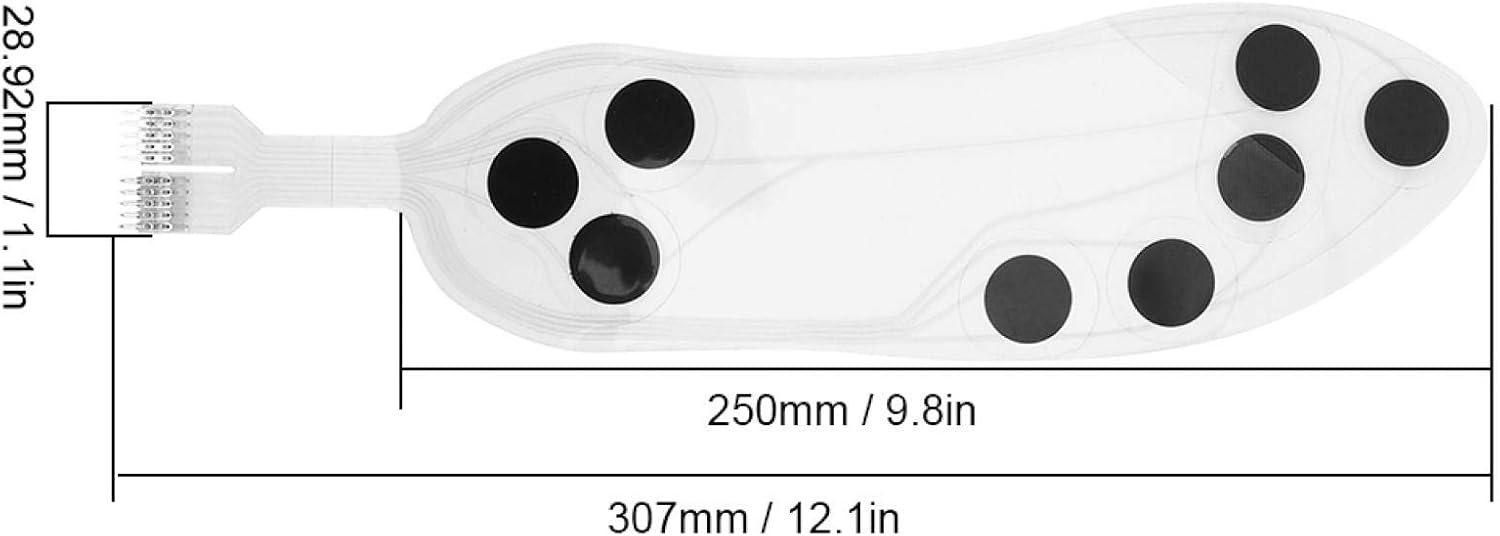
| Approximate Length | 307mm / 12.1in |
| Approximate Width (widest point) | 250mm / 9.8in |
| Connector Width | 28.92mm / 1.1in |
| Pin Pitch | 2.54mm / 0.1in |
7. Warranty and Support
This product is manufactured by Shanrya. For specific warranty information, please refer to the documentation provided at the time of purchase or contact your retailer. General support for the Shanrya Flexible Thin Film Pressure Sensor (ZNX-01) can be obtained through the manufacturer's official channels.
Contact Information:
For technical assistance, troubleshooting beyond the scope of this manual, or warranty inquiries, please contact Shanrya customer support. Refer to the packaging or the official Shanrya website for the most current contact details.