
1. Introduction
This manual provides essential information for the safe and effective use of your FunKey DP-88 II Digital Piano. Please read it thoroughly before operating the instrument and retain it for future reference. The FunKey DP-88 II is an 88-key digital piano designed for both beginners and experienced players, offering a wide range of sounds, rhythms, and learning features.

Figure 1.1: Front view of the FunKey DP-88 II Digital Piano.
2. Safety Instructions
To prevent electric shock, fire, or damage to the instrument, please observe the following precautions:
- Do not expose the instrument to rain, moisture, or excessive humidity.
- Do not place containers with liquids on the instrument.
- Ensure the power adapter is compatible with your local voltage supply.
- Do not open the instrument casing or attempt to repair it yourself. Refer all servicing to qualified personnel.
- Keep the instrument away from heat sources such as radiators, heat registers, or other heat-producing appliances.
- Unplug the power cord during lightning storms or when unused for long periods.
3. Package Contents
Verify that all items are present in the package:
- FunKey DP-88 II Digital Piano Unit
- Pedal Unit (3 pedals)
- Power Adapter
- User Manual (this document)
4. Setup
The FunKey DP-88 II requires minimal assembly. Follow these steps:
- Carefully unpack all components from the box.
- Assemble the stand according to the included diagrams (not provided in this manual).
- Place the digital piano unit securely onto the assembled stand.
- Connect the pedal unit cable to the designated port on the underside of the piano.
- Connect the power adapter to the DC IN port on the piano and then plug it into a wall outlet.
5. Controls and Functions Overview
The control panel provides access to all instrument functions. Familiarize yourself with the layout:

Figure 5.1: Detailed view of the control panel and keyboard.
- 88 Dynamic Touch Keys: Standard piano keyboard with touch sensitivity.
- LCD Display: Shows current settings, selected sounds, rhythms, and learning mode information.
- Master Volume Knob: Adjusts the overall output volume.
- Sound/Voice Buttons: Select from 360 available instrument sounds.
- Rhythm/Style Buttons: Choose from 160 accompaniment styles.
- Function Buttons: Access various features like Metronome, Record, Playback, Split, Dual, Reverb, Chorus, and Learning Mode.
- Tempo Controls: Adjust the speed of rhythms and metronome.
6. Basic Operation
6.1 Power On/Off
Press the POWER button to turn the instrument on or off. The LCD display will illuminate upon power-on.
6.2 Adjusting Volume
Rotate the MASTER VOLUME knob to increase or decrease the overall sound output. Adjust to a comfortable listening level.
6.3 Selecting Sounds
Press the VOICE button, then use the number pad or arrow buttons to select from the 360 available instrument sounds. The selected sound name will appear on the LCD display.
6.4 Using the Metronome
Press the METRONOME button to activate the metronome. Use the TEMPO buttons to adjust the beat per minute (BPM).
7. Advanced Features
7.1 Learning Mode and Demo Songs
The DP-88 II includes a learning mode to assist with piano practice. Press the LESSON button to enter this mode. You can practice left-hand or right-hand parts at three different difficulty levels. The instrument also features numerous demo songs to aid in musical development.

Figure 7.1: The digital piano's display showing musical notation, illustrating the learning mode and demo song features.
7.2 Recording and Playback
To record your performance, press the RECORD button. Play your desired piece, then press PLAY/PAUSE to stop recording. To listen to your recorded piece, press PLAY/PAUSE again. The instrument supports recording up to 180 measures.

Figure 7.2: Visual representation of metronome, recording, and MP3 playback functions.
7.3 Rhythm Box
Select from 160 integrated rhythm styles, ranging from rock to bossa nova, to provide automatic accompaniment for your playing. Use the STYLE button and number pad to choose a rhythm.
7.4 Split and Dual Functions
- Split Function: Divides the keyboard into two sections, allowing different sounds to be played by the left and right hands.
- Dual Function: Layers two different sounds across the entire keyboard, creating a richer, combined sound.
7.5 Effects: Reverb and Chorus
Enhance your sound with built-in digital effects. Press the REVERB or CHORUS buttons to apply these effects, adding depth and spaciousness to your performance.
7.6 Integrated MP3 Player
Connect a USB storage device to the USB TO DEVICE port to play MP3 audio files directly through the piano's speakers. This allows you to play along with your favorite songs.
8. Connections
The FunKey DP-88 II offers various connectivity options:

Figure 8.1: Overview of the digital piano's rear connection panel.
- DC IN: Connect the included power adapter here.
- USB TO DEVICE: For connecting USB storage devices (e.g., USB flash drives) to play MP3 files.
- 6.35 mm Jack Output: For connecting to external amplification systems or mixers.
- PEDAL: Connect the included 3-pedal unit.
- MIDI IN/OUT: For connecting to other MIDI-compatible devices, such as computers or sound modules.
- USB TO HOST: For connecting the piano to a computer for MIDI data transfer.
- Headphone Jack (3.5 mm): Located on the underside of the piano, for silent practice.
9. Maintenance
Proper care ensures the longevity and performance of your digital piano:
- Cleaning: Use a soft, dry cloth to wipe the surface of the instrument. For stubborn dirt, dampen the cloth slightly with water and a mild detergent, then wipe dry immediately. Avoid abrasive cleaners or solvents.
- Storage: When not in use, cover the piano to protect it from dust. Store in a stable environment, away from direct sunlight, extreme temperatures, and high humidity.
- Transportation: When moving the piano, ensure it is properly disassembled and packed to prevent damage.
10. Troubleshooting
If you encounter issues, refer to the following common problems and solutions:
| Problem | Possible Cause | Solution |
|---|---|---|
| No sound | Volume too low; headphones connected; power issue. | Increase master volume; disconnect headphones; check power connection. |
| Keys not responding | Instrument not powered on; specific function activated (e.g., split mode with no sound on one side). | Ensure power is on; check function settings. |
| Distorted sound | Volume too high; faulty connection to external amplifier. | Reduce volume; check cables and connections. |
| MP3 playback issues | USB device not properly connected; unsupported file format. | Ensure USB device is securely inserted; verify MP3 file format. |
If the problem persists after attempting these solutions, please contact customer support.
11. Specifications
Key technical details of the FunKey DP-88 II Digital Piano:
- Keys: 88, dynamic touch
- Sounds: 360
- Polyphony: 128 notes
- Rhythm Styles: 160
- Effects: Reverb, Chorus
- Pedals: 3 (Sustain, Sostenuto, Soft)
- Speakers: 2 x 15W integrated stereo speakers
- Connections: DC IN, USB to Device, USB to Host, MIDI In/Out, 6.35mm Jack Output, Pedal Unit, 3.5mm Headphone Jack
- Dimensions (W x D x H): 135 x 39 x 77.5 cm
- Weight: 29.4 kg

Figure 11.1: Integrated speakers and the 3-pedal unit.
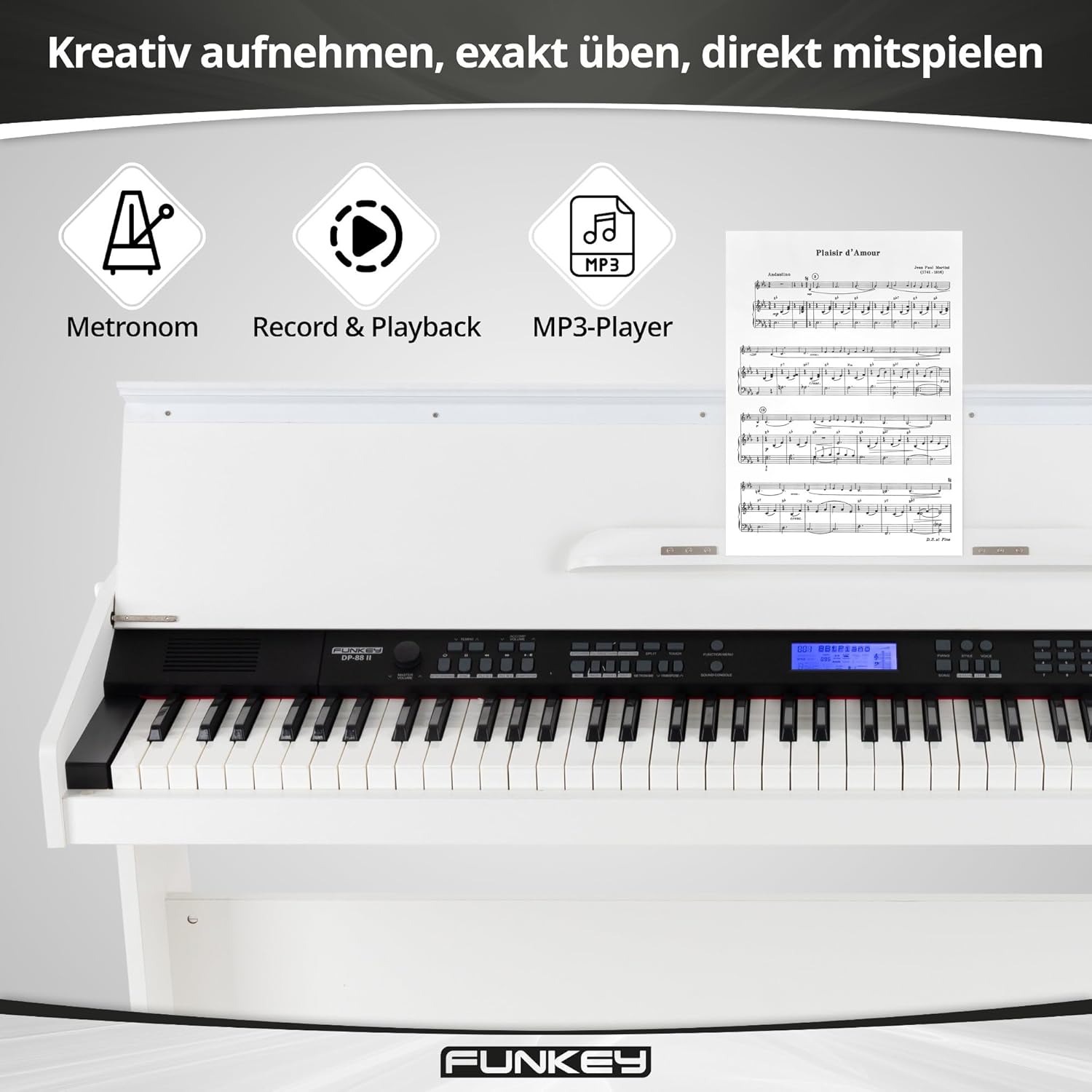
Figure 11.2: Diagram showing the dimensions of the FunKey DP-88 II.
12. Warranty and Support
For warranty information, please refer to the documentation provided at the time of purchase or contact your retailer. If you require technical assistance or have questions not covered in this manual, please contact FunKey customer support or your authorized dealer.


