Introduction
Welcome to the instruction manual for your new USHA Ayush Sewing Machine. This machine is designed for basic straight stitching and offers essential features for various sewing projects. To ensure safe and efficient operation, please read this manual thoroughly before using the machine. Keep this manual for future reference.
The USHA Ayush Sewing Machine is known for its economical design and user-friendly features, including an auto-tripping, spring-loaded bobbin winder for consistent bobbin winding and perfect stitch formation. It also features a lever-type stitch regulator for easy control over forward and reverse stitching, and a convenient slide plate for simple bobbin insertion.
1. Setup and Assembly
Your USHA Ayush Sewing Machine will be delivered unassembled, consisting of the machine head, handle, and base. Follow these steps for initial setup:
- Unpacking: Carefully remove all components from the packaging. Ensure all parts are present according to the packing list.
- Placement: Place the sewing machine base on a stable, flat surface.
- Attaching the Machine Head: Securely attach the machine head to the base. Refer to the diagrams for proper alignment and fastening.
- Attaching the Handle: If your model includes a hand-crank handle, attach it to the flywheel according to the instructions provided in the accessory kit.
- Power Connection (if applicable): If your machine is an electric model, connect the power cord to a suitable electrical outlet. Ensure the voltage matches your machine's requirements.

Figure 1: The USHA Ayush Sewing Machine, fully assembled and ready for use.
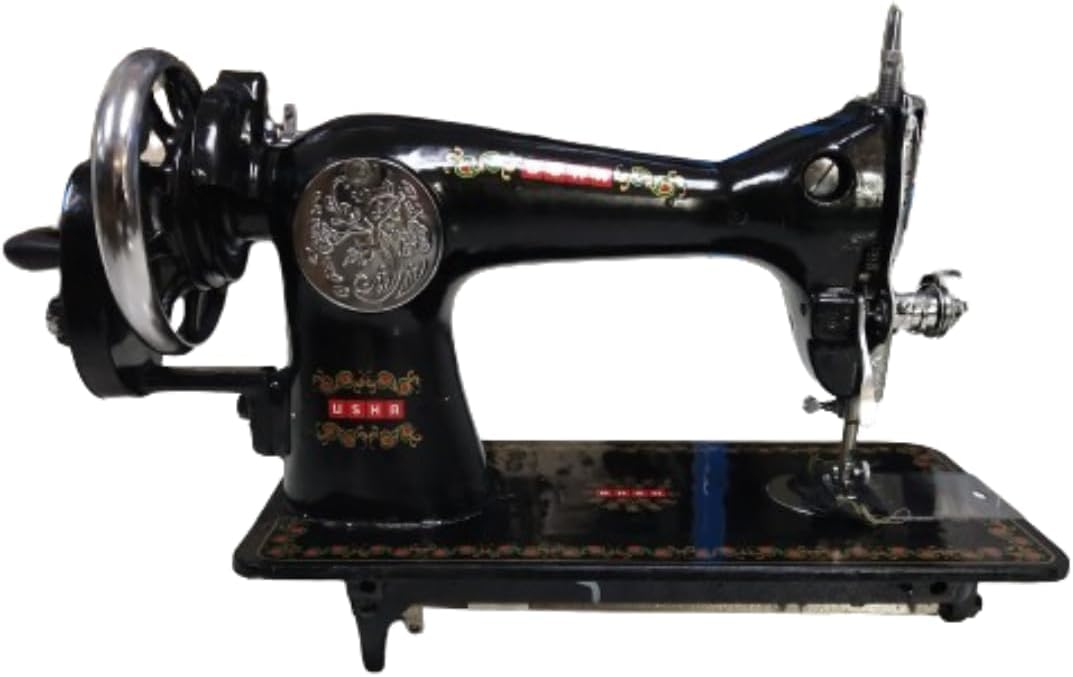
Figure 2: Side view of the USHA Ayush Sewing Machine, highlighting the hand crank and flywheel.

Figure 3: Close-up front view of the USHA Ayush Sewing Machine, showing the needle, presser foot, and stitch plate.
2. Operating Instructions
This section guides you through the basic operation of your USHA Ayush Sewing Machine.
2.1. Winding the Bobbin
The USHA Ayush features an auto-tripping, spring-loaded bobbin winder for uniform and perfect bobbin winding.
- Place an empty bobbin onto the bobbin winder spindle.
- Guide the thread from the spool pin through the tension disc of the bobbin winder.
- Wrap the thread a few times around the bobbin.
- Push the bobbin winder lever towards the flywheel until it engages.
- Start the machine (either by hand crank or foot pedal if electric). The bobbin will wind automatically and the winder will trip off when the bobbin is full.
- Cut the thread and remove the full bobbin.
2.2. Inserting the Bobbin
The machine is equipped with a slide plate for easy bobbin insertion.
- Open the slide plate located on the needle plate.
- Insert the bobbin into the bobbin case, ensuring the thread unwinds in the correct direction (refer to the markings on the bobbin case).
- Pull the thread through the tension spring of the bobbin case.
- Close the slide plate.
2.3. Threading the Upper Thread
Follow the numbered threading path indicated on your machine. Generally, this involves:
- Place the thread spool on the spool pin.
- Guide the thread through the upper thread guide.
- Pass the thread through the tension discs.
- Thread the take-up lever from right to left.
- Guide the thread through the lower thread guide.
- Finally, thread the needle from front to back.
2.4. Bringing Up the Bobbin Thread
- Hold the upper thread lightly with your left hand.
- Turn the handwheel towards you (counter-clockwise) to lower the needle into the needle plate and then bring it back up.
- The upper thread will catch the bobbin thread, forming a loop. Pull this loop up through the needle plate opening.
- Pull both upper and bobbin threads under the presser foot and towards the back of the machine.
2.5. Stitch Regulator and Pressure Adjustment
- Lever Type Stitch Regulator: Your machine features a lever-type stitch regulator. Move the lever up or down to adjust the stitch length. The lever also controls forward and reverse stitching. Push the lever fully down for reverse stitching.
- Screw Type Pressure Adjustment: A screw-type mechanism allows for adjusting the needle bar pressure. This is crucial for different fabric thicknesses. Turn the screw clockwise to increase pressure for thicker fabrics and counter-clockwise to decrease pressure for lighter fabrics. Adjust as needed to prevent skipped stitches or fabric puckering.
2.6. Starting to Sew
- Place the fabric under the presser foot.
- Lower the presser foot lever.
- Begin sewing by turning the handwheel or pressing the foot pedal. Guide the fabric gently.
3. Maintenance
Regular maintenance ensures the longevity and optimal performance of your USHA Ayush Sewing Machine.
3.1. Cleaning
- Lint Removal: Regularly remove lint and dust from the bobbin area, feed dogs, and under the needle plate using a small brush or lint brush.
- Surface Cleaning: Wipe the exterior of the machine with a soft, dry cloth. Avoid using harsh chemicals.
3.2. Oiling
The moving parts of your sewing machine require periodic oiling. Use only high-quality sewing machine oil.
- Turn off and unplug the machine (if electric).
- Tilt the machine head back to access the underside mechanisms.
- Apply a small drop of oil to all moving metal parts, especially joints and shafts.
- Also, apply a drop of oil to the bobbin case race.
- Run the machine for a few minutes on a scrap piece of fabric to distribute the oil and absorb any excess.

Figure 4: Underside view of the USHA Ayush Sewing Machine, illustrating the various moving parts that require periodic oiling for smooth operation.
4. Troubleshooting
If you encounter issues with your sewing machine, consult this section for common problems and their solutions.
| Problem | Possible Cause | Solution |
|---|---|---|
| Skipped Stitches | Incorrect needle, bent needle, improper threading, incorrect needle bar pressure. | Use the correct needle for the fabric, replace bent needles, re-thread the machine carefully, adjust needle bar pressure. |
| Thread Breaking | Poor quality thread, incorrect tension, needle bent or blunt, improper threading. | Use good quality thread, adjust upper or bobbin tension, replace needle, re-thread. |
| Fabric Puckering | Incorrect tension, dull needle, incorrect needle bar pressure. | Adjust tension, replace needle, adjust needle bar pressure. |
| Machine Jamming | Thread tangled in bobbin case, lint buildup, incorrect bobbin insertion. | Remove bobbin case and clear tangled thread, clean bobbin area, re-insert bobbin correctly. |
If the problem persists after attempting these solutions, please contact USHA customer support or a qualified service technician.
5. Specifications
- Model: AAYUSH
- Type: Straight Stitch Sewing Machine
- Color: Black
- Material: Plastic (Base), Metal (Machine Head)
- Item Weight: Approximately 22 pounds (9989 Grams)
- Package Dimensions: 20.79 x 12.91 x 9.92 inches
- Stitch Regulator: Lever type, for forward and reverse stitching
- Bobbin Winder: Auto tripping, spring-loaded
- Pressure Adjustment: Screw type for needle bar pressure
- Included: Plastic base (Top cover not included)
- Power Source: Corded Electric (Note: While listed as 'Is Electric: No' in some specifications, this refers to it not being fully automated, but it is designed to be powered by a corded electric motor.)
6. Warranty and Support
For detailed information regarding the warranty period, terms, and conditions for your USHA Ayush Sewing Machine, please refer to the official warranty card included with your product or visit the official USHA website.
Should you require technical assistance, spare parts, or service, please contact USHA customer support. Contact details can typically be found on the product packaging, the official USHA website, or your purchase documentation.