
smartgen HMC9000S
HMC9000S Marine Engine Controller User Manual
Brand: SmartGen | Model: HMC9000S
1. Product Overview
The HMC9000S diesel engine controller is a sophisticated unit that integrates digitization, intelligentization, and network technology. It is designed for genset automation and monitoring control systems, enabling automatic start/stop, data measurement, alarm protection, and 'three remote' functions (remote control, remote measuring, and remote communication).
Equipped with a 4.3-inch TFT-LCD display, the controller offers an intuitive interface with optional Chinese/English language support. Its robust 32-bit ARM processor ensures precise parameter measurement, fixed value adjustment, time setting, and value adjustment. Most parameters can be configured directly from the front panel or via a PC communication interface.
Due to its compact design, straightforward connections, and high reliability, the HMC9000S is widely used in various diesel engine automation systems, including marine emergency units, main propulsion units, main generator units, and pumping units.
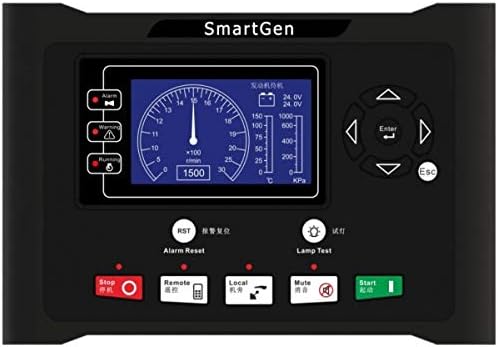
Figure 1: Front panel of the HMC9000S Marine Engine Controller. The display shows engine parameters, and the panel includes various control buttons for operation and testing.
2. Key Features
- Advanced Processor: Features a powerful 32-bit ARM micro-processor for high performance.
- User Interface: Equipped with a 4.3-inch LCD display with backlight and optional Chinese/English interface for easy operation via push-buttons.
- ECU Engine Communication: Ability to control and communicate with various ECU engines via the SAE J1939 interface.
- Module Expansion: The J1939 interface supports connection to digital input modules, digital output modules, LED lamp indicator modules, and security modules, allowing for system expansion.
- Parameter Monitoring: Transmits and displays multiple engine parameters such as speed, water temperature, oil temperature, and oil pressure directly on the LCD, reducing the need for additional sensors and complex wiring.
- Remote Control Capability: Can be connected to a remote control module to perform remote start, stop, and other functions.
- Comprehensive Protection: Integrates alarm protection for enhanced system safety.
3. Installation and Setup
The HMC9000S is designed for simple installation due to its compact structure and high reliability. Proper installation is crucial for optimal performance.
3.1 Wiring Connections
- Power Supply: Connect the controller to a stable DC power source as per the specifications.
- Engine Connections: Connect the necessary engine sensors (e.g., speed, oil pressure, water temperature) to the designated inputs.
- J1939 Interface: For ECU engines, connect the J1939 communication lines to the engine's ECU. This interface simplifies wiring by transmitting multiple parameters digitally.
- Output Connections: Connect the control outputs (e.g., start, stop, alarm) to the corresponding engine actuators or relays.
- Remote Module: If using a remote control module, connect it to the dedicated remote communication port.
Ensure all connections are secure and properly insulated to prevent short circuits or interference. Refer to the detailed wiring diagrams provided in the full product manual for specific terminal assignments.
4. Operating the HMC9000S
The HMC9000S controller provides intuitive operation through its front panel buttons and LCD display.
4.1 Basic Operation
- Start/Stop: Use the dedicated 'Start' and 'Stop' buttons on the front panel to manually control the engine. The controller also supports automatic start/stop sequences based on configured parameters.
- Monitoring: The 4.3-inch LCD displays real-time engine parameters such as RPM, oil pressure, water temperature, and battery voltage. Use the navigation buttons (Up, Down, Left, Right) and 'Enter' to browse through different display screens.
- Alarm Reset: In case of an alarm, the 'Alarm' indicator will illuminate. Press the 'Alarm Reset' button (RST) to clear the alarm after addressing the issue.
- Lamp Test: Press the 'Lamp Test' button to verify that all indicator lights on the panel are functioning correctly.
- Mode Selection: The 'Remote' and 'Local' buttons allow switching between remote control mode (via a connected remote module or communication interface) and local manual control.
- Mute: The 'Mute' button silences audible alarms.
4.2 Parameter Configuration
Most operational parameters can be configured directly from the controller's front panel menu. For advanced settings and comprehensive configuration, connect the controller to a PC via its communication interface and use the SmartGen configuration software.
5. Maintenance Guidelines
To ensure the longevity and reliable operation of your HMC9000S Marine Engine Controller, follow these maintenance guidelines:
- Regular Cleaning: Keep the controller's display and buttons clean using a soft, dry cloth. Avoid abrasive cleaners or solvents.
- Connection Inspection: Periodically check all wiring connections for tightness and signs of corrosion. Loose connections can lead to intermittent operation or system failures.
- Environmental Conditions: Ensure the operating environment remains within the specified temperature and humidity ranges. Protect the unit from excessive moisture, dust, and direct sunlight.
- Software Updates: Check the SmartGen official website periodically for any firmware updates that may improve performance or add new features.
- Ventilation: Ensure adequate ventilation around the unit to prevent overheating, especially if installed in an enclosed space.
6. Troubleshooting
This section provides basic troubleshooting steps for common issues. For more complex problems, refer to the detailed troubleshooting guide in the full product manual or contact technical support.
| Problem | Possible Cause | Solution |
|---|---|---|
| Controller does not power on | No power supply; Loose power connection; Blown fuse. | Check power source; Verify power cable connections; Inspect and replace fuse if necessary. |
| Engine does not start | Incorrect operating mode (e.g., in Remote mode); Engine fault; Wiring issue. | Ensure controller is in 'Local' mode or remote start signal is active; Check engine status and clear any engine faults; Verify start circuit wiring. |
| Alarm indicator is on | Engine fault detected (e.g., low oil pressure, high temperature); Sensor malfunction. | Check the LCD for specific alarm codes; Address the underlying engine issue; Verify sensor connections and functionality; Press 'Alarm Reset' after resolving. |
| Display is blank or flickering | Power supply issue; Loose display cable; Extreme temperature. | Check power supply voltage; Ensure display cable is securely connected; Operate within specified temperature range. |
7. Technical Specifications
| Specification | Detail |
|---|---|
| Manufacturer | SMARTGEN |
| Part Number | HMC9000S |
| Item Model Number | HMC9000S |
| Product Dimensions | 10.47 x 7.17 x 1.77 inches (26.59 x 18.21 x 4.5 cm) |
| Item Weight | 1.98 pounds (0.9 Kilograms) |
| Display Type | 4.3 inches TFT-LCD |
| Processor | 32-bit ARM micro-processor |
| Communication Interface | SAE J1939, RS485 |
| First Available Date | December 13, 2018 |
8. Warranty and Support
8.1 Return Policy
This product is eligible for a return within 30 days of receipt for a refund or replacement, subject to the seller's return policy. Please ensure the product is returned in its original condition and packaging.
8.2 Protection Plans
Extended protection plans are available for this product to provide additional coverage beyond the standard return period. Options may include:
- 3-Year Protection Plan
- 4-Year Protection Plan
- Complete Protect (monthly plan covering eligible past and future purchases)
For details on coverage, terms, and pricing, please refer to the specific protection plan documentation.
8.3 Technical Support
For technical assistance, troubleshooting beyond this manual, or warranty claims, please contact SmartGen-America, the authorized seller. Ensure you have your product model number (HMC9000S) and purchase details ready when contacting support.
Related documentsHMC9000S


Ask a question about this manual
Ask about setup, troubleshooting, compatibility, parts, safety, or missing instructions. Manuals+ will review the question and use this page’s manual context to help answer it.