
1. Introduction
This manual provides essential information for the safe and effective use of the MARS 90372 General Purpose Relay. This relay is designed for various applications requiring switching of electrical circuits, featuring a Single Pole Double Throw (SPDT) contact configuration and a 120 VAC coil.
Please read this manual thoroughly before installation or operation to ensure proper functionality and to prevent potential hazards.

This image displays the MARS 90372 General Purpose Relay, still in its blue and white packaging box. The box label clearly shows the model number 90372, indicating it is a switching relay with SPDT configuration, 120 VAC coil voltage, and replaces Essex/RBM 90-372. The relay itself is partially visible next to the box, showing its black housing and red button. The barcode/UPC visible on the packaging is 0685744903727.
2. Product Overview
The MARS 90372 relay is a robust component designed for reliable electrical switching. It features .250 inch flat blade terminals for easy and secure connections.

A detailed view of the MARS 90372 relay's top label. The label specifies the model D3101 90372, along with electrical ratings: 12 FLA, 60 LRA at 125 VAC; 8 FLA, 48 LRA at 277 VAC; and 18A, 277 VAC resistive. It also indicates a coil voltage of 120 VAC 50/60HZ and includes UL and CSA certifications.
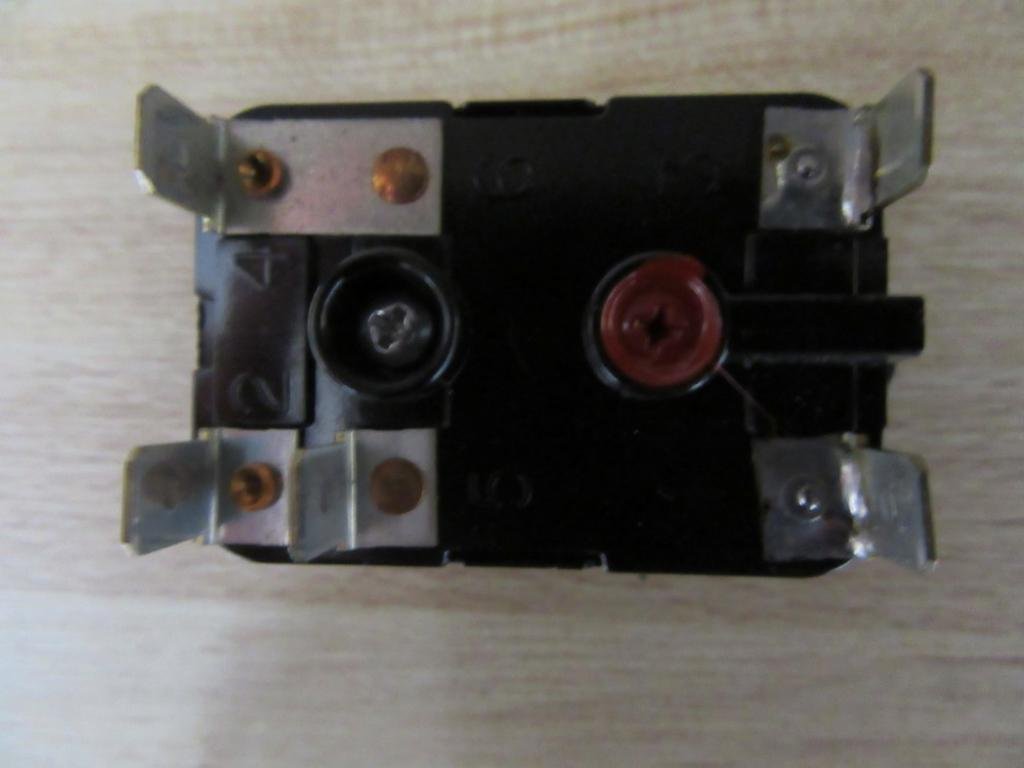
This image shows the underside of the MARS 90372 relay, highlighting its various electrical terminals. The terminals are flat blade type, designed for secure electrical connections. A red adjustment screw and a black screw are visible, likely for internal adjustments or mounting.
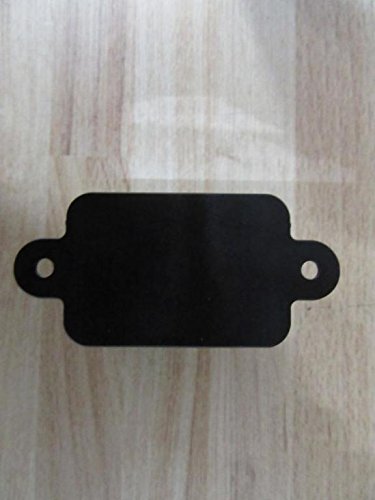
A simple black rectangular mounting plate with two circular holes on either end, designed for securing the MARS 90372 relay in place. This accessory ensures stable installation of the relay.
3. Setup and Installation
Safety First: Always disconnect power to the circuit before installing or servicing the relay. Improper installation can lead to electrical shock or damage to equipment.
- Power Disconnection: Ensure all power to the system where the relay will be installed is completely shut off and locked out.
- Mounting: Securely mount the relay in a suitable enclosure or panel using appropriate fasteners. If a mounting plate is provided, utilize it for stable installation.
- Wiring: Connect the coil terminals to the control voltage (110/120 VAC). Connect the load circuit to the appropriate SPDT contact terminals (Common, Normally Open, Normally Closed) as per your application's wiring diagram. Ensure all connections are tight and secure.
- Verification: Double-check all wiring connections against your schematic to prevent miswiring.
- Power Restoration: Once installation is complete and verified, restore power to the circuit.
4. Operation
The MARS 90372 is a general-purpose relay designed for automatic operation. When the specified coil voltage (110/120 VAC) is applied to the coil terminals, the relay's internal contacts will switch, changing the state of the connected load circuit.
- De-energized State: When no voltage is applied to the coil, the common contact is connected to the Normally Closed (NC) contact.
- Energized State: When 110/120 VAC is applied to the coil, the coil energizes, causing the common contact to switch and connect to the Normally Open (NO) contact.
- Automatic Operation: The relay will maintain its energized state as long as the coil voltage is present. Upon removal of the coil voltage, the relay will return to its de-energized state.
5. Maintenance
The MARS 90372 relay is designed for long-term, reliable operation with minimal maintenance. However, periodic inspection is recommended to ensure optimal performance.
- Visual Inspection: Periodically inspect the relay for any signs of physical damage, discoloration, or loose connections.
- Terminal Integrity: Ensure all electrical connections to the flat blade terminals remain tight and free from corrosion.
- Environmental Conditions: Ensure the operating environment remains within the specified temperature and humidity ranges to prevent premature failure.
- Cleaning: If necessary, gently clean the exterior of the relay with a dry, soft cloth. Do not use solvents or abrasive cleaners.
6. Troubleshooting
If you encounter issues with your MARS 90372 relay, refer to the following table for common problems and their potential solutions.
| Problem | Possible Cause | Solution |
|---|---|---|
| Relay does not energize when coil voltage is applied. | No coil voltage; Incorrect coil voltage; Open coil; Loose wiring. | Verify 110/120 VAC at coil terminals; Check coil resistance; Inspect and tighten wiring connections. |
| Relay energizes but contacts do not switch or switch intermittently. | Overload condition; Damaged contacts; Incorrect wiring of load. | Check load current against relay ratings; Replace relay if contacts are damaged; Verify load wiring. |
| Relay hums loudly or overheats. | Incorrect coil voltage (too high/low); Shorted turns in coil; Excessive ambient temperature. | Verify correct coil voltage; Replace relay if coil is faulty; Ensure adequate ventilation. |
| Relay contacts are stuck open or closed. | Welded contacts due to overload/short circuit; Mechanical failure. | Replace relay; Investigate and correct cause of overload/short circuit. |
7. Specifications
| Specification | Value |
|---|---|
| Product Dimensions | 1 x 1 x 1 inches; 8 ounces |
| Manufacturer | MARS |
| ASIN | B0071N5U5E |
| Contact Type | SPDT (Single Pole Double Throw) |
| Current Rating | 12 Amps |
| Brand | Mars |
| Operation Mode | Automatic |
| Coil Voltage | 110/120 VAC |
| Coil Resistance | 50 Ohms |
8. Warranty Information
MARS products are manufactured to high-quality standards. For specific warranty terms and conditions, please refer to the documentation included with your purchase or contact the manufacturer directly. Keep your proof of purchase for warranty claims.
9. Support
For technical assistance, replacement parts, or further inquiries regarding the MARS 90372 General Purpose Relay, please contact MARS customer support. Contact information can typically be found on the product packaging or the manufacturer's official website.