
1. Introduction and Safety Information
This manual provides essential instructions for the safe operation, maintenance, and troubleshooting of your SAKAWA AS7T Electric Log Splitter. Please read this manual thoroughly before assembly, operation, or maintenance to ensure safe and efficient use of the machine. Keep this manual in a safe place for future reference.
Important Safety Warnings:
- Always wear appropriate personal protective equipment (PPE), including safety glasses, gloves, and sturdy footwear, when operating the log splitter.
- Ensure the work area is clear of bystanders, children, and pets.
- Operate the log splitter on a stable, level surface.
- Never place hands or feet near moving parts during operation.
- Always disconnect the power supply before performing any maintenance or adjustments.
- Electrical Connection Warning: Avoid using coiled extension cords or cords with a cross-section smaller than 2.5 mm². Using inadequate extension cords can cause motor damage and invalidate the warranty. Extension cords should be as short as possible and have an appropriate cross-section for their length. For lengths of 5 to 10 meters, a cord of at least 2.5 mm² is recommended. For longer applications, consider a gasoline-powered machine.
2. Setup and Assembly
The SAKAWA AS7T Log Splitter is designed for ease of use and transport. Follow these steps for initial setup.
2.1 Unpacking and Inspection
Carefully remove all components from the packaging. Inspect for any damage that may have occurred during shipping. Contact your dealer immediately if any parts are damaged or missing.
2.2 Assembly
The log splitter features a robust base with lateral supports for logs and transport wheels for mobility. Minimal assembly is typically required. Ensure all bolts and fasteners are securely tightened before operation.
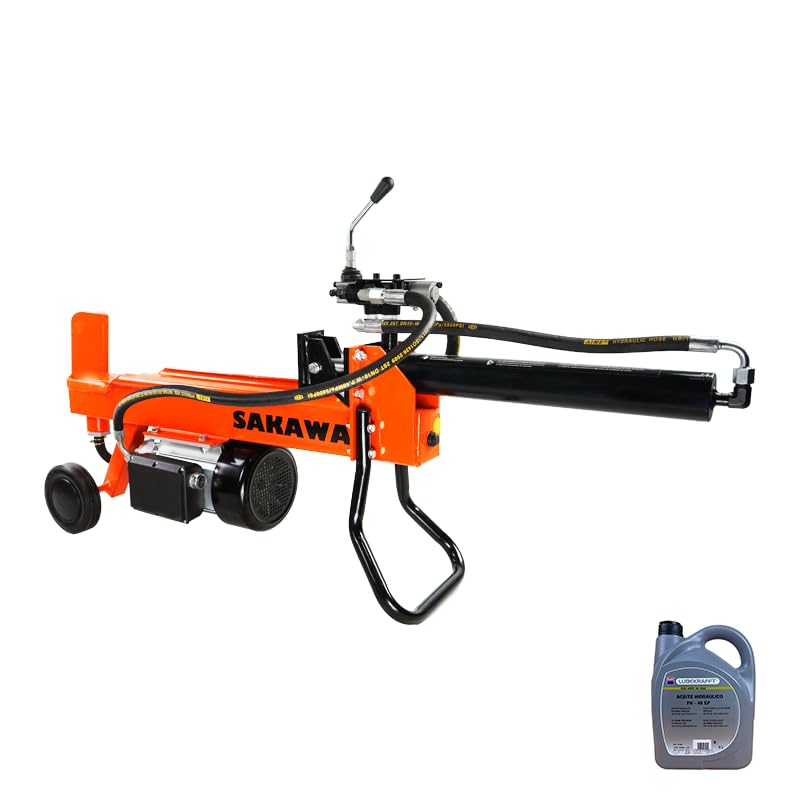
Figure 1: Side view of the SAKAWA AS7T Electric Log Splitter, showing the main body, motor, hydraulic cylinder, control lever, and transport wheels. This image illustrates the overall structure of the machine.

Figure 2: Close-up view of one of the robust transport wheels, designed for easy movement of the log splitter.
2.3 Hydraulic Oil
The log splitter comes with hydraulic oil. Before first use, verify the hydraulic oil level according to the instructions provided in the maintenance section. Ensure the oil cap is securely fastened.
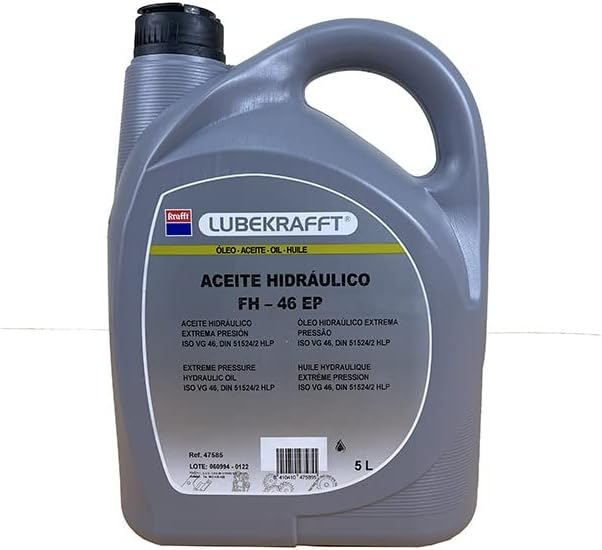
Figure 3: Example of the Lubekrafft FH-46 EP Hydraulic Oil supplied with the log splitter, essential for its hydraulic system.
2.4 Electrical Connection
Connect the log splitter to a suitable power outlet. Refer to the safety warnings regarding extension cords to prevent motor damage and ensure optimal performance.
3. Operating Instructions
The SAKAWA AS7T Log Splitter is designed for efficient and safe wood splitting. Follow these steps for proper operation.
3.1 Preparing Logs
- The log splitter can handle logs with an approximate diameter of 5 to 35 centimeters, depending on knots and wood hardness.
- The maximum log length is 52 centimeters.
- Ensure logs are free of foreign objects like nails or wire.
- Place the log securely on the splitting bed, ensuring it rests firmly against the lateral supports.
3.2 Splitting Operation
The machine features a manual control lever for safe operation, preventing accidents.

Figure 4: Close-up of the manual control lever, which activates the hydraulic piston for splitting. This lever ensures user safety during operation.
- Ensure the log is correctly positioned.
- Activate the log splitter by engaging the manual control lever. The powerful hydraulic piston and high-flow hydraulic pump will rapidly split the log.
- Once the log is split, release the control lever to retract the wedge.
- Remove the split wood and prepare for the next log.
Always maintain a firm grip on the log splitter and keep your body clear of the splitting wedge during operation.
4. Maintenance
Regular maintenance ensures the longevity and safe operation of your SAKAWA AS7T Log Splitter.
4.1 General Cleaning
- After each use, clean the log splitter to remove wood chips, sawdust, and debris.
- Use a brush or compressed air. Avoid using water directly on electrical components.
4.2 Hydraulic Oil Check and Replacement
- Regularly check the hydraulic oil level. Refer to the oil reservoir's dipstick or sight glass.
- If the oil level is low, top up with appropriate hydraulic oil (e.g., Lubekrafft FH-46 EP or equivalent ISO VG 46 HLP hydraulic oil).
- Hydraulic oil should be replaced periodically, typically after 50 hours of operation or annually, whichever comes first. Consult a qualified technician if unsure.
4.3 Inspecting Components
- Periodically inspect the splitting wedge for sharpness and damage.
- Check all bolts, nuts, and fasteners for tightness. Tighten as necessary.
- Examine the hydraulic hoses for any signs of wear, cracks, or leaks. Replace damaged hoses immediately.
- Inspect the electrical cord and plug for damage.
5. Troubleshooting
This section addresses common issues you might encounter with your log splitter.
5.1 Motor Does Not Start
- Check Power Supply: Ensure the log splitter is properly plugged into a functional power outlet.
- Extension Cord: Verify that the extension cord meets the recommended specifications (minimum 2.5 mm² cross-section, shortest possible length). Inadequate cords can prevent the motor from starting or cause damage.
- Circuit Breaker: Check if the circuit breaker has tripped.
5.2 Log Splitter Lacks Power or Splits Poorly
- Hydraulic Oil Level: Check the hydraulic oil level. Low oil can reduce splitting force.
- Air in Hydraulic System: If the machine is new or oil has been changed, there might be air in the system. Operate the splitter without a log a few times to bleed air.
- Log Size/Hardness: Ensure the log diameter and hardness are within the machine's capacity (5-35 cm diameter, max 52 cm length).
- Wedge Condition: A dull or damaged wedge can reduce splitting efficiency.
5.3 Oil Leakage
- Hose Connections: Check all hydraulic hose connections for tightness.
- Damaged Hoses/Seals: Inspect hoses and seals for visible damage. Replace any compromised components.
For issues not covered here or if problems persist, contact your authorized SAKAWA service center or dealer.
6. Specifications
Technical specifications for the SAKAWA AS7T Electric Log Splitter.
| Feature | Specification |
|---|---|
| Model Number | 501AS7TA6 |
| Splitting Force | 7 Tons |
| Motor Power | 2.3 kW |
| Hydraulic Pump Flow | 18 MPa |
| Max Log Length | 52 cm |
| Log Diameter Range | Approx. 5 - 35 cm (depending on wood type/knots) |
| Product Dimensions (L x W x H) | 93.5 x 31.5 x 64 cm |
| Country of Origin | China |
7. Warranty and Support
SAKAWA products are manufactured to high-quality standards. For warranty claims or technical support, please contact your original point of purchase or an authorized SAKAWA service center.
Important: As noted in the safety section, using inadequate extension cords (e.g., coiled or with a cross-section smaller than 2.5 mm²) can cause motor damage and will invalidate the product's warranty coverage.
Please retain your proof of purchase for warranty purposes.
