
1. Introduction
The Loncin LC1P75F/B gasoline engine is a reliable, modern, versatile, and ergonomic device featuring a vertical shaft. This engine is designed for a wide range of applications, including tillers, lawnmowers, and other garden machinery. It offers stable performance, high efficiency, economical fuel consumption, and low noise levels.
This 4-stroke OHV (Overhead Valve) engine has a single cylinder with a cast iron alloy sleeve for enhanced durability. Air cooling is facilitated by cooling fins that draw airflow through the manual starter holes. With a displacement of 224 cubic centimeters and a maximum power output of 6 HP at 3600 rpm, it delivers robust performance. The replaceable dual-cleaning air filter helps maintain a consistent operating temperature. The engine also features advanced automatic speed control. Its compact size and light weight (12.4 kg) make it suitable as a replacement engine for various devices with a 22.2 mm diameter crankshaft shaft.
2. Safety Instructions
Always read and understand this manual before operating the engine. Failure to follow instructions can result in serious injury or property damage.
- Fuel Safety: Gasoline is highly flammable. Store fuel in approved containers in a well-ventilated area. Do not refuel while the engine is running or hot. Avoid spilling fuel.
- Exhaust Fumes: Engine exhaust contains carbon monoxide, a colorless, odorless, poisonous gas. Operate the engine only in well-ventilated outdoor areas. Never operate indoors.
- Hot Surfaces: The engine and exhaust system become very hot during operation and remain hot for a period after stopping. Avoid contact to prevent burns.
- Moving Parts: Keep hands, feet, and clothing away from moving parts such as the crankshaft and recoil starter.
- Personal Protective Equipment (PPE): Wear appropriate safety gear, including eye protection, gloves, and sturdy footwear.
- Children and Pets: Keep children and pets away from the engine during operation and while it is cooling down.
- Maintenance: Always disconnect the spark plug cap before performing any maintenance or inspections to prevent accidental starting.
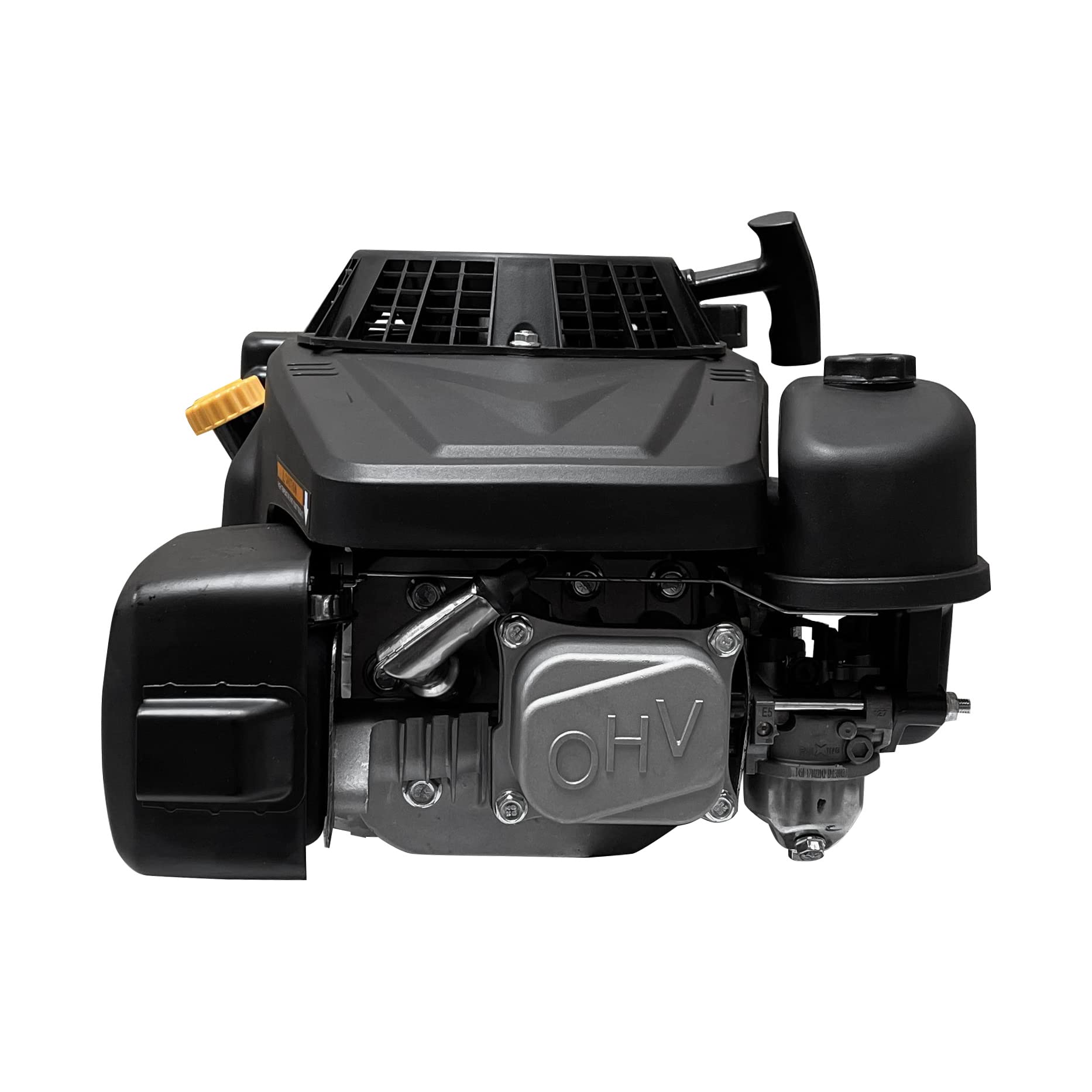
Figure 2.1: Side view of the Loncin LC1P75F/B engine, showing the fuel cap and a caution sticker regarding high temperatures.
3. Product Overview
Familiarize yourself with the main components of your Loncin LC1P75F/B engine.

Figure 3.1: View of the engine highlighting the recoil starter handle ('START') and the carburetor linkage for speed control.

Figure 3.2: Close-up view of the engine, showing the OHV (Overhead Valve) cover, indicating the engine type.

Figure 3.3: Bottom view of the engine, clearly showing the vertical crankshaft output shaft.
4. Setup
4.1 Unpacking
Carefully remove the engine and all components from the packaging. Inspect for any shipping damage. Retain packaging for future storage or transport.
4.2 Fuel and Oil Filling
Before first use, the engine must be filled with appropriate fuel and engine oil.
- Engine Oil: Fill the crankcase with 0.5 liters of recommended 4-stroke engine oil. Do not overfill. Check the oil level using the dipstick.
- Fuel: Fill the fuel tank with up to 1.4 liters of unleaded gasoline. Use fresh, clean gasoline. Do not use E85 or E15 fuel.

Figure 4.1: Side view indicating the location of the fuel cap (yellow) and the oil fill/dipstick.
4.3 Mounting
The Loncin LC1P75F/B engine features a vertical shaft with a diameter of 22.2 mm and a usable length of 47 mm. Ensure proper alignment and secure mounting to your equipment using appropriate fasteners. The crankshaft has a direct output under the keyway, and rotation is counter-clockwise when viewed from the shaft side.
5. Operation
5.1 Pre-Operation Checks
- Check engine oil level.
- Check fuel level.
- Inspect the air filter for cleanliness.
- Ensure all fasteners are tight.
- Verify that the equipment attached to the engine is in good working order.
5.2 Starting the Engine (Rope Start)
- Ensure the fuel valve is open (if applicable).
- Move the choke lever to the 'CHOKE' position (for cold starts).
- Move the throttle lever to the 'FAST' position.
- Grasp the recoil starter handle firmly. Pull slowly until resistance is felt, then pull quickly and smoothly to start the engine.
- Once the engine starts, gradually move the choke lever to the 'RUN' position as the engine warms up.
5.3 Stopping the Engine
- Move the throttle lever to the 'SLOW' or 'IDLE' position.
- Move the engine switch to the 'OFF' position.
- Close the fuel valve (if applicable) for storage.
5.4 Speed Control
The engine is equipped with automatic speed control. Adjust the throttle lever to achieve the desired engine speed for your application.
6. Maintenance
Regular maintenance is crucial for the longevity and optimal performance of your engine. Always ensure the engine is off and cool before performing any maintenance.
6.1 Air Filter Cleaning/Replacement
The engine features a dual-cleaning air filter. Inspect the air filter regularly, especially when operating in dusty conditions. Clean or replace the filter elements as needed to ensure proper airflow and prevent engine damage.

Figure 6.1: Front view of the engine, showing the air filter housing on the left side.
6.2 Oil Change
Change the engine oil after the first 5-10 hours of operation, and then every 50 hours or annually, whichever comes first. Drain the old oil while the engine is warm, then refill with 0.5 liters of recommended 4-stroke engine oil.
6.3 Spark Plug Inspection
Inspect the spark plug annually or every 100 hours. Clean or replace if fouled or worn. Ensure the gap is set to the manufacturer's specification.
6.4 Storage
For extended storage, drain the fuel tank and carburetor, or add a fuel stabilizer. Change the engine oil. Clean the engine thoroughly. Store in a clean, dry, well-ventilated area.
7. Troubleshooting
This section provides solutions to common operational issues. For problems not listed here, consult a qualified service technician.
- Engine Does Not Start:
- Check fuel level.
- Ensure fuel valve is open.
- Check spark plug for fouling or damage.
- Ensure choke is set correctly for cold start.
- Check engine oil level (low oil shutdown may be active).
- Engine Runs Poorly/Lacks Power:
- Check air filter for clogging.
- Inspect spark plug.
- Ensure fresh fuel is used.
- Check for proper throttle lever position.
- Excessive Smoke:
- Blue Smoke: Engine burning oil. Check oil level (overfilled) or engine wear.
- Black Smoke: Rich fuel mixture. Check air filter, carburetor adjustment.
- White Smoke: Water in fuel or engine.
8. Specifications
Technical data for the Loncin LC1P75F/B gasoline engine.
| Feature | Specification |
|---|---|
| Manufacturer | Loncin |
| Model Number | LC1P75F/B |
| Engine Type | EURO 5, OHV, Single-cylinder, 4-stroke, Forced Air Cooling |
| Displacement | 224 cm³ |
| Bore × Stroke | 75 × 50.8 mm |
| Max. Engine Power | 4.5 kW / 6 HP at 3600 rpm |
| Max. Torque | 14 Nm at 2500 rpm |
| Shaft Diameter | 22.2 mm (with keyway) |
| Usable Shaft Length | 47 mm |
| Fuel Tank Volume | 1.4 l |
| Engine Oil Volume | 0.5 l |
| Starting System | Rope Start |
| Dimensions (L×W×H) | 384 × 341 × 258 mm |
| Net Weight | 12.4 kg |
| Rotation Direction | Counter-clockwise (viewed from shaft side) |

Figure 8.1: Technical drawing showing overall dimensions and mounting points of the engine.

Figure 8.2: Detailed technical drawing illustrating the crankshaft dimensions, including diameter and keyway specifications.
9. Included Components
The following items are typically included with your Loncin LC1P75F/B engine:
- Loncin LC1P75F/B Gasoline Engine
- 1 set of wrenches
- 1 instruction manual

Figure 9.1: The included wrench set and the owner's manual for the Loncin LC1P-Series engine.


