
Garvee Commercial Dough Presses
Garvee Manual Pizza Dough Press Machine User Manual
Model: Commercial Dough Presses
1. Introduction
Thank you for choosing the Garvee Manual Pizza Dough Press Machine. This manual provides essential information for the safe and efficient operation, maintenance, and care of your new dough press. Please read it thoroughly before initial use and retain it for future reference.
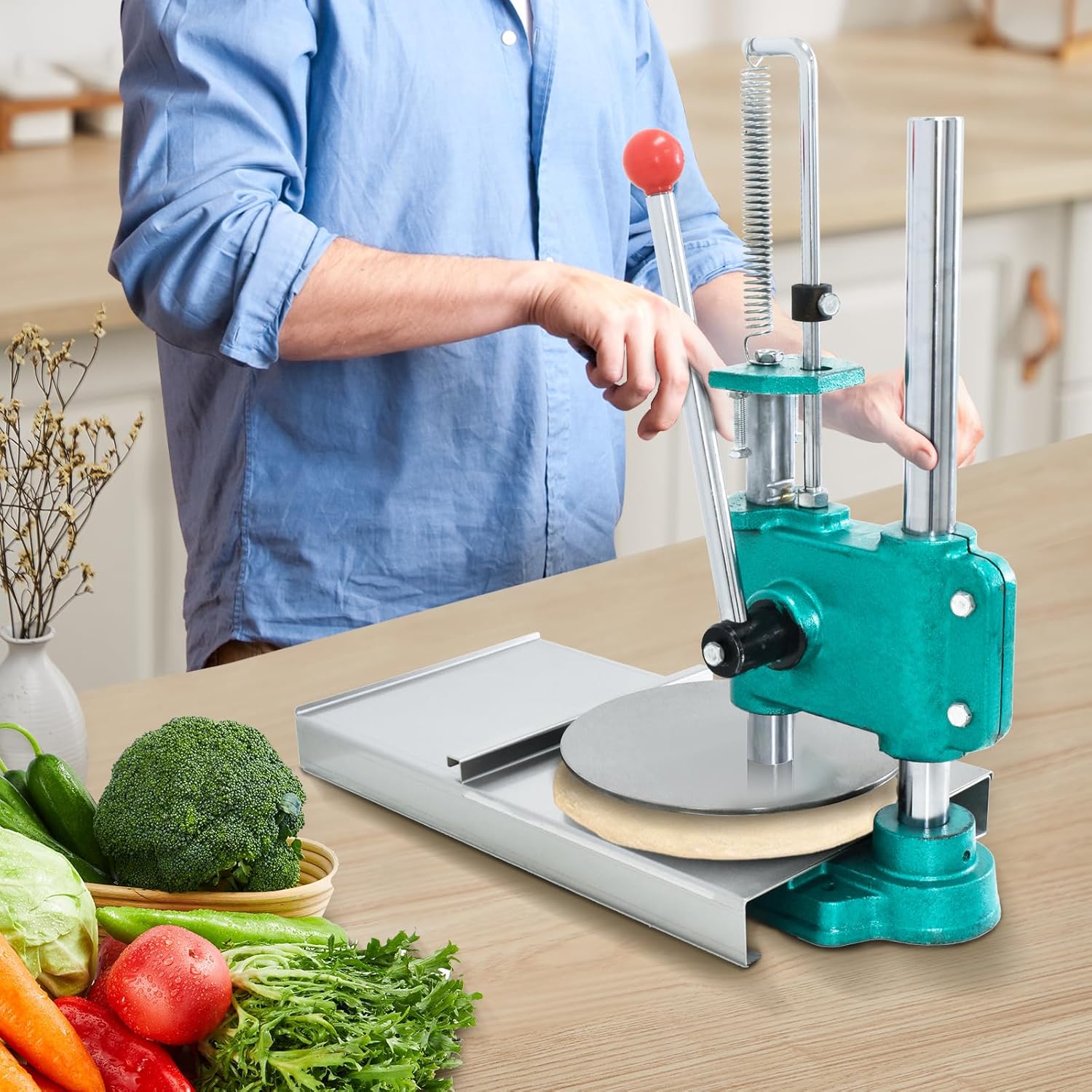
This robust machine is designed for pressing various types of dough, including pizza, pies, pita bread, corn tortillas, and flatbreads. Its construction from high-grade cast iron and food-safe 304 stainless steel ensures durability and consistent performance.
Key features include a vertical pressing design for even dough distribution, a widened base for enhanced stability, and an automatic rebound mechanism for efficiency. The upgraded press plate measures 240 mm (9.5 inches) in diameter, allowing for dough pressing to a uniform 5 mm thickness.
2. Safety Instructions
Always observe the following safety precautions to prevent injury or damage to the machine:
- Ensure the machine is placed on a stable, level, and non-slip surface before operation.
- Keep hands and fingers clear of the press plate and moving parts during operation to avoid pinching.
- Do not attempt to press excessively hard or frozen dough, as this may damage the machine or cause injury.
- Supervise children and individuals unfamiliar with the machine's operation.
- Clean the machine thoroughly after each use, following the maintenance instructions.
- Do not modify the machine or use it for purposes other than its intended use.
3. Product Components
Familiarize yourself with the main parts of your Garvee Manual Pizza Dough Press Machine:
- Base: Provides stability and support for the entire unit.
- Press Plate: The circular surface where the dough is placed for pressing (240 mm / 9.5 inches diameter).
- Pressing Lever: Used to apply downward force onto the dough. Features a red ball handle for grip.
- Spring Mechanism: Ensures automatic rebound of the press plate after use.
- Vertical Support Rods: Guide the press plate's vertical movement.


4. Setup and Initial Preparation
- Unpack: Carefully remove all components from the packaging. Retain packaging for potential future transport or storage.
- Placement: Position the dough press on a clean, dry, stable, and level countertop or work surface. Ensure there is sufficient space around the machine for safe operation.
- Initial Cleaning: Before first use, wipe down all food-contact surfaces, especially the press plate, with a damp cloth and mild detergent. Rinse thoroughly with a clean, damp cloth and dry completely.
5. Operating Instructions
Follow these steps to effectively press dough using your Garvee machine:
- Prepare Dough: Ensure your dough is at the appropriate consistency and temperature for pressing. If the dough is too thick (exceeding 35 mm), it may require pre-pressing by hand or a rolling pin to a manageable thickness before using the machine.
- Flour the Plate: Lightly dust the press plate with flour or place a piece of parchment paper on it to prevent the dough from sticking.
- Position Dough: Place a ball of dough (up to 9.5 inches / 24 cm in diameter) centrally on the press plate.
- Pressing: Grasp the pressing lever firmly. Slowly and steadily pull the lever downwards to lower the press plate onto the dough. Apply even pressure until the desired thickness is achieved. The machine is designed to press dough to approximately 5 mm thickness.
- Release: Once pressed, release the lever. The high-strength spring will automatically rebound the press plate to its original position.
- Remove Dough: Carefully remove the pressed dough from the plate.
- Repeat: Repeat the process for additional dough portions.

6. Cleaning and Maintenance
Regular cleaning and proper maintenance will extend the life of your dough press.
- After Each Use: Immediately after use, wipe down all food-contact surfaces, especially the press plate, with a damp cloth and mild, food-safe detergent.
- Rinsing: Use a clean, damp cloth to remove any soap residue.
- Drying: Dry all parts thoroughly with a clean, soft cloth to prevent water spots and rust, particularly on the cast iron components.
- Do Not Submerge: Do not submerge the entire machine in water.
- Storage: Store the machine in a clean, dry place away from direct sunlight and extreme temperatures.
7. Troubleshooting
If you encounter issues with your dough press, refer to the following common problems and solutions:
| Problem | Possible Cause | Solution |
|---|---|---|
| Dough sticks to the press plate. | Insufficient flouring; dough too wet. | Lightly dust the press plate with flour or use parchment paper. Adjust dough consistency if too sticky. |
| Dough is not pressing evenly. | Dough not centered; uneven initial dough ball; unstable surface. | Ensure dough is centered. Form a uniform dough ball. Place machine on a stable, level surface. |
| Difficulty pressing dough. | Dough is too cold or stiff; dough is too thick. | Allow dough to reach room temperature. If dough is thicker than 35 mm, pre-press it manually before using the machine. |
8. Product Specifications
| Feature | Detail |
|---|---|
| Model Number | Commercial Dough Presses |
| Product Dimensions | 21.65 x 14.17 x 12.2 inches (55 x 36 x 31 cm) |
| Item Weight | 41.4 pounds (18.78 kg) |
| Press Plate Diameter | 9.5 inches (24 cm) |
| Maximum Initial Dough Thickness | 35 mm (pre-press if thicker) |
| Final Dough Thickness | Approximately 5 mm |
| Construction Materials | High-grade Cast Iron, Food-safe 304 Stainless Steel |
| Manufacturer | Garvee |
9. Warranty and Support
For warranty information or technical support, please refer to the purchase documentation or contact your retailer. Keep your proof of purchase for any warranty claims.
Ask a question about this manual
Ask about setup, troubleshooting, compatibility, parts, safety, or missing instructions. Manuals+ will review the question and use this page’s manual context to help answer it.