
1. Introduction
This manual provides essential instructions for the safe and efficient operation, setup, and maintenance of your TUXING 4500Psi 300Bar High Pressure Diving Compressor. This model is a gasoline engine driven unit designed to provide high-quality compressed air for various applications, including scuba diving, breathing air systems, snorkeling, water sports, and paintball.
Please read this manual thoroughly before operating the compressor to ensure proper usage and to prevent injury or damage to the equipment.

2. Safety Information
Operating a high-pressure air compressor requires strict adherence to safety guidelines. Failure to follow these instructions can result in serious injury or death.
General Safety Precautions:
- Always operate the compressor in a well-ventilated area to prevent carbon monoxide poisoning from engine exhaust.
- Ensure the compressor is placed on a stable, level surface during operation.
- Keep children and unauthorized personnel away from the operating compressor.
- Wear appropriate personal protective equipment (PPE), including eye and hearing protection.
- Never attempt to service or repair the compressor while it is running or pressurized.
- Always depressurize the system before disconnecting hoses or performing maintenance.
- Do not operate the compressor if any parts are damaged or missing.
Oil and Lubrication:
- The machine must not operate without sufficient oil. Regularly check the oil level.
- First Oil Change: Replace the oil after the first 50 working hours.
- Subsequent Oil Changes: Replace the oil every 300 working hours on average.
- Oil Level Check: Check the oil level every 25 hours of operation.
- Recommended Lubricants: Mobil Food Grade Lubricants, MAC Breathing Air, Mobil Special 20w50, Mobil Rarus 827-829, Anderol 7553.
Pressure Safety:
- The compressor is equipped with a safety valve that will automatically release pressure if it exceeds the maximum safe limit. Do not tamper with this valve.
- Always monitor the pressure gauge during operation.
- Ensure all connections are secure and rated for the high pressures involved.
3. Product Overview and Components
The TUXING High Pressure Diving Compressor is a robust, gasoline engine driven unit designed for reliable high-pressure air delivery. It features a four-stage compression system and an efficient cooling mechanism.
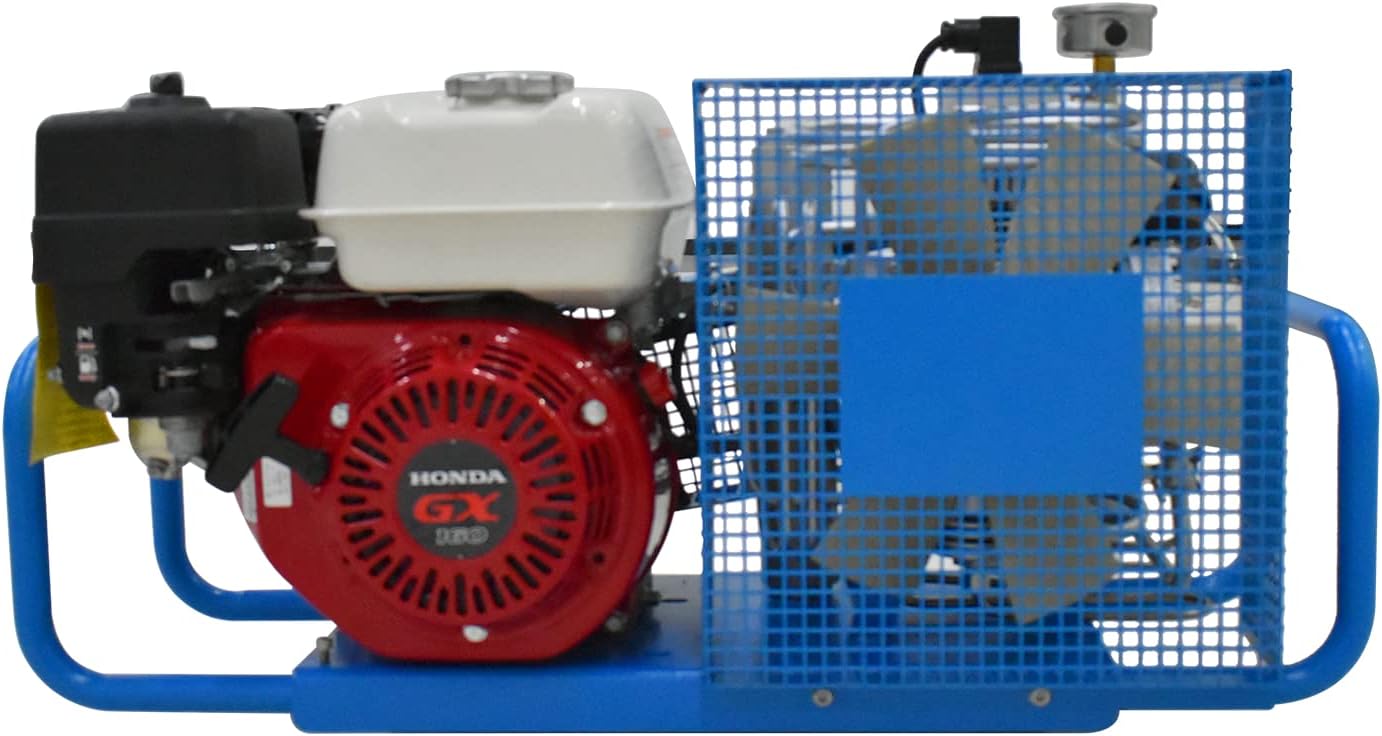
Key Components:
- Gasoline Engine: Provides power to the compressor pump.
- Compressor Pump: Four high-pressure cylinders compress air up to 300 bar (4500 psi).
- Intake Filter: Filters incoming air to protect the compressor.
- Cooling Fan: Ensures efficient cooling of the compressor unit.
- Oil Separator & Filter: Removes oil and moisture from the compressed air.
- Safety Valve: Automatically releases excess pressure.
- Pressure Gauge: Displays current operating pressure.
- Starter: For initiating the gasoline engine.

4. Setup
Proper setup is crucial for safe and effective operation.
4.1 Unpacking and Inspection:
- Carefully remove the compressor from its packaging.
- Inspect for any visible damage that may have occurred during shipping. Contact your supplier immediately if damage is found.
- Ensure all components listed in the packing list are present.
4.2 Placement:
- Place the compressor on a firm, level, and stable surface.
- Ensure adequate ventilation around the unit to prevent overheating and to disperse engine exhaust fumes. Never operate indoors or in enclosed spaces.
- Keep the compressor away from flammable materials.
4.3 Fuel and Oil:
- Fill the gasoline engine fuel tank with appropriate fuel (refer to engine manual for specifics).
- Check the compressor oil level and fill with recommended oil if necessary (refer to Section 2 for oil types).
4.4 Connecting Air Hoses:
- Connect the high-pressure air hose from the compressor to the tank or device you intend to fill.
- Ensure all connections are tight and secure to prevent leaks under high pressure.


5. Operation
Follow these steps for safe and effective operation of your TUXING compressor.
5.1 Pre-Operation Checks:
- Verify oil levels for both the engine and compressor.
- Check fuel level in the engine.
- Ensure all air connections are secure.
- Confirm the drain valve on the oil separator is closed.
5.2 Starting the Compressor:
- Follow the starting procedure for the gasoline engine (typically involving choke, throttle, and pull start or electric start).
- Allow the engine to warm up for a few moments.
- Once the engine is running smoothly, the compressor will begin to build pressure.
5.3 Filling Process:
- Monitor the pressure gauge closely.
- Fill the tank or device to the desired pressure, ensuring it does not exceed the maximum working pressure of the tank or the compressor (300 bar / 4500 psi).
- The safety valve will automatically activate if pressure exceeds safe limits.
5.4 Shutting Down:
- Once the desired pressure is reached, turn off the gasoline engine.
- Slowly open the drain valve on the oil separator to release any residual pressure and moisture from the system.
- Disconnect the air hose from the filled tank/device.
6. Maintenance
Regular maintenance ensures the longevity and safe operation of your compressor.
6.1 Oil Management:
- Oil Level Check: Every 25 operating hours.
- First Oil Change: After 50 operating hours.
- Routine Oil Change: Every 300 operating hours.
- Use only recommended compressor oils (refer to Section 2).
6.2 Filter Maintenance:
- Regularly inspect and clean the intake air filter. Replace if damaged or excessively dirty.
- The oil separator and filter system should be checked and maintained according to manufacturer guidelines to ensure clean, dry air output.
6.3 General Cleaning:
- Keep the exterior of the compressor clean and free of debris.
- Ensure cooling fins and fan blades are clear of obstructions for optimal cooling.
7. Troubleshooting
This section addresses common issues you might encounter with your compressor.
7.1 Compressor Not Starting:
- Check Fuel: Ensure the gasoline engine has sufficient fuel.
- Check Engine Oil: Verify the engine oil level.
- Spark Plug: Inspect the spark plug for fouling or damage.
- Starter: Ensure the starter mechanism is functioning correctly.
7.2 Low Pressure Output:
- Air Leaks: Check all hose connections and fittings for leaks.
- Intake Filter: A clogged intake filter can restrict airflow; clean or replace it.
- Compressor Oil: Insufficient or incorrect oil can affect performance.
7.3 Excessive Noise or Vibration:
- Loose Components: Check for any loose bolts or parts.
- Placement: Ensure the compressor is on a stable, level surface.
- Internal Issue: If noise persists, discontinue use and contact support.
7.4 Overheating:
- Ventilation: Ensure adequate airflow around the compressor.
- Cooling Fan: Check if the cooling fan is operating correctly and free of obstructions.
- Oil Level: Low oil can contribute to overheating.
8. Specifications
Detailed technical specifications for the TUXING 4500Psi 300Bar High Pressure Diving Compressor.

| Feature | Specification |
|---|---|
| Brand | TUXING |
| Model Name | diving compressor |
| Part Number | TXEDB053 |
| Power Supply | Gas Engine, 5.5HP / 4KW |
| Flow Rate | 100L/min / 3.5cfm |
| Maximum Operating Pressure | 300 Bar / 4500 Psi |
| Noise Level | 85 Decibels |
| Item Weight | 55 Kilograms (121 pounds) |
| Material | Iron |
| Color | Blue |
| Included Components | Air Hose |
| Manufacturer | Xiamen Subang Technology Co.,Ltd. |
| UPC | 717325435157 |
9. Warranty and Support
For warranty information, please refer to the documentation provided with your purchase or contact the seller directly. For technical support, troubleshooting assistance beyond this manual, or to inquire about replacement parts, please contact TUXING customer service through their official channels or your point of purchase.