
DF Models 3145
DF Models Z-10 Competition Truggy BR Brushed RTR User Manual
Model: 3145
Introduction
This manual provides essential information for the safe and effective operation, maintenance, and troubleshooting of your DF Models Z-10 Competition Truggy BR. Please read this manual thoroughly before operating the vehicle.

Figure 1: The DF Models Z-10 Competition Truggy BR.
Safety Information
Always prioritize safety when operating your RC vehicle. Failure to follow safety guidelines can result in injury or damage to the product or property.
- Recommended age for operation is 14 years and up.
- Do not operate near people, pets, or obstacles.
- Ensure the battery is fully charged and securely installed before use.
- Avoid operating in wet conditions to prevent damage to electronic components.
- Always turn off the vehicle and remote control when not in use.
- Keep hands and loose clothing away from moving parts.
- The motor and electronic speed controller (ESC) can become hot during operation. Avoid touching them immediately after use.
Package Contents
Verify that all components are present in the package:
- Z-10 Competition Truggy BR (RTR)
- 2.4 GHz Remote Control
- NiMH 7.2 V 3500 mAh Battery
- USB Charging Cable
- Instruction Manual (this document)
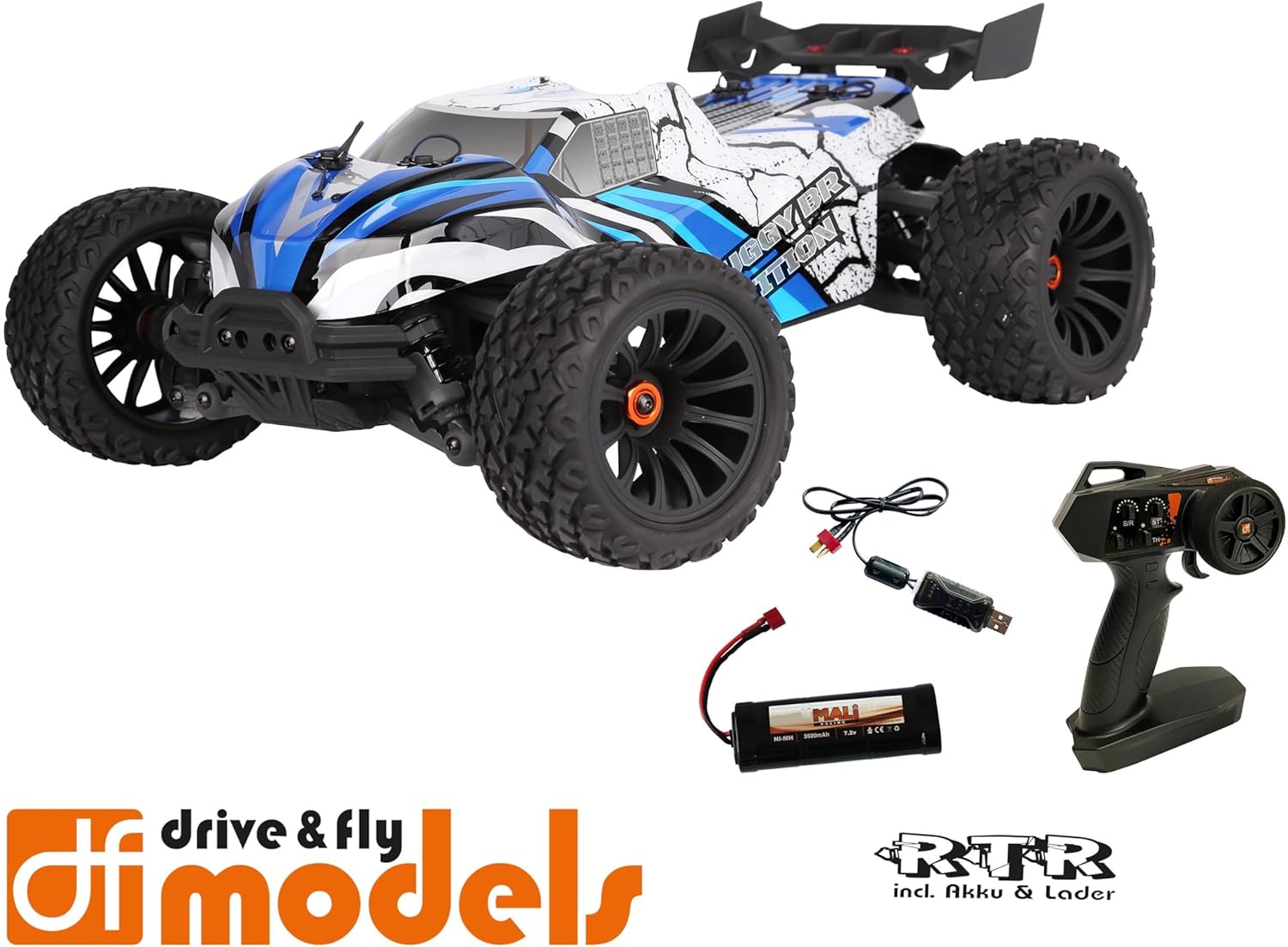
Figure 2: Included components: Truggy, remote control, battery, and USB charging cable.
Setup
1. Charging the Battery
Before first use, fully charge the included NiMH 7.2V 3500 mAh battery using the provided USB charging cable. Connect the USB cable to a compatible USB power source (e.g., computer USB port, USB wall adapter) and the battery connector.
- Charging time may vary depending on the power source.
- Do not leave the battery unattended while charging.
- Disconnect the charger once the battery is fully charged.
2. Installing the Battery
Locate the battery compartment on the Truggy. Securely insert the charged battery and connect it to the vehicle's power connector. Ensure the battery is properly seated and secured with the retention clip.

Figure 3: Battery retention clip for secure battery installation.
3. Remote Control Preparation
Install the required batteries (not included) into the 2.4 GHz remote control. Ensure correct polarity. The remote control features a speed adjustment switch (100%, 75%, 50%) for different skill levels.

Figure 4: Remote control with adjustable speed settings (100%, 75%, 50%).
Operating Instructions
1. Powering On
- Turn on the remote control first.
- Then, turn on the power switch on the Truggy.
- The vehicle and remote control should automatically pair.
2. Driving the Truggy
- Use the trigger on the remote control to control forward and reverse movement.
- Use the steering wheel to control left and right turns.
- Adjust the speed limit switch on the remote control as needed (100% for maximum speed, 75% or 50% for reduced speed, ideal for beginners).
3. Powering Off
- Turn off the power switch on the Truggy first.
- Then, turn off the remote control.
- Disconnect the battery from the Truggy for storage.

Figure 5: The Truggy in operation on varied terrain.
Maintenance
Regular maintenance ensures the longevity and optimal performance of your Truggy.
- Cleaning: After each use, especially in dusty or dirty conditions, clean the vehicle to remove debris. Use a soft brush or compressed air. Avoid using water directly on electronic components.
- Inspecting Components: Regularly check for loose screws, damaged parts, or worn tires. Tighten any loose fasteners.
- Battery Care: Store batteries in a cool, dry place. Do not overcharge or over-discharge.
- Motor and ESC: Ensure proper ventilation. The motor and ESC can get hot; allow them to cool down between runs.
- Oil Pressure Shock Absorbers: Check for leaks and ensure smooth operation. Refill or replace oil as needed (advanced maintenance).
- Differentials: Inspect for smooth operation and proper lubrication.

Figure 6: Internal components including the motor and ESC, which require occasional inspection.
Troubleshooting
| Problem | Possible Cause | Solution |
|---|---|---|
| Vehicle does not respond. | Battery not charged or connected. Remote control batteries low/dead. Vehicle/remote not powered on. Not paired. | Charge vehicle battery. Replace remote control batteries. Ensure both are powered on. Re-pair vehicle and remote. |
| Reduced speed or power. | Low vehicle battery. Speed limit switch on remote set to 50% or 75%. | Recharge vehicle battery. Adjust speed limit switch to 100% for full power. |
| Steering issues. | Steering trim incorrect. Damaged steering servo or linkage. | Adjust steering trim on remote control. Inspect steering components for damage. |
| Motor/ESC overheating. | Continuous heavy use. Insufficient airflow. | Allow vehicle to cool down between runs. Ensure chassis is clear of debris for airflow. |
Specifications
| Feature | Detail |
|---|---|
| Model | DF Models Z-10 Competition Truggy BR |
| Model Number | 3145 |
| Scale | 1:10XL RTR |
| Drive | 4WD Brushed |
| Length | 500 mm (50 cm) |
| Width | 360 mm (36 cm) |
| Height | 230 mm (23 cm) |
| Wheelbase | 300 mm |
| Max. Speed | Up to 40 km/h |
| Battery | NiMH 7.2 V 3500 mAh (included) |
| Steering Servo | 10 kg with metal gear |
| ESC | 60A DF-1060 controller |
| Recommended Age | 14 years and up |
| Material | Plastic |

Figure 7: Key dimensions of the Truggy.
Warranty and Support
For warranty information, technical support, or spare parts, please contact DF Models customer service. Refer to the official DF Models website or your purchase documentation for contact details.
Note: Unauthorized modifications or improper use may void the product warranty.
Related documents3145


Ask a question about this manual
Ask about setup, troubleshooting, compatibility, parts, safety, or missing instructions. Manuals+ will review the question and use this page’s manual context to help answer it.