1. Introduction
The GIGABYTE B850M Eagle WIFI6E Motherboard is designed to support AMD AM5 Processors, offering unparalleled performance for modern computing needs. This motherboard integrates an upgraded power design, high-grade storage standards, and outstanding connectivity options to optimize system performance.
Key features include:
- AMD Socket AM5: Supports AMD Ryzen 9000 / Ryzen 8000 / Ryzen 7000 Series Processors.
- DDR5 Compatible: Features 4 DIMM slots for high-speed DDR5 memory.
- Robust Power Design: Equipped with an 8+2+2 power phase design for stable power delivery.
- Advanced Connectivity: Includes PCIe 5.0 support, 2x M.2 Slots for NVMe SSDs, and USB-C ports.
- DIY Friendly Features: Incorporates M.2 EZ-Latch, PCIe EZ-Latch, and Wi-Fi EZ-Plug for simplified installation and upgrades.
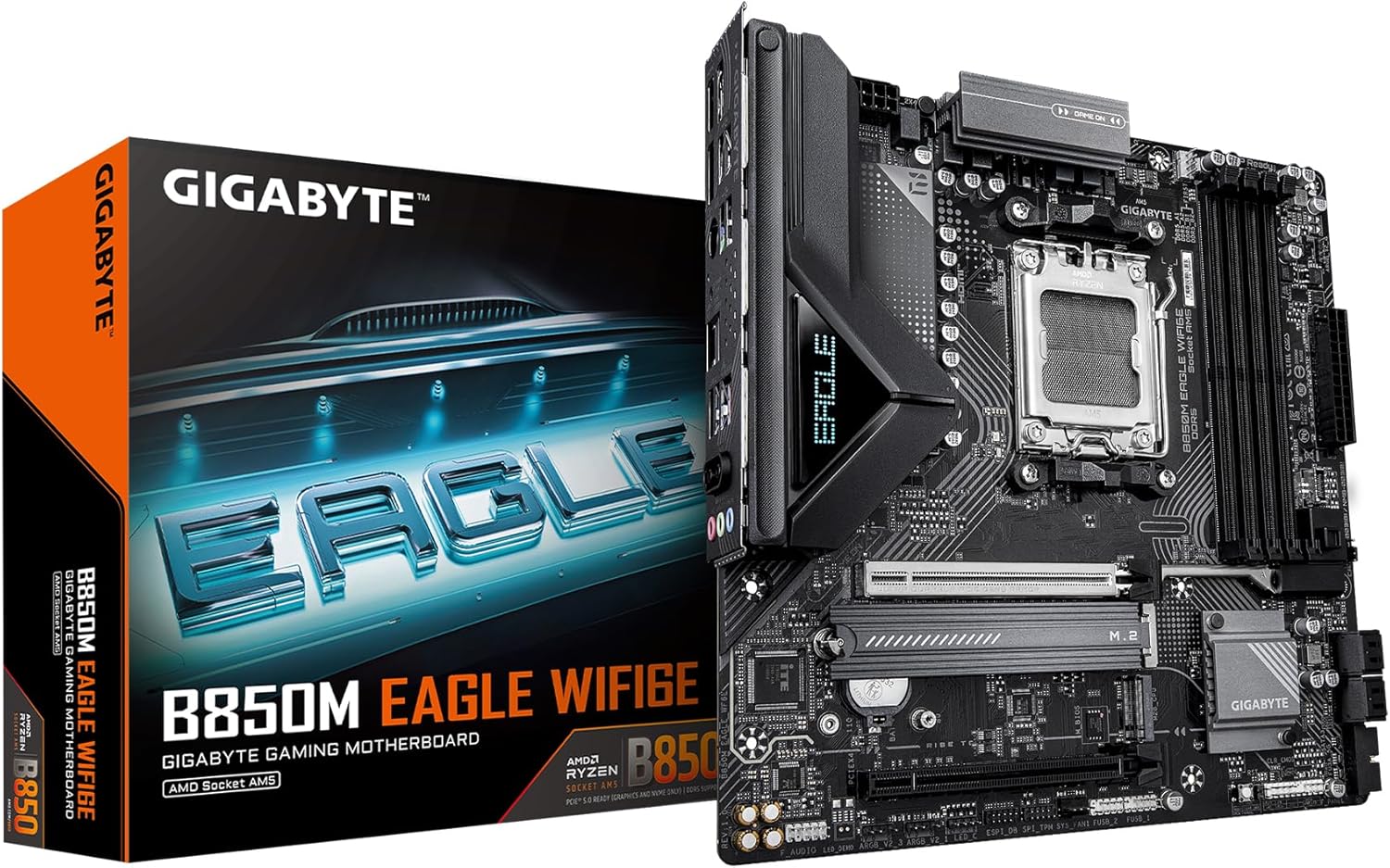
Figure 1.1: GIGABYTE B850M Eagle WIFI6E Motherboard and Retail Packaging.
This image displays the GIGABYTE B850M Eagle WIFI6E Motherboard alongside its retail box, highlighting the product's branding and overall appearance.
2. Setup and Installation
Proper installation is crucial for optimal performance and system stability. Follow these guidelines for setting up your GIGABYTE B850M Eagle WIFI6E Motherboard.
2.1 Motherboard Overview

Figure 2.1: Top-down view of the GIGABYTE B850M Eagle WIFI6E Motherboard.
This image provides a comprehensive top-down view of the motherboard, showcasing the CPU socket, DIMM slots, M.2 slots, and various headers.

Figure 2.2: Angled view of the GIGABYTE B850M Eagle WIFI6E Motherboard.
This angled view highlights the various components and heatsinks on the motherboard, including the VRM area and PCIe slots.
2.2 Component Installation
- Processor (CPU) Installation: Carefully align your AMD AM5 processor with the socket on the motherboard. Ensure the triangle mark on the CPU matches the mark on the socket. Gently lower the CPU into place and secure it with the retention arm.
- CPU Cooler Installation: Install your compatible CPU cooler according to its manufacturer's instructions. Ensure proper thermal paste application and secure mounting for effective heat dissipation.
- Memory (RAM) Installation: Insert DDR5 memory modules into the DIMM slots. This motherboard supports 4 DIMMs. For dual-channel operation, refer to the motherboard manual for recommended slot configurations (typically slots A2 and B2 first). Press down firmly on both ends of the module until the clips snap into place.
- Storage (M.2 SSDs) Installation: Utilize the two M.2 slots for high-speed NVMe SSDs. The M.2 EZ-Latch feature simplifies installation, allowing you to secure the SSD without screws.
- Graphics Card (GPU) Installation: Insert your PCIe 5.0 compatible graphics card into the primary PCIe x16 slot. The PCIe EZ-Latch allows for easy removal of the graphics card. Ensure it is fully seated and secured with the case's retention mechanism.
- Power Supply Connections: Connect the 24-pin ATX power connector and the 8-pin (or 4+4 pin) CPU power connector from your power supply to the motherboard. Connect SATA power cables to your storage drives if applicable.
- Front Panel Connections: Connect the front panel headers for power button, reset button, USB ports, audio jacks, and LED indicators. Refer to the detailed diagram in your physical motherboard manual for correct pin assignments.
- Wi-Fi Antenna Installation: Attach the included Wi-Fi antennas to the Wi-Fi EZ-Plug connectors on the rear I/O panel for optimal wireless performance.
2.3 Rear I/O Panel

Figure 2.3: Detailed Rear I/O Panel with Port Labels.
This image provides a labeled diagram of the motherboard's rear input/output panel, showing the location and type of each port, including USB, display outputs, network, and audio jacks.
The rear I/O panel provides various connectivity options:
- Display Outputs: HDMI and DisplayPort for integrated graphics.
- USB Ports: Multiple USB 3.2 Gen 1, USB 3.2 Gen 2, and a USB-C port for high-speed data transfer.
- Network: 2.5GbE LAN port for high-speed wired internet and Wi-Fi 6E for wireless connectivity.
- Audio Jacks: Standard audio jacks for speakers, headphones, and microphone.
- Q-Flash Plus Button: Allows for BIOS updates without a CPU, memory, or graphics card installed.
- PS/2 Port: For legacy keyboard or mouse connections.
3. Operating Your Motherboard
Once all components are installed and connected, you can power on your system. The GIGABYTE B850M Eagle WIFI6E Motherboard is designed for stable and efficient operation.
3.1 Initial Boot and BIOS Setup
- Upon first boot, the system may take a moment to train the memory. This is normal for AM5 platforms.
- Access the BIOS/UEFI by pressing the DEL key during startup. Here you can configure boot order, enable/disable features, and monitor system status.
- Ensure your operating system (e.g., Windows 11) is installed on your primary storage device.
3.2 Driver Installation
After installing your operating system, it is essential to install the latest drivers for your motherboard components. These can be found on the official GIGABYTE website for your specific model.
- Chipset Drivers: Install the AMD chipset drivers first.
- LAN Drivers: For the 2.5GbE Ethernet port.
- Wi-Fi/Bluetooth Drivers: For the integrated Wi-Fi 6E and Bluetooth functionality.
- Audio Drivers: For the onboard Hi-Fi audio.
- USB Drivers: Ensure proper functionality of all USB ports.
3.3 Software Utilities
GIGABYTE provides various software utilities to enhance your experience:
- GIGABYTE Control Center (GCC): A unified software platform for managing various GIGABYTE features, including system monitoring, fan control, and RGB FUSION lighting.
- RGB FUSION: Customize the integrated RGB lighting on your motherboard and synchronize it with other compatible components.
4. Maintenance
Regular maintenance helps ensure the longevity and stable performance of your motherboard and PC system.
- Keep it Clean: Periodically clean dust from inside your PC case, especially around the motherboard, CPU cooler, and GPU. Use compressed air and ensure the system is powered off and unplugged.
- Ensure Good Airflow: Proper case airflow is vital for cooling. Given that this board can run warm under heavy loads, ensure your case has adequate ventilation and fan configuration.
- BIOS Updates: Regularly check the GIGABYTE website for the latest BIOS updates. BIOS updates can improve compatibility, stability, and performance. Use the Q-Flash Plus feature for safe and easy updates.
- Driver Updates: Keep your drivers updated to ensure optimal performance and compatibility with new software and hardware.
- Cable Management: Good cable management not only improves aesthetics but also enhances airflow within the case.
5. Troubleshooting
This section addresses common issues you might encounter and provides potential solutions.
5.1 Common Issues and Solutions
| Problem | Possible Cause | Solution |
|---|---|---|
| System does not power on. | Loose power connections, faulty power supply, incorrect front panel wiring. |
|
| No display output (DRAM/VGA lights on). | Incorrectly seated RAM/GPU, incompatible components, outdated BIOS. |
|
| System unstable or crashes frequently. | Overheating, unstable RAM settings, outdated drivers, faulty components. |
|
| Wi-Fi or LAN connectivity issues. | Missing/outdated drivers, loose antenna connection, network configuration issues. |
|
5.2 Q-Flash Plus for BIOS Recovery
The Q-Flash Plus feature is invaluable for BIOS updates and recovery, even if your system is not booting or lacks a CPU/RAM/GPU. This was highlighted by user reviews as a critical feature for recovery.
- Download the latest BIOS file from the GIGABYTE official website for your specific motherboard model.
- Rename the downloaded BIOS file as instructed on the GIGABYTE support page (e.g., GIGABYTE.bin).
- Copy the renamed BIOS file to the root directory of a USB flash drive formatted to FAT32. Ensure it's the only file on the drive.
- With the system powered off (but power supply connected and switched on), insert the USB drive into the designated Q-Flash Plus USB port on the rear I/O panel (refer to Figure 2.3).
- Press and hold the Q-Flash Plus button for approximately 3 seconds. The Q-Flash LED will begin to flash.
- Wait for the LED to stop flashing, indicating the BIOS update process is complete. This may take several minutes.
6. Specifications
| Feature | Detail |
|---|---|
| Brand | GIGABYTE |
| Series | B850M EAGLE WIFI6E |
| Model Number | B850M EAGLE WIFI6E |
| CPU Socket | Socket AM5 |
| Compatible Processors | AMD Ryzen AM5 (7000/8000/9000 Series) |
| Chipset Type | AMD B850 |
| RAM Memory Technology | DDR5 |
| Memory Slots Available | 4 |
| Memory Speed | 5200 MHz (and higher via OC) |
| PCIe Support | PCIe 5.0 |
| M.2 Slots | 2x M.2 Slots |
| USB Connectivity | USB-C, USB 3.2 Gen 2, USB 3.2 Gen 1 |
| Network | Wi-Fi 6E, 2.5GbE LAN |
| Form Factor | Micro-ATX (mATX) |
| Product Dimensions (LxWxH) | 8.82 x 8.82 x 1 inches |
| Item Weight | 2.81 pounds |
| Color | Black |
| Platform | Windows 11 |
7. Warranty and Support
For detailed warranty information, please refer to the warranty card included with your product or visit the official GIGABYTE website. Warranty terms and conditions may vary by region.
If you encounter any issues that cannot be resolved using the troubleshooting steps provided, please contact GIGABYTE customer support:
- GIGABYTE Official Website: www.gigabyte.com
- Refer to the "Support" or "Service" section on their website for contact numbers, email support, and FAQ databases specific to your region.
Please have your product model number (B850M EAGLE WIFI6E) and serial number ready when contacting support.