
Important Safety Information
Warning: Not suitable for children under three years old due to small parts which may present a choking hazard.
Always operate the RC car in a safe environment, away from people, pets, and obstacles. Do not operate near public roads or in crowded areas. Adult supervision is recommended for users under 14 years of age.
Introduction
Thank you for purchasing the TeeGGi SG316 MAX Brushless Fast RC Car. This high-performance 1:16 scale remote control vehicle is designed for thrilling off-road adventures, reaching speeds up to 50mph (80km/h). Featuring a powerful brushless motor, 4WD system, and durable components, it offers an exceptional driving experience. Please read this manual thoroughly before operating your RC car to ensure safe and optimal performance.
Package Contents
Upon opening your package, please verify that all components listed below are present and in good condition:
- TeeGGi SG316 MAX RC Car
- 2.4GHz Remote Control
- 3 x Lipo Batteries
- Charging Cable
- Carrying Bag
- User Manual (this document)
- Small tools and spare parts (as included by manufacturer)
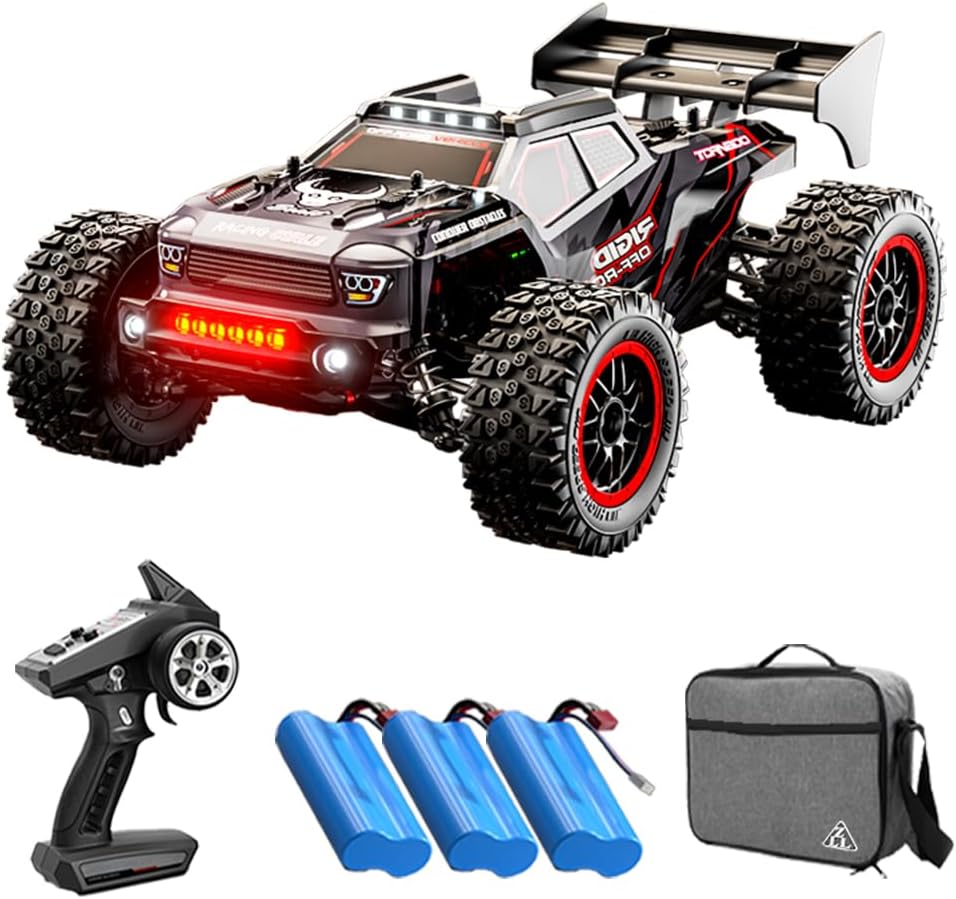
Image: The complete package contents, including the RC car, remote, batteries, and carrying bag.
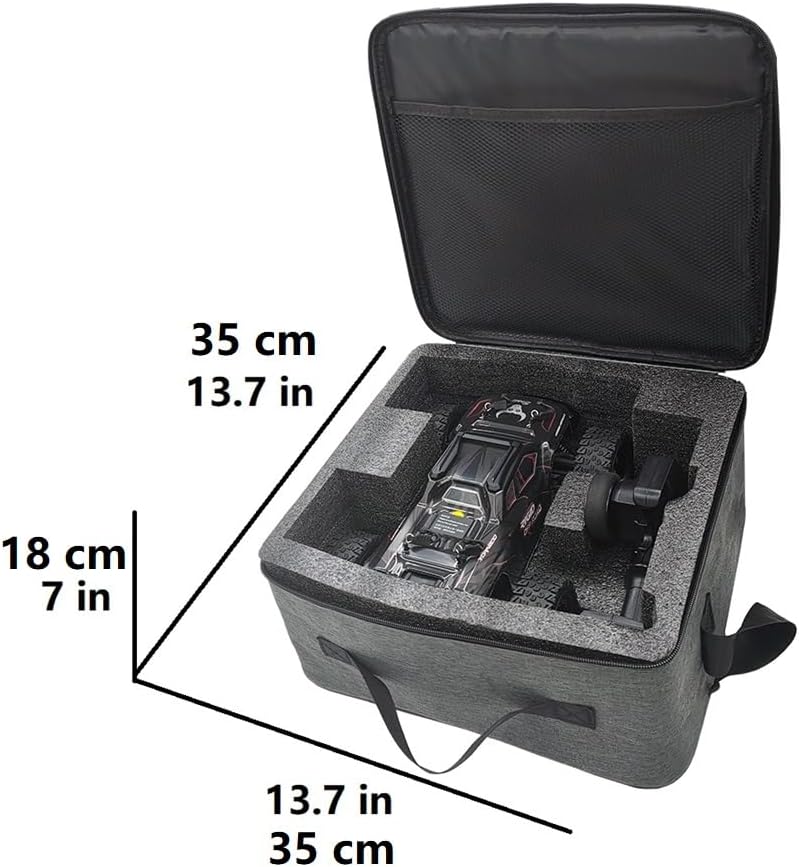
Image: The SG316 MAX RC car neatly stored within its portable carrying bag, highlighting its compact dimensions for transport.
Setup Guide
1. Charging the Lipo Batteries
- Connect the provided charging cable to a compatible USB power adapter (not included).
- Connect the Lipo battery to the charging cable.
- Allow the battery to charge fully. Charging time is approximately 4 hours per battery. Do not overcharge.
- Disconnect the battery once charging is complete.
Note: Always use the original charging cable and monitor batteries during charging. Do not leave charging batteries unattended.
2. Installing Batteries in the RC Car
- Carefully remove the body shell of the RC car.
- Locate the battery compartment.
- Insert a fully charged Lipo battery into the compartment.
- Connect the battery connector to the car's power port. Ensure correct polarity.
- Secure the battery and reattach the body shell.

Image: An internal view of the RC car's chassis, illustrating the placement of the battery and other electronic components.
3. Installing Batteries in the Remote Control
- Open the battery compartment on the back of the remote control.
- Insert 3 AA batteries (included) into the compartment, observing correct polarity (+/-).
- Close the battery compartment cover securely.
4. Pairing the Remote Control with the RC Car
- Ensure both the RC car and the remote control are turned off.
- Turn on the RC car first. The car's LED lights may flash.
- Turn on the remote control. The remote's indicator light should flash and then become solid, indicating successful pairing.
- If pairing fails, turn off both devices and repeat the steps.
Operating Instructions
Remote Control Functions
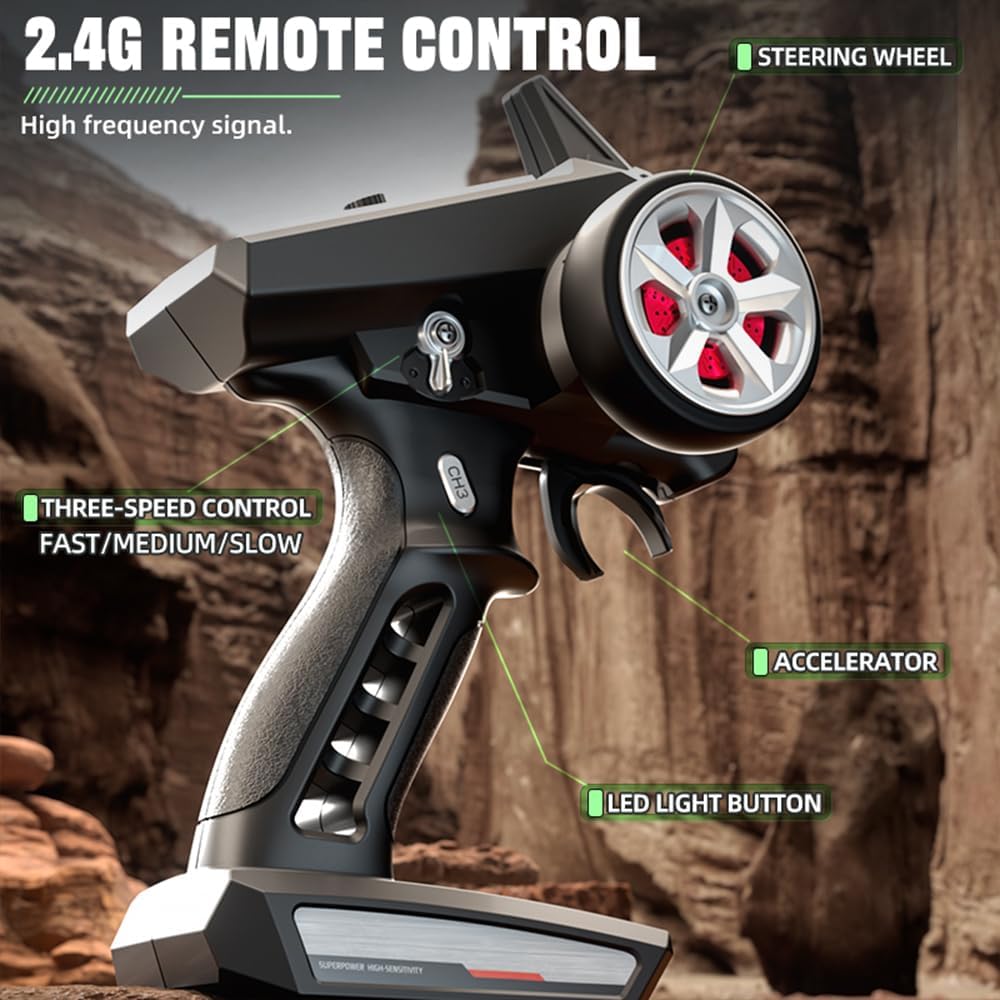
Image: A detailed diagram of the 2.4G remote control, highlighting the steering wheel, accelerator trigger, LED light button, and the three-speed control switch (Fast/Medium/Slow).
- Steering Wheel: Rotate left or right to control the direction of the car.
- Accelerator Trigger: Pull to accelerate forward, push to brake or reverse. This is a full proportional throttle for precise speed control.
- LED Light Button: Press to cycle through LED headlight modes: normal light, slow flashing, fast flashing.
- Three-Speed Control: Adjust the switch to select between Fast, Medium, or Slow speed modes, suitable for different skill levels and environments.
Driving Tips
- Initial Driving: Start in Slow or Medium speed mode to get accustomed to the car's handling.
- Terrain: The SG316 MAX is designed for off-road use. It performs well on flat surfaces, sand, mud, and grass due to its strong grip tires and 4WD system.
- Braking: Push the accelerator trigger forward to engage the brake. Pushing further will activate reverse.
- Headlights: Utilize the LED headlights for improved visibility during low-light conditions or for added visual effect.

Image: The SG316 MAX RC car showcasing its powerful 4WD capability as it navigates challenging rocky terrain.

Image: The SG316 MAX RC car with its bright front headlights illuminated, demonstrating visibility for night operation.
Maintenance
Regular maintenance will extend the lifespan and performance of your RC car.
- Cleaning: After each use, especially in dirty or wet conditions, clean the car thoroughly. Use a soft brush or compressed air to remove dirt and debris from the chassis, wheels, and suspension components. Avoid using water directly on electronic parts.
- Battery Care: Store Lipo batteries in a cool, dry place. Do not fully discharge batteries before storing them for extended periods. Always charge batteries on a non-flammable surface.
- Component Inspection: Regularly check for loose screws, damaged parts, or excessive wear on tires, shocks, and differentials. Tighten any loose fasteners. Replace worn or damaged parts promptly.
- Lubrication: Periodically apply a small amount of RC-safe lubricant to moving metal parts, such as differential gears and drive shafts, to reduce friction and wear.

Image: An exploded view diagram illustrating the robust front and rear metal differentials, crucial for the car's 4WD system and durability.

Image: A diagram detailing the independent spring shock absorber, designed to provide a smooth ride and absorb impacts from rough terrain.

Image: A close-up diagram of the wear-resistant tire, highlighting its robust tread pattern designed for strong grip across various terrains.
Troubleshooting
| Problem | Possible Cause | Solution |
|---|---|---|
| Car does not respond to remote control. | Low battery in car or remote; Not paired; Interference. | Charge/replace batteries; Re-pair car and remote; Move to an area with less interference. |
| Car runs slowly or lacks power. | Low car battery; Motor/gear obstruction; Speed mode setting. | Charge car battery; Check for debris in gears/motor; Ensure speed mode is set to Fast. |
| Short control range. | Battery interference; Environmental interference. | Ensure remote batteries are fresh; Avoid operating near large metal structures or other 2.4GHz devices. |
| Car pulls to one side. | Steering trim adjustment needed; Damaged steering component. | Adjust steering trim on the remote control; Inspect steering linkages for damage. |
Specifications
| Feature | Detail |
|---|---|
| Model Number | SG316 MAX |
| Scale | 1:16 |
| Motor Type | Brushless Motor |
| Max Speed | Up to 50mph (80km/h) |
| Drive System | 4-Wheel Drive (4WD) |
| Remote Control Frequency | 2.4GHz |
| Control Range | Up to 150 meters |
| Car Battery | Lipo Batteries (3 included) |
| Remote Control Battery | 3 AA batteries (included) |
| Product Dimensions | 11.81 x 9.06 x 4.53 inches |
| Item Weight | 2.2 pounds |
| Recommended Age | 14 years and up |

Image: A diagram illustrating the internal workings of a brushless motor, highlighting its efficient power delivery.
Warranty and Support
For warranty information, technical support, or to purchase replacement parts, please refer to the manufacturer's official website or contact TeeGGi customer service directly. Contact details can typically be found on the product packaging or the brand's online store.
Keep your purchase receipt as proof of purchase for any warranty claims.