Introduction
Thank you for choosing the Aiwa FP-30-2G Flip Phone. This manual provides essential information for setting up, operating, and maintaining your device. The FP-30-2G is a reliable 2G mobile phone designed for essential communication, featuring dual SIM support, Bluetooth 3.0, dual displays, an FM radio, and a dedicated SOS button for emergencies.
Please read this manual carefully before using your phone to ensure proper operation and to maximize its lifespan.
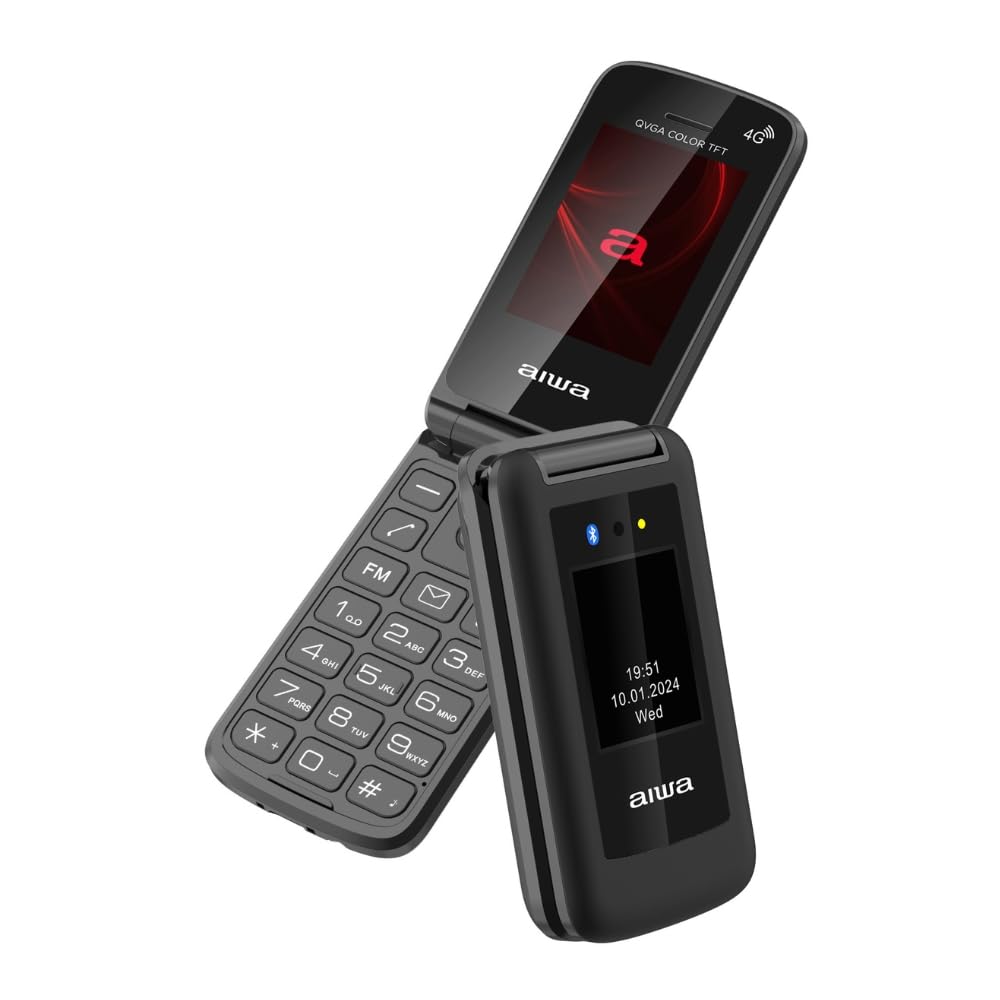
Image: Aiwa FP-30-2G Flip Phone in open position, displaying the main screen and keypad.
1. Setup
1.1 Package Contents
Ensure all items are present in the box:
- Aiwa FP-30-2G Flip Phone
- Battery (BL-5C 1000mAh)
- AC Charger
- USB-C Cable
- User Manual (this document)
1.2 Battery and SIM Card Installation
- Remove the Back Cover: Gently pry open the back cover of the phone using the notch provided.
- Insert SIM Card(s): The phone supports Dual SIM. Locate the SIM card slots. Insert your 2G compatible SIM card(s) into the designated slots with the gold contacts facing down and the cut corner aligned as shown in the diagram (refer to phone's internal markings).
- Insert MicroSD Card (Optional): If you wish to expand storage (up to 32GB), insert a MicroSD card into the T-Flash card slot.
- Insert Battery: Place the BL-5C battery into the battery compartment, ensuring the contacts align with the phone's terminals.
- Replace Back Cover: Carefully align and press the back cover until it clicks securely into place.
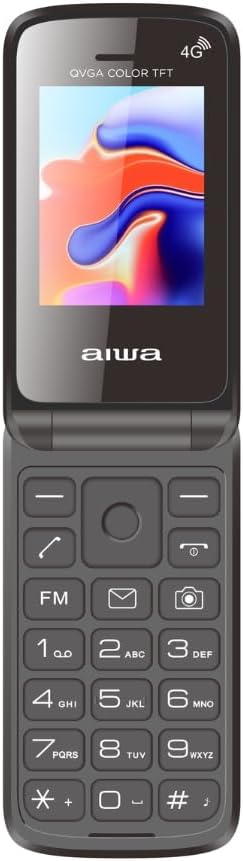
Image: Aiwa FP-30-2G Flip Phone in closed position, front view.
1.3 Charging the Battery
Before first use, fully charge the phone's battery. Use only the provided charger and USB-C cable.
- Connect the USB-C cable to the charging port on the phone.
- Connect the other end of the USB-C cable to the AC charger.
- Plug the AC charger into a power outlet.
- The charging indicator on the phone will show the charging status. Once fully charged, disconnect the charger.
Note: The phone has a standby time of up to 180 hours and talk time of up to 4 hours on a full charge.
1.4 Powering On/Off
- To Power On: Press and hold the Power/End Call button (usually red) until the screen lights up.
- To Power Off: Press and hold the Power/End Call button until the power-off options appear, then select "Power Off" or simply hold until the phone shuts down.
2. Operating Instructions
2.1 Basic Call Functions
- Making a Call: Enter the phone number using the keypad and press the Call button (usually green).
- Answering a Call: When the phone rings, press the Call button.
- Ending a Call: Press the Power/End Call button.
- Adjusting Volume: Use the side volume keys during a call.
2.2 Sending SMS Messages
- Go to the "Messages" menu.
- Select "Write Message" or "New SMS".
- Enter the recipient's number or select from contacts.
- Type your message using the alphanumeric keypad.
- Press "Send".
2.3 Dual Displays
The FP-30-2G features two displays:
- Main Display: 2.4-inch (240 x 320 QVGA) screen visible when the phone is open. This is your primary interface.
- External Display: 1.77-inch (128 x 160) screen visible when the phone is closed. This display shows essential information like time, date, battery status, and incoming call notifications without needing to open the phone.
2.4 SOS Emergency Button
The dedicated SOS button provides a quick way to contact pre-set emergency numbers.
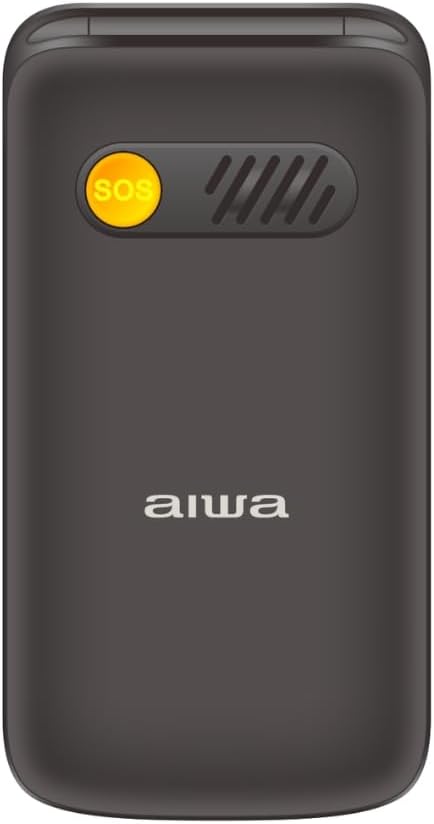
Image: Back view of the Aiwa FP-30-2G Flip Phone, highlighting the yellow SOS button and speaker grille.
- Setting Up SOS Numbers: Navigate to the "SOS Settings" in the phone's menu. Add up to 5 emergency contact numbers.
- Using the SOS Button: In an emergency, press and hold the SOS button on the back of the phone for a few seconds. The phone will automatically call the pre-set emergency numbers in sequence until one answers. It will also send an emergency SMS message to these contacts.
2.5 FM Radio
The phone includes an offline FM radio. To use it:
- Access the "FM Radio" application from the main menu.
- You may need to connect wired headphones (not included) to act as an antenna for optimal reception.
- Use the navigation keys to scan for stations or tune manually.
2.6 Bluetooth 3.0
Connect your phone to Bluetooth headsets or other compatible devices.
- Go to "Settings" > "Bluetooth".
- Turn Bluetooth "On".
- Select "Search for devices" or "Pair new device".
- Select your desired device from the list and follow the on-screen prompts to pair.
2.7 Camera and Flashlight
- Camera: The phone features a 0.3 MP rear camera with flash. Access it from the main menu to take basic photos or QVGA videos.
- Flashlight: A built-in LED flashlight is available. It can usually be activated quickly by pressing and holding a specific key (refer to your phone's quick access keys, often the '0' or a dedicated side button) or through the utilities menu.
3. Maintenance
3.1 Cleaning the Device
- Use a soft, dry, lint-free cloth to clean the phone's exterior and screen.
- Do not use liquid cleaners, aerosols, or harsh chemicals, as these can damage the phone.
- Keep the charging port free from dust and debris.
3.2 Battery Care
- Avoid exposing the battery to extreme temperatures (hot or cold).
- Do not puncture, disassemble, or modify the battery.
- If the phone will not be used for an extended period, charge the battery to about 50% before storing it.
- Replace the battery if you notice a significant decrease in performance or swelling.
3.3 General Care
- Protect the phone from drops and impacts.
- Keep the phone dry. Moisture can damage internal components.
- Do not attempt to repair the phone yourself. Refer to qualified service personnel.
4. Troubleshooting
If you encounter issues with your Aiwa FP-30-2G, try the following solutions before seeking professional assistance.
| Problem | Possible Solution |
|---|---|
| Phone does not power on |
|
| No network signal |
|
| Battery not charging |
|
| SOS button not working |
|
| Cannot hear FM radio |
|
5. Specifications
Detailed technical specifications for the Aiwa FP-30-2G:
| Feature | Detail |
|---|---|
| Model Number | FP-30-2G |
| Network Bands | GSM 850/900/1800/1900Mhz (2G) |
| Bluetooth | 3.0 + EDR |
| Main Display | 2.4 inches, 240 x 320 QVGA, TN Type |
| External Display | 1.77 inches, 128 x 160, TN Type |
| Camera | 0.3 MP with Flash |
| Internal Memory | 32MB + 32MB |
| Expandable Memory | T-Flash Card Slot, up to 32GB |
| SIM Card Support | Dual SIM |
| Battery | BL-5C, 1000mAh (Removable) |
| Standby Time | Up to 180 Hours |
| Talk Time | Up to 4 Hours |
| Charger | 5V, 500mA with USB-C cable |
| Dimensions (Closed) | 103 x 53.5 x 21.05 mm |
| Weight (with battery) | 106 g |
| Operating System | Symbian 9.1 (as per specifications, though this is unusual for a modern feature phone) |
| Audio Player | AMR, MID, MP3, WAV |
| Video Player | 3GP, MP4, AVI |
| Other Features | FM Radio, Torchlight, Vibration System, QVGA Video Recorder, Sound Recorder, SMS, Phonebook (500 contacts), Calendar, Calculator, Alarm, Speed Dial (M1/M2/M3), Photo Contacts |

Image: Side view of the Aiwa FP-30-2G Flip Phone, showing its compact profile.
6. Warranty and Support
Your Aiwa FP-30-2G Flip Phone comes with a standard manufacturer's warranty. Please refer to the warranty card included in your package for specific terms and conditions, including the warranty period and coverage details.
For technical support, service, or warranty claims, please contact Aiwa customer service through their official website or the contact information provided in your warranty documentation. Do not attempt to open or repair the device yourself, as this may void your warranty.
Keep your purchase receipt as proof of purchase for warranty purposes.


