
1. Introduction
This manual provides detailed instructions for the safe and efficient operation of your KOULATE Battery-Powered Fuel Transfer Pump Model 901. Please read this manual thoroughly before use to ensure proper function and to prevent injury or damage.
The KOULATE Fuel Transfer Pump is designed for transferring various liquids including gasoline, diesel, kerosene, and water. Its portable design, auto shut-off feature, and included adapters make it a versatile tool for automotive, marine, and agricultural applications.

Figure 1: KOULATE Battery-Powered Fuel Transfer Pump in operation.
This image shows the main unit of the KOULATE fuel transfer pump attached to a red fuel can, with the hose extending to the right. The pump features a white housing with green 'ON' and red 'OFF' buttons, and three black adapters are visible at the top left of the image.
2. Safety Information
WARNING: Failure to follow these safety instructions may result in fire, explosion, electric shock, or other serious injury.
- Always operate the pump in a well-ventilated area.
- Do not smoke or use open flames near the pump or fuel.
- Ensure all connections are secure before operating to prevent leaks.
- Do not pump corrosive liquids, strong acids, or highly flammable solvents.
- Keep out of reach of children.
- Do not immerse the pump motor unit in liquid.
- Dispose of batteries responsibly.
- In case of a spill, immediately clean up the fuel and ventilate the area.
3. Package Contents
Verify that all items are present in your package:
- 1 x KOULATE Battery-Powered Fuel Transfer Pump
- 3 x Universal Adapters (1/2" NPT, 3/4" ACME, 14mm Euro)
- 1 x Storage Bag
- 1 x User Manual (this document)
4. Setup and Installation
4.1 Battery Installation
- Locate the battery compartment on the top of the pump unit.
- Open the battery compartment cover.
- Insert four (4) AA batteries, ensuring correct polarity (+/-).
- Close the battery compartment cover securely.

Figure 2: Battery installation in the pump unit. The image displays the open battery compartment of the pump, showing four AA batteries being inserted. It also indicates that the pump can operate slower with only two AA batteries in emergencies.
Note: Batteries are not included. For optimal performance, use new, high-quality alkaline batteries. In emergencies, the pump can operate at a reduced flow rate with two AA batteries.
4.2 Adapter Selection and Attachment
The pump includes three universal adapters to fit various fuel container openings. Select the adapter that provides the tightest seal for your source container.
- Identify the correct adapter size for your fuel can.
- Thread the selected adapter onto the pump's intake port until secure.

Figure 3: Product specifications and adapter dimensions. This diagram illustrates the overall dimensions of the pump and the three included adapters, providing measurements for proper fitment with various fuel containers.
Tip: Ensure the adapter creates an airtight seal to prevent leaks and ensure efficient pumping.
5. Operating Instructions
Follow these steps for safe and effective fuel transfer:
- Prepare the Area: Ensure you are in a well-ventilated area, away from ignition sources.
- Insert Intake Hose: Place the pump's intake hose, with the appropriate adapter, into the source fuel container. Ensure the pump unit is securely seated on the container opening.
- Position Discharge Nozzle: Insert the discharge nozzle into the receiving tank's filler neck. The nozzle features a built-in clip to secure it in place.
- Start Pumping: Press the ON button on the pump unit to begin transferring fuel.
- Monitor Transfer: The pump will transfer fuel at approximately 3.2 gallons per minute (12 LPM).
- Auto Shut-Off: The pump is equipped with an auto shut-off sensor. When the receiving tank is full, the pump will automatically stop the flow to prevent overfilling and spills. An audible alarm will also trigger if the hose disconnects during operation.
- Stop Pumping: To manually stop the pump, press the OFF button.
- Post-Transfer Procedure: After pumping, lift the discharge nozzle above the pump unit to allow any residual fuel in the hose to drain back into the source container. This prevents drips and spills when removing the hose.
- Remove Pump: Carefully remove the pump from the source container and the nozzle from the receiving tank.
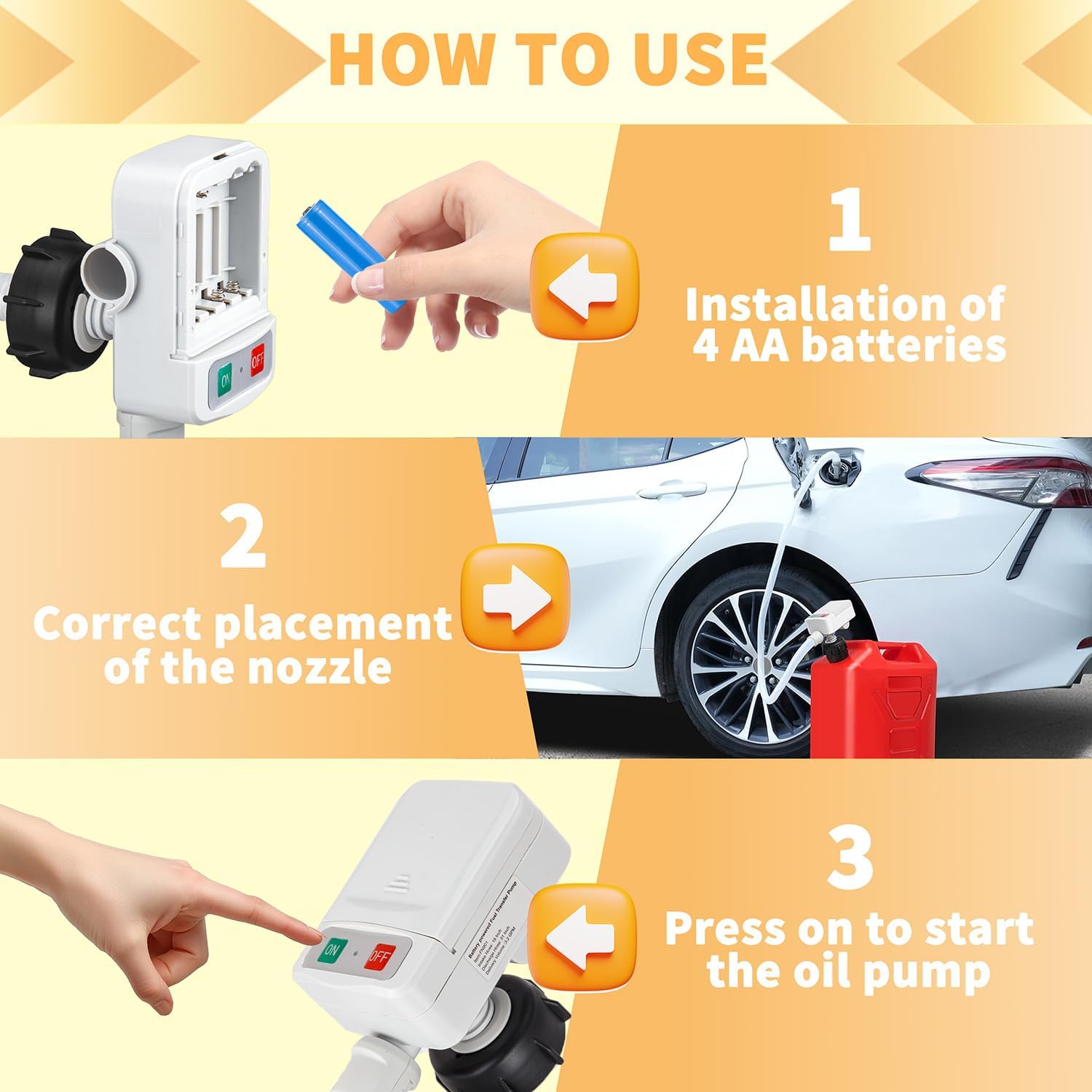
Figure 4: How to use the pump. This image illustrates the three main steps: 1) Installing batteries, 2) Correctly placing the nozzle in the vehicle's fuel tank, and 3) Pressing the ON button to start the pump.

Figure 5: Auto-Stop Sensor in action. This diagram highlights the auto-stop sensor, which detects when the tank is full and automatically stops the fuel flow, preventing spills and fuel loss.
Video 1: Demonstration of the Auto-Stop Sensor. This video illustrates how the pump's auto-stop sensor functions, automatically halting fuel transfer when the receiving tank is full to prevent spills.
6. Maintenance
- Cleaning: After each use, wipe down the exterior of the pump with a clean, dry cloth. Do not use harsh chemicals or abrasive cleaners.
- Storage: Store the pump in a cool, dry place, away from direct sunlight and extreme temperatures. Ensure the hose is free of kinks.
- Battery Replacement: Replace batteries when the pump's performance diminishes. Remove batteries if the pump will not be used for an extended period to prevent leakage.
- Hose Inspection: Regularly inspect the intake and discharge hoses for any signs of wear, cracks, or damage. Replace if necessary.
Video 2: Overview of pump components and storage. This video provides a brief look at the pump's design, including its compartments and protective features, which are relevant for proper maintenance and storage.
7. Troubleshooting
| Problem | Possible Cause | Solution |
|---|---|---|
| Pump does not start. | Dead or incorrectly installed batteries. | Check battery polarity; replace with new batteries. |
| Slow flow rate. | Low battery power; kinked hose; clogged intake. | Replace batteries; straighten hose; check intake for obstructions. |
| Fuel leakage. | Loose adapter connection; damaged hose. | Ensure adapter is tightly secured; inspect hose for damage and replace if necessary. |
| Auto shut-off not working. | Sensor obstruction; faulty sensor. | Ensure the nozzle tip is clear of debris. If problem persists, contact customer support. |
8. Specifications
| Feature | Detail |
|---|---|
| Brand | KOULATE |
| Model | 901 |
| Flow Rate | Up to 3.2 Gallons per Minute (12 LPM) |
| Power Source | 4 x AA Batteries (not included) |
| Compatible Liquids | Gasoline, Diesel, Kerosene, Water (non-corrosive) |
| Material | ABS Housing, PVC Hose |
| Safety Features | Auto Shut-Off, Audible Disconnect Alarm |
| Certifications | CSA, CE, UKCA |
| Item Weight | 1.52 pounds (0.69 Kilograms) |
| Package Dimensions | 11.81 x 5.98 x 3.78 inches |
9. Warranty and Support
The KOULATE Battery-Powered Fuel Transfer Pump Model 901 comes with a 2-year warranty from the date of purchase. This warranty covers manufacturing defects and material flaws under normal use.
For technical assistance, troubleshooting, or warranty claims, please contact KOULATE customer support. Our team is available to provide lifetime support for your product.
Please retain your proof of purchase for warranty validation.