
1. Introduction
The Riloer TPMS (Tire Pressure Monitoring System) sensors are designed to monitor your vehicle's tire pressure, providing crucial information to the driver. This system helps enhance driving safety by alerting you to under-inflated or over-inflated tires, which can lead to improved vehicle performance, extended tire life, and reduced risks of tire failure.
These sensors feature consistent signal transmission for accurate readings, robust ABS construction for durability, and broad vehicle compatibility.
2. Setup and Installation
Installation of TPMS sensors typically involves mounting them inside the tire, replacing the standard valve stem. This procedure requires specialized tools and expertise, and should be performed by a qualified automotive technician to ensure proper seating, sealing, and balance of the wheel assembly.
After installation or tire rotation, the vehicle's TPMS system often requires a 'relearn' procedure to recognize the new sensors and their positions. Consult your vehicle's owner's manual for the specific relearn process, which may involve driving at a certain speed, using a TPMS scan tool, or a manual sequence of steps.

Figure 1: A set of four Riloer TPMS sensors, each featuring a black plastic housing and a metallic valve stem, ready for installation.

Figure 2: Riloer TPMS sensors digitally placed over an image of a silver car, illustrating their intended use with vehicles.
3. Operating Instructions
Once installed and properly relearned, the Riloer TPMS sensors continuously transmit tire pressure data to your vehicle's onboard system. If a tire's pressure falls below or rises above the manufacturer's recommended levels, an alert will typically appear on your dashboard, indicating which tire requires attention.
It is good practice to regularly check your tire pressure manually with a reliable gauge to cross-reference with TPMS readings and ensure accuracy. This helps confirm the system is functioning correctly and provides an additional layer of safety.
4. Maintenance
Riloer TPMS sensors are generally designed to be maintenance-free. However, to ensure optimal performance and longevity, it is recommended to replace the valve stem service kit (which includes the grommet, washer, nut, and valve cap) whenever tires are serviced or replaced. This prevents potential air leaks and maintains the integrity of the sensor.
During tire changes or inspections, visually check the sensors for any signs of physical damage. The batteries within TPMS sensors are sealed and not replaceable. The entire sensor unit must be replaced when its battery depletes, which typically occurs after 5-10 years of use, depending on driving conditions and usage.

Figure 3: Detailed close-up views of the Riloer TPMS sensor, highlighting its various components including the valve stem, the main sensor body, and the internal structure of the valve.
5. Troubleshooting
- TPMS Warning Light On:
- First, manually check all tire pressures with a reliable gauge. Inflate tires to the vehicle manufacturer's recommended pressure, typically found on a sticker inside the driver's side door jamb or in the owner's manual.
- Perform the TPMS relearn procedure as outlined in your vehicle's owner's manual. This step is crucial after tire service or sensor replacement.
- If the warning light persists after verifying pressure and performing a relearn, a sensor may be faulty or its internal battery depleted. Professional diagnostic scanning by a technician may be required to identify the specific issue.
- Intermittent Warnings:
- Intermittent warnings could indicate a weak sensor battery, especially in cold weather, or potential signal interference. Ensure no other electronic devices are causing interference with the TPMS signal.
- Incorrect Readings:
- Always verify TPMS readings with a manual tire pressure gauge. If discrepancies are significant and consistent, the sensor may be damaged, faulty, or incorrectly calibrated, requiring replacement.
6. Specifications
- Product Name: Tire Pressure Monitoring Sensor (TPMS)
- Material: ABS
- Item Weight: 160 g
- Package Dimensions: 14 x 9 x 5 cm
- Manufacturer Part Number: RA14254AYON241010
- OE Part Numbers: 5430T4, 9673198580, 5430.T4, 543093, 96568222980, 9634866180, 543042, 543002, 543065
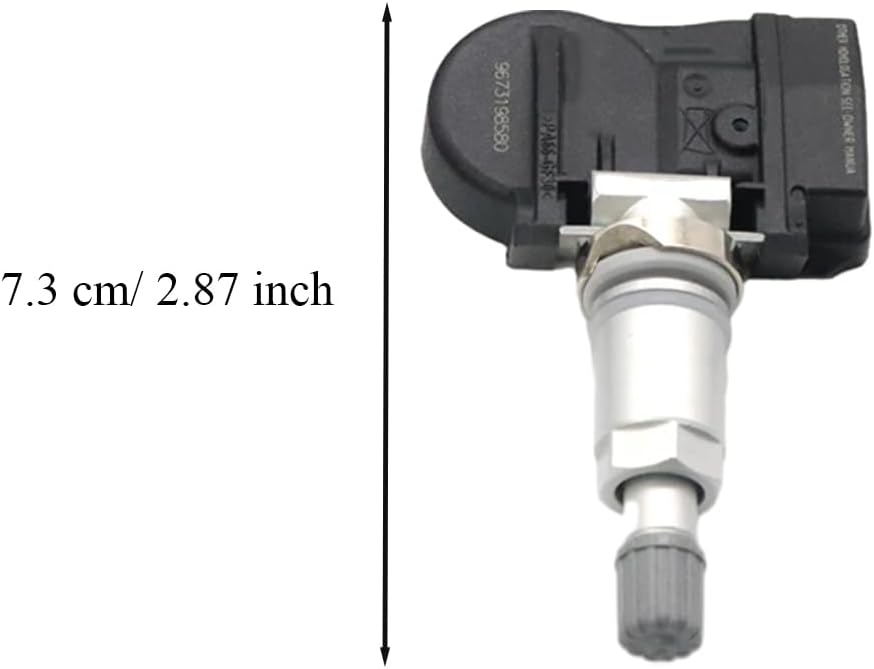
Figure 4: A single Riloer TPMS sensor is shown with a measurement indicating its length as 7.3 cm or 2.87 inches.

Figure 5: A single Riloer TPMS sensor presented from a side angle, clearly displaying the part number '9673198580' on its black housing.
7. Vehicle Compatibility
These Riloer TPMS sensors are compatible with a wide range of vehicles. Please verify the OE part numbers against your existing sensors or vehicle specifications to ensure proper fitment.
- Compatible with Citroen:
- C4 (11/2004-07/2008)
- C5 (08/2004-08/2013)
- C6 (09/2005-05/2013)
- C8 (10/2005-06/2014)
- Compatible with Peugeot:
- 207 (01/2006-09/2013)
- 307 (11/2003-02/2007)
- 407 (01/2004-08/2011)
- 508 (01/2011-09/2013)
- 607 (10/2004-10/2010)
- 807 (10/2005-12/2015)
- 1007 (01/2005-12/2009)
8. Warranty and Support
Warranty information for this product is not explicitly provided in the available product details. For specific warranty terms, conditions, and customer support, please refer to the seller or the manufacturer's official website. It is recommended to retain your proof of purchase for any warranty claims.