
1. Introduction
The BoxWave AllReader SD Card Reader is a versatile device designed for easy transfer of files between various devices and memory cards. This compact reader supports both standard SD and microSD cards and features multiple interfaces for broad compatibility, including USB-C, USB-A, Micro-USB, and Lightning. This manual provides instructions for setting up, operating, maintaining, and troubleshooting your AllReader SD Card Reader.
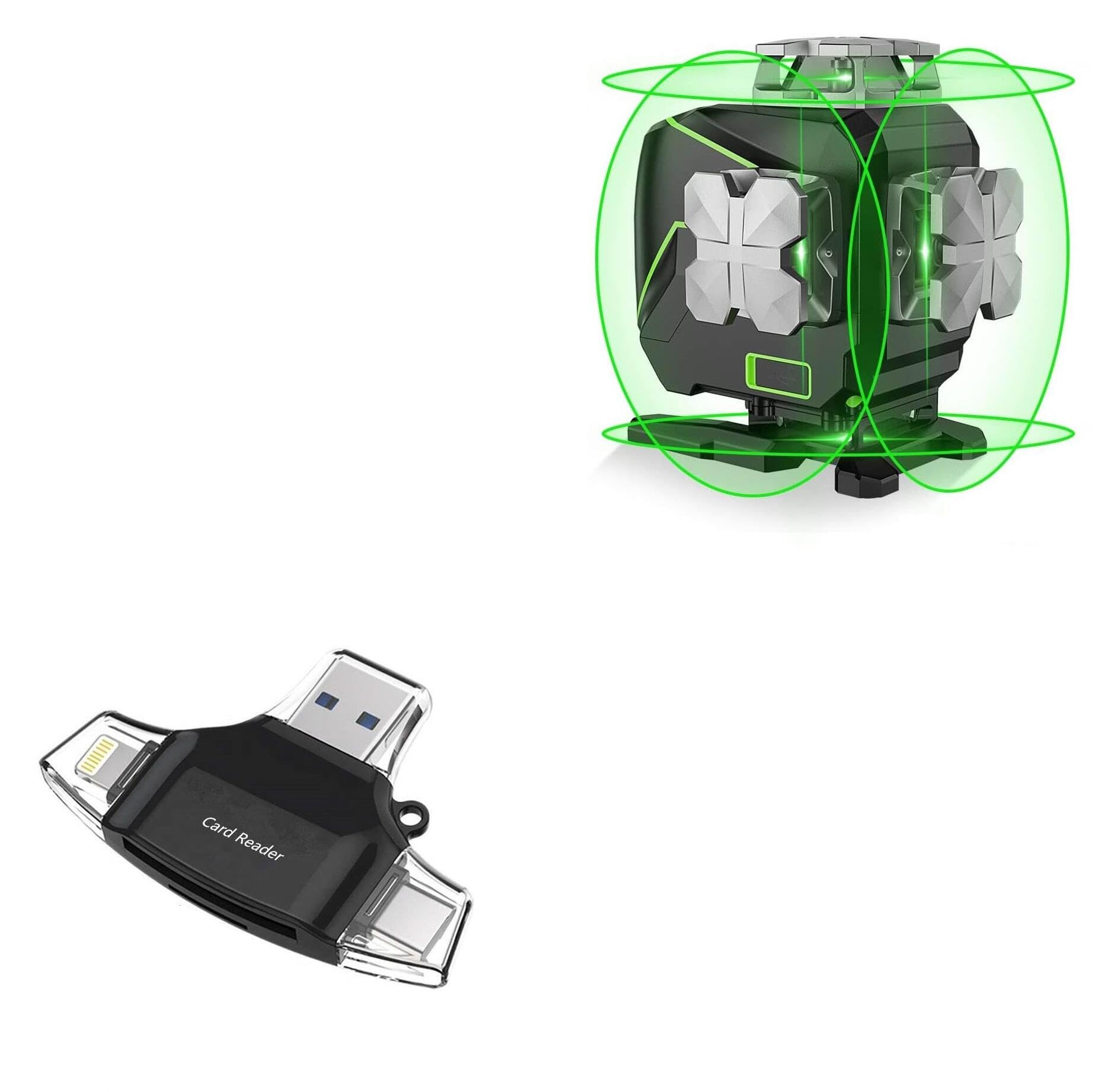
Image 1: The BoxWave AllReader SD Card Reader. This image displays the compact design of the card reader, highlighting its various connectors for different devices.
2. Key Features
- Four Universal Interfaces: Equipped with USB-C, USB-A, Micro-USB, and Lightning connectors for maximum compatibility with smartphones, tablets, laptops, and desktop PCs.
- Easy File Transfer: Facilitates quick and straightforward transfer of photos, videos, music, and other files between memory cards and connected devices.
- Plug and Play Functionality: Requires no additional drivers or software installation for most operating systems, allowing for immediate use.
- Wide Card Compatibility: Supports both standard SD cards and microSD cards, expanding storage and access options.
- Compact and Portable Design: Its small size and integrated connectors make it easy to carry and use on the go.

Image 2: Four Interfaces. This image provides a detailed view of the USB-A, USB-C, Apple Lightning, and Flip-out Micro USB connectors on the AllReader.

Image 3: Compact Size. The AllReader SD Card Reader is shown resting in the palm of a hand, illustrating its small and portable form factor.
3. Setup Guide
Setting up your BoxWave AllReader SD Card Reader is a simple process. No software installation is typically required for most modern operating systems.
- Insert Memory Card: Locate the appropriate slot for your SD card or microSD card on the AllReader. Gently insert the memory card until it clicks into place. Ensure the card is inserted correctly according to its orientation.
- Connect to Device: Choose the correct connector (USB-C, USB-A, Micro-USB, or Lightning) for your smartphone, tablet, laptop, or desktop computer. Plug the AllReader firmly into the corresponding port on your device.
- Access Files: Your device should automatically detect the AllReader and the inserted memory card. Navigate to your device's file manager or photo gallery to access the contents of the card.

Image 4: Card Insertion and Device Connection. This image shows an SD card being inserted into the AllReader, which is then connected to a tablet, demonstrating the setup process.
4. Operating Instructions
Once connected, the AllReader allows for easy management of files on your memory card.
4.1. Transferring Files to Your Device
- Ensure the AllReader with the memory card is connected to your device.
- Open your device's file management application (e.g., "Files" on iOS, "My Files" on Android, "File Explorer" on Windows, "Finder" on macOS).
- Locate the external storage device, which will represent your inserted memory card.
- Browse to the files you wish to transfer. Select them and use the "Copy" or "Move" function to transfer them to your device's internal storage or another connected storage.
4.2. Transferring Files from Your Device to Memory Card
- With the AllReader connected, open your device's file management application.
- Navigate to the files on your device that you wish to transfer to the memory card.
- Select the files and use the "Copy" or "Move" function to transfer them to the external storage device (your memory card).
Note: Always ensure safe removal of the device by ejecting the memory card through your operating system's options before physically disconnecting the AllReader, especially on computers, to prevent data corruption.

Image 5: Easy File Transfer. This image illustrates the process of transferring files using the AllReader, showing a memory card inserted and the device connected to a smartphone.

Image 6: Cross-Device Compatibility. This composite image shows the AllReader connected to various devices including a smartphone, tablet, laptop, and desktop PC, highlighting its versatility for file transfer across different platforms.
5. Maintenance
To ensure the longevity and optimal performance of your BoxWave AllReader SD Card Reader, follow these maintenance guidelines:
- Cleaning: Use a soft, dry, lint-free cloth to gently wipe the exterior of the card reader. Avoid using liquid cleaners, solvents, or abrasive materials, as these can damage the device.
- Storage: Store the AllReader in a cool, dry place away from direct sunlight and extreme temperatures. When not in use, consider storing it in a protective pouch to prevent dust and scratches.
- Handling: Avoid dropping the device or subjecting it to strong impacts. Handle the connectors carefully to prevent bending or damage to the pins.
- Moisture: Keep the card reader away from water and other liquids. If it comes into contact with moisture, disconnect it immediately and allow it to dry completely before reuse.
6. Troubleshooting
If you encounter issues with your BoxWave AllReader SD Card Reader, refer to the following common problems and solutions:
| Problem | Possible Cause | Solution |
|---|---|---|
| Device not recognized |
|
|
| Cannot access files on card |
|
|
| Slow transfer speeds |
|
|
7. Specifications
| Model Name | AllReader SD Card Reader |
| Brand | BoxWave |
| Interfaces | USB-C, USB-A, Micro-USB, Lightning |
| Card Compatibility | SD, microSD |
| Item Weight | 6 ounces |
| ASIN | B0DJ3Q5232 |
| Manufacturer | BoxWave |
8. Warranty and Support
For information regarding warranty coverage, product support, or to contact customer service, please refer to the official BoxWave website or the documentation included with your purchase. BoxWave is committed to providing high-quality accessories and customer satisfaction.
Website: www.boxwave.com (Note: This is a placeholder URL, please refer to actual product documentation for correct support information.)