
1. Introduction
The HYNOTONE ARES Distortion Preamp Pedal is designed to deliver aggressive, high-gain tones, mimicking the characteristics of a tube amplifier. Featuring a 5-stage JFET circuit, a versatile 3-band EQ, and specialized tone-shaping switches, this pedal is optimized for heavy music genres, extended-range guitars, and drop tunings. This manual provides detailed instructions for the proper setup, operation, and maintenance of your ARES pedal.
2. Safety Instructions
- Do not expose the unit to rain, moisture, or extreme temperatures.
- Use only a regulated 9V DC power supply with a center-negative polarity. Incorrect power supplies can damage the unit and void the warranty.
- Avoid placing the unit near heat sources or in direct sunlight.
- Do not attempt to open or service the unit yourself. Refer all servicing to qualified personnel.
- Keep out of reach of children.
3. Package Contents
Please ensure all items are present in the package:
- HYNOTONE ARES Distortion Preamp Pedal
- User Manual (this document)
- Warranty Card (if applicable)
4. Product Overview
The HYNOTONE ARES pedal features a robust metal enclosure and intuitive controls for shaping your tone.

Figure 4.1: Front view of the HYNOTONE ARES pedal with all controls labeled, including Bass, Mid, Treble, Volume, Gain knobs, and Bite, Tight, Boost switches.
4.1. Controls and Features
- BASS Knob: Adjusts the low-frequency response.
- MID Knob: Adjusts the mid-frequency response.
- TREBLE Knob: Adjusts the high-frequency response.
- VOLUME Knob: Controls the overall output level of the pedal.
- GAIN Knob: Adjusts the amount of distortion.
- BITE Switch: Engages a mid-range grit, emphasizing a rawer, more aggressive distortion texture. When disengaged, the tone becomes smoother.
- TIGHT Switch: Refines the low-end for a punchy, focused sound, making the tone more aggressive. Recommended for use with 7-string guitars and drop tunings.
- BOOST Switch: Tightens the low end and boosts mids, providing an aggressive and modern tone. Recommended for use with 7-string guitars and drop tunings.
- Footswitch: Engages or bypasses the effect.

Figure 4.2: An internal view of the pedal's circuit board, highlighting the JFET components. The 5-stage JFET circuit is designed to emulate the sound and feel of a real tube preamp.
5. Setup
Follow these steps to connect your HYNOTONE ARES pedal:
- Power Connection: Connect a 9V DC center-negative power supply (not included) to the DC input jack on the pedal.
- Input Connection: Connect your guitar or the output of another pedal to the INPUT jack on the ARES pedal using a standard 1/4-inch instrument cable.
- Output Connection: Connect the OUTPUT jack of the ARES pedal to your amplifier's input or the input of another pedal in your signal chain using a standard 1/4-inch instrument cable. For optimal results, especially when using the ARES as a preamp, connect it to your amplifier's effects return or a dedicated power amp.
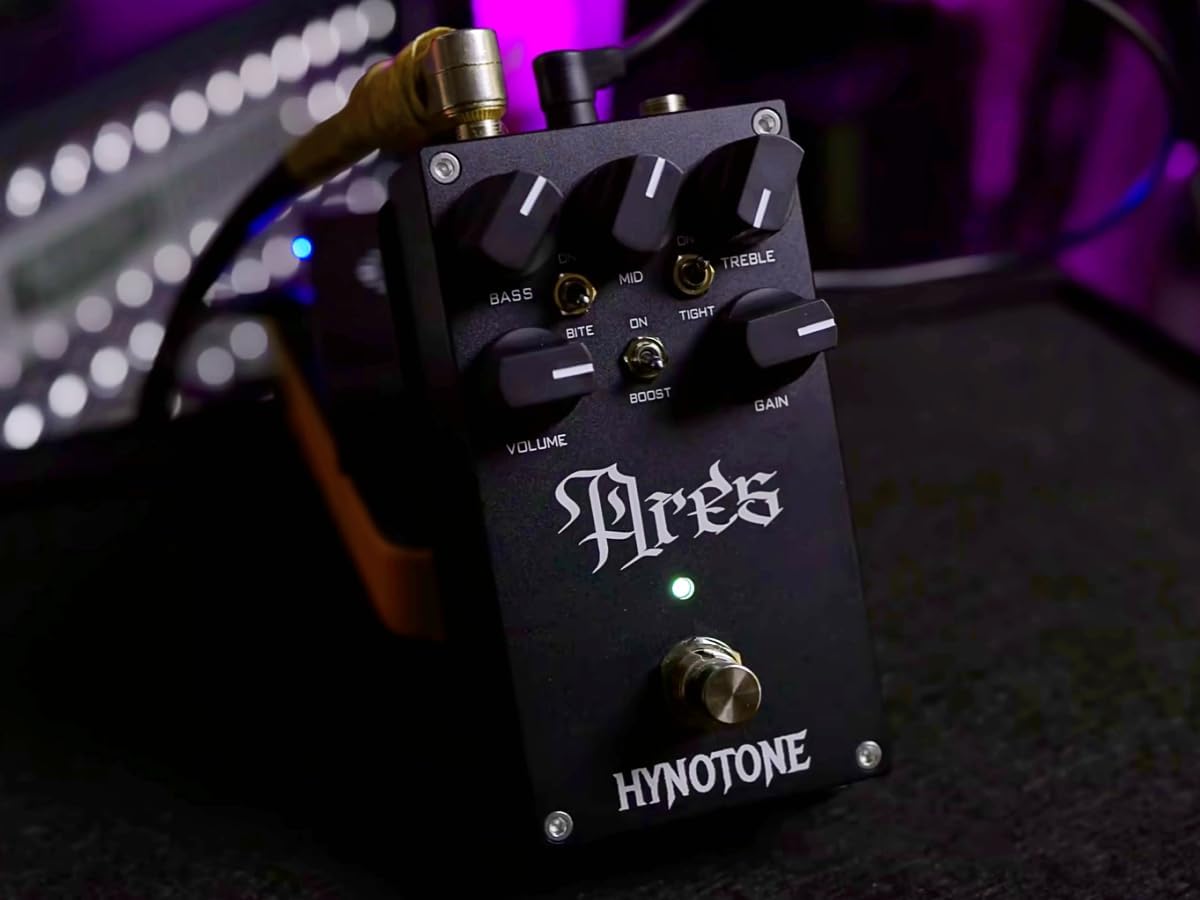
Figure 5.1: The HYNOTONE ARES pedal connected in a typical setup, showing input and output cables, ready for use with an electric guitar.
6. Operating Instructions
Once connected, you can begin shaping your tone using the pedal's controls.
6.1. Basic Operation
- Press the footswitch to engage (LED on) or bypass (LED off) the distortion effect.
- Start with all knobs at the 12 o'clock position for a neutral starting point.
- Adjust the GAIN knob to achieve your desired level of distortion. Higher settings will produce more aggressive tones.
- Use the VOLUME knob to match the output level of the pedal to your bypassed signal or to boost your signal for solos.
6.2. Tone Shaping with EQ and Switches
The 3-band EQ and specialized switches provide extensive control over your sound:

Figure 6.1: The HYNOTONE ARES pedal highlighting the Bass, Mid, and Treble EQ controls, which function similarly to a tube amplifier's tone stack.
- BASS, MID, TREBLE Knobs: Adjust these controls to sculpt your frequency response. These act like a traditional tube amp's tone stack, allowing for significant tonal variations.
- BITE Switch: Engage this switch for a pronounced mid-range character, adding a raw, gritty texture suitable for cutting through a mix. Disengage for a smoother, less aggressive mid-response.
- TIGHT Switch: Activate this switch to tighten the low-end frequencies, resulting in a more focused and articulate sound. This is particularly effective for palm-muted riffs and maintaining clarity in low tunings.
- BOOST Switch: This switch simultaneously tightens the low end and boosts the mid-range, creating a modern, aggressive tone ideal for heavy riffs and solos, especially with extended-range guitars.

Figure 6.2: Close-up view of the HYNOTONE ARES pedal, detailing the BITE, TIGHT, and BOOST switches and their functions for advanced tone shaping.
7. Maintenance
To ensure the longevity and optimal performance of your ARES pedal:
- Cleaning: Use a soft, dry cloth to clean the pedal's exterior. Do not use abrasive cleaners or solvents.
- Storage: Store the pedal in a cool, dry place away from direct sunlight and extreme temperatures when not in use.
- Connections: Periodically check all cable connections for wear and tear. Replace damaged cables to prevent signal loss or noise.
8. Troubleshooting
If you encounter issues with your ARES pedal, refer to the following common problems and solutions:
| Problem | Possible Cause | Solution |
|---|---|---|
| No sound when pedal is engaged. | Incorrect power supply, faulty cables, pedal not connected correctly. | Verify power supply (9V DC, center-negative). Check all instrument cables. Ensure input/output connections are correct. |
| Weak or distorted sound (unintended). | Low battery (if using battery power), incorrect gain/volume settings, faulty cables. | Ensure adequate power. Adjust GAIN and VOLUME knobs. Test with different cables. |
| Excessive noise or hum. | Ground loop, interference from other electronics, faulty power supply. | Use a high-quality, isolated power supply. Move pedal away from other electronic devices. Check for proper grounding in your setup. |
| Footswitch not responding. | Power issue, internal fault. | Ensure pedal is powered on. If problem persists, contact customer support. |
If the issue persists after attempting these solutions, please contact customer support for further assistance.
9. Specifications
Technical specifications for the HYNOTONE ARES Distortion Preamp Pedal:

Figure 9.1: A visual representation of the HYNOTONE ARES pedal's key technical specifications, including dimensions, weight, and electrical characteristics.
| Specification | Value |
|---|---|
| Model Number | ares01 |
| Dimensions (L x W x H) | 2.6 x 2.4 x 4.9 inches (65 x 60 x 125 mm) |
| Item Weight | 11.2 ounces (315g) |
| Input Impedance | 1 MOhm |
| Output Impedance | 1 kOhm |
| Power Input | Center-negative 9V nominal DC, 7-12V range |
| Current Draw | 10mA typical, 100mA max |
| Connector Type | 1/4 inch audio jack |
| Hardware Interface | 1/4-inch Audio |
| Signal Format | Analog |
| Audio Output Effects | Distortion, Preamp |
| Controls Type | Knob, Toggle Switches |
10. Warranty and Support
10.1. Warranty Information
This product is covered by a limited warranty against defects in materials and workmanship. The duration and terms of the warranty may vary by region. Please refer to the warranty card included with your product or visit the official TOPPING website for detailed warranty information.
10.2. Customer Support
For technical assistance, troubleshooting, or service inquiries, please contact TOPPING customer support through their official website or the retailer from whom you purchased the product. Please have your model number (ares01) and purchase date available when contacting support.