
Introduction

Image: The Srliya Starter Motor Solenoid Relay, featuring its robust metal casing and pre-attached red and yellow control wires with ring terminals.
This manual provides essential information for the proper installation, operation, and maintenance of your Srliya Starter Motor Solenoid Relay. This relay is designed to manage the high current required by starter motors in various 12-24V domestic and imported vehicles, ensuring reliable starting performance.
Product Features
- Increases the current to the starter motor for improved starting.
- Designed for universal compatibility with all domestic and imported 12-24V starter systems.
- Acts as a control switch for the starter motor, preventing large currents from flowing directly through the ignition key.
- Durable aluminum construction for reliable performance.
Specifications
| Attribute | Value |
|---|---|
| Brand | Srliya |
| Model Number | Srliyavoaxc1w3yq |
| Voltage Compatibility | 12-24V |
| Large Working Current | 150A |
| Material | Aluminum |
| Approximate Size | 4.5cm x 8.5cm (1.8 x 3.3 inches) |

Image: The Srliya Starter Motor Solenoid Relay showing its approximate dimensions of 4.5cm by 8.5cm.
Installation Instructions
Proper installation is crucial for the safe and effective operation of the starter solenoid relay. Always disconnect the vehicle's battery before beginning any electrical work.
- Mounting: Securely mount the relay to a suitable, stable surface in the vehicle. The relay typically has mounting tabs for this purpose.
- Ground Connection: Connect the two smaller terminals (feet) of the relay to a reliable ground point (iron/chassis) of the vehicle. Ensure a clean, secure connection for optimal performance.
- Ignition Switch Connection: Connect the upper screw terminal of the relay to the electric door lock (ignition switch) output. This connection provides the control signal to activate the relay.
- Power Supply Connection: Connect the two larger terminals (columns) of the relay to the power supply. One terminal connects to the positive terminal of the battery, and the other connects to the starter motor's positive input. Ensure these connections are robust and capable of handling high current.
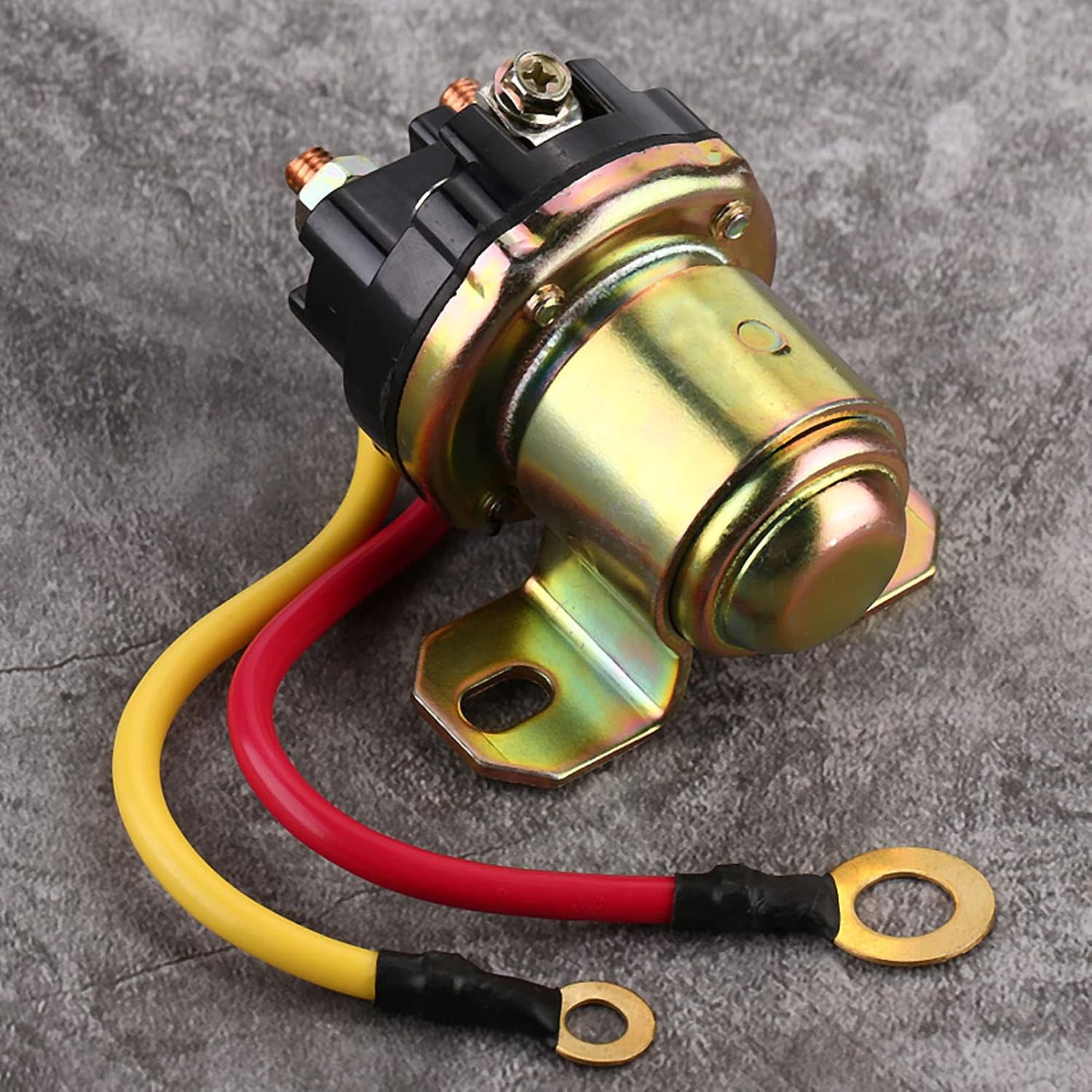
Image: A detailed view of the Srliya Starter Motor Solenoid Relay, highlighting the terminals for connection. Note the two smaller terminals for ground and ignition signal, and the two larger terminals for the main power supply to the starter.
Operating Principles
The starter relay functions as a high-current switch. When the ignition key is turned to the "start" position, a small current flows from the ignition switch to the relay's control coil. This energizes the coil, creating a magnetic field that pulls a contact arm, closing the circuit between the vehicle's battery and the starter motor. This allows a large current to flow directly to the starter motor, enabling it to crank the engine. Once the engine starts and the ignition key is released from the "start" position, the control coil de-energizes, opening the circuit and cutting off power to the starter motor.
Maintenance
The Srliya Starter Motor Solenoid Relay is designed for durability and requires minimal maintenance. However, periodic checks can ensure its longevity and reliable operation:
- Connection Integrity: Periodically inspect all electrical connections to the relay for tightness and corrosion. Loose or corroded connections can lead to poor performance or failure.
- Wiring Inspection: Check the wiring connected to the relay for any signs of wear, fraying, or damage. Replace damaged wiring immediately.
- Cleanliness: Keep the relay and its surroundings clean and free from excessive dirt, moisture, or debris.
Troubleshooting
If you experience issues with your vehicle's starting system, the relay may be a factor. Here are some common troubleshooting steps:
- Engine Does Not Crank:
- Check battery charge and terminals.
- Verify all relay connections are secure and free of corrosion.
- Listen for a "click" from the relay when the ignition key is turned to start. A click indicates the control circuit is working, but the high-current contacts might be faulty or the starter motor itself is the issue. No click suggests a problem with the ignition switch, control wiring, or the relay's control coil.
- Slow Cranking:
- Ensure battery is fully charged.
- Inspect high-current connections to the relay and starter for corrosion or looseness, which can cause voltage drop.
- The relay's internal contacts might be worn, causing resistance.
- Relay Stays Engaged: This is rare but indicates a faulty relay (stuck contacts) or a short in the control circuit keeping the coil energized. Disconnect the battery immediately.
If troubleshooting does not resolve the issue, it is recommended to consult a qualified automotive technician.
Safety Information
- Always disconnect the vehicle's battery before performing any installation or maintenance on electrical components.
- Wear appropriate personal protective equipment, including safety glasses and gloves.
- Ensure all connections are tight and properly insulated to prevent short circuits.
- Do not attempt to modify the relay or use it for applications outside its specified voltage and current ratings.
- Keep children and pets away from the work area.
Warranty and Support
Specific warranty information for the Srliya Starter Motor Solenoid Relay is not provided in this manual. Please refer to the product packaging or contact your retailer for details regarding warranty coverage and customer support.