
Introduction
This manual provides instructions for the proper installation, operation, and maintenance of your Stemedu H60-180 60KG Brushless Digital RC Servo. Please read this manual thoroughly before use to ensure optimal performance and longevity of the product.
The Stemedu H60-180 is a high-performance brushless digital servo designed for demanding RC applications, featuring high torque, high speed, and waterproof capabilities with durable stainless steel gears.
Product Features
- High Voltage Operation: Supports 4.8V to 8.4V DC input.
- High Speed Performance: Achieves 0.18sec/60° at 4.8V, 0.14sec/60° at 6.0V, 0.12sec/60° at 7.4V, and 0.1sec/60° at 8.4V.
- High Torque Output: Delivers 53kg.cm at 4.8V, 56kg.cm at 6.0V, 60kg.cm at 7.4V, and 63kg.cm at 8.4V.
- Precise Control System: Utilizes PWM (Pulse Width Modification) with a range of 500 to 2500μsec for 0 to 180° control angle.
- Durable Construction: Features stainless steel gears and a full aluminum housing for enhanced durability.
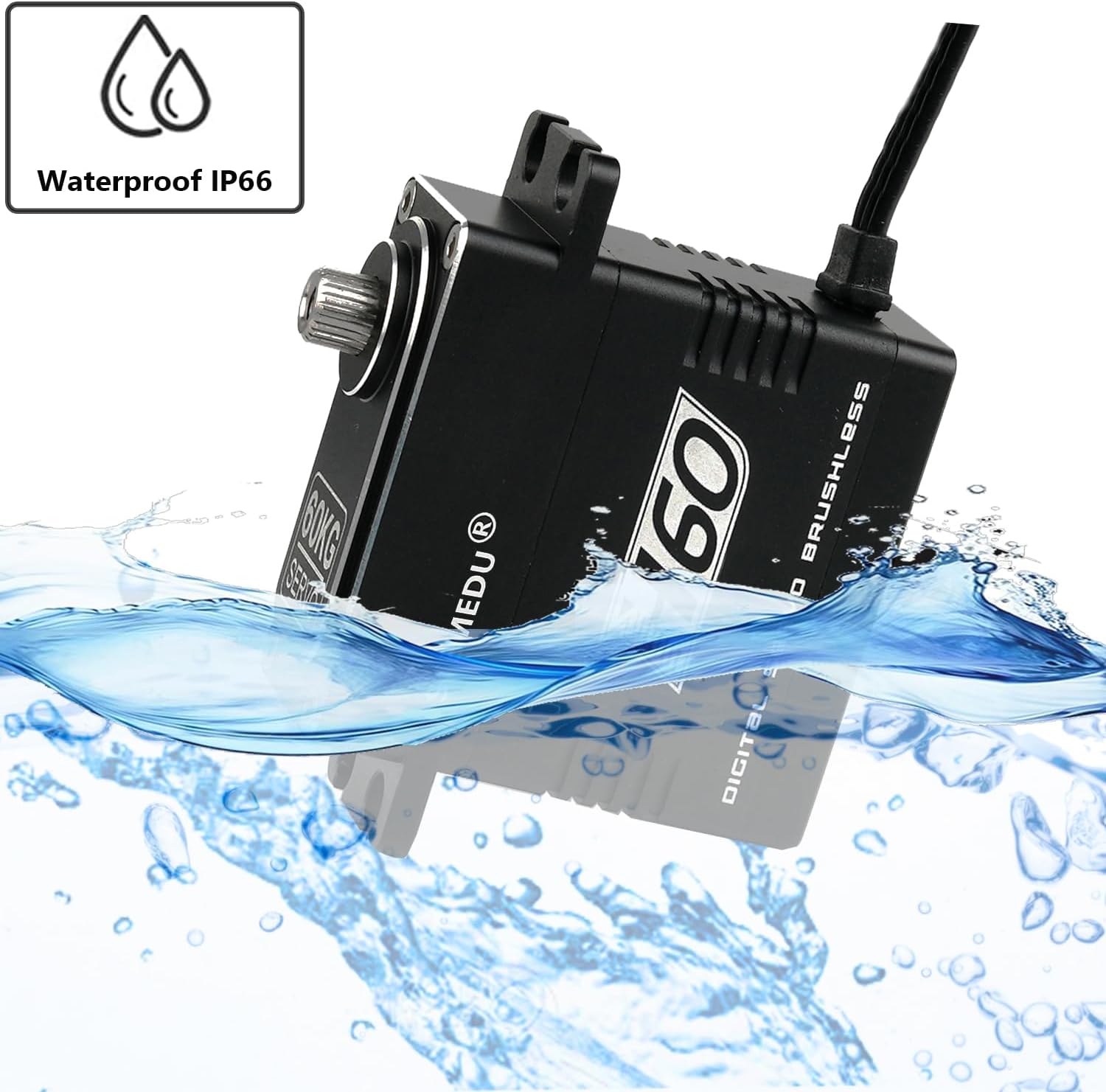
- Waterproof Design: Rated IP66 for protection against water ingress.
- Versatile Application: Suitable for 1/8, 1/10, 1/12 scale RC cars (buggy, truggy, crawler, off-road vehicles), robots, mechanical arms, remote control boats, and giant scale aircraft.
What's in the Box
- 1 x Stemedu H60-180 60KG Brushless Digital RC Servo
Setup
Follow these steps for proper installation of your servo:
- Mounting: Securely mount the servo in the designated location on your RC model using appropriate screws and mounting hardware. Ensure the servo is firmly attached to prevent movement during operation.
- Horn Attachment: Select the correct servo horn for your application and attach it to the servo's output shaft. Ensure it is centered before tightening.
- Electrical Connection: Connect the servo's three-wire cable to the corresponding channel on your RC receiver or flight controller. The standard color coding is typically brown/black for ground, red for positive voltage, and orange/yellow/white for the signal wire. Ensure correct polarity.
- Power Supply: Ensure your power supply (battery) can provide the necessary voltage (4.8V-8.4V DC) and current for the servo's operation. High-torque servos may require a dedicated BEC (Battery Eliminator Circuit) or a robust power system.
- Initial Calibration: With your RC system powered on, ensure the servo is centered. Adjust linkages as necessary to achieve the desired neutral position for your control surface or steering mechanism.


Operating Instructions
The H60-180 servo operates based on Pulse Width Modulation (PWM) signals from your RC receiver or controller. The pulse width determines the servo's angular position.
- Control Range: The servo's full 180-degree rotation is achieved with PWM signals ranging from 500μsec (0 degrees) to 2500μsec (180 degrees). A typical center pulse is 1500μsec.
- Voltage Considerations: The servo's speed and torque performance are directly influenced by the input voltage. Higher voltages (up to 8.4V) will result in faster speeds and greater torque, as detailed in the specifications section.
- Load Management: Avoid continuously stalling the servo or applying excessive force that exceeds its maximum torque rating, as this can lead to overheating and damage.
Maintenance
Proper maintenance ensures the longevity and reliable performance of your servo.
- Cleaning: Regularly clean the exterior of the servo to remove dirt, dust, and debris. Use a soft, dry cloth. For stubborn grime, a slightly damp cloth can be used, but ensure no moisture enters the casing.
- Gear Inspection: Periodically check the servo gears for any signs of wear or damage. While the stainless steel gears are highly durable, extreme impacts can cause issues.
- Connection Check: Ensure all electrical connections remain secure and free from corrosion. Loose connections can lead to intermittent operation or power loss.
- Waterproof Care: Although the servo is IP66 waterproof, it is good practice to dry it thoroughly after exposure to water, especially if used in saltwater environments. Avoid prolonged submersion beyond its rating.
Troubleshooting
If you encounter issues with your H60-180 servo, consider the following common troubleshooting steps:
- Servo Not Moving:
- Check power supply: Ensure the battery is charged and connected correctly.
- Verify connections: Confirm the servo cable is securely plugged into the receiver/controller and that polarity is correct.
- Test with another channel/servo: Isolate if the issue is with the servo or the control system.
- Erratic Movement or Glitching:
- Check for interference: Ensure no strong electrical interference sources are near the receiver or servo wiring.
- Inspect wiring: Look for damaged or frayed servo wires.
- Power supply: Insufficient or fluctuating power can cause erratic behavior. Consider a dedicated BEC if using a high-power setup.
- Weak Torque or Slow Response:
- Check input voltage: Ensure the servo is receiving adequate voltage (e.g., 7.4V or 8.4V for optimal performance).
- Verify linkages: Ensure there are no binding or excessive friction in the mechanical linkages connected to the servo horn.
- Overload: The servo might be attempting to move a load beyond its rated torque. Reduce the load or consider a higher-torque servo.
Specifications
| Feature | Specification |
|---|---|
| Model Number | H60-180 |
| Operating Voltage | 4.8V ~ 8.4V DC |
| Speed (4.8V) | 0.18 sec/60° |
| Speed (6.0V) | 0.14 sec/60° |
| Speed (7.4V) | 0.12 sec/60° |
| Speed (8.4V) | 0.10 sec/60° |
| Torque (4.8V) | 53 kg.cm |
| Torque (6.0V) | 56 kg.cm |
| Torque (7.4V) | 60 kg.cm |
| Torque (8.4V) | 63 kg.cm |
| Control System | PWM (Pulse Width Modification) |
| Pulse Width Range | 500μsec to 2500μsec |
| Control Angle | 0° to 180° |
| Gear Type | Stainless Steel |
| Motor Type | Brushless |
| Waterproof Rating | IP66 |
| Dimensions (L x W x H) | 1.57 x 0.78 x 1.57 inches (40 x 20 x 40 mm approx.) |
| Item Weight | 3.04 ounces |


Warranty and Support
Warranty: Please refer to the manufacturer's website or your point of purchase for detailed warranty information regarding the Stemedu H60-180 servo.
Support: For technical assistance, troubleshooting, or any product-related inquiries, please contact Stemedu customer service through their official channels.
