
1. Introduction
Thank you for choosing the banapoy 20 Bar 1400W Professional Espresso Machine. This manual provides essential information for the safe and efficient operation, maintenance, and troubleshooting of your new espresso machine. Please read this manual thoroughly before first use and keep it for future reference.
2. Important Safety Instructions
When using electrical appliances, basic safety precautions should always be followed to reduce the risk of fire, electric shock, and/or injury to persons, including the following:
- Read all instructions.
- Do not touch hot surfaces. Use handles or knobs.
- To protect against fire, electric shock, and injury to persons, do not immerse cord, plugs, or appliance in water or other liquid.
- Close supervision is necessary when any appliance is used by or near children.
- Unplug from outlet when not in use and before cleaning. Allow to cool before putting on or taking off parts, and before cleaning the appliance.
- Do not operate any appliance with a damaged cord or plug or after the appliance malfunctions, or has been damaged in any manner.
- The use of accessory attachments not recommended by the appliance manufacturer may result in fire, electric shock, or injury to persons.
- Do not use outdoors.
- Do not let cord hang over edge of table or counter, or touch hot surfaces.
- Do not place on or near a hot gas or electric burner, or in a heated oven.
- Always attach plug to appliance first, then plug cord into the wall outlet. To disconnect, turn any control to “off”, then remove plug from wall outlet.
- Do not use appliance for other than intended use.
- Scalding may occur if the water tank lid is removed during the brewing cycle.
3. Package Contents
Please check the package contents upon unpacking. If any items are missing or damaged, contact customer support.
- 1 x banapoy Espresso Machine
- 1 x Portafilter
- 1 x Portafilter Filter Basket
- 1 x Instruction Manual (this document)
- 1 x Coffee Tamper
4. Product Overview
Familiarize yourself with the components of your espresso machine.

Figure 4.1: Front view of the banapoy Espresso Machine, showcasing its compact design and main controls.

Figure 4.2: Close-up of the machine's front, showing the control knob, indicator lights, and portafilter attachment point.
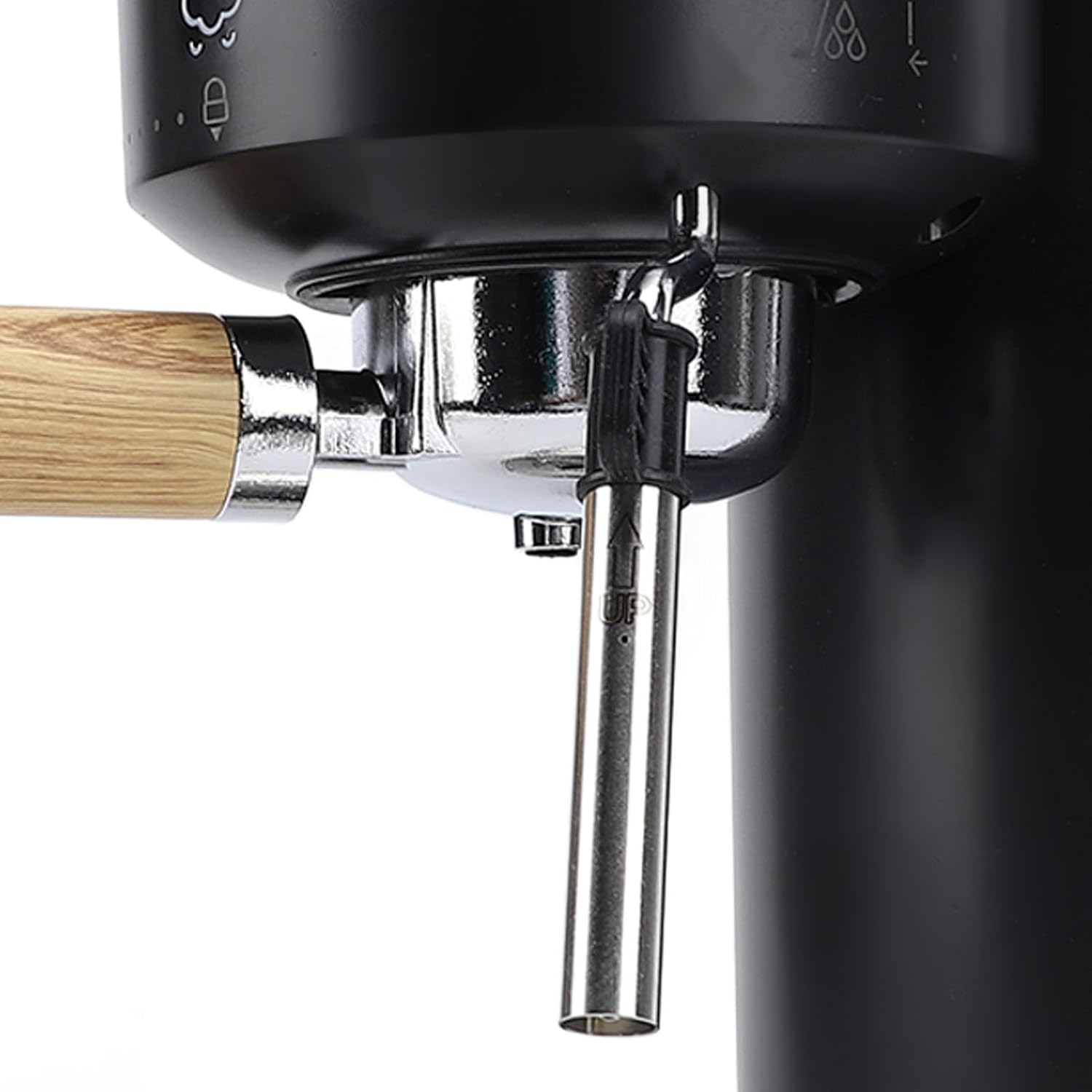
Figure 4.3: Detailed view of the portafilter handle and the adjustable steam wand for milk frothing.

Figure 4.4: Side view of the espresso machine, clearly showing the removable water tank on the right.
5. Setup
5.1 Unpacking
- Carefully remove all components from the packaging.
- Remove any protective films or stickers from the machine.
- Retain packaging for future transport or storage.
5.2 Placement
Place the espresso machine on a stable, flat, heat-resistant surface, away from water sources and heat. Ensure there is adequate space around the machine for ventilation and access to the water tank.
5.3 Filling the Water Tank
- Remove the water tank from the back of the machine.
- Fill the tank with fresh, cold, filtered water up to the MAX line. The tank has a capacity of 1 liter.
- Replace the water tank securely into its position.
5.4 First Use / Priming the Machine
Before making your first coffee, it is important to prime the machine to ensure proper water flow and to clean internal components.
- Ensure the water tank is filled.
- Place a large cup or container under the portafilter head and the steam wand.
- Plug the machine into a grounded 110V power outlet.
- Turn the control knob to the coffee brewing position. Allow water to flow through the portafilter head until the tank is nearly empty.
- Turn the control knob to the steam position. Allow steam and hot water to dispense from the steam wand for about 30 seconds.
- Turn the machine off and refill the water tank. Your machine is now primed and ready for use.
6. Operating Instructions
6.1 Making Espresso
This machine features 20 Bar high-pressure extraction and intelligent temperature control for optimal flavor.
- Prepare the Portafilter: Insert the filter basket into the portafilter. Add finely ground coffee to the filter basket. Use the provided coffee tamper to press the grounds firmly and evenly. Wipe any excess grounds from the rim.
- Attach Portafilter: Align the portafilter with the group head on the machine. Insert it and turn it firmly to the right until it is securely locked in place.
- Place Cup: Position your espresso cup(s) on the drip tray directly under the portafilter spouts.
- Pre-soaking and Extraction: Turn the control knob to the coffee brewing position. The machine will first pre-soak the coffee grounds with low pressure water, then apply 20 Bar high pressure for optimal flavor extraction. The intelligent temperature control system will ensure the water temperature is suitable for brewing.
- Stop Brewing: Once the desired amount of espresso is brewed, turn the control knob back to the OFF position.
- Remove Portafilter: Carefully remove the portafilter by turning it to the left. Be cautious as it will be hot. Discard the used coffee grounds.

Figure 6.1: The espresso machine actively brewing coffee into a glass cup, demonstrating the extraction process.

Figure 6.2: An illustrative diagram showing the internal water heating and flow path during the pre-soaking and high-pressure extraction phases.
6.2 Milk Frothing
The high-pressure steam nozzle allows you to create fine and even milk froth for cappuccinos and lattes.
- Prepare Milk: Fill a stainless steel frothing pitcher with cold milk (dairy or non-dairy) to just below the spout.
- Heat Machine: Turn the control knob to the steam position. Wait for the steam indicator light to illuminate steadily, indicating the machine has reached frothing temperature.
- Purge Steam Wand: Briefly open the steam valve to release any condensed water from the wand. Close the valve.
- Froth Milk: Immerse the tip of the steam wand just below the surface of the milk. Open the steam valve. Angle the pitcher to create a swirling motion. As the milk heats and expands, lower the pitcher slightly to keep the tip just below the surface, incorporating air.
- Stop Frothing: Once the milk has reached the desired temperature and froth consistency, close the steam valve and remove the pitcher.
- Clean Steam Wand: Immediately wipe the steam wand with a damp cloth to remove any milk residue. Briefly open the steam valve again to clear any milk from inside the wand.

Figure 6.3: The espresso machine's steam wand in action, frothing milk in a pitcher to create creamy foam for beverages.
7. Maintenance
Regular cleaning and maintenance will ensure the longevity and optimal performance of your espresso machine.
7.1 Daily Cleaning
- Portafilter and Filter Basket: After each use, remove the portafilter and discard coffee grounds. Rinse the portafilter and filter basket under running water. Use a brush to remove any stubborn coffee residue.
- Steam Wand: As described in Section 6.2, wipe the steam wand immediately after frothing and purge it to prevent milk blockage.
- Drip Tray: Empty and rinse the drip tray regularly. It has a capacity of 250ml.
- Exterior: Wipe the exterior of the machine with a soft, damp cloth. Do not use abrasive cleaners or immerse the machine in water.
7.2 Descaling
Over time, mineral deposits can build up inside the machine, affecting performance. Descale your machine every 2-3 months, or more frequently if you have hard water.
- Prepare a descaling solution according to the descaler manufacturer's instructions (e.g., white vinegar diluted with water, or a commercial descaling agent).
- Fill the water tank with the descaling solution.
- Place a large container under the portafilter head and the steam wand.
- Run the machine through several brewing cycles until half of the solution has passed through the group head.
- Turn the control knob to the steam position and allow the remaining solution to pass through the steam wand.
- Rinse the water tank thoroughly and fill it with fresh water. Repeat the priming process (Section 5.4) with fresh water to flush out any remaining descaling solution.
8. Troubleshooting
If you encounter issues with your espresso machine, refer to the following common problems and solutions:
| Problem | Possible Cause | Solution |
|---|---|---|
| No coffee dispenses / Slow flow | Water tank empty; Machine not primed; Coffee too finely ground or over-tamped; Clogged filter basket; Machine needs descaling. | Fill water tank; Prime the machine; Use coarser grind or less pressure; Clean filter basket; Descale the machine. |
| Weak coffee | Coffee too coarsely ground; Not enough coffee; Insufficient tamping. | Use finer grind; Increase coffee amount; Tamp more firmly. |
| No steam from wand | Machine not heated to steam temperature; Steam wand clogged; Water tank empty. | Wait for steam indicator light; Clean steam wand; Fill water tank. |
| Water leaking from machine | Water tank not seated correctly; Drip tray full; Loose portafilter. | Reseat water tank; Empty drip tray; Secure portafilter firmly. |
If the problem persists after attempting these solutions, please contact customer support.
9. Specifications
| Feature | Specification |
|---|---|
| Model Number | banapoyyhvrt0o8g6-11 |
| Power | 1400W |
| Pressure | 20 Bar |
| Water Tank Capacity | 1 Liter |
| Water Tray Capacity | 250ml |
| Product Dimensions (L x W x H) | 169mm x 294mm x 345mm (6.7in x 11.6in x 13.6in) |
| Material | PP + SUS |
| Voltage | US Plug 110V |

Figure 9.1: Diagram illustrating the dimensions of the banapoy Espresso Machine.
10. Warranty and Support
For warranty information or technical support, please refer to the contact details provided with your purchase or visit the official banapoy website. Keep your proof of purchase for warranty claims.