Introduction
This manual provides essential information for the safe and effective use, installation, and maintenance of the Generic HH 811-24 1-1/2'' Hydraulic Suction Hose. Please read this manual thoroughly before installation or operation to ensure proper function and safety. This hose is designed for industrial hydraulic suction applications.
Safety Information
Adhering to these safety guidelines is crucial to prevent injury and equipment damage.
- Personal Protective Equipment (PPE): Always wear appropriate PPE, including safety glasses and gloves, when handling or working near hydraulic systems.
- Depressurize System: Ensure all hydraulic systems are completely depressurized before attempting any installation, maintenance, or inspection of the hose.
- Pressure Limits: Do not exceed the maximum working pressure of 150 PSI. Operating above this limit can lead to hose failure and severe injury.
- Temperature Limits: Operate the hose only within the specified temperature range of -40°C / -40°F to 100°C / 212°F. Extreme temperatures can degrade hose material.
- Bend Radius: Avoid sharp bends. Ensure the hose is routed to maintain at least 1/2 of the minimum SAE bend radius to prevent kinking and internal damage.
- Compatible Fittings: Use only fittings compatible with SAE 100R4 specifications, such as Parkrimp 43/81 series, 88 series field attachable, and barbed hose fittings. Improper fittings can cause leaks or blow-offs.
- Regular Inspection: Periodically inspect the hose for any signs of wear, damage, cuts, bulges, or leaks. Replace damaged hoses immediately.
Product Overview
The HH 811-24 is a robust hydraulic suction hose designed for demanding industrial applications. It features a 1-1/2 inch inside diameter and is constructed from durable synthetic rubber, capable of withstanding a working pressure of 150 PSI. This hose meets or exceeds SAE 100R4 performance specifications, ensuring reliability and compatibility with standard hydraulic systems.
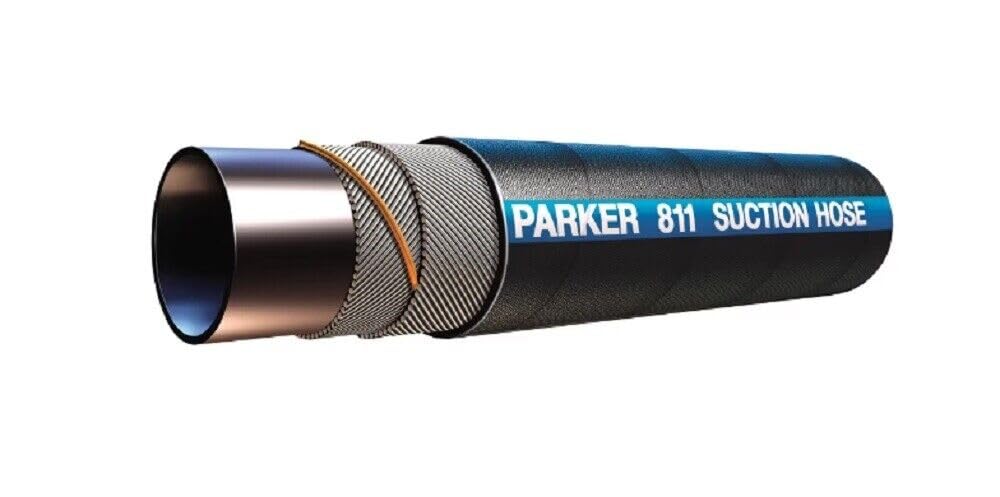
Image: A segment of the HH 811-24 hydraulic suction hose, showing its robust construction and smooth exterior. This hose is designed for reliable fluid transfer in industrial settings.
Setup and Installation
Proper installation is critical for the performance and longevity of the hydraulic hose.
- Measure and Cut: Carefully measure the required hose length. Use a specialized hose cutting tool to ensure a clean, square, and burr-free cut.
- Select Fittings: Choose appropriate hydraulic fittings that are compatible with the HH 811-24 hose and meet SAE 100R4 specifications. Ensure the fittings match the system's pressure and temperature requirements.
- Attach Fittings: Follow the fitting manufacturer's specific instructions for attachment. This typically involves crimping for permanent fittings or proper insertion and securing for field-attachable or barbed fittings. Ensure a secure, leak-free connection.
- Route Hose: Route the hose to avoid sharp bends, kinks, abrasion against other components, or excessive twisting. Allow for slight slack to accommodate pressure changes and system movement.
- Secure Hose: Use appropriate clamps or ties to secure the hose, preventing unnecessary movement or strain on the fittings.
- System Test: After installation, slowly pressurize the hydraulic system and carefully inspect all connections for leaks. Address any leaks immediately before full operation.
Operating Instructions
To ensure safe and efficient operation, adhere to the following guidelines:
- Stay Within Limits: Always operate the hydraulic system within the specified maximum working pressure (150 PSI) and temperature range (-40°C / -40°F to 100°C / 212°F) of the HH 811-24 hose.
- Monitor Performance: Regularly monitor the hose and system for any unusual noises, vibrations, or changes in fluid flow or pressure, which could indicate a problem.
- Avoid Surges: Minimize sudden pressure surges or rapid changes in flow, as these can stress the hose and fittings.
- Environmental Factors: Protect the hose from direct exposure to harsh chemicals, extreme UV radiation, or mechanical impact that could compromise its integrity.
Maintenance
Regular maintenance extends the life of your hydraulic hose and ensures safe operation.
- Daily/Pre-operation Inspection: Visually inspect the entire length of the hose for any signs of cuts, abrasions, bulges, cracks, leaks, or kinked areas. Check the integrity of all fittings for tightness and corrosion.
- Cleaning: Keep the exterior of the hose clean from dirt, debris, and chemical spills. Use mild soap and water if necessary, avoiding harsh solvents that could damage the synthetic rubber.
- Fluid Compatibility: Ensure that the hydraulic fluid used in the system is compatible with synthetic rubber to prevent internal degradation of the hose.
- Storage: When not in use, store the hose in a cool, dry environment away from direct sunlight, ozone-generating equipment, and corrosive chemicals. Avoid coiling the hose too tightly or placing heavy objects on it.
- Replacement: Replace the hose immediately if any damage is detected, or if it shows signs of aging such as hardening, cracking, or excessive flexibility loss.
Troubleshooting
This section addresses common issues you might encounter with your hydraulic suction hose.
| Problem | Possible Cause | Solution |
|---|---|---|
| Leakage at fittings | Improperly tightened fittings, damaged seals, incorrect fitting type, hose damage near fitting. | Ensure fittings are tightened to manufacturer specifications. Replace damaged seals or O-rings. Verify fitting compatibility. Inspect hose end for damage and replace if necessary. |
| Reduced flow or pressure | Kinked hose, internal blockage, collapsed hose, pump issue. | Inspect hose for kinks or external damage. Check for internal obstructions. If hose is collapsed, replace it. Verify pump functionality. |
| Hose bursting or sudden failure | Exceeded maximum working pressure, extreme temperature exposure, severe abrasion, material fatigue, improper installation. | Immediately depressurize the system. Replace the hose. Review operating conditions to ensure they are within specified limits. Inspect routing for abrasion points. |
| Hose hardening or cracking | Exposure to incompatible fluids, excessive heat, ozone exposure, prolonged UV exposure, natural aging. | Replace the hose. Ensure fluid compatibility. Protect hose from environmental stressors. Consider more frequent inspection in harsh environments. |
Specifications
Detailed technical specifications for the HH 811-24 Hydraulic Suction Hose.
| Feature | Detail |
|---|---|
| Model Number | HH 811-24 |
| Inside Diameter (ID) | 1-1/2 inches |
| Outside Diameter (OD) | 2.05 inches |
| Maximum Working Pressure | 150 PSI (Pound per Square Inch) |
| Temperature Range | -40°C / -40°F to 100°C / 212°F |
| Material | Synthetic Rubber |
| SAE Performance Standard | Meets or exceeds SAE 100R4 |
| Compatible Fittings | Parkrimp 43/81 series, 88 series field attachable, and barbed hose fittings |
Warranty and Support
For information regarding product warranty, technical support, or to purchase replacement parts, please contact the manufacturer or your authorized distributor. Keep your purchase receipt for warranty claims.


