
1. Introduction
Thank you for purchasing the KATO N Gauge H5 Series Hokkaido Shinkansen Hayabusa 6-Car Basic Set. This highly detailed model train set accurately reproduces the H5 Series Shinkansen, featuring its distinctive lavender belt and symbol. The set includes six cars designed for smooth and quiet operation on N Gauge tracks. This manual provides essential information for setting up, operating, and maintaining your model train to ensure a rewarding experience.
Key features of this model include a dynamic and speedy body shape, a body tilt mechanism for realistic cornering, a head coupling mechanism (H514-1), and a slotless motor for enhanced performance. The set comes in a book-shaped vehicle case for convenient storage.

Image 1: The KATO N Gauge H5 Series Hokkaido Shinkansen Hayabusa 6-Car Basic Set neatly arranged in its book-shaped storage case.
2. Safety Information
This product is a precision model and should be handled with care. It contains small parts and is not intended for children under 8 years of age without adult supervision. Always ensure the model is placed on a stable surface during operation. Keep fingers and loose clothing away from moving parts. This model is track-powered and does not use batteries or fuel. Do not attempt to modify the electrical components.
3. Package Contents
The KATO N Gauge H5 Series Hokkaido Shinkansen Hayabusa 6-Car Basic Set (Model 10-1967) includes the following:
- 6 x H5 Series Hokkaido Shinkansen Hayabusa train cars
- 1 x Destination indicator seal sheet
- 1 x Book-shaped vehicle storage case
4. Setup
4.1 Unpacking the Train Cars
Carefully remove each train car from its designated slot within the book-shaped storage case. Handle the models by their sides to avoid damaging delicate details such as pantographs or couplers.
4.2 Placing on Tracks
Gently place each car onto a compatible N Gauge track layout. Ensure all wheels are properly seated on the rails. The model is designed for N Gauge (1:160 scale) tracks.
4.3 Connecting Cars
The train cars feature a realistic connecting mechanism. Align the couplers between cars and gently push them together until they securely connect. The outer holo of the connecting part rotates, mimicking the real train's design. Ensure all cars are connected in the correct sequence as indicated in the packaging or by car numbers.

Image 2: Close-up of the connection between two cars, highlighting the detailed coupling and the H5 Series livery.
4.4 Applying Destination Indicator Seals
The set includes a sheet of destination indicator seals. Carefully cut out the desired destination and apply it to the designated areas on the side of the train cars. Refer to the seal sheet for specific placement instructions. The side destination indication is black solid printed on the model, and these seals allow for customization.

Image 3: The included destination indicator seal sheet, offering various route options for customization.
4.5 Head Coupling Mechanism
The lead car (H514-1) is equipped with a head coupling mechanism, allowing for realistic coupling with other compatible train sets, such as the E6 Shinkansen (sold separately). To expose the coupler, gently open the nose cone as instructed in the detailed product diagrams.

Image 4: The lead car with its nose cone opened to show the integrated head coupling mechanism.
5. Operating Instructions
5.1 Power Source
This railway model is a system that receives power directly from the rails. It does not require batteries for driving, illumination, or lighting. Ensure your N Gauge track layout is properly connected to a compatible power pack or controller.
5.2 Controller Usage
Use a standard N Gauge manual/hand control type controller to operate the train. Adjust the speed and direction according to your preference. The slotless motor ensures a smooth and quiet ride.
5.3 Head/Tail Lights
The lead and tail cars are equipped with white LED head/tail lights that illuminate automatically depending on the direction of travel. Ensure sufficient power is supplied to the tracks for optimal light performance.
5.4 Body Tilt Mechanism
The H5 Series model incorporates a body tilt mechanism, allowing the train to lean into curves just like the real Shinkansen. This feature enhances the realism of your model railway operation.
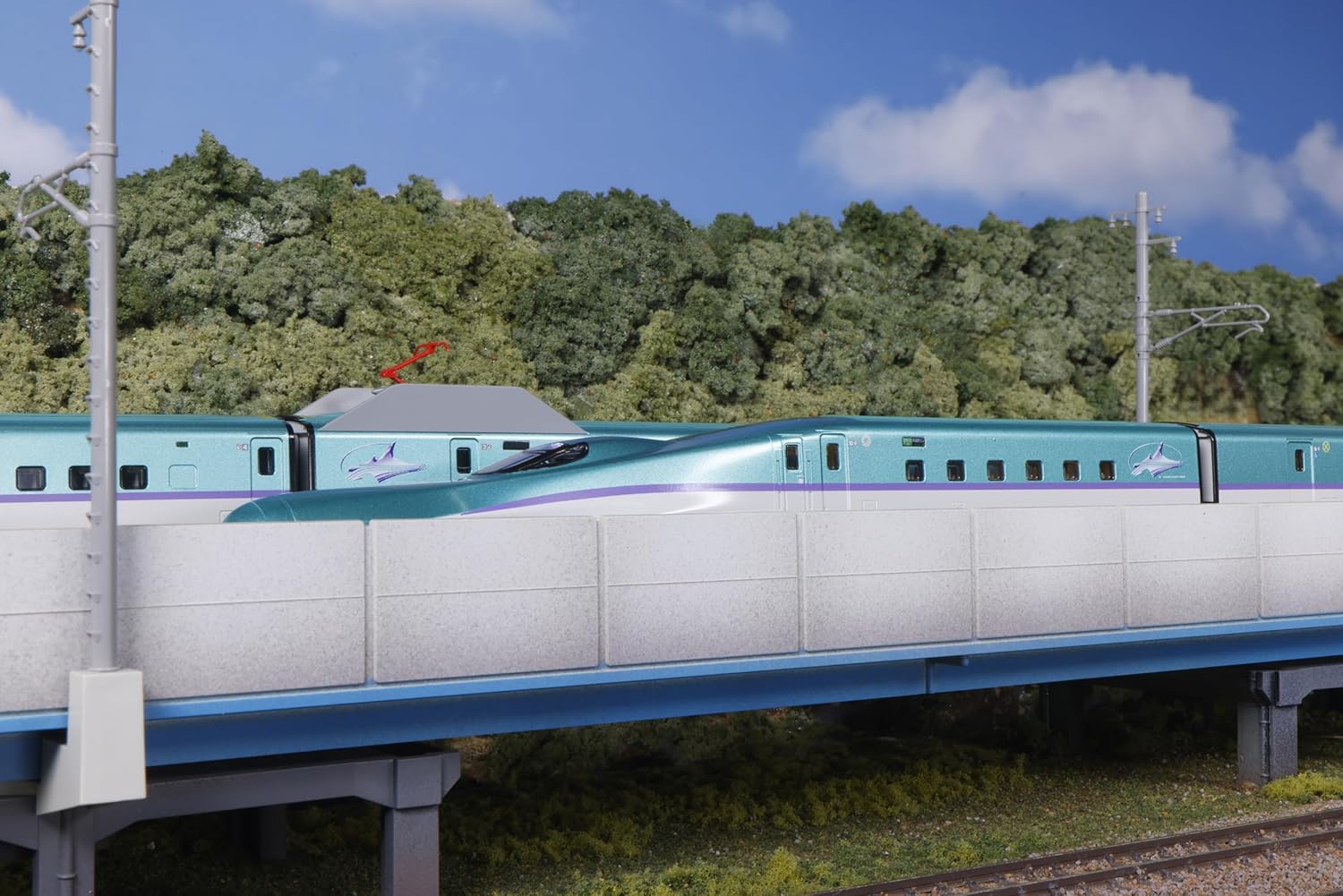
Image 5: The H5 Series Shinkansen demonstrating its realistic body tilt mechanism while navigating a curve on a diorama.
6. Maintenance
6.1 Cleaning the Model
To maintain the appearance and performance of your train, regularly clean the car bodies with a soft, dry cloth. Avoid using harsh chemicals or abrasive materials. For stubborn dirt, a slightly damp cloth can be used, followed by immediate drying.
6.2 Wheel and Track Cleaning
Ensure the wheels of the train cars and the track rails are clean and free of dust or debris. Dirt on these surfaces can impede electrical contact and affect smooth operation. Use a specialized track cleaning tool or a soft cloth with isopropyl alcohol for cleaning rails and wheels.
6.3 Storage
When not in use, store the train set in its original book-shaped vehicle case. This protects the models from dust, damage, and UV light, preserving their condition for years to come.
7. Troubleshooting
- Train Not Moving:
- Check if the power pack is turned on and properly connected to the track.
- Ensure all train wheels are correctly seated on the rails.
- Clean the track rails and train wheels to ensure good electrical contact.
- Verify that all cars are securely coupled.
- Lights Not Working:
- Confirm the train is receiving power from the track.
- Check the direction of travel; head/tail lights illuminate based on direction.
- Ensure no physical obstructions are blocking the light source.
- Train Derails Frequently:
- Inspect the track for any misalignments, gaps, or uneven sections.
- Ensure all cars are properly coupled and not binding.
- Reduce the speed, especially on curves or complex track sections.
- Check for any foreign objects on the track or wheels.
8. Specifications
| Feature | Detail |
|---|---|
| Brand Name | Kato |
| Model Name | H5 Series Hokkaido Shinkansen Hayabusa |
| Model Number | 10-1967 |
| Scale | N Gauge |
| Number of Pieces | 6 (train cars) |
| Material Type | Plastic |
| Power Source | Track-Powered |
| Special Features | Body Tilt Mechanism, Head Coupling Mechanism, Slotless Motor, White LED Head/Tail Lights, Unique Storage Case |
| Item Dimensions (per car, approx.) | 6.3 x 0.79 x 1.18 inches |
| Item Weight (total) | 0.69 Kilograms |
| Controller Type | Manual/Hand Control (external controller required) |
| Operation Mode | Automatic |
| Assembly Required | No (minor setup like seal application) |
9. Warranty Information
Specific warranty details for the KATO N Gauge H5 Series Hokkaido Shinkansen Hayabusa 6-Car Basic Set are not provided within the product information. Please retain your proof of purchase and contact the retailer or the manufacturer directly for any warranty-related inquiries.
10. Customer Support
Direct customer support contact information is not provided in the product details. For assistance with your KATO N Gauge H5 Series Hokkaido Shinkansen Hayabusa 6-Car Basic Set, please refer to the manufacturer's official website or contact the retailer from whom you purchased the product. They will be able to provide guidance or direct you to appropriate support channels.


