
VIHELM HT107B
VIHELM HT107B LCD Display Socket Tester User Manual
Model: HT107B
1. Introduction
The VIHELM HT107B is an advanced LCD display socket tester designed for quickly and accurately detecting the correct electrical connection of US standard sockets. It features voltage testing, frequency display, phase voltage (L_N), leakage voltage (N_E), and GFCI test capabilities, ensuring household electrical safety.
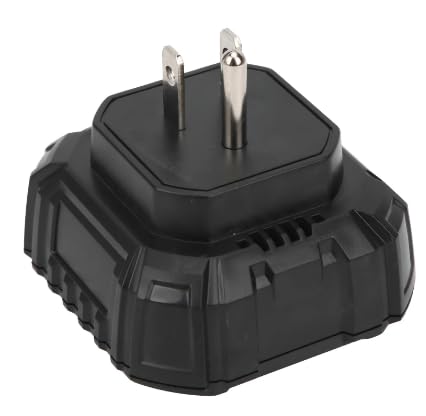
Image 1: Front view of the VIHELM HT107B LCD Display Socket Tester, showing its compact design and US plug type.
2. Features
- Quickly detects correct electrical connection of sockets.
- LCD display shows test frequency, phase voltage (L_N), leakage voltage (N_E), and accurate measurements.
- Multifunctional electrician detector for household electrical safety.
- Time-saving tool for socket problem detection.
- Portable and suitable for electricians.
- Widely used for electrical maintenance testing in schools, laboratories, factories, offices, and homes.
- GFCI test function for ground fault circuit interrupter protection.
3. Product Overview
The HT107B socket tester features an LCD display and indicator lights to present testing results clearly.
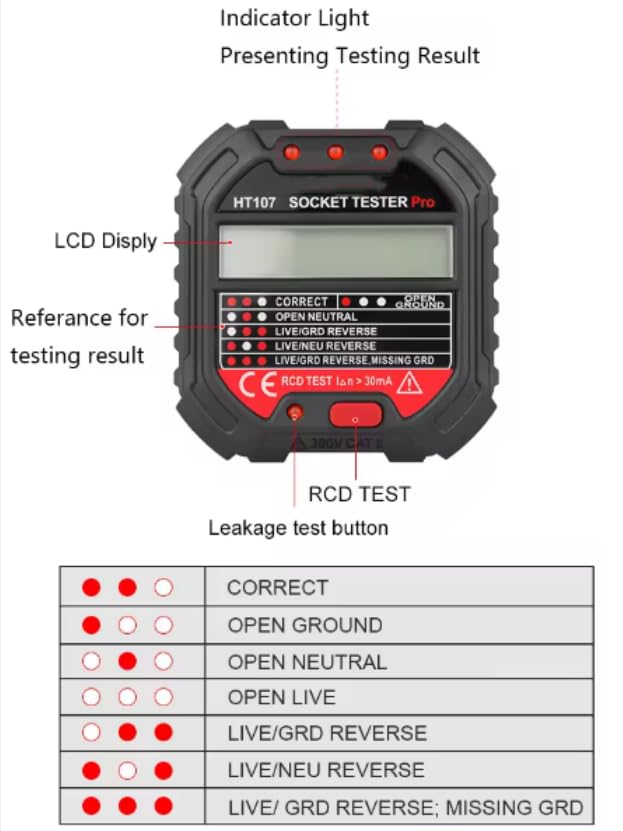
Image 2: Diagram showing the LCD display, indicator lights, and RCD test button on the HT107B socket tester.
- LCD Display: Shows voltage, frequency, and other measurement data.
- Indicator Lights: Red and orange lights indicate wiring status.
- RCD Test Button: Initiates the Residual Current Device (GFCI) test.
4. Specifications
| Parameter | Value |
|---|---|
| Item Type | Socket Tester |
| Material | ABS |
| Working Voltage | 90-250V 45-65HZ |
| Phase Voltage Measurement Range | 90-250V, 45-65HZ, Accuracy: ± (2.0%+2) |
| Leakage Voltage Measurement Range | 0-99V/45-65HZ, Accuracy: ± (2.0%+2) |
| Working Temperature | 0°C-40°C |
| Working Humidity | 20%-75%RH |
| Storage Temperature | -10°C-50°C |
| Storage Humidity | 20%-80%RH |
| Altitude | ≤2000 Meters |
| RCD Current | 30mA |
| RCD Working Voltage | 220V±20V |
| GFCI Test | 5mA |
| GFCI Working Voltage | 110V±20V (ground fault current leakage protector, North American market specific) |
5. Operating Instructions
5.1 Basic Socket Testing
- Plug the HT107B tester into a standard 3-hole power socket.
- Observe the indicator lights and the LCD display. The tester will automatically detect the socket wiring sequence.
- Refer to the "Socket Wiring Indication Table" below to interpret the results. If an error in the socket wiring sequence is detected, the red backlight will light up to indicate a wiring error.
- If a wiring error is detected, unplug the tester and consult a professional electrician to repair the wiring.
5.2 Socket Wiring Indication Table
The tester uses a combination of red and orange indicator lights to show the wiring status. A solid red circle (●) indicates the light is ON, while an empty circle (○) indicates it is OFF.
Image 3: Reference for testing results, showing indicator light patterns for different wiring conditions on the HT107B tester.
| Indicator Pattern | Wiring Status |
|---|---|
| ● ● ● | CORRECT |
| ● ○ ● | OPEN GROUND |
| ● ● ○ | OPEN NEUTRAL |
| ○ ● ● | OPEN LIVE |
| ○ ● ○ | LIVE/GRD REVERSE |
| ● ○ ○ | LIVE/NEU REVERSE |
| ○ ○ ○ | LIVE/GRD REVERSE; MISSING GRD |
Note: If "Phase and ground are wrong and lack of ground" (Live and Ground Reverse; Missing Ground) is indicated, it means the live wire and the ground wire are reversely connected, and the ground wire is not connected. This tester cannot distinguish between the reverse connection of the neutral wire and the ground wire in this specific scenario.
5.3 GFCI (RCD) Test
- Ensure the socket wiring is CORRECT before performing a GFCI test.
- Plug the HT107B tester into the socket.
- Press the "RCD TEST" button on the tester.
- A properly functioning GFCI outlet should trip (power off) when the button is pressed. If the GFCI does not trip, it indicates a fault with the GFCI outlet and it should be replaced by a qualified electrician.
- Important: The GFCI test function is specifically designed for North American market ground fault current leakage protectors (110V±20V).
6. Applications
The VIHELM HT107B socket tester is suitable for a wide range of applications where electrical socket safety and wiring verification are required.
- Home Use: Checking household sockets for correct wiring and GFCI functionality.
- Office Environments: Ensuring safe electrical connections for office equipment.
- Industrial Settings: Testing factory and workshop sockets.
- Educational Institutions: For electrical maintenance testing in schools and laboratories.
- Professional Electricians: A portable tool for quick diagnostics.
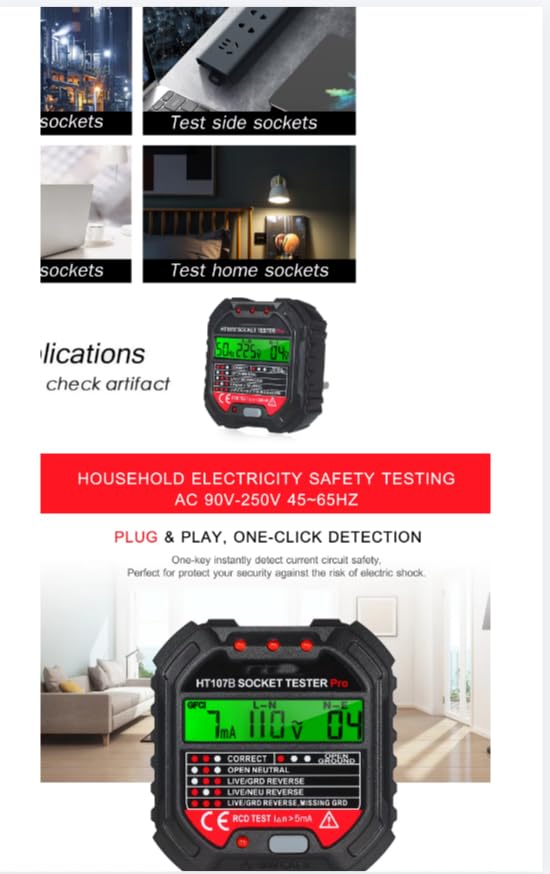
Image 4: Examples of the HT107B socket tester being used in different settings, including home, office, and industrial environments.
7. Safety Information and Precautions
- Always ensure the tester is in good working condition before use.
- Do not use the tester if it appears damaged.
- Never attempt to open or repair the device yourself. Refer to qualified personnel.
- This device is for testing purposes only. Do not use it as a permanent plug or adapter.
- When a wiring error is detected, always consult a professional electrician for repairs. Do not attempt to fix electrical wiring unless you are qualified.
- Keep out of reach of children.
- Observe all local electrical safety regulations.
8. Maintenance
- Clean the device with a soft, dry cloth. Do not use abrasive cleaners or solvents.
- Store the tester in a cool, dry place, away from direct sunlight and extreme temperatures.
- Avoid dropping or subjecting the device to strong impacts.
9. Troubleshooting
If the tester indicates a wiring fault, refer to the "Socket Wiring Indication Table" in Section 5.2 to identify the specific issue. Common issues and actions:
- Incorrect Wiring Indication: If any pattern other than "CORRECT" is displayed, the socket wiring is faulty. Unplug the tester immediately and contact a qualified electrician for inspection and repair.
- GFCI Does Not Trip: If the GFCI test button is pressed and the GFCI outlet does not trip, the GFCI mechanism is faulty. This poses a safety risk. The GFCI outlet should be replaced by a qualified electrician.
- No Display/No Lights: Ensure the tester is fully inserted into a live socket. If still unresponsive, the tester may be faulty or the socket has no power. Test with a known working socket.
10. Customer Support
For technical assistance or warranty inquiries, please contact VIHELM customer support through your retailer or the official VIHELM website.
Ask a question about this manual
Ask about setup, troubleshooting, compatibility, parts, safety, or missing instructions. Manuals+ will review the question and use this page’s manual context to help answer it.