
Bottleboom 6-in-1 Solar Power Robots Kit
Bottleboom STEM 6-in-1 Solar Power Robots Kit Instruction Manual
Model: 6-in-1 Solar Power Robots Kit
Introduction
The Bottleboom STEM 6-in-1 Education Solar Power Robots Kit is an innovative and engaging educational toy designed to introduce children aged 8-12 to the principles of solar energy, robotics, and engineering. This kit allows for the construction of six distinct robot models, each powered by solar energy, providing a hands-on learning experience that combines fun with fundamental scientific concepts. The models include a Space Shuttle, Space Station, Space Dog, Astronaut, Space Explorer, and Space Rover.

Image: Overview of the six distinct robot models that can be constructed with the kit, showcasing their unique designs and the central solar power module.
Product Components
Before beginning assembly, ensure all components listed below are present in your kit. Refer to the 'Product Accessories' image for a visual guide to the parts.
- Solar space robots components (various plastic parts for building 6 models)
- Solar power panel
- Micro rechargeable battery
- AAA Battery Case (for alternative power)
- Motor
- Gears and shafts
- Instruction manual

Image: All components included in the kit, neatly laid out, showing the plastic parts, solar panel, motor, battery holder, and assembly manual.
Setup and Assembly
Assembly of the Bottleboom 6-in-1 Solar Power Robots Kit requires careful attention to the included instruction manual. Each of the six models shares a common core power unit, which is then adapted with different structural components to form the desired robot. Follow the step-by-step diagrams provided in the physical manual for detailed instructions.
General Assembly Steps:
- Solar Panel Module Assembly: Begin by assembling the solar panel unit, ensuring all connections are secure. This forms the primary power source for your robots.
- Body Module Assembly: Construct the main body module, which will house the motor and gear system. Pay close attention to gear alignment for smooth operation.
- Solar Panels Connection: Connect the assembled solar panel module to the main body module. Ensure the wiring is correctly routed and securely attached.
- Model-Specific Assembly: Once the core power unit is complete, proceed with assembling the specific robot model of your choice (e.g., Space Explorer, Astronaut) by attaching the designated structural parts.

Image: Visual representation of the four key assembly steps, from solar panel module construction to the completion of a robot model.
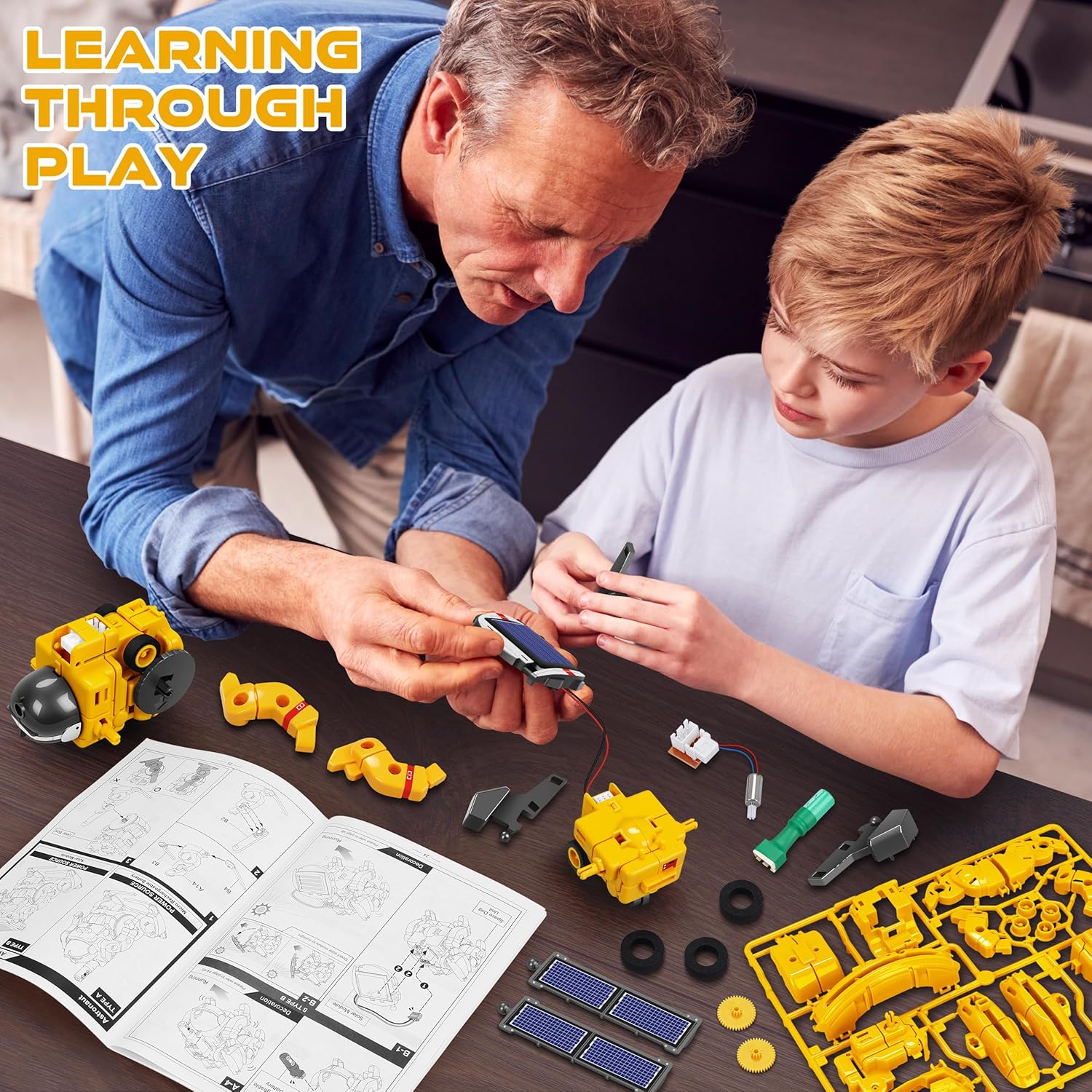
Image: An adult and child engaged in the assembly process, demonstrating the hands-on learning aspect of the kit.
Operating Instructions
The Bottleboom Solar Power Robots are designed to operate primarily using solar energy. They can also be powered by a micro rechargeable battery, which offers flexibility for indoor or low-light conditions.
Solar Power Operation:
Place the assembled robot in direct sunlight. The solar panel will convert solar heat energy into electrical energy to power the motor and drive the robot. Ensure the solar panel is clean and unobstructed for optimal performance.

Image: A robot model demonstrating the solar panel's function in converting sunlight into energy for movement.
Micro Rechargeable Battery Operation:
The kit includes a micro rechargeable battery that can be charged in two ways:
- Charging by Solar Module: Connect the micro rechargeable battery to the solar panel module. Charging times vary based on weather conditions: approximately 5 minutes to 1 hour in sunny conditions, and 10 minutes to 3 hours in cloudy conditions.
- Charging by Battery Module: The micro rechargeable battery can also be charged using the AAA battery case. This method provides a quicker charge, typically within 10 to 30 seconds.

Image: A visual guide detailing the two methods for charging the micro rechargeable battery, including estimated charging durations.
Exploring the 6 Models:
The kit allows you to build and operate six distinct space-themed robots. Each model offers a unique design and movement pattern. Follow the specific assembly instructions for each model in the manual to transform your core unit into a:
- Space Shuttle
- Space Station
- Space Dog
- Astronaut
- Space Explorer
- Space Rover

Image: A collage showcasing the six unique robot configurations possible with the kit, highlighting their diverse forms.
Maintenance
Proper maintenance will ensure the longevity and optimal performance of your Bottleboom Solar Power Robots.
- Cleaning: Use a soft, dry cloth to gently wipe down the robot parts, especially the solar panel, to remove dust and debris. Avoid using water or harsh chemicals, as they can damage the electronic components.
- Storage: When not in use, store the robot and its components in a cool, dry place away from direct sunlight and extreme temperatures. Keep small parts in a designated container to prevent loss.
- Handling: Handle the assembled robots with care, particularly the delicate gears and connections. Avoid dropping or applying excessive force to the models.
Troubleshooting
If your robot is not functioning as expected, consider the following troubleshooting steps:
- Robot Not Moving (Solar Power):
- Ensure the robot is in direct sunlight. Indoor lighting or indirect sunlight may not be sufficient to power the motor.
- Check if the solar panel is clean and free of dust or obstructions.
- Verify that all electrical connections from the solar panel to the motor are secure and correctly inserted.
- Robot Not Moving (Battery Power):
- Ensure the micro rechargeable battery is fully charged.
- If using the AAA battery case, confirm that the AAA batteries are new and correctly inserted with the correct polarity.
- Check all wire connections, especially those to the battery case and motor, for any looseness or damage.
- Gears Not Engaging/Robot Jams:
- Disassemble the affected section and re-check gear alignment according to the instruction manual. Gears must mesh smoothly.
- Ensure no small plastic burrs or foreign objects are obstructing the gears.
- Parts Not Fitting Together:
- Refer to the instruction manual to ensure you are using the correct parts for the current step.
- Apply gentle, even pressure. Do not force parts together, as this can cause breakage.
Specifications
| Feature | Detail |
|---|---|
| Product Dimensions | 0.3 x 0.3 x 0.3 inches |
| Item Weight | 9.9 ounces |
| Recommended Age | 8 - 16 years |
| Power Source | Solar Power, Micro Rechargeable Battery, AAA Battery (not included) |
| Number of Models | 6 unique robot models |
| Manufacturer | Bottleboom |
Warranty and Support
For information regarding product warranty, returns, or technical support, please refer to the contact details provided on the product packaging or visit the official Bottleboom website. Keep your purchase receipt as proof of purchase.
Ask a question about this manual
Ask about setup, troubleshooting, compatibility, parts, safety, or missing instructions. Manuals+ will review the question and use this page’s manual context to help answer it.