
1. Introduction
Welcome to the user manual for your Bmax Y13 Pro 2-in-1 Touchscreen Laptop. This device combines the functionality of a laptop with the versatility of a tablet, featuring a 13.3-inch Full HD IPS touch display and a 360-degree flip design. Powered by an Intel 12th Gen N100 processor, 16GB DDR5 RAM, and a 512GB SSD, it is designed for efficient performance in various tasks, from work and study to daily entertainment. This manual provides essential information for setting up, operating, maintaining, and troubleshooting your device.
2. Package Contents
Please verify that all items are present in your package:
- Bmax Y13 Pro 2-in-1 Touchscreen Laptop
- Power Adapter/Charger
3. Product Overview
The Bmax Y13 Pro is designed for flexibility and performance. Below are key features and components.

Figure 3.1: The Bmax Y13 Pro 2-in-1 Touchscreen Laptop, showcasing its 13.3-inch display and sleek design.
3.1 Key Features
- Intel 12th Gen N100 Processor: Efficient performance for daily computing.
- 13.3" FHD IPS Touch Display: Vibrant visuals and interactive control.
- 360° Flip Design: Transforms between laptop, tablet, tent, and stand modes.
- 16GB DDR5 RAM & 512GB SSD: Fast multitasking and ample storage.
- Backlit Keyboard: Enhanced typing experience in low-light conditions.
- Connectivity: Dual-band WiFi 5, Bluetooth 4.2, USB Type-C ports, Micro SD slot.
3.2 Processor and Performance

Figure 3.2: Diagram illustrating the Intel 12th Gen N100 Processor with its 4 cores, 4 threads, 6M cache, 6W power consumption, and 3.40GHz turbo frequency.
The laptop is equipped with an Intel 12th Gen N100 processor, featuring 4 cores and 4 threads, designed for balanced power and energy efficiency. It operates at up to 3.4GHz, suitable for everyday computing tasks.
3.3 Memory and Storage

Figure 3.3: Visual representation of the laptop's 16GB LPDDR5 RAM and 512GB SSD storage, highlighting M.2 2280 expansion capability.
With 16GB LPDDR5 RAM and a 512GB SSD, the Bmax Y13 Pro offers substantial capacity for multitasking and rapid data access. Storage can be expanded via a microSD card.
3.4 Display and Convertible Design

Figure 3.4: Details of the 13.3-inch FHD 1920x1080 IPS display, featuring a slim 5mm bezel and 81.7% screen-to-body ratio.
The 13.3-inch FHD (1920x1080) IPS touchscreen display provides clear and vibrant visuals. Its slim bezel design enhances the viewing experience. The 360° flip design allows for multiple usage modes:

Figure 3.5: The Bmax Y13 Pro shown in laptop, tent, stand, and tablet modes, demonstrating its 360° convertible functionality.
- Laptop Mode: Traditional laptop use for typing and productivity.
- Tent Mode: Ideal for presentations or watching videos in confined spaces.
- Stand Mode: Perfect for media consumption or video calls.
- Tablet Mode: Fully folded back for touchscreen interaction.
3.5 Keyboard and Touchpad
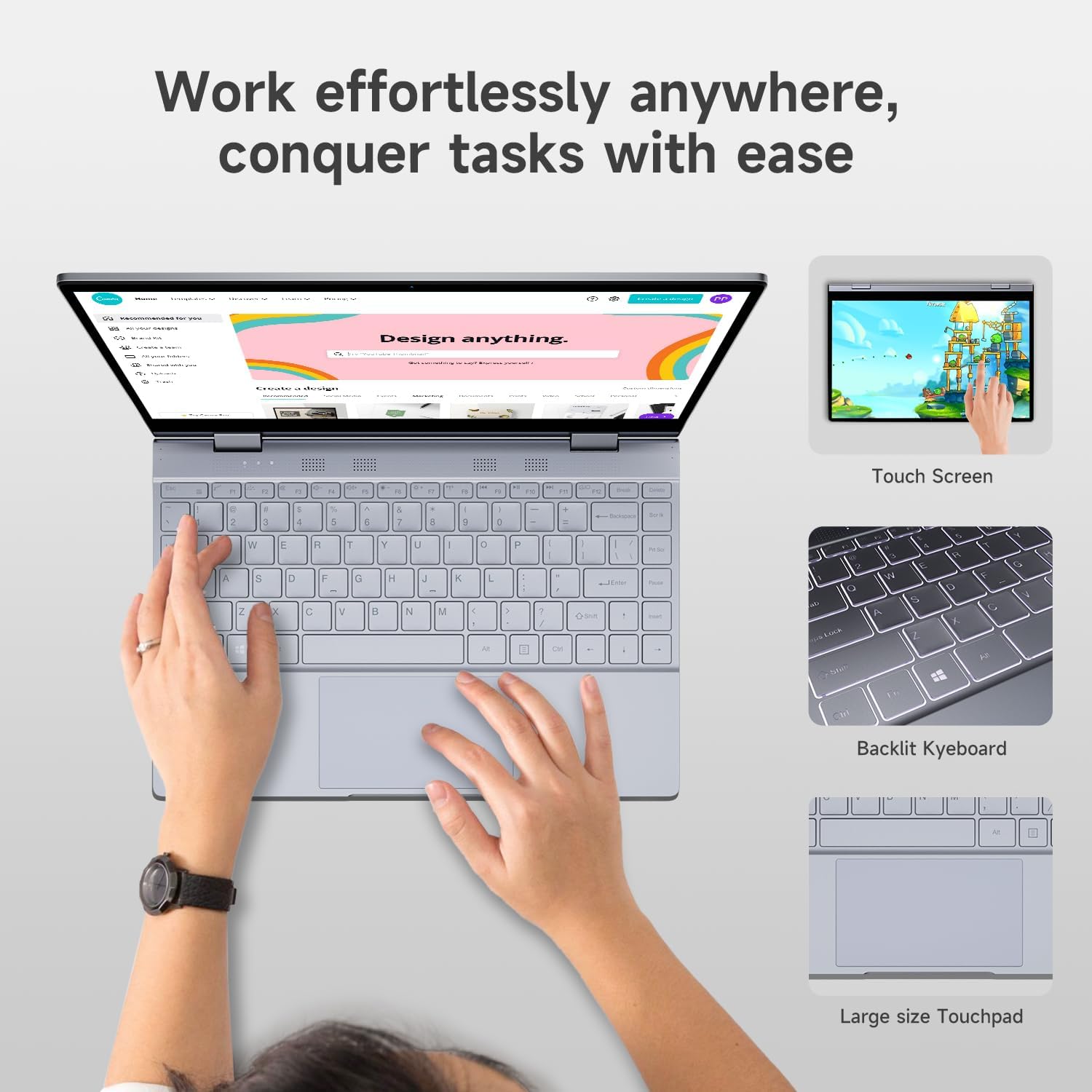
Figure 3.6: Close-up of the Bmax Y13 Pro's backlit keyboard and large touchpad, designed for comfortable input.
The laptop features a backlit keyboard for comfortable typing in various lighting conditions and a large touchpad for precise navigation.
3.6 Ports and Connectivity

Figure 3.7: Detailed view of the laptop's ports, including two Type-C ports (one full-featured, one for data transmission), a 3.5mm headset jack, a Micro SD slot, and the power button.
The Bmax Y13 Pro includes multiple ports for diverse connectivity needs:
- 2 x USB Type-C ports (one full-featured, one for data transmission)
- 1 x 3.5mm Headset Jack
- 1 x Micro SD Slot
Wireless connectivity is provided by Dual-band WiFi 5 and Bluetooth 4.2.
4. Setup
4.1 Initial Charging
Before first use, connect the provided power adapter to the laptop's Type-C charging port and a power outlet. Allow the device to charge for at least 30 minutes, or until the battery indicator shows sufficient charge, before powering it on.
4.2 Powering On and Initial Setup
- Press and hold the Power Button (located on the side, near the Micro SD slot) until the screen illuminates.
- Follow the on-screen prompts to complete the Windows operating system setup. This typically includes selecting your language, region, connecting to a Wi-Fi network, and creating a user account.
- Ensure your device is connected to the internet to download necessary updates during the setup process.
5. Operating Instructions
5.1 Using the Touchscreen
The 13.3-inch display supports multi-touch gestures. You can interact with the operating system and applications directly on the screen using your fingers. Common gestures include:
- Tap: Equivalent to a mouse click.
- Tap and Hold: Equivalent to a right-click.
- Pinch-to-Zoom: Use two fingers to zoom in or out.
- Swipe: Navigate through content or activate system functions (e.g., opening Action Center).
5.2 Switching Between Modes
The 360° hinge allows you to seamlessly switch between laptop, tent, stand, and tablet modes. Simply rotate the screen to your desired configuration. The operating system may automatically detect the mode change and adjust the display and input methods accordingly (e.g., enabling Tablet Mode in Windows).
5.3 Keyboard Functions
The keyboard includes standard keys and function keys (F1-F12) that can be activated with the Fn key for special functions like adjusting brightness, volume, or enabling/disabling Wi-Fi. The keyboard backlight can typically be toggled using a dedicated function key combination (refer to keyboard icons).
5.4 Connecting Peripherals
- USB Type-C: Use the Type-C ports to connect compatible devices, external displays, or for charging.
- 3.5mm Headset Jack: Connect headphones or external speakers.
- Micro SD Slot: Insert a Micro SD card for expanded storage.
- Bluetooth: Pair Bluetooth devices (e.g., mice, keyboards, headphones) through Windows settings.
- Wi-Fi: Connect to wireless networks via Windows network settings.
6. Maintenance
6.1 Cleaning Your Laptop
- Screen: Use a soft, lint-free cloth slightly dampened with water or a screen cleaner. Avoid harsh chemicals.
- Keyboard and Chassis: Use a soft cloth. For stubborn dirt, a slightly damp cloth is acceptable. Ensure no liquid enters openings.
- Ports: Use compressed air to gently clear dust from ports.
6.2 Battery Care
- Avoid extreme temperatures, as they can degrade battery life.
- For optimal battery longevity, avoid consistently discharging the battery completely or keeping it at 100% charge for extended periods.
- If storing the laptop for a long time, charge it to about 50-60% before turning it off.
6.3 Software Updates
Regularly check for and install operating system updates (Windows Update) and driver updates to ensure optimal performance and security.
7. Troubleshooting
This section addresses common issues you might encounter.
7.1 Power and Charging Issues
- Laptop not turning on: Ensure the laptop is charged. Connect the power adapter and wait a few minutes before attempting to power on again.
- Laptop not charging: Verify the power adapter is securely connected to both the laptop and the power outlet. Try a different outlet. Ensure the Type-C port used for charging is functional.
- Laptop gets hot while charging: It is normal for laptops to generate some heat during charging or heavy use. If the heat is excessive or causes discomfort, ensure proper ventilation and avoid using the laptop on soft surfaces that block vents.
7.2 Display and Touchscreen Problems
- Screen is blank: Ensure the laptop is powered on. Try adjusting screen brightness. Connect to an external monitor to check if the issue is with the laptop's display.
- Touchscreen unresponsive: Restart the laptop. Ensure there are no physical obstructions or excessive dirt on the screen. Check for updated display drivers.
7.3 Connectivity Issues
- Wi-Fi not connecting: Check if Wi-Fi is enabled in Windows settings. Restart your router and the laptop. Ensure you are entering the correct Wi-Fi password.
- Bluetooth device not pairing: Ensure Bluetooth is enabled on both the laptop and the device. Place devices close to each other. Try removing and re-pairing the device.
7.4 General Performance Issues
- Slow performance: Close unnecessary applications. Check for sufficient free storage space. Run a virus scan. Ensure Windows and drivers are up to date.
- System crashes/freezes: Perform a system restart. Check for recent software installations that might be causing conflicts.
8. Specifications
| Feature | Specification |
|---|---|
| Brand | Bmax |
| Model Name | Y13 Pro |
| Standing Screen Display Size | 13.3 Inches |
| Screen Resolution | 1920 x 1080 pixels (FHD IPS) |
| Processor | Intel 12th Gen N100 (up to 3.4 GHz) |
| RAM | 16 GB DDR5 |
| Hard Drive | 512 GB SSD |
| Graphics Coprocessor | Intel UHD Graphics |
| Operating System | OS |
| Wireless Type | 802.11a/b/g/n/ac (WiFi 5) |
| Bluetooth | 4.2 |
| Number of USB 3.0 Ports | 2 (Type-C) |
| Item Weight | 2.75 pounds |
| Product Dimensions | 12 x 8.1 x 0.57 inches |
| Battery | 38.0Wh Lithium Polymer (up to 6-8 hours usage) |
| Special Features | Backlit Keyboard, Memory Card Slot (Micro SD) |
9. Warranty Information
The Bmax Y13 Pro laptop typically comes with a 12-month repair period from the date of purchase. Additionally, a 30-day return policy may apply, subject to the retailer's terms and conditions. Please retain your proof of purchase for warranty claims. For specific warranty details and terms, refer to the documentation included with your product or contact Bmax customer support.
10. Support
For further assistance, technical support, or inquiries regarding your Bmax Y13 Pro laptop, please refer to the following resources:
- Online Support: Visit the official Bmax website for FAQs, driver downloads, and support contact information.
- Retailer Support: Contact the retailer from whom you purchased the device for return or exchange policies.
- Email Support: Check the Bmax website for dedicated email support channels.
Bmax offers 24-hour online support for after-sales service.
