
1. Introduction
This manual provides essential information for the safe and effective use of your TUXING 0.22L 4500Psi High Pressure Composite Cylinder. This high-purity carbon fiber tank is designed for various applications including PCP air rifles, deep diving, snorkeling, and as a fill station for gas loading. Please read this manual thoroughly before operation and retain it for future reference.
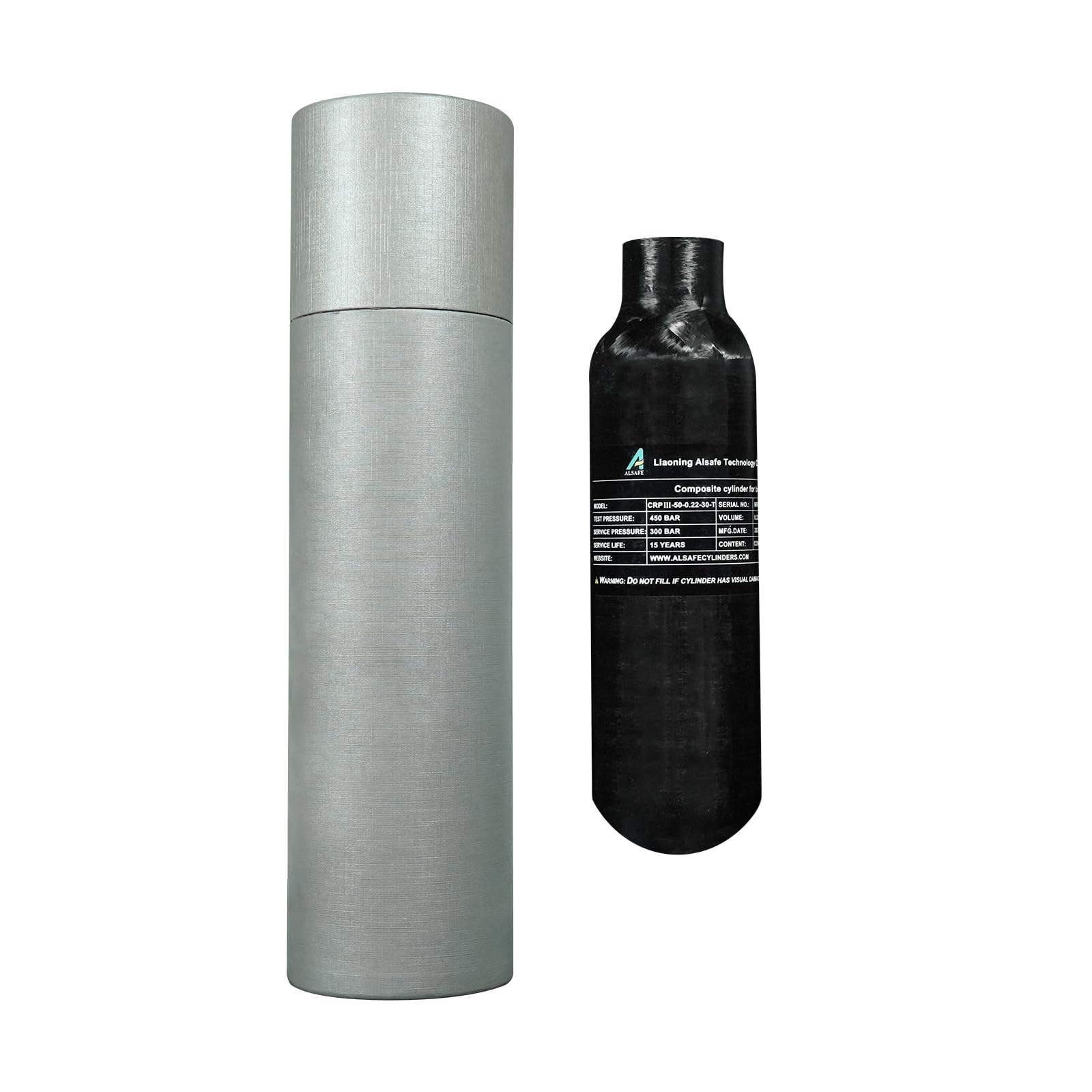
Image: The TUXING 0.22L 4500Psi High Pressure Composite Cylinder, showcasing its compact design.
2. Safety Information
Operating high-pressure equipment requires strict adherence to safety protocols. Failure to follow these instructions can result in serious injury or death.
- Pressure Warning: This cylinder operates at a working pressure of 300 bar (4500 psi). Never exceed the maximum working pressure.
- Visual Inspection: Always inspect the cylinder for any visual damage (cracks, dents, deep scratches, or delamination) before each use. DO NOT FILL IF CYLINDER HAS VISUAL DAMAGE.
- Certification: This product is CE Certified. It is NOT DOT approved. Ensure compliance with local regulations for high-pressure cylinders.
- Temperature: Avoid exposing the cylinder to extreme temperatures.
- Handling: Handle the cylinder with care. Do not drop or subject it to impact.
- Filling: Only fill the cylinder using appropriate, certified filling equipment and by trained personnel. Ensure the filling station is compatible with the M18*1.5 thread.
- Maintenance: Adhere to the recommended inspection cycle and service life.

Image: Close-up view of the cylinder's label, displaying model, test pressure, service pressure, service life, and a critical warning: "DO NOT FILL IF CYLINDER HAS VISUAL DAMAGE."
3. Product Components
The TUXING 0.22L 4500Psi High Pressure Composite Cylinder consists of the following primary components and materials:
- Composite Cylinder Body: Constructed with an imported AL6061 aluminum alloy liner.
- Winding: Full-wrapped with high-purity carbon fiber and glass fiber for enhanced strength and durability.
- External Surface Treatment: Epoxy coating for wear and impact resistance.
- Neck Thread: Standard M18*1.5-6H thread for connection to compatible valves and filling stations.

Image: An exploded view illustrating the high-performance construction of the cylinder, detailing the AL6061 aluminum alloy liner, carbon fiber full-wrapped winding, glass fiber over-wrapped winding, and the epoxy coating for corrosion resistance and stable performance.
4. Specifications
| Feature | Specification |
|---|---|
| Capacity | 0.22 Liters / 13 Cubic Inches / 220cc |
| Neck Thread | M18*1.5-6H |
| Working Pressure | 30 MPa / 300 Bar / 4500 Psi |
| Hydrostatic Test Pressure | 50 MPa / 500 Bar |
| Minimum Burst Pressure | 102 MPa |
| Certification | CE Certificate (Not DOT approved) |
| Inspection Cycle | 3 Years |
| Service Life | 15 Years |
| Liner Material | Imported AL6061 Aluminum Alloy |
| Winding Material | Carbon Fiber and Glass Fiber |
| Actual Weight | 0.34 kg / 12 ounces |
| Length | 194 mm / 7.64 inches |
| Outer Diameter | 54 mm / 2.13 inches |

Image: Detailed specifications and dimensions of the 0.22L PCP Air Tank, showing its length of 194mm and outer diameter of 54mm, along with volume, weight, and pressure ratings.
5. Setup
Before using the TUXING PCP Air Tank, ensure proper setup and connection to a compatible air compressor or filling station.
- Inspect the Tank: Perform a thorough visual inspection of the cylinder for any signs of damage as described in the Safety Information section.
- Prepare Filling Equipment: Ensure your air compressor or filling station is rated for 4500 psi (300 bar) and has a compatible M18*1.5 thread connection.
- Connect the Tank: Carefully screw the tank onto the filling hose or adapter of your air compressor. Ensure the connection is secure and hand-tight. Do not overtighten.
- Check for Leaks: Before initiating the fill, perform a leak check on all connections.

Image: The PCP air tank connected to a compressor, demonstrating the setup for charging the cylinder.
6. Operating Instructions
Once the tank is properly set up, follow these steps for safe operation:
- Filling the Tank:
- Ensure the tank is securely connected to the filling source.
- Slowly open the valve on the filling source to begin filling.
- Monitor the pressure gauge on the filling equipment. Do not exceed 300 bar (4500 psi).
- Fill slowly to avoid excessive heat buildup, which can affect pressure readings.
- Once the desired pressure is reached, close the valve on the filling source, then slowly vent any residual pressure in the filling hose before disconnecting the tank.
- Using the Tank:
- Connect the filled tank to your PCP air rifle, diving equipment, or other compatible device using appropriate adapters and hoses.
- Ensure all connections are secure before opening the tank valve.
- Slowly open the tank valve to allow air to flow to your device.
- Monitor pressure gauges on both the tank and the device during use.
- After use, close the tank valve and vent any remaining pressure from the connecting hose before disconnecting.

Image: Examples of the wide application of the air tank, including use for PCP air rifles, paintball, and underwater breathing activities.
7. Maintenance
Proper maintenance ensures the longevity and safe operation of your TUXING PCP Air Tank.
- Regular Visual Inspection: Continuously inspect the cylinder for any signs of damage, corrosion, or wear. Pay close attention to the neck thread and the composite surface.
- Hydrostatic Test / Re-Test Period: The cylinder requires a hydrostatic re-test every 3 years from the manufacturing date. This must be performed by a certified facility.
- Service Life: The maximum service life of this cylinder is 15 years from the manufacturing date. Do not use the cylinder beyond its designated service life.
- Cleaning: Clean the exterior of the tank with a damp cloth. Avoid using harsh chemicals or abrasive materials that could damage the epoxy coating or composite layers.
- Storage: Store the tank in a cool, dry place, away from direct sunlight, extreme temperatures, and corrosive substances. Store with a small amount of pressure (e.g., 100-200 psi) to prevent moisture ingress, but never store fully charged for extended periods unless specifically required by application.

Image: A complete view of the TUXING 0.22L PCP Air Tank, highlighting its overall design and the information label.
8. Troubleshooting
This section addresses common issues you might encounter with your PCP Air Tank.
- Issue: Pressure loss during filling or use.
- Possible Cause: Loose connections.
- Solution: Ensure all connections (tank to hose, hose to compressor/device) are securely tightened.
- Possible Cause: Damaged O-rings or seals.
- Solution: Inspect O-rings and seals on the tank valve and connecting equipment. Replace if worn or damaged.
- Possible Cause: Tank damage.
- Solution: If the tank itself shows signs of damage (cracks, delamination), discontinue use immediately and consult a professional.
- Issue: Tank not filling to full pressure.
- Possible Cause: Insufficient output from the air compressor/filling station.
- Solution: Verify the compressor is functioning correctly and capable of reaching 4500 psi (300 bar).
- Possible Cause: Rapid filling causing heat buildup.
- Solution: Fill the tank slowly, allowing it to cool periodically. Pressure readings can be lower when the tank is hot.
9. Warranty and Support
Warranty: Based on the provided product information, there is no explicit warranty description for this TUXING PCP Air Tank.
Customer Support: TUXING provides all-round after-sales warranty and technical support, including 24 hours online service. For technical assistance or inquiries, please refer to the manufacturer's official channels or the seller's contact information.
You can visit the TUXING Store for more information: TUXING Official Store