
BEBANG WX-C03-651
BEBANG Pocket Microscope Instruction Manual
Model: WX-C03-651
1. Introduction
The BEBANG Pocket Microscope is a compact and versatile scientific instrument designed to introduce users, especially children and students, to the fascinating world of microscopy. With its adjustable magnification from 60x to 120x, integrated LED illumination, and portable design, it allows for on-the-go exploration of various specimens. This manual provides essential information on setting up, operating, and maintaining your pocket microscope to ensure optimal performance and a rewarding learning experience.

Image 1.1: The BEBANG Pocket Microscope, a compact and portable device for microscopic observation.
2. Product Features
- Adjustable Magnification: Offers a magnification range of 60x to 120x, allowing for detailed observation of various subjects.
- Dual Illumination: Equipped with a bright LED light for clear viewing and a UV light source for specialized observations, such as currency verification.
- Portable Design: Its compact and lightweight construction makes it easy to carry and use anywhere, fostering exploration in diverse environments.
- Easy Focusing: Features an adjustable focus wheel for precise and sharp image acquisition.
- Included Accessories: Comes with five prepared microscope slides for immediate scientific exploration.

Image 2.1: Visual representation of 60x and 120x magnification capabilities, alongside the LED and UV light functions.
3. What's in the Box
Upon opening your BEBANG Pocket Microscope package, you should find the following items:
- 1 x BEBANG Pocket Microscope (Model: WX-C03-651)
- 5 x Prepared Microscope Slides Specimens
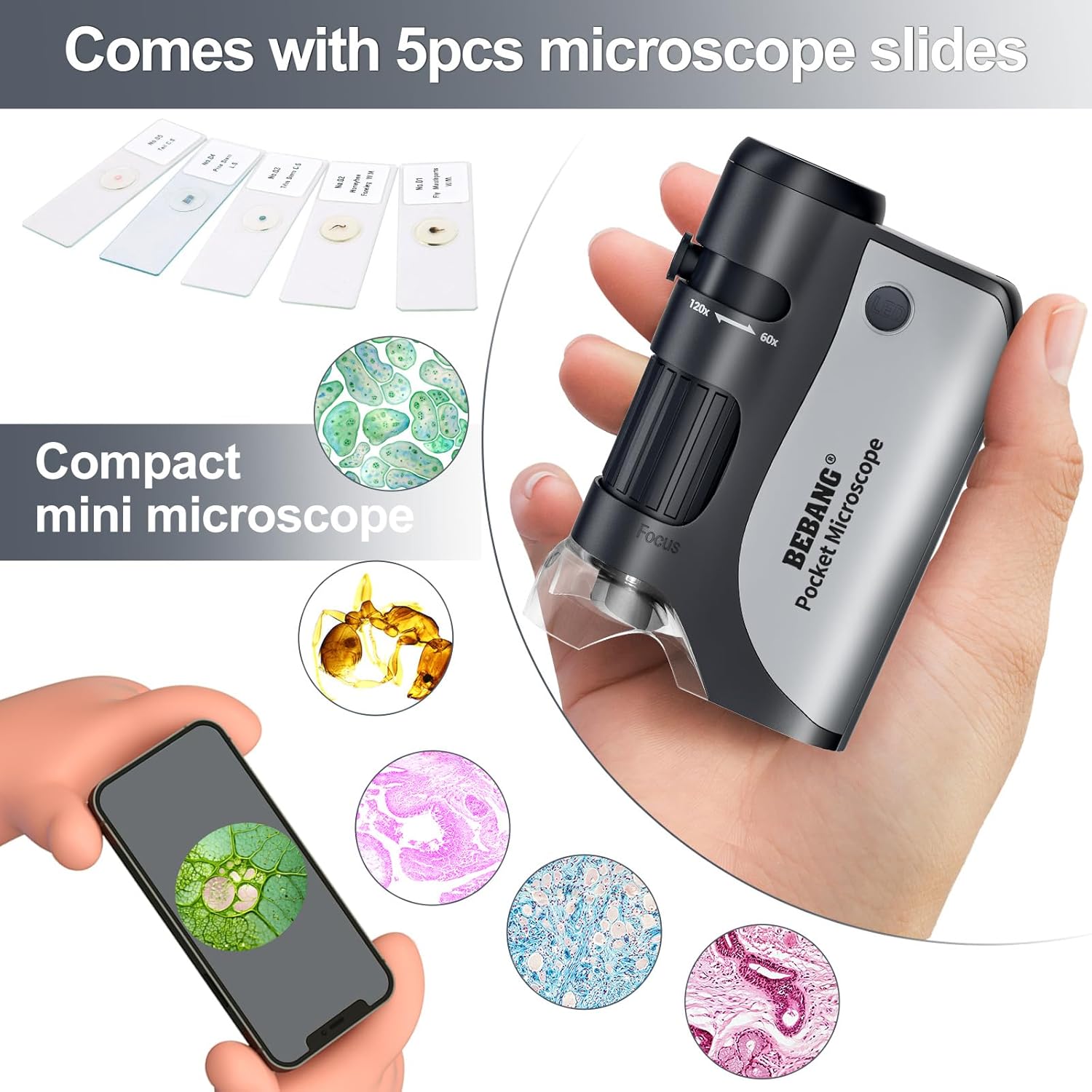
Image 3.1: Contents of the BEBANG Pocket Microscope package, including the microscope and prepared slides.
4. Setup
4.1 Battery Installation
The BEBANG Pocket Microscope requires one (1) AA battery for operation (battery not included). Follow these steps to install the battery:
- Locate the battery compartment cover on the side or back of the microscope.
- Gently slide or unclip the cover to open the compartment.
- Insert one AA battery, ensuring the positive (+) and negative (-) terminals align correctly with the markings inside the compartment.
- Close the battery compartment cover securely.
4.2 Powering On/Off
To power on the microscope's LED light, press the 'LED' button located near the top of the microscope. Press it again to turn the light off. For the UV light, press and hold the dedicated UV button.
5. Operating Instructions
5.1 Observing a Specimen
- Place the microscope directly over the object you wish to observe. For prepared slides, place the slide on a flat, well-lit surface.
- Press the 'LED' button to turn on the illumination.
- Look through the eyepiece.
- Adjust the focus wheel (typically located on the side) until the image appears clear and sharp.
- To change magnification, slide the zoom adjustment (marked 60x-120x) to your desired level and re-focus if necessary.

Image 5.1: Users engaging with the BEBANG Pocket Microscope to explore various subjects.
5.2 Using the UV Light
The UV light feature is useful for detecting fluorescent properties in certain materials, such as security features on currency. To activate the UV light, press and hold the dedicated UV button. Release the button to turn it off.

Image 5.2: Examples of various specimens that can be observed using the microscope, including biological samples and everyday objects.
6. Maintenance
6.1 Cleaning the Lenses
To maintain clear viewing, keep the lenses clean. Use a soft, lint-free cloth specifically designed for optical lenses. Avoid using abrasive materials or harsh chemicals, which can scratch or damage the lens coatings.
6.2 Battery Replacement
When the LED light dims or fails to turn on, it's time to replace the battery. Follow the battery installation steps in Section 4.1.
6.3 Storage
Store the microscope in a dry, dust-free environment when not in use. Keep it away from extreme temperatures and direct sunlight. The included pouch can help protect it during transport and storage.
7. Troubleshooting
- Problem: Cannot see anything or image is blurry.
- Solution:
- Ensure the LED light is turned on.
- Adjust the focus wheel slowly until the image becomes clear.
- Make sure the microscope is placed directly over the specimen.
- Check if the lenses are clean. Refer to Section 6.1 for cleaning instructions.
- Verify that the battery is correctly installed and has sufficient power.
- Problem: LED light does not turn on.
- Solution:
- Check if the battery is installed correctly with the correct polarity.
- Replace the battery with a fresh AA battery.
8. Specifications
| Feature | Detail |
|---|---|
| Product Type | Clip-type Microscope |
| Magnification Range | 60x-120x |
| Light Source Type | LED, UV |
| Material | ABS acrylic |
| Color | Black |
| Power Source | 1 x AA Battery (3 Volts) |
| Product Dimensions | 2.37"L x 1.34"W x 3.55"H (6cm x 3.4cm x 9cm) |
| Item Weight | 5.6 ounces |
| Model Number | WX-C03-651 |
| Manufacturer | BEBANG |

Image 8.1: Detailed dimensions and technical specifications of the BEBANG Pocket Microscope.
9. Warranty and Support
For any questions, technical assistance, or support regarding your BEBANG Pocket Microscope, please contact BEBANG customer service. Please refer to the product packaging or the BEBANG official website for the most current contact information.
Ask a question about this manual
Ask about setup, troubleshooting, compatibility, parts, safety, or missing instructions. Manuals+ will review the question and use this page’s manual context to help answer it.