
1. Introduction
This manual provides essential information for the safe and effective operation, maintenance, and troubleshooting of your etoolab W7L Electric Pressure Washer. Please read these instructions thoroughly before assembly or use to ensure proper function and to prevent injury or damage.
The etoolab W7L Electric Pressure Washer is designed for various cleaning tasks, offering a maximum pressure of 4200 PSI and a water flow rate of 2.6 GPM. It is suitable for cleaning surfaces such as concrete, pavements, driveways, brick walls, patios, decks, walkways, RVs, boats, and outdoor furniture.

Image 1.1: etoolab W7L Electric Pressure Washer demonstrating its cleaning power.
2. Safety Instructions
Always follow basic safety precautions when using this product to reduce the risk of fire, electric shock, or serious injury.
- Read All Instructions: Familiarize yourself with the controls and proper use of the pressure washer.
- Grounding Instructions: This product must be grounded. If it malfunctions or breaks down, grounding provides a path of least resistance for electric current to reduce the risk of electric shock.
- Personal Safety: Always wear appropriate personal protective equipment, including safety glasses, hearing protection, and protective clothing. Do not operate the pressure washer barefoot or with open-toed footwear.
- Avoid Direct Spray: Never direct the water spray at people, pets, electrical devices, or the unit itself. High-pressure spray can cause serious injury.
- Secure Connections: Ensure all hose connections are tight and secure before operating. The unit features a secure hose lock to prevent leaks.
- Trigger Lock: Utilize the handle safety lock on the spray gun to prevent accidental activation when not spraying.
- Water Source: Connect the pressure washer to a cold water supply only. Do not use hot water.
- Electrical Safety: Do not operate the pressure washer if the power cord or plug is damaged. Avoid using extension cords unless absolutely necessary and ensure they are rated for outdoor use and the appliance's power requirements.
- Children and Bystanders: Keep children and bystanders away from the operating area.
- Stable Operation: The anti-tipping design and wheels enhance stability. Always operate on a stable, level surface.

Image 2.1: Pressure hose lock and spray gun safety lock features.
3. Package Contents
Verify that all items are present in the package before beginning assembly. If any parts are missing or damaged, contact customer support.
- etoolab W7L Electric Pressure Washer Unit
- High-Pressure Spray Gun
- High-Pressure Hose (6 meters / approximately 19.7 feet)
- Power Cable (29 feet)
- Quick-Connect Nozzles (0°, 15°, 25°, 40°)
- External Foam Cannon (500 ml tank volume)
- Water Inlet Connector
- Nozzle Cleaning Pin
- User Manual

Image 3.1: Overview of the etoolab W7L Electric Pressure Washer and its accessories.
4. Setup
Follow these steps to assemble and prepare your pressure washer for use.
- Attach Wheels and Handle: Secure the wheels and handle to the main unit according to the diagrams in the quick start guide (if provided).
- Connect High-Pressure Hose: Connect one end of the high-pressure hose to the pressure washer's outlet and the other end to the spray gun. Ensure the hose lock mechanism is engaged for a secure, leak-proof connection.
- Connect Water Supply: Attach a garden hose (not included) to the water inlet connector on the pressure washer. Ensure the connection is tight. The pressure washer can draw water directly from a faucet or a bucket. If drawing from a bucket, ensure the inlet hose is fully submerged and free of air.
- Connect Power: Plug the power cable into a grounded electrical outlet. Ensure the outlet meets the power requirements of the unit.
- Purge Air from System: Before turning on the power, turn on the water supply. Squeeze the trigger on the spray gun to allow water to flow through the system and expel any trapped air. Continue until a steady stream of water emerges from the nozzle.
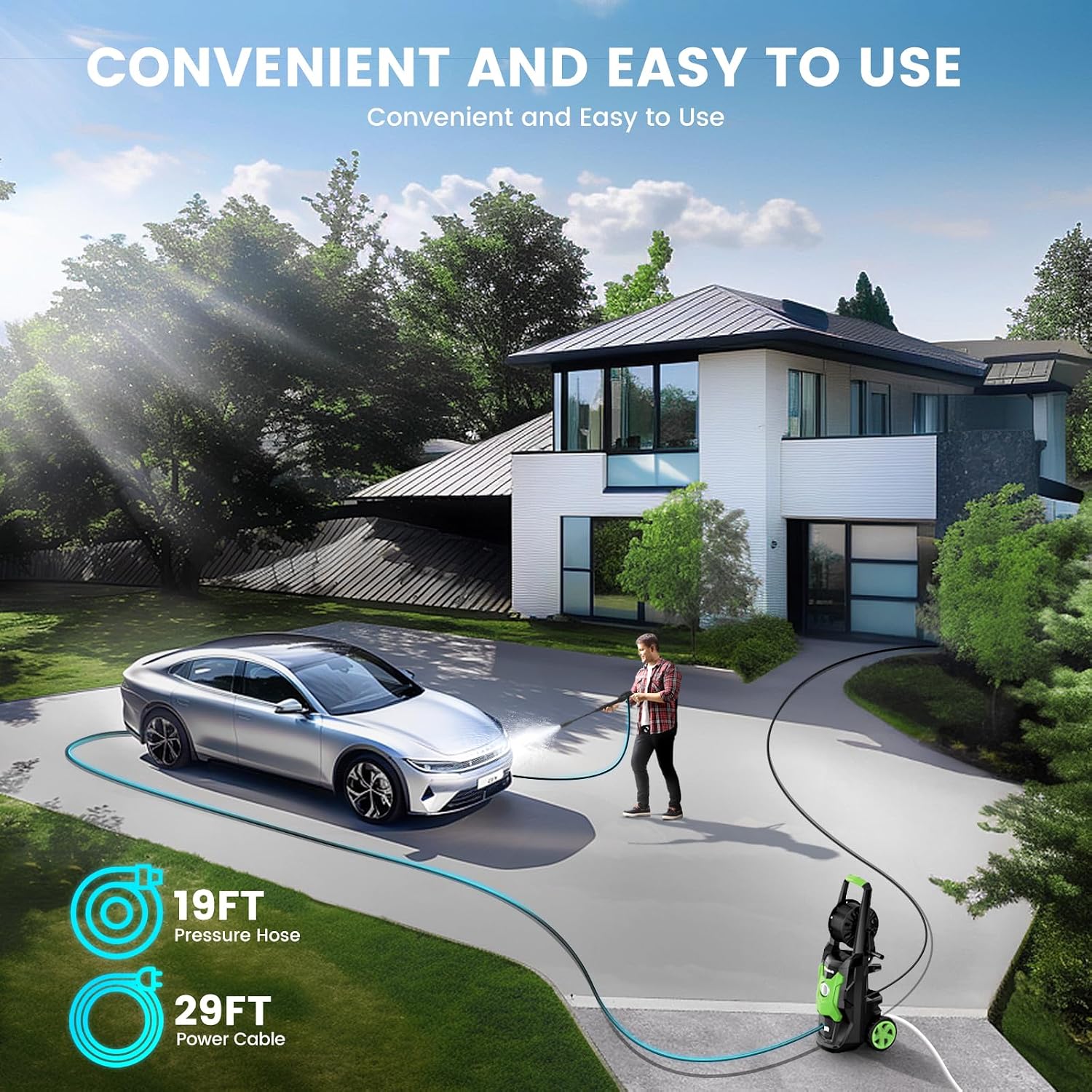
Image 4.1: Pressure washer setup, illustrating hose and power cable reach.
5. Operating Instructions
Once assembled and connected, follow these steps for safe operation.
- Select Nozzle: Choose the appropriate quick-connect nozzle for your cleaning task (refer to Section 6). Insert the nozzle firmly into the spray gun until it clicks into place.
- Turn On Power: Flip the ON/OFF switch on the pressure washer to the 'ON' position. The motor will start.
- Begin Cleaning: Aim the spray gun at the surface to be cleaned, keeping a safe distance. Release the safety lock on the spray gun handle and squeeze the trigger to begin spraying.
- Adjust Distance: Adjust the distance between the nozzle and the cleaning surface to control the cleaning intensity. Start further away and move closer as needed.
- Using the Foam Cannon: Fill the external foam cannon with appropriate pressure washer detergent. Attach it to the spray gun. The foam cannon allows for efficient application of soap before high-pressure rinsing.
- Shutting Down: When finished, release the spray gun trigger and engage the safety lock. Turn the pressure washer's ON/OFF switch to 'OFF'. Turn off the water supply. Squeeze the spray gun trigger to release any remaining pressure in the system.
- Disconnect: Disconnect the garden hose and then the high-pressure hose.

Image 5.1: Cleaning a patio surface with the pressure washer.

Image 5.2: Cleaning a glass surface with the pressure washer.

Image 5.3: Washing a car using the foam cannon attachment.
6. Nozzle Selection Guide
The etoolab W7L includes four quick-connect nozzles and an external foam cannon, each designed for specific cleaning tasks.
- 0° Tip (Red): Provides an ultra-high pressure, pinpoint stream. Use for dissolving stubborn substances on hard, non-delicate surfaces. Exercise extreme caution.
- 15° Tip (Yellow): Provides high pressure with a 15-degree fan spray. Suitable for concrete, gold bricks, and other hard surfaces requiring concentrated cleaning.
- 25° Tip (Green): Provides medium pressure with a 25-degree fan spray. Ideal for general cleaning of wood decks, siding, and other surfaces that require less aggressive cleaning.
- 40° Tip (White): Provides low pressure with a 40-degree wide fan spray. Best for cleaning windows, screens, and other fragile surfaces, or for applying detergents.
- Foam Jug: For applying soap or detergent. Fill with appropriate cleaning solution and attach to the spray gun for a wide, even foam application.

Image 6.1: Quick-connect nozzle tips and their applications.
7. Maintenance
Regular maintenance ensures the longevity and optimal performance of your pressure washer.
- Nozzle Cleaning: If a nozzle becomes clogged, use the included nozzle cleaning pin to clear any debris.
- Water Inlet Filter: Periodically check and clean the water inlet filter to prevent debris from entering the pump.
- Hose and Cord Inspection: Regularly inspect the high-pressure hose and power cord for any signs of damage, kinks, or wear. Replace damaged components immediately.
- Storage: After each use, drain all water from the pump, hoses, and spray gun. Store the pressure washer in a dry, frost-free area. The unit features integrated storage for the spray gun, soap dispenser, pressure hose, and power cord.
- Winterization: In cold climates, use a pump protector or non-toxic antifreeze solution to prevent freezing damage to the pump during storage.

Image 7.1: All-in-one storage solutions for the pressure washer components.
8. Troubleshooting
Refer to this section for solutions to common issues.
| Problem | Possible Cause | Solution |
|---|---|---|
| Motor does not start | No power supply; ON/OFF switch is OFF; Thermal overload activated. | Check power connection and outlet; Turn switch ON; Allow motor to cool down. |
| Low pressure | Insufficient water supply; Clogged nozzle; Air in pump; Leaks in hose connections. | Ensure full water supply; Clean nozzle; Purge air from system; Tighten connections. |
| Water leaks | Loose connections; Damaged O-rings or seals. | Tighten all connections; Inspect and replace O-rings/seals if damaged. |
| Motor runs intermittently | Air in pump; Water supply issues; Internal leak. | Purge air from system; Check water supply; Contact support for internal leaks. |
9. Specifications
| Feature | Specification |
|---|---|
| Model Number | W7L |
| Brand | etoolab |
| Maximum Pressure | 4200 PSI |
| Maximum Flow Rate | 2.6 GPM |
| Power Source | AC |
| High-Pressure Hose Length | 6 Meters (approx. 19.7 feet) |
| Power Cable Length | 29 feet |
| Nozzles Included | 0°, 15°, 25°, 40° Quick-Connect, Foam Cannon |
| Foam Cannon Tank Volume | 500 Milliliters |
| Product Dimensions (L x W x H) | 44.45 x 30.48 x 30.48 cm |
| Item Weight | 10.68 kg |
| Safety Certification | CSA |
10. Warranty and Support
For warranty information or technical assistance, please contact etoolab customer support. Keep your purchase receipt as proof of purchase.
Manufacturer Contact Information: support@etoolab.com