
1. Introduction
The CDBAIRUI E32-900T30D-V8 is a high-performance LoRa wireless RF module designed for ultra-long-range communication with strong anti-interference capabilities. Operating at 868/915MHz, this module utilizes LoRa spread spectrum technology to achieve reliable data transmission over distances up to 8km, making it ideal for various IoT and industrial applications. Its robust design and multiple working modes ensure efficient and secure wireless connectivity.
2. Product Overview
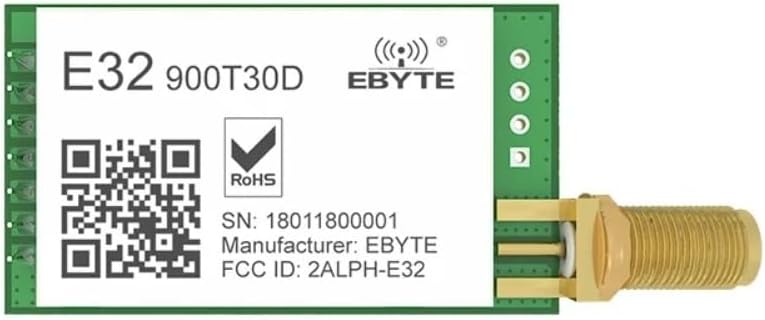
Figure 2.1: Front view of the E32-900T30D-V8 LoRa Wireless RF Module. This image displays the module's main components, including the EBYTE branding, QR code, RoHS compliance mark, serial number, manufacturer information, and FCC ID.

Figure 2.2: Dimensions of the E32-900T30D-V8 LoRa Wireless RF Module. The module measures approximately 43mm in length and 24mm in width, indicating its compact form factor suitable for integration into various devices.
3. Setup and Connection
This section provides general guidelines for setting up your E32-900T30D-V8 module. Specific connection details will depend on your host microcontroller or system.
3.1 Pin Definitions
Refer to the module's datasheet for detailed pinout information. Typically, the module will require connections for:
- VCC: Power supply (e.g., 3.3V or 5V, check datasheet).
- GND: Ground connection.
- TXD/RXD: UART serial communication pins for data exchange with a microcontroller.
- AUX: Auxiliary pin, often used for module status indication (e.g., busy, ready).
- M0/M1: Configuration pins for setting operating modes.
3.2 Antenna Connection
Ensure a suitable 868/915MHz antenna is securely connected to the module's SMA connector. A properly matched antenna is crucial for optimal performance and range.
3.3 Power Supply
Provide a stable and clean power supply within the specified voltage range. Unstable power can lead to erratic behavior or damage to the module.
4. Operating Modes and Features
The E32-900T30D-V8 module supports various operating modes to optimize power consumption and functionality for different application scenarios.
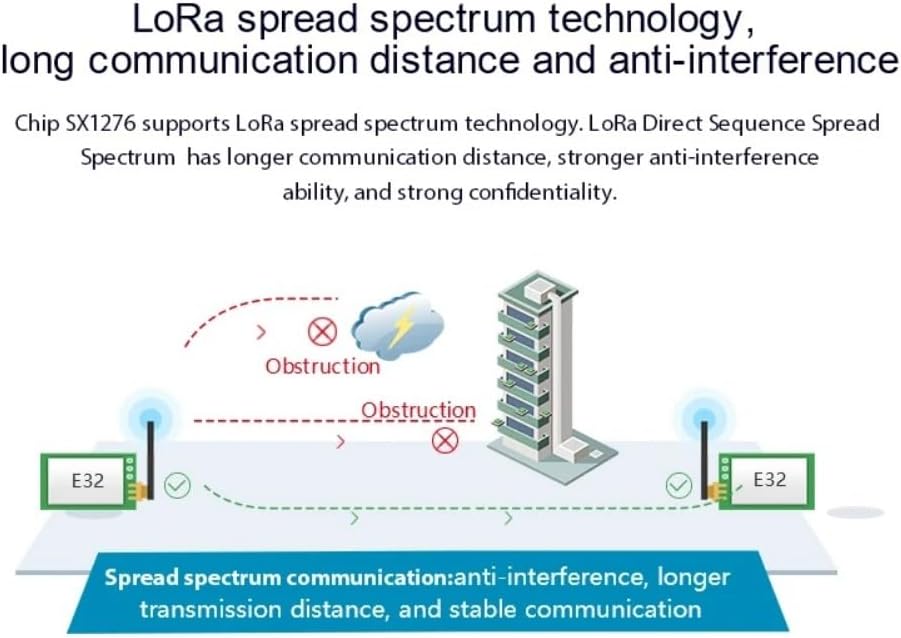
Figure 4.1: Illustration of LoRa spread spectrum communication. This technology enables longer communication distances and enhanced anti-interference capabilities by spreading the signal over a wider frequency band, making it more robust against noise and obstacles.

Figure 4.2: Overview of the four primary working modes: Transmission mode (transparent transmission), Wake-up mode (low power consumption with automatic wake-up code), Power saving mode (low power consumption receiver mode), and Deep sleep mode (ultra-low power consumption of 2uA).

Figure 4.3: Diagram illustrating the low power consumption mode and air wake-up feature. This functionality significantly reduces the power consumption of the receiving end, making the module highly suitable for battery-powered applications by allowing it to wake up only when data is detected.
4.1 Key Features
- LoRa Spread Spectrum: Enables ultra-long communication range and robust anti-interference capabilities.
- High Power Output: 30dBm (100mW) for extended transmission distance.
- Multiple Working Modes: Optimized for various power consumption and application needs.
- Air Wake-up: Reduces power consumption at the receiving end, ideal for battery-powered devices.
4.2 Application Scenarios
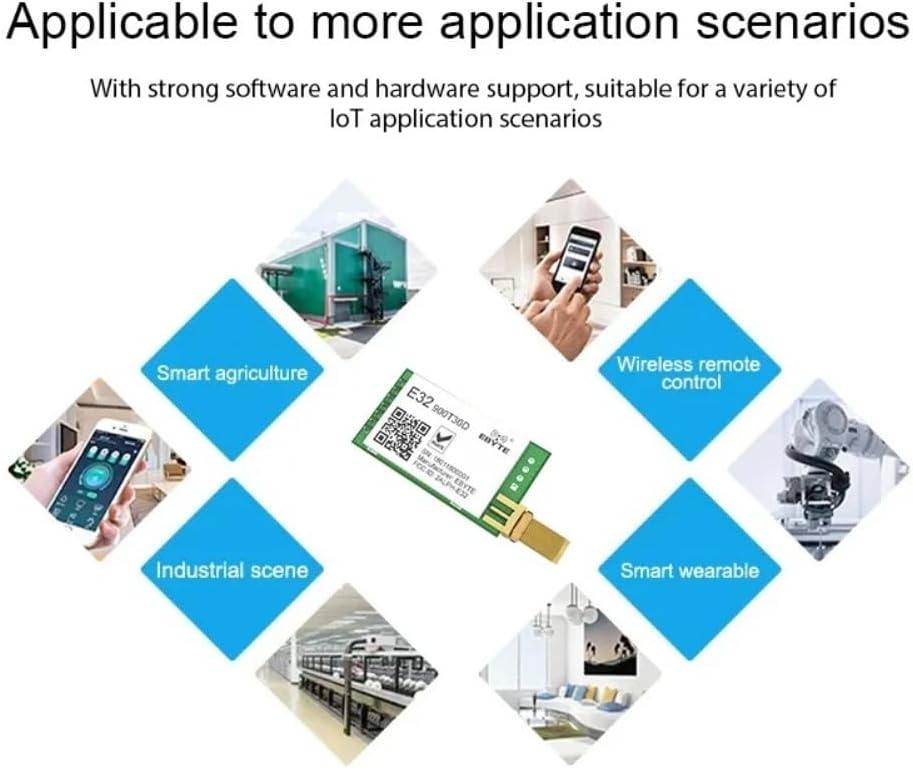
Figure 4.4: Diverse application scenarios for the E32-900T30D-V8 module. With strong software and hardware support, it is suitable for smart agriculture, wireless remote control, industrial scenes, and smart wearable devices, among others.
5. Maintenance
The E32-900T30D-V8 module is designed for reliable operation with minimal maintenance. Follow these guidelines to ensure its longevity:
- Environmental Conditions: Operate the module within its specified temperature and humidity ranges. Avoid extreme conditions.
- Cleanliness: Keep the module free from dust, dirt, and moisture. Do not use liquid cleaners directly on the module.
- Physical Handling: Handle the module with care to prevent physical damage to components or connectors. Avoid static discharge.
- Antenna Integrity: Ensure the antenna connection remains secure and the antenna itself is not damaged.
6. Troubleshooting
If you encounter issues with your E32-900T30D-V8 module, consider the following common troubleshooting steps:
- No Communication:
- Verify power supply voltage and stability.
- Check UART connections (TXD, RXD, GND) and ensure correct baud rate settings.
- Confirm M0/M1 pin settings match the desired operating mode.
- Poor Range/Signal:
- Ensure the antenna is correctly attached and is suitable for 868/915MHz.
- Check for physical obstructions between modules.
- Verify that both transmitting and receiving modules are configured to the same frequency and spreading factor.
- Module Not Responding:
- Perform a power cycle (turn off and on).
- Ensure the module is not in Deep Sleep mode if you expect immediate response.
For more complex issues, refer to the detailed technical documentation or contact support.
7. Specifications
| Feature | Description |
|---|---|
| Model Name | E32-900T30D-V8 |
| Frequency Range | 868MHz / 915MHz |
| Transmit Power | 30dBm (100mW) |
| Communication Distance | Up to 8km (line of sight) |
| Technology | LoRa Spread Spectrum |
| Operating Modes | Transmission, Wake-up, Power Saving, Deep Sleep |
| Deep Sleep Current | Approx. 2uA |
| Manufacturer | CDBAIRUI (EBYTE) |
8. Warranty and Support
For warranty information and technical support, please contact the manufacturer or your point of purchase. Detailed product documentation, including datasheets and application notes, may be available on the manufacturer's official website.
Manufacturer Website: www.cdebyte.com