
1. Introduction
This manual provides essential information for the installation, operation, maintenance, and troubleshooting of your AMD EPYC 9004 9124 Hexadeca-core Processor. The AMD EPYC 9004 series processors are designed for high-performance server and data center environments, offering advanced computing capabilities and efficiency.
2. Safety Information
Please read and understand all safety precautions before handling or installing the processor. Failure to follow these guidelines may result in damage to the processor, motherboard, or other components, and could void your warranty.
- Electrostatic Discharge (ESD) Protection: Always wear an anti-static wrist strap and work on an anti-static mat when handling the processor. ESD can severely damage electronic components.
- Handle with Care: Avoid touching the gold contacts or pins on the processor. Hold the processor by its edges.
- Sharp Edges: Be aware of potentially sharp edges on the heatsink or motherboard components during installation.
- Power Off: Ensure the system is completely powered off and unplugged from the power source before installing or removing any components.
3. Package Contents
Verify that all items are present and in good condition upon opening the package:
- 1 x AMD EPYC 9004 9124 Processor (Model: 100-000000802)
Note: A CPU cooler, thermal paste, and motherboard are sold separately and are required for operation.
4. Setup and Installation
Follow these steps carefully to install your AMD EPYC 9004 9124 Processor into a compatible Socket SP5 motherboard.
4.1 Pre-Installation Checklist
- Compatible Socket SP5 Motherboard (ensure BIOS/UEFI is updated to support EPYC 9004 series).
- Compatible CPU Cooler for Socket SP5 (e.g., server-grade heatsink and fan or liquid cooling solution).
- Thermal Paste.
- Anti-static wrist strap and mat.
- Screwdriver (if required for cooler installation).
4.2 Processor Installation Steps
- Prepare the Motherboard: Place the motherboard on an anti-static surface. Locate the Socket SP5 CPU socket.
- Open the Socket: Carefully open the CPU socket retention mechanism according to your motherboard's manual. This typically involves lifting a lever or releasing a frame.
- Orient the Processor: Align the triangular or gold arrow indicator on the corner of the processor with the corresponding mark on the CPU socket. Ensure the processor is correctly oriented before attempting to place it.
- Insert the Processor: Gently lower the processor straight down into the socket. Do not force it. If it does not seat easily, re-check the orientation.
- Secure the Processor: Close the CPU socket retention mechanism, ensuring the processor is firmly seated and locked into place.
- Apply Thermal Paste: Apply a small amount of high-quality thermal paste to the center of the CPU's integrated heat spreader (IHS). Refer to the thermal paste manufacturer's instructions for the recommended application method.
- Install CPU Cooler: Mount the CPU cooler onto the motherboard, ensuring it makes firm and even contact with the processor's IHS. Follow the cooler manufacturer's instructions for proper installation and fan connection.
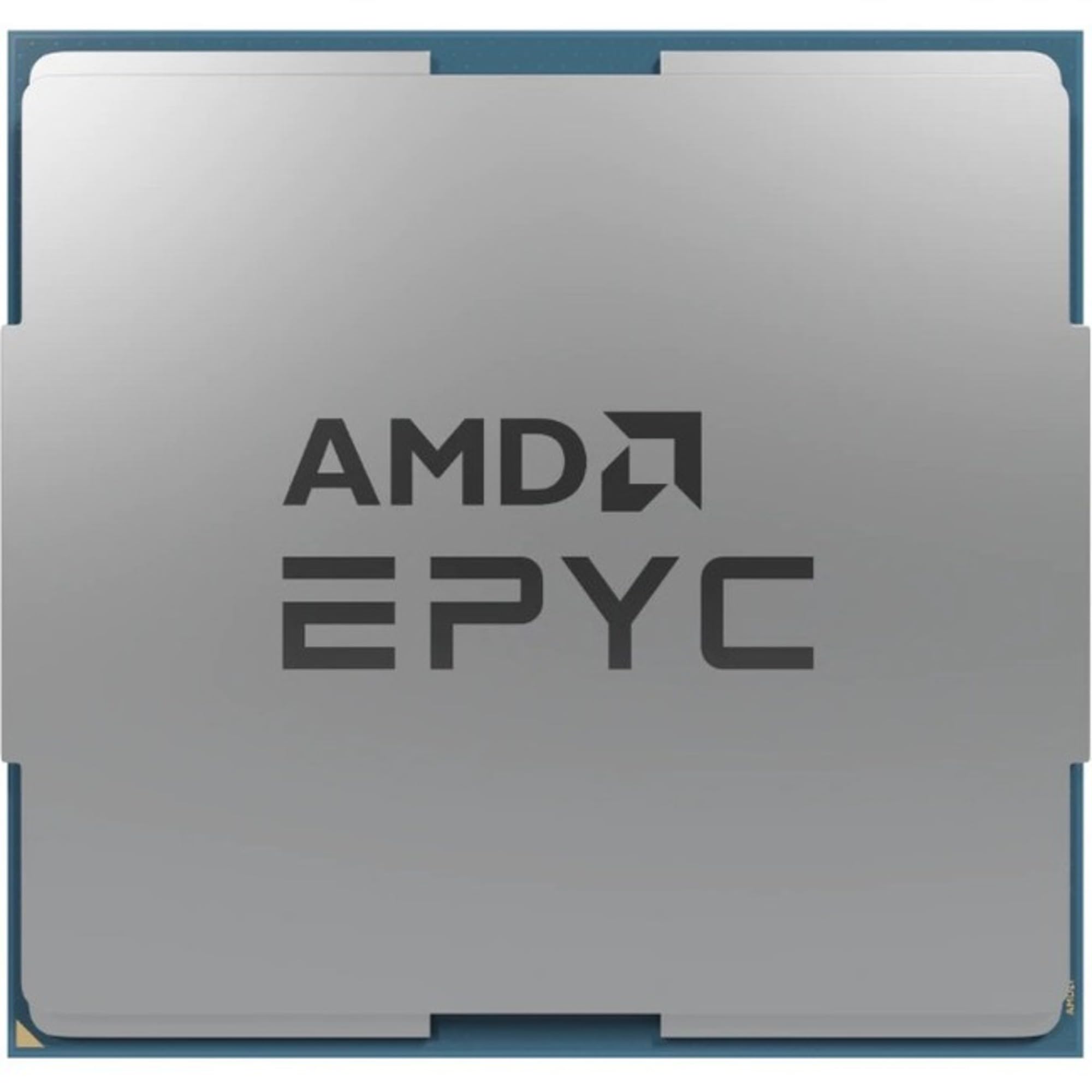
Figure 1: AMD EPYC 9004 9124 Processor. This image shows the top view of the processor, highlighting its square shape and the integrated heat spreader (IHS) on its surface.
5. Operating the Processor
Once the processor is physically installed, further steps are required to ensure proper system operation.
5.1 BIOS/UEFI Configuration
- Access BIOS/UEFI: Power on your system and press the designated key (e.g., Del, F2, F10) to enter the BIOS/UEFI setup utility.
- Verify CPU Recognition: Confirm that the BIOS/UEFI correctly identifies the AMD EPYC 9124 processor.
- Memory Configuration: Ensure that the installed RAM is recognized and configured correctly, especially for multi-channel setups.
- Enable Virtualization (Optional): If you plan to use virtualization technologies (e.g., VMware, Hyper-V), enable AMD-V (SVM Mode) in the BIOS/UEFI settings.
- Save and Exit: Save your changes and exit the BIOS/UEFI. The system will restart.
5.2 Operating System Recognition and Drivers
- Operating System Installation: Install your preferred server operating system (e.g., Windows Server, Linux distribution).
- Chipset Drivers: After OS installation, install the latest chipset drivers for your motherboard from the motherboard manufacturer's website. These drivers are crucial for optimal CPU performance and system stability.
- System Monitoring: Use system monitoring tools to verify CPU temperature, clock speeds, and core utilization to ensure stable operation.
6. Maintenance
Proper maintenance ensures the longevity and optimal performance of your AMD EPYC processor.
- Dust Removal: Regularly clean dust from the CPU cooler and system fans using compressed air. Dust accumulation can impede airflow and lead to overheating.
- Thermal Paste: Over time, thermal paste can dry out and lose effectiveness. Consider reapplying thermal paste every 2-3 years, or if you notice increased CPU temperatures. This requires removing the CPU cooler.
- Temperature Monitoring: Use software utilities to monitor CPU temperatures, especially under heavy load. Ensure temperatures remain within safe operating limits as specified by AMD.
- BIOS/UEFI Updates: Keep your motherboard's BIOS/UEFI updated to the latest version. Updates often include performance improvements, bug fixes, and support for new features.
7. Troubleshooting
This section addresses common issues you might encounter with your AMD EPYC 9124 processor.
7.1 No Power On Self-Test (POST) / No Display
- Check Power Connections: Ensure all power cables (24-pin ATX, 8-pin EPS/CPU power) are securely connected to the motherboard and power supply.
- Reseat Components: Carefully reseat the CPU, RAM modules, and any expansion cards (e.g., GPU).
- Clear CMOS: Refer to your motherboard manual to clear the CMOS settings. This can resolve incorrect BIOS configurations.
- Minimum Configuration: Try booting with only the essential components: CPU, one RAM stick, and the graphics card (if no integrated graphics).
7.2 Overheating Issues
- Verify Cooler Installation: Ensure the CPU cooler is properly seated and making good contact with the CPU. Check that all mounting screws are tightened evenly.
- Thermal Paste Application: Confirm that thermal paste was applied correctly and adequately. Reapply if necessary.
- Fan Operation: Check that the CPU cooler fan(s) are spinning correctly and connected to the appropriate fan headers on the motherboard.
- Case Airflow: Ensure your server chassis has adequate airflow with properly configured intake and exhaust fans.
7.3 System Instability / Crashes
- Check RAM: Run memory diagnostic tools (e.g., MemTest86) to check for faulty RAM modules.
- Driver Updates: Ensure all system drivers, especially chipset drivers, are up to date.
- Power Supply: Verify that your power supply unit (PSU) has sufficient wattage and is functioning correctly.
- Operating System Issues: Perform a clean installation of the operating system if software corruption is suspected.
8. Specifications
Detailed technical specifications for the AMD EPYC 9004 9124 Processor:
| Feature | Specification |
|---|---|
| Brand | AMD |
| Model Number | 100-000000802 |
| CPU Manufacturer | AMD |
| CPU Speed | 3 GHz |
| CPU Socket | Socket SP5 |
| Wattage | 3.7 watts (Note: This value might refer to a specific power state or a misinterpretation; typical TDP for EPYC processors is significantly higher. Refer to official AMD documentation for actual TDP.) |
| Cache Memory Installed Size | 16 MB (L3 Cache is typically much larger for EPYC processors; this might refer to L2 cache or a partial specification. Refer to official AMD documentation for full cache details.) |
| Processor Count (Cores) | 16 |
| Processor Number of Concurrent Threads | 32 |
| Platform | Not Machine Specific |
| Item Weight | 0.2 kg |
9. Warranty and Support
According to the product information, this AMD EPYC 9004 9124 Processor is sold with No Warranty. Please verify warranty terms with your point of purchase or AMD directly for the most accurate and up-to-date information.
For technical support, driver downloads, and additional product information, please visit the official AMD support website: