
1. Introduction
The HEXEH PM2.5 Sensor series, including models ZH06 and ZH07, are advanced dust sensor modules engineered for precise air quality monitoring. These compact units employ the Mie scattering principle to detect airborne particulate matter, providing reliable and consistent data. Designed for easy integration, they offer both serial (UART_TTL) and PWM output capabilities. This manual provides essential information for the setup, operation, and maintenance of your HEXEH PM2.5 sensor.

Figure 1: Various HEXEH PM2.5 Sensor Modules
2. Features
- Consistent Performance: Designed for reliable and repeatable measurements.
- Real-time Response: Provides immediate data on particulate matter levels.
- Accurate Data: Achieves high accuracy through professional algorithms and calibration.
- Low Power Consumption: Efficient operation for extended use.
- High Resolution: Detects particles with a minimum diameter of 0.3 µm.
- Dual Output: Simultaneous UART_TTL (3.3V level) and PWM (3.3V level) output.
- Compact Design: Small size for easy integration into various systems.
- Durable Construction: Aluminum alloy housing provides anti-seismic and fall-resistant properties.
- Active Air Intake: Features an active intake airflow structure for continuous monitoring.
3. Specifications
| Parameter | Value |
|---|---|
| Detection Particle Size Range | 0.3 - 10 µm |
| Effective Range | 0 - 1000 µg/m³ |
| Detection Interval | 1 second |
| PM2.5 Detection Accuracy (0-100 µg/m³) | ±15 µg/m³ |
| PM2.5 Detection Accuracy (101-1000 µg/m³) | ±15% reading |
| Power-on Stabilization Time | 30 seconds |
| Output Data | UART_TTL (3.3V level, default), PWM (3.3V level, default) |
| Working Voltage | 4.9V ~ 5.5V (DC) |
| Working Humidity | 0-80% RH (non-condensing) |
| Working Temperature | -10°C to 60°C |
| Storage Temperature | -30°C to 70°C |
| MTTF (Mean Time To Failure) | Continuous uninterrupted > 10000 hours |
| Material | Aluminum |
| Item Weight | 50 Grams (1.76 ounces) |
4. Setup and Installation
Proper installation is crucial for the accurate and reliable operation of your PM2.5 sensor. Follow these guidelines:
4.1. Physical Installation
- The dust collection hole serves as the air inlet for the sensor. Ensure it has good, unobstructed contact with the outside air.
- The fan installation position is the air outlet of the sensor.
- When installing the sensor, avoid strong external airflow around the sensor. If unavoidable, try to keep the direction of the external airflow perpendicular to the direction of the airflow inside the sensor.
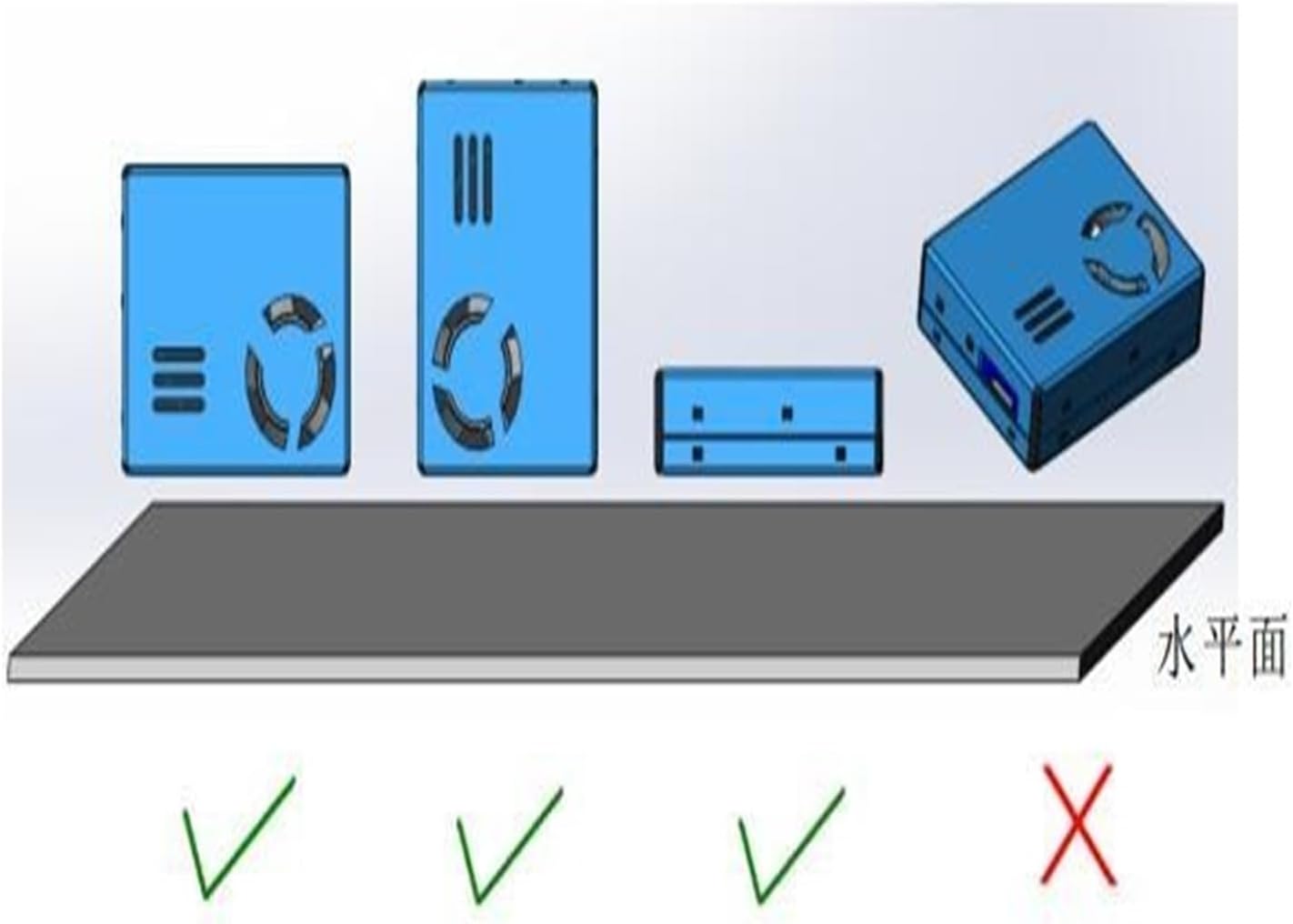
Figure 2: Correct (green check) and Incorrect (red X) Horizontal Installation Orientations

Figure 3: Correct (green check) and Incorrect (red X) Vertical Installation Orientations for ZH06-I

Figure 4: Optimal Airflow Direction (Green arrows indicate preferred directions, red X indicates undesirable direction)
4.2. Electrical Connection (ZH06-I Example)
The ZH06-I model uses a 1.25T-8P connector with a pin pitch of 1.25mm. Refer to the pinout table below for proper wiring:

Figure 5: ZH06-I Terminal Description (Pinout)
| Pin | Name | Description |
|---|---|---|
| PIN1 | VDD | DC +5V Power Supply |
| PIN2 | GND | Ground |
| PIN3 | - | NC (No Connection) |
| PIN4 | RXD | Serial Receive (TTL@3.3V) |
| PIN5 | TXD | Serial Transmit (TTL@3.3V) |
| PIN6 | - | User Reserved |
| PIN7 | - | NC (No Connection) |
| PIN8 | PWM | PWM Output (TTL@3.3V) |
Ensure all connections are secure and correctly aligned to prevent damage to the sensor or connected equipment.
5. Operating Principles
The HEXEH PM2.5 sensor operates on the principle of Mie scattering. This method involves illuminating airborne particles with a light source (typically a laser) and detecting the scattered light. The intensity and pattern of the scattered light are analyzed to determine the concentration and size distribution of particulate matter, such as PM2.5 and PM10.
Upon power-up, the sensor undergoes a stabilization period of approximately 30 seconds before providing accurate readings. Data is continuously updated every second and can be accessed via the UART_TTL serial interface or as a PWM signal, allowing for flexible integration into various control systems and data logging applications.
6. Maintenance
The HEXEH PM2.5 sensor is designed for long-term, continuous operation with minimal maintenance. However, adhering to the following guidelines can help ensure optimal performance and longevity:
- Keep Air Inlet Clear: Periodically inspect the dust collection hole (air inlet) for any obstructions such as dust buildup, lint, or debris. Gently clean if necessary using a soft brush or compressed air, ensuring not to damage internal components.
- Environmental Conditions: Operate the sensor within the specified working temperature (-10°C to 60°C) and humidity (0-80% RH non-condensing) ranges to prevent damage and ensure accurate readings.
- Avoid Strong Airflow: As mentioned in the installation section, strong, turbulent external airflow can affect readings. Ensure the sensor is installed in a location where airflow is stable or perpendicular to the sensor's internal flow.
- Power Supply Stability: Provide a stable DC 4.9V ~ 5.5V power supply to prevent erratic behavior or damage.
Do not attempt to disassemble the sensor, as this may void any warranty and could damage the sensitive internal components.
7. Troubleshooting
If you encounter issues with your HEXEH PM2.5 sensor, consider the following common troubleshooting steps:
- No Output/Incorrect Readings:
- Verify power supply: Ensure the sensor is receiving the correct voltage (4.9V ~ 5.5V DC) and that connections are secure.
- Check wiring: Confirm that all pins (VDD, GND, RXD, TXD, PWM) are connected correctly according to the pinout diagram (Figure 5).
- Allow stabilization time: The sensor requires 30 seconds after power-on to stabilize before providing accurate data.
- Inspect air inlet/outlet: Ensure the air inlet is not blocked and that there is proper airflow through the sensor.
- Inconsistent Readings:
- Environmental factors: Check for strong, turbulent external airflow near the sensor. Relocate or shield the sensor if necessary.
- Dust accumulation: Clean the air inlet as described in the Maintenance section.
- Operating conditions: Ensure the sensor is operating within its specified temperature and humidity ranges.
- Sensor Not Responding:
- Power cycle: Disconnect and reconnect the power supply to reset the sensor.
- Check for physical damage: Inspect the sensor for any visible signs of damage.
If problems persist after attempting these steps, contact the manufacturer or your supplier for further assistance.
8. Applications
The HEXEH PM2.5 Sensor is suitable for a wide range of applications requiring accurate particulate matter detection, including:
- Air purifiers
- Fresh air systems
- Portable air quality monitoring instruments
- Air quality supervision systems
- Measuring equipment
- Air conditioning units
- Smart home equipment
- HVAC systems
- Alarm systems
- Other dust monitoring equipment components
9. Warranty and Support
For information regarding warranty coverage, technical support, or repair services for your HEXEH PM2.5 sensor, please refer to the documentation provided at the time of purchase or contact your vendor or the official HEXEH customer support channels. Specific warranty terms and support procedures may vary by region and product model.