
1. Introduction
This manual provides essential information for the installation, operation, maintenance, and troubleshooting of the Midwest Hearth Empire R3663 Thermocouple. This component is a direct replacement for Empire part # R3663 and is designed for use with Empire unit heater models UH-1050 and UH-1150 that feature standing pilots. Please read these instructions thoroughly before proceeding with any installation or maintenance.
2. Safety Information
WARNING: Improper installation, adjustment, alteration, service, or maintenance can cause property damage, injury, or death. Read the installation, operating, and maintenance instructions thoroughly before installing or servicing this equipment.
- Always disconnect electrical power and turn off the gas supply to the heater before attempting any service or installation.
- Installation and service must be performed by a qualified installer, service agency, or gas supplier.
- Ensure the work area is well-ventilated.
- Never bypass safety devices.
- Check for gas leaks after any gas line connections are made or disturbed.
3. Product Overview
The R3663 Thermocouple is a safety device crucial for the proper operation of gas-fired heaters with standing pilots. Its primary function is to generate a small electrical current when heated by the pilot flame. This current signals the gas valve to remain open, allowing gas to flow to the main burner. If the pilot flame extinguishes, the thermocouple cools, the current stops, and the gas valve closes, preventing uncombusted gas from accumulating.
4. Specifications
- Part Number: R3663
- Length: 18 inches
- Voltage Output: 30 mV (millivolts)
- Compatibility: Empire Unit Heater Models UH-1050, UH-1150 (with standing pilots)
- Material: Copper tubing with brass fittings and a metallic tip.
5. Setup and Installation
This section outlines the general procedure for replacing a thermocouple. Refer to your specific heater's service manual for detailed instructions and diagrams.
- Preparation:
- Turn off the gas supply to the heater at the main shut-off valve.
- Disconnect electrical power to the heater.
- Allow the heater to cool completely.
- Gather necessary tools: adjustable wrench, screwdriver, leak detection solution.
- Locate the Thermocouple: The thermocouple is typically located near the pilot burner assembly, with its tip positioned directly in the pilot flame. The other end connects to the gas control valve.
- Remove the Old Thermocouple:
- Carefully disconnect the thermocouple's fitting from the gas control valve using an adjustable wrench.
- Unclip or unfasten the thermocouple from its mounting bracket near the pilot burner.
- Gently remove the old thermocouple.
- Install the New Thermocouple:
- Position the new R3663 thermocouple, ensuring its tip will be fully enveloped by the pilot flame when lit.
- Secure the thermocouple to its mounting bracket.
- Connect the thermocouple's fitting to the gas control valve. Hand-tighten first, then use an adjustable wrench to tighten securely, but do not overtighten.
- Check for Leaks:
- Turn the gas supply back on.
- Apply a leak detection solution (soapy water) to all gas connections made or disturbed. Bubbles indicate a leak. If a leak is detected, turn off the gas, tighten the connection, and retest. Do not proceed until all leaks are resolved.
- Test Operation:
- Restore electrical power to the heater.
- Follow the heater's instructions to light the pilot and then the main burner.
- Ensure the pilot flame consistently heats the thermocouple tip and the main burner ignites and operates correctly.
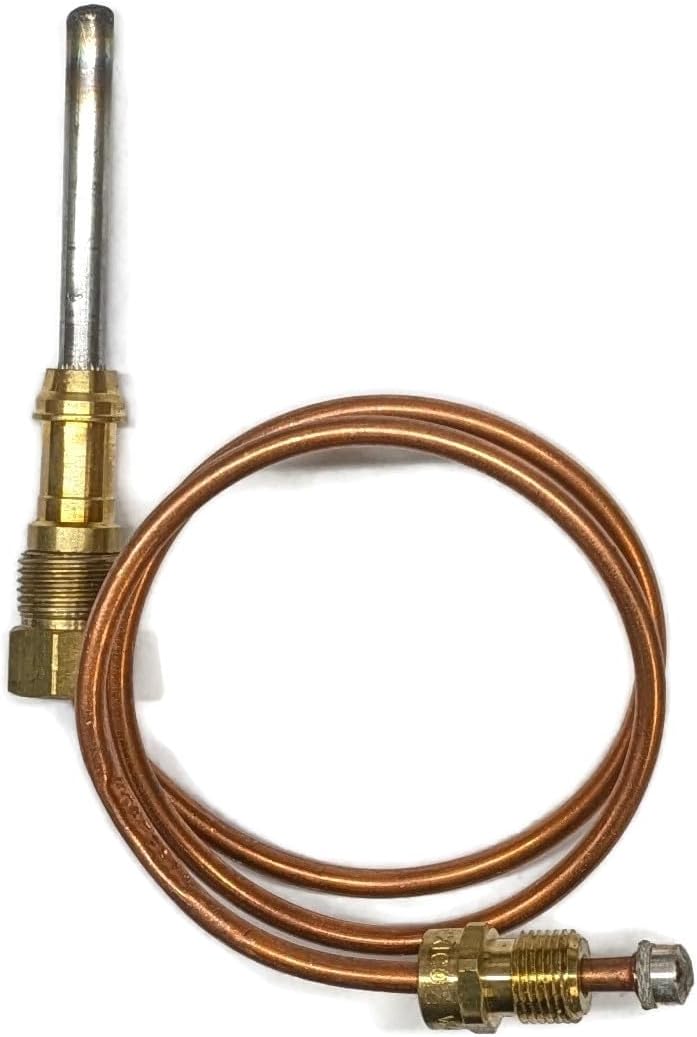
Figure 1: The Midwest Hearth Empire R3663 Thermocouple. This image displays the 18-inch copper tube with a metallic sensing tip on one end and a threaded brass fitting on the other, designed to connect to the gas control valve. The copper tubing is coiled for packaging and installation flexibility.
6. Operating Principle
Once installed and the pilot flame is established, the R3663 thermocouple's tip, when heated, generates a small millivolt current. This current flows to the gas control valve, energizing an electromagnet that holds the pilot valve open. As long as the pilot flame is present and heating the thermocouple, the gas valve remains open, allowing the heater to operate. If the pilot flame goes out, the thermocouple cools, the current drops, and the electromagnet releases, closing the pilot valve and shutting off the gas supply for safety.
7. Maintenance
Regular inspection of the thermocouple can help prevent heater malfunctions.
- Visual Inspection: Periodically check the thermocouple tip for soot buildup, corrosion, or physical damage. A clean, shiny tip is ideal.
- Cleaning: If soot is present, gently clean the thermocouple tip with a fine-grade emery cloth or steel wool. Avoid bending or damaging the tip.
- Pilot Flame Check: Ensure the pilot flame is strong, blue, and consistently engulfs the thermocouple tip. A weak or yellow pilot flame may not adequately heat the thermocouple.
- Connections: Verify that the thermocouple connection to the gas valve is secure and free from corrosion.
If the thermocouple appears damaged or corroded beyond simple cleaning, it should be replaced.
8. Troubleshooting
If your heater's pilot light will not stay lit or the main burner fails to ignite, the thermocouple may be a contributing factor.
- Pilot Light Will Not Stay Lit:
- Ensure the pilot flame is strong and directly hitting the thermocouple tip. Adjust the pilot flame if necessary (refer to heater manual).
- Clean the thermocouple tip as described in the Maintenance section.
- Check the thermocouple connection at the gas valve for tightness and corrosion.
- If these steps do not resolve the issue, the thermocouple may be faulty and require replacement.
- Main Burner Does Not Ignite (Pilot is Lit):
- While less common for a thermocouple issue if the pilot stays lit, a weak thermocouple signal could prevent the main gas valve from opening fully.
- Verify the thermostat is calling for heat.
- Consult your heater's service manual for other potential causes, such as a faulty gas valve or other control issues.
If you are unable to diagnose or resolve the problem, contact a qualified service technician.
9. Warranty
Warranty information for the Midwest Hearth Empire R3663 Thermocouple is typically provided by the seller or manufacturer at the time of purchase. Please retain your proof of purchase for any warranty claims. For specific details regarding warranty coverage and duration, refer to the documentation included with your purchase or contact Midwest Hearth directly.
10. Support
For further assistance, technical support, or to inquire about replacement parts, please contact Midwest Hearth customer service. When contacting support, have your product model number (R3663) and the model of your Empire heater (UH-1050 or UH-1150) readily available.
It is always recommended to consult a qualified HVAC technician for any complex repairs or if you are unsure about performing any installation or maintenance procedures yourself.