1. Introduction
This manual provides essential information for the safe operation, maintenance, and troubleshooting of your POXURIO 2550-Watt Portable Inverter Generator, Model KF370033-01. Please read this manual thoroughly before operating the generator to ensure proper use and to prevent injury or damage.
The POXURIO 2550-Watt Inverter Generator is designed to provide reliable portable power for various applications, including home backup, camping, and outdoor activities. It features a 2550W starting power and a 1.06-gallon fuel tank, offering up to 10 hours of run time at 25% load. Its advanced sound reduction technology ensures quiet operation.
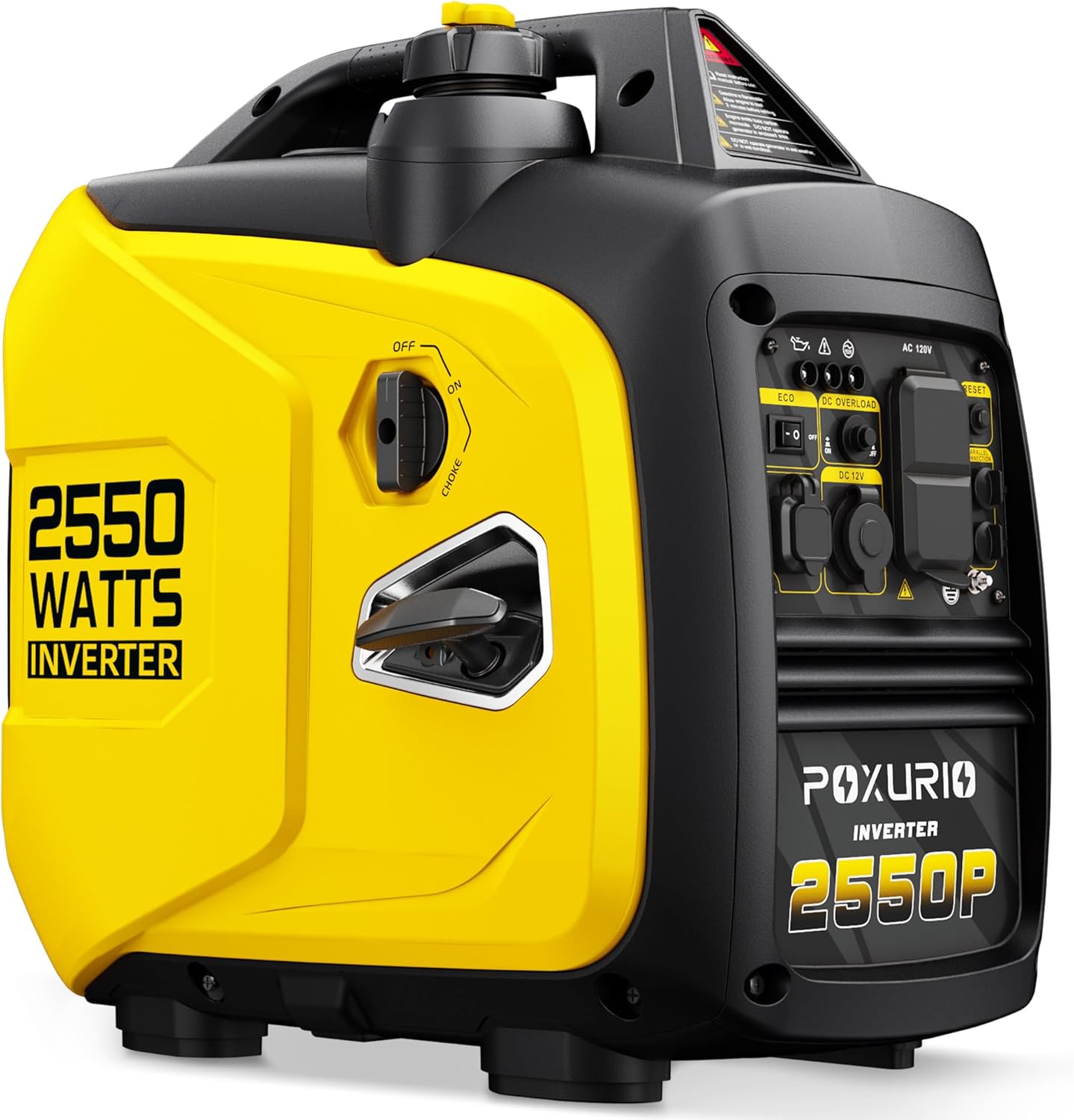
Figure 1.1: The POXURIO 2550-Watt Portable Inverter Generator, showcasing its compact design and yellow and black casing.
2. Safety Information
Operating a generator can be hazardous. Always follow these safety precautions:
- Carbon Monoxide Hazard: Never operate the generator indoors or in enclosed spaces. Generators produce carbon monoxide, an odorless, colorless, and deadly gas. Use outdoors only, far from windows, doors, and vents.
- Fire Hazard: Gasoline is highly flammable. Refuel in a well-ventilated area with the engine off and cool. Do not smoke or allow open flames near the generator. Store fuel in an approved container.
- Electrical Shock Hazard: Do not operate the generator in wet conditions. Ensure all electrical connections are secure and dry. Never connect the generator directly to a home's electrical system without a transfer switch installed by a qualified electrician.
- Hot Surfaces: The generator's engine and muffler become very hot during operation and remain hot for a period after shutdown. Avoid contact to prevent burns.
- Children and Pets: Keep children and pets away from the generator at all times.
- Personal Protective Equipment: Wear appropriate safety gear, such as gloves and eye protection, when performing maintenance.
3. Product Overview and Components
Familiarize yourself with the various parts of your generator before operation.

Figure 3.1: Detailed view of the generator's control panel, highlighting key indicators and outlets.
Control Panel Features:
- Low Oil Indicator (1): Illuminates when engine oil level is low. The generator will shut down automatically to prevent damage.
- Overload Indicator (2): Illuminates when the generator is overloaded. The AC output will shut off.
- Run Indicator (3): Illuminates when the generator is operating normally.
- ECO Switch: Engages economy mode for reduced fuel consumption and quieter operation at lower loads.
- DC Thermal Protection: Protects DC circuits from overload.
- RESET Button: Resets the AC output after an overload.
- 120V 20AMP AC Outlet: Standard household outlet for connecting appliances.
- DC 12V Outlet (8.3 amp): For charging 12V batteries or powering 12V devices.
- 5V DC USB Duplex: USB ports for charging small electronic devices.
- Parallel Connectors: For connecting two compatible generators in parallel to increase power output.
- Ground Terminal: For connecting a ground wire to prevent electrical shock.
4. Setup
Before first use, proper setup is crucial.
4.1 Adding Engine Oil
The generator is shipped without engine oil. You must add the correct amount and type of oil before starting. Refer to the specifications for oil type and capacity.
- Place the generator on a level surface.
- Locate the oil fill cap/dipstick.
- Remove the cap and slowly add SAE 10W/30 engine oil to the specified capacity (0.35 L). Do not overfill.
- Replace the oil fill cap securely.
4.2 Adding Fuel
Use fresh, unleaded gasoline with an octane rating of 87 or higher. Do not use E85 or mixed fuels.
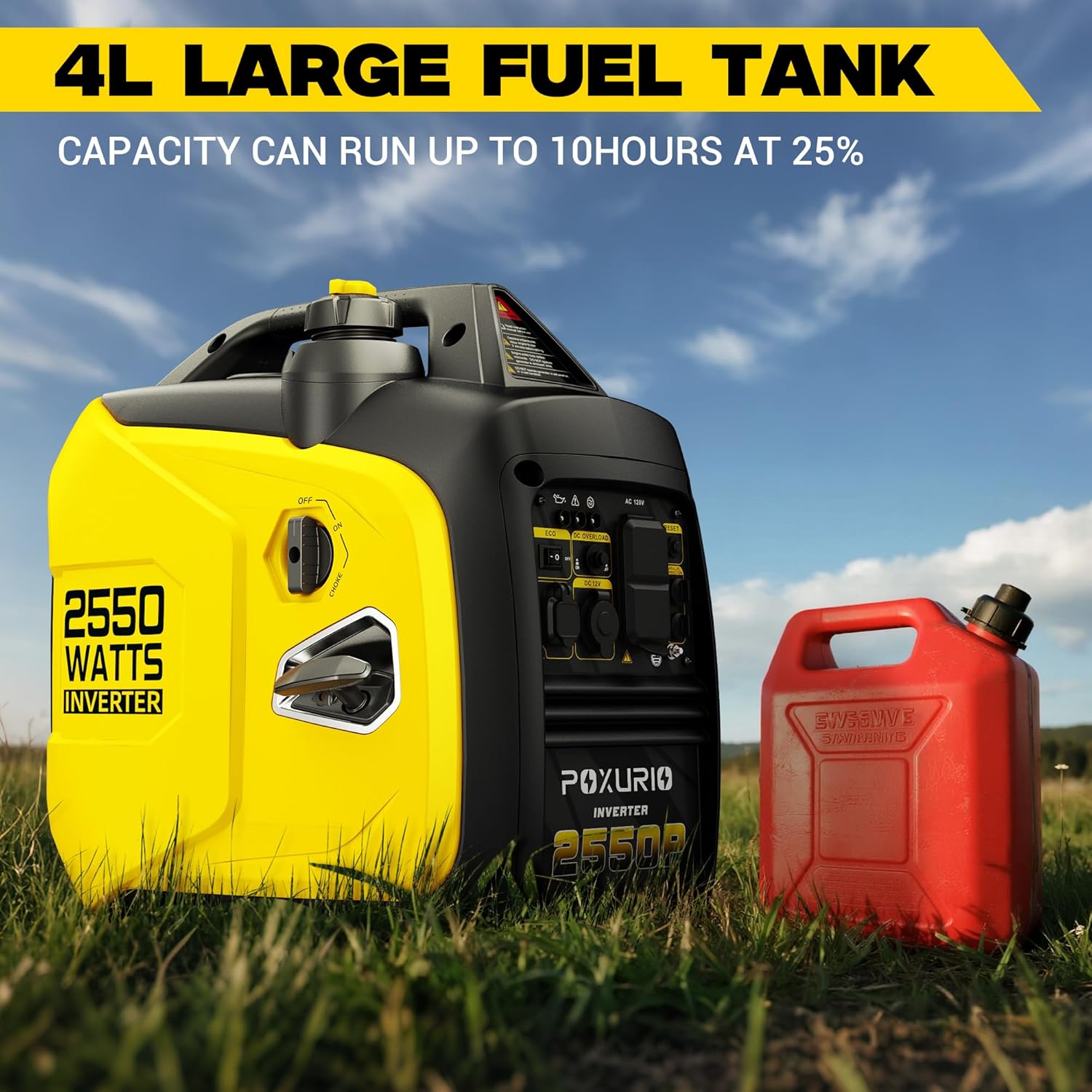
Figure 4.1: The generator positioned next to a fuel can, illustrating the 4-liter fuel tank capacity.
- Ensure the generator is off and cool.
- Open the fuel tank cap.
- Carefully pour gasoline into the fuel tank, filling up to the lower edge of the filler neck. Do not overfill.
- Securely close the fuel tank cap.
5. Operating Instructions
5.1 Starting the Generator
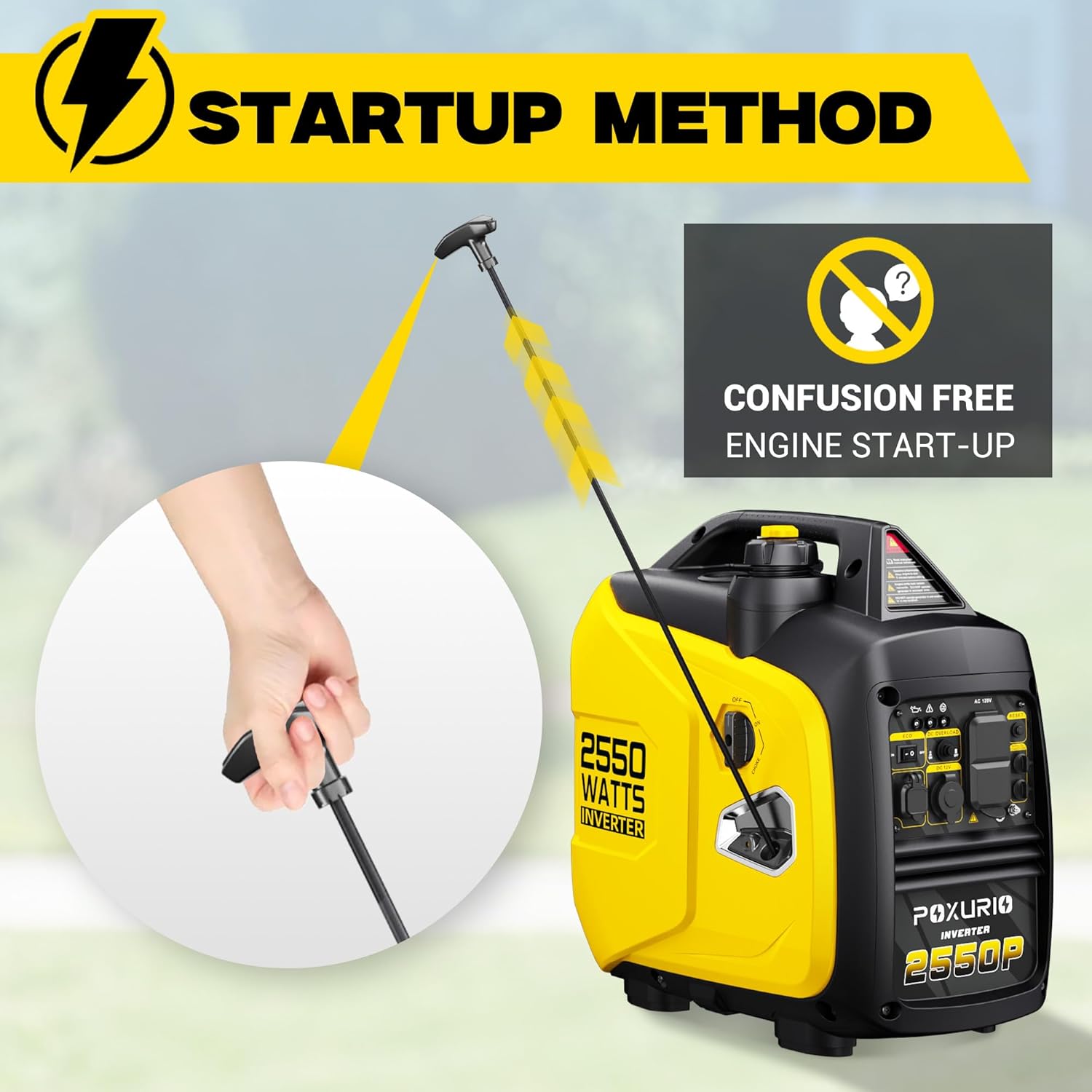
Figure 5.1: Illustration of the recoil start method, showing how to pull the starting handle for engine ignition.
- Ensure the generator is on a level surface and in a well-ventilated outdoor area.
- Turn the fuel cap vent lever to the 'ON' position.
- Turn the engine switch to the 'ON' position.
- If the engine is cold, move the choke lever to the 'CHOKE' position. If warm, leave it in 'RUN'.
- Pull the recoil starter handle slowly until resistance is felt, then pull firmly and quickly. Repeat until the engine starts.
- Once the engine starts, slowly move the choke lever to the 'RUN' position.
- Allow the generator to run for a few minutes to warm up before connecting electrical loads.
5.2 Connecting Electrical Loads
The generator provides 2550W starting power and 1800W running power. Ensure the total wattage of connected devices does not exceed the running wattage.

Figure 5.2: Visual representation of the generator's 2550W starting and 1800W running capacity, with examples of compatible household appliances.
- Plug your appliances into the appropriate AC or DC outlets.
- Avoid overloading the generator. If the Overload Indicator illuminates, disconnect some devices and press the RESET button.
5.3 ECO Mode Operation
The ECO switch reduces engine speed when the electrical load is low, improving fuel efficiency and reducing noise.
- To activate ECO mode, set the ECO switch to 'ON'.
- To deactivate ECO mode for full power, set the ECO switch to 'OFF'.
5.4 Stopping the Generator
- Disconnect all electrical loads from the generator.
- Allow the generator to run for a few minutes without load to cool down.
- Turn the engine switch to the 'OFF' position.
- Turn the fuel cap vent lever to the 'OFF' position.
6. Maintenance
Regular maintenance ensures optimal performance and extends the life of your generator.
6.1 Engine Oil Change
Change the engine oil after the first 20 hours of operation, and every 50 hours thereafter.
- Run the engine for a few minutes to warm the oil, then shut it off.
- Place a drain pan under the oil drain plug.
- Remove the oil fill cap and the oil drain plug. Allow oil to drain completely.
- Reinstall the drain plug and tighten it.
- Refill with new SAE 10W/30 oil (0.35 L).
- Dispose of used oil responsibly.
6.2 Air Filter Cleaning
Inspect the air filter every 50 hours or more frequently in dusty conditions. Clean or replace as needed.
- Remove the air filter cover.
- Remove the foam filter element.
- Wash the element in warm, soapy water, rinse, and allow to air dry completely.
- Lightly oil the foam element with engine oil, then squeeze out excess oil.
- Reinstall the filter element and cover.
6.3 Spark Plug Inspection
Inspect the spark plug every 100 hours of operation.
- Remove the spark plug cap and use a spark plug wrench to remove the spark plug.
- Check for discoloration and carbon buildup. Clean with a wire brush if necessary.
- Check the spark plug gap and adjust if needed (refer to specifications for correct gap).
- Reinstall the spark plug and cap.
6.4 Fuel Storage
If storing the generator for more than 30 days, drain the fuel tank and carburetor to prevent fuel degradation and engine issues.
- Add a fuel stabilizer to the fuel tank and run the engine for a few minutes to circulate it.
- Turn off the fuel valve (if present) or run the engine until it runs out of fuel.
- Drain any remaining fuel from the tank and carburetor bowl.
- Store the generator in a clean, dry place.
7. Troubleshooting
This section addresses common issues you might encounter.
| Problem | Possible Cause | Solution |
|---|---|---|
| Engine will not start | No fuel; Low oil level; Choke not set correctly; Spark plug issue; Engine switch OFF | Add fuel; Add oil; Adjust choke; Inspect/replace spark plug; Turn engine switch ON |
| No power output (AC) | Overload; Circuit breaker tripped; Loose connections | Reduce load, press RESET button; Check circuit breaker; Secure connections |
| Engine runs, then stops | Low oil level; Out of fuel; Clogged fuel filter | Add oil; Add fuel; Clean/replace fuel filter |
| Generator is too loud | ECO mode OFF; High load | Engage ECO mode; Reduce load |
8. Specifications
Technical details for the POXURIO 2550-Watt Portable Inverter Generator.

Figure 8.1: The POXURIO 2550-Watt Portable Inverter Generator with its dimensions (18.9in L x 11.2in W x 18.1in H) and weight (39.68 lbs) clearly indicated.
| Feature | Detail |
|---|---|
| Brand | POXURIO |
| Model Name | KF370033-01 |
| Starting Wattage | 2550 Watts |
| Running Wattage | 1800 Watts |
| Voltage | 120 Volts |
| Fuel Type | Gasoline |
| Fuel Tank Capacity | 1.06 Gallons (4 Liters) |
| Run Time (25% Load) | Up to 10 Hours |
| Engine Type | 4 Stroke |
| Engine Displacement | 163 Cubic Centimeters |
| Lubricating Oil Model | SAE 10W/30 |
| Lubricating Oil Capacity | 0.35 Liters |
| Noise Level (at 7m, 25% load) | 59 dB |
| Item Weight | 43.9 Pounds |
| Product Dimensions (L x W x H) | 21.26" x 20.08" x 12.6" |
| Total Power Outlets | 2 (AC) + 1 (DC 12V) + 1 (USB Duplex) |
9. Warranty and Support
9.1 Warranty Information
This POXURIO generator comes with a 1-year warranty from the date of purchase. This warranty covers defects in materials and workmanship under normal use. It does not cover damage due to misuse, neglect, unauthorized modifications, or normal wear and tear.
9.2 Customer Support
For technical assistance, warranty claims, or to order replacement parts, please contact POXURIO customer support. Refer to your purchase documentation or the POXURIO official website for current contact information.


