
1. Introduction
This manual provides essential information for the safe and effective use of the AMSH RT16-3 NT3 Knife Fusible Switch Core. This ceramic fuse link is designed for quick and fast blow protection in electrical systems, specifically for the 630A variant. Please read this manual thoroughly before installation and operation to ensure proper function and safety.
2. Product Features
- Type: Knife Fusible Switch Core
- Voltage and Current: Available in 315A, 400A, 500A, 630A, 800A variants. This manual specifically covers the 630A model.
- Material: Made of high-quality ceramic for durability and long service life.
- Function: Momentary contact, designed for quick and fast blow protection.
3. Specifications
| Specification | Value |
|---|---|
| Item Weight | 1.1 pounds |
| Department | unisex-adult |
| Manufacturer | AMSH |
| ASIN | B0BY6654MZ |
| Country of Origin | China |
| Material | Ceramic |
| Unit Count | 1.0 Count |
4. Product Overview and Dimensions

Figure 4.1: Main view of the AMSH RT16-3 NT3 630A Fuse Link, showing its ceramic body and knife contacts.

Figure 4.2: Length measurement of the fuse link, indicating an approximate length of 150mm.

Figure 4.3: Width measurement of the fuse link, indicating an approximate width of 66mm.
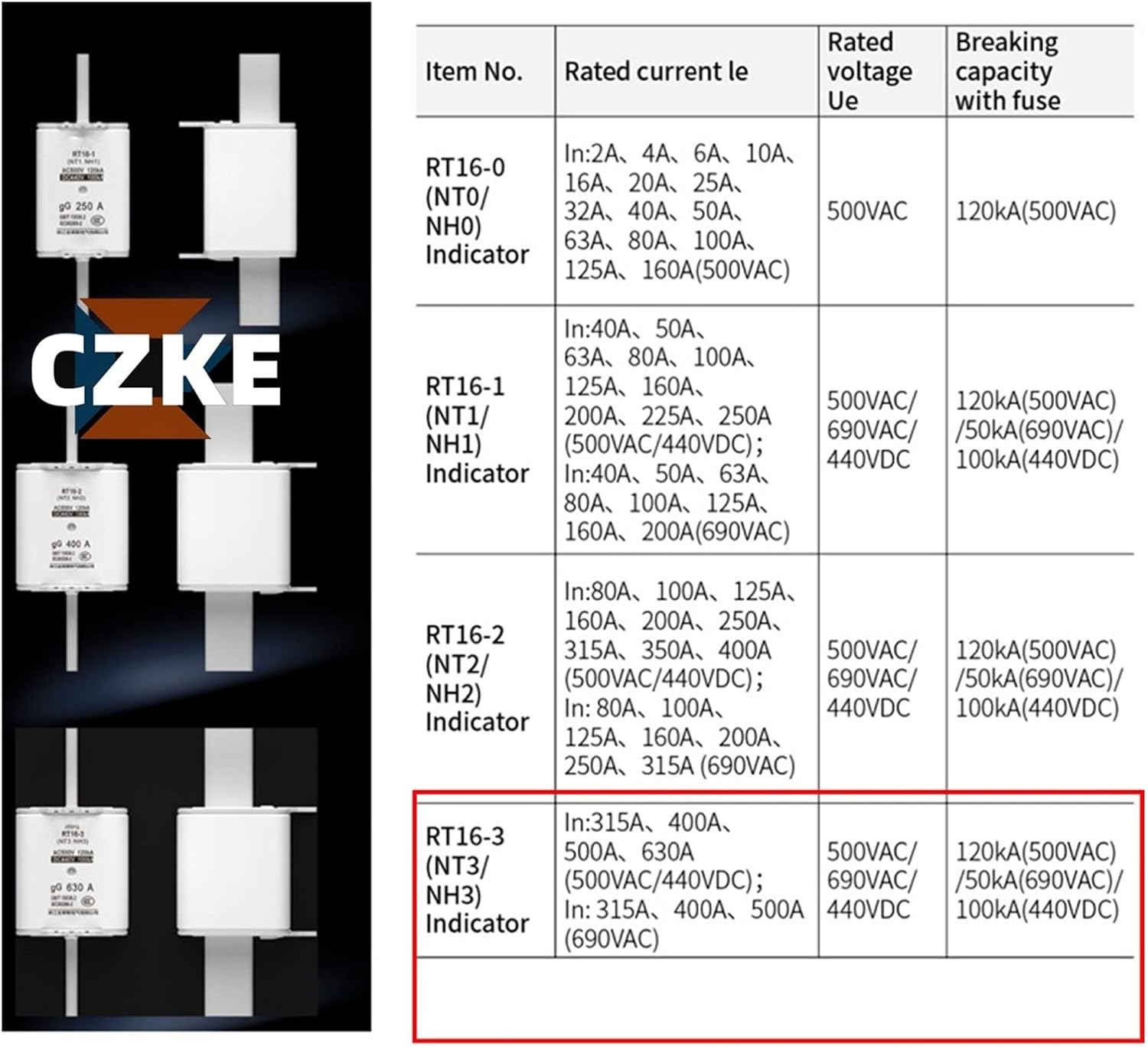
Figure 4.4: Table detailing specifications for the RT16 series fuse links, including rated current, voltage, and breaking capacity for various models (RT16-0, RT16-1, RT16-2, RT16-3).

Figure 4.5: Detailed technical drawing of the fuse link, providing precise dimensions for installation and compatibility checks.
5. Installation and Setup
Safety First: Always disconnect power to the circuit before installing or replacing fuse links. Work only with appropriate personal protective equipment (PPE) and ensure you are qualified to perform electrical work.
5.1. Pre-Installation Checks
- Verify the fuse link's current rating (630A) and voltage rating match the requirements of your electrical system.
- Inspect the fuse link for any physical damage, cracks, or deformities. Do not install damaged fuses.
- Ensure the fuse holder or switch core is compatible with the knife-type contacts and dimensions of the RT16-3 NT3 fuse link (refer to Figures 4.2, 4.3, and 4.5 for dimensions).
5.2. Installation Procedure
- Ensure the power supply to the circuit is completely de-energized and locked out.
- Carefully insert the knife contacts of the fuse link into the corresponding terminals of the fuse holder or switch core.
- Apply firm, even pressure to ensure the fuse link is fully seated and makes secure electrical contact. Do not force the fuse.
- Once installed, visually confirm that the fuse link is properly aligned and securely held in place.
- Restore power to the circuit only after verifying the installation is complete and safe.
6. Operation
The AMSH RT16-3 NT3 Fuse Link is a passive overcurrent protection device. It operates by melting a metallic element when the current flowing through it exceeds its rated capacity for a specified duration. This action rapidly interrupts the circuit, preventing damage to electrical equipment and ensuring system safety.
- Automatic Protection: The fuse link will automatically blow and open the circuit in the event of an overcurrent or short circuit condition.
- Non-Resettable: Once a fuse link has blown, it must be replaced. It is a single-use device and cannot be reset.
7. Maintenance
Fuse links generally require minimal maintenance, but periodic inspection is recommended to ensure continued reliability.
7.1. Inspection
- Regularly inspect the fuse link and its holder for signs of overheating, discoloration, or physical damage.
- Ensure connections remain tight and free from corrosion.
7.2. Replacement
If a fuse link blows, it must be replaced with a new one of the exact same type and rating (AMSH RT16-3 NT3 630A). Refer to the Installation and Setup section for safe replacement procedures.
8. Troubleshooting
8.1. Fuse Link Blows Repeatedly
- Cause: This indicates a persistent overcurrent condition, a short circuit, or an undersized fuse for the application.
- Action: Do not simply replace the fuse without investigating the root cause. Identify and rectify the fault in the circuit (e.g., faulty appliance, wiring issue, motor overload) before installing a new fuse. Ensure the fuse rating is appropriate for the circuit's normal operating current and fault current capacity.
8.2. Fuse Link Appears Damaged but Not Blown
- Cause: This could be due to physical stress, prolonged exposure to high temperatures, or manufacturing defect.
- Action: Even if the fuse has not blown, a damaged fuse link may compromise protection. It is recommended to replace any fuse link showing signs of damage or degradation.
9. Warranty and Support
For information regarding product warranty, please refer to the terms and conditions provided at the point of purchase or contact your retailer. Standard return policies typically allow for returns within 30 days of purchase, subject to the seller's specific terms.
For technical support, product inquiries, or assistance with specific applications, please contact AMSH customer service or visit the official AMSH website. When contacting support, please have your product model (RT16-3 NT3 630A) and purchase details readily available.
Contact Information: Please refer to the packaging or the official AMSH website for the most current contact details.