
1. Introduction
Thank you for choosing the Preethi Induction Base Stainless Steel Outer Lid Pressure Cooker. This 3-litre pressure cooker is designed for efficient and safe cooking, compatible with both induction and gas stovetops. This manual provides essential information for the safe and effective use, maintenance, and troubleshooting of your new appliance. Please read it thoroughly before first use and retain it for future reference.
2. Key Features
The Preethi pressure cooker incorporates several design elements for performance and safety:

Key Components: Features include a Virgin Nitrile Gasket for zero odor, an S.S. 304 Valve & Whistle made from food-grade, highly durable material, a Bismuth Valve for lead-free safety, and a specially designed Flame Protected Handle for easy opening and closing.

Construction and Design: Constructed with SS 304 Grade Body & Lid, ensuring highest and durable food-grade stainless steel. It features a C-Clamp Design for enhanced safety and an Induction Base compatible with both gas stoves and induction cooktops.
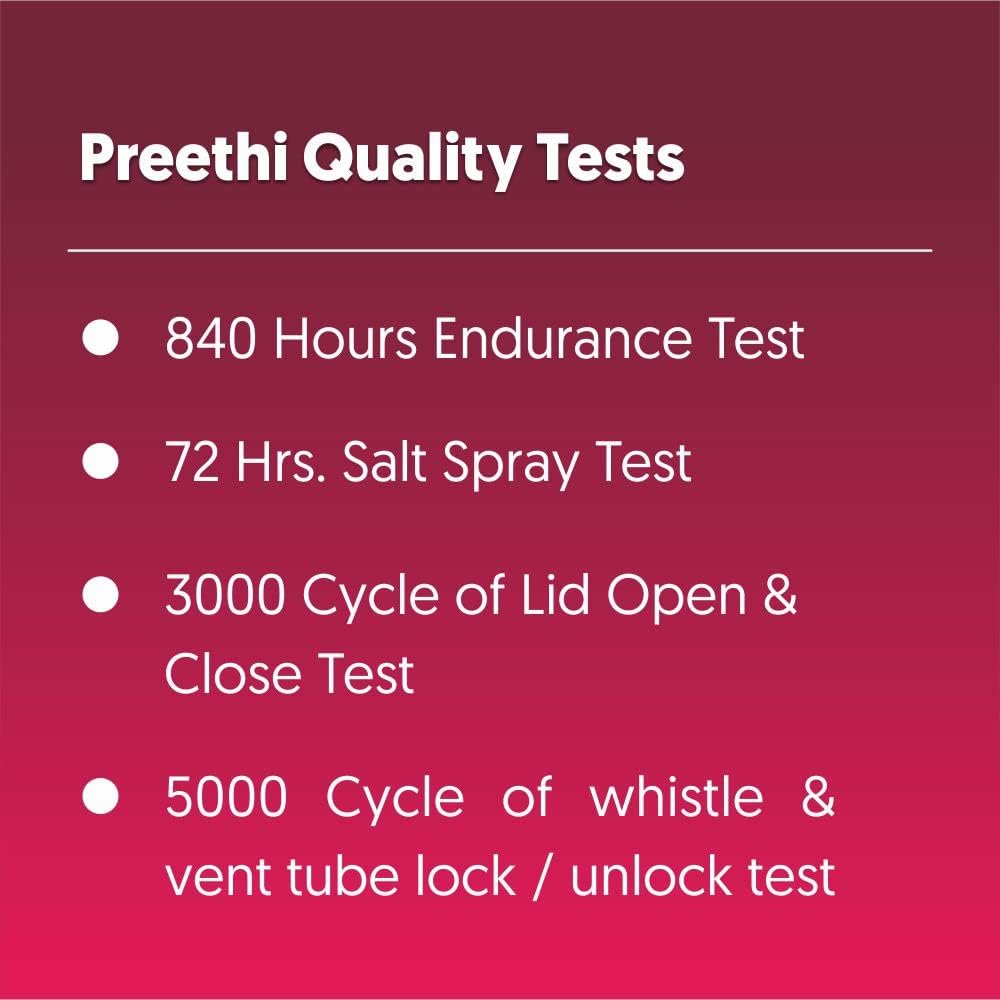
Quality Assurance: The product undergoes rigorous testing, including an 840 Hours Endurance Test, a 72 Hrs. Salt Spray Test, a 3000 Cycle of Lid Open & Close Test, and a 5000 Cycle of whistle & vent tube lock/unlock test, ensuring durability and reliability.

Capacity Guide: The 3 Litre model is ideal for a small family, serving 2-3 people and capable of cooking approximately 428g of raw rice. Always load to 1/2 capacity with a 1:2.5 ratio of rice to water.
3. Important Safety Instructions
Failure to follow these safety instructions may result in property damage or personal injury.
- Read all instructions carefully before using the pressure cooker.
- Do not touch hot surfaces. Use handles or knobs.
- Close supervision is necessary when the pressure cooker is used near children.
- Do not place the pressure cooker in a heated oven.
- Exercise extreme caution when moving a pressure cooker containing hot liquids.
- Do not use the pressure cooker for purposes other than its intended use.
- This appliance cooks under pressure. Improper use may result in scalding injury. Make certain the unit is properly closed before operating.
- Never force open the pressure cooker. Ensure internal pressure is completely released before opening.
- Do not fill the unit over 2/3 full. When cooking foods that expand during cooking, such as rice or dried vegetables, do not fill the unit over 1/2 full. Overfilling may cause a risk of clogging the vent pipe and developing excess pressure.
- Be aware that certain foods, such as applesauce, cranberries, pearl barley, oatmeal or other cereals, split peas, noodles, macaroni, rhubarb, or spaghetti can foam, froth, and sputter, and clog the pressure release device. These foods should not be cooked in a pressure cooker.
- Always check the pressure release device for clogging before use.
- Do not use this pressure cooker for deep frying with oil.
- Ensure the gasket is properly seated and free from damage before each use.
- Use only genuine Preethi replacement parts.
4. Setup and First Use
- Unpacking: Carefully remove all packaging materials and inspect the pressure cooker for any damage. Retain packaging for future transport if needed.
- Initial Cleaning: Before first use, wash the pressure cooker body, lid, gasket, and pressure regulator thoroughly with warm soapy water. Rinse well and dry completely.
- Gasket Installation: Ensure the rubber gasket is properly fitted into the groove on the inner rim of the lid. It should be seated evenly and securely.
- Pressure Regulator Placement: Place the pressure regulator (whistle) onto the vent pipe on the lid. Ensure it sits firmly.
- Test Run (Optional but Recommended): For your first use, you may perform a test run by adding 2 cups of water to the cooker, closing the lid, and bringing it to pressure. Allow it to whistle once or twice, then turn off the heat and let the pressure release naturally. This helps familiarize you with the cooker's operation and ensures all parts are functioning correctly.
5. Operating Instructions
5.1. Preparing for Cooking
- Add your ingredients and the required amount of liquid to the pressure cooker. Remember the 2/3 full rule (1/2 full for expanding foods).
- Ensure the rim of the cooker and the gasket are clean and free from food particles.
- Place the lid on the cooker, aligning the arrow on the lid with the arrow on the handle of the cooker body.
- Rotate the lid handle clockwise until it locks securely into place. The lid should fit snugly and not wobble.
- Place the pressure regulator (whistle) onto the vent pipe.
5.2. Cooking Under Pressure
- Place the pressure cooker on your induction cooktop or gas stove.
- Turn the heat to high.
- Steam will begin to escape from the vent pipe before the pressure regulator starts to whistle. This is normal.
- Once the pressure regulator begins to whistle steadily, reduce the heat to maintain a gentle, consistent whistling. This indicates that the desired pressure has been reached.
- Cook for the time specified in your recipe.
5.3. Releasing Pressure
There are two primary methods for releasing pressure:
- Natural Release: Turn off the heat and allow the pressure cooker to cool down naturally. The pressure regulator will stop whistling, and the lid will become easy to open once all pressure has dissipated. This method is ideal for foods that benefit from continued cooking, such as stews and roasts.
- Quick Release (under cold water): For foods that require precise cooking times or to stop cooking quickly, turn off the heat and carefully place the cooker under a running cold water tap, allowing water to flow over the lid (avoiding the vent pipe). The pressure will release rapidly. Never attempt to remove the pressure regulator manually to release pressure quickly, as this can cause hot steam to escape violently.
5.4. Opening the Lid
- Ensure all pressure has been released. The lid should feel loose and easy to rotate.
- Rotate the lid handle counter-clockwise to unlock it.
- Carefully lift the lid away from you to allow any residual steam to escape safely.
6. Maintenance and Cleaning
Proper care ensures the longevity and safe operation of your pressure cooker.
- Daily Cleaning: After each use, wash the cooker body, lid, gasket, and pressure regulator with warm soapy water. Rinse thoroughly and dry completely to prevent water spots and corrosion.
- Gasket Care: Remove the gasket from the lid after each use for cleaning. Inspect it for cracks, tears, or hardening. Replace the gasket every 6-12 months, or sooner if signs of wear are visible, to ensure a proper seal.
- Vent Pipe Cleaning: Regularly check the vent pipe on the lid for any food particles or blockages. Use a small brush or pipe cleaner to ensure it is clear. A blocked vent pipe can lead to dangerous pressure buildup.
- Pressure Regulator: Disassemble the pressure regulator if possible (refer to specific model instructions if applicable) and clean all parts. Ensure the weight moves freely and the steam vent is clear.
- Exterior: For stainless steel, use a non-abrasive cleaner to maintain its shine. Avoid steel wool or harsh scouring pads that can scratch the surface.
- Storage: Store the pressure cooker with the lid inverted or slightly ajar to allow air circulation and prevent odors. Ensure all parts are dry before storage.
7. Troubleshooting
| Problem | Possible Cause | Solution |
|---|---|---|
| Pressure not building / Steam leaking from lid |
|
|
| Lid stuck after cooking |
|
|
| Food burning at the bottom |
|
|
| Whistle not sounding or sounding too frequently |
|
|
8. Product Specifications
- Brand: Preethi
- Model Number: PC3L-SS
- Capacity: 3 Liters
- Material: Stainless Steel (SS 304 Grade Body & Lid)
- Color: Silver
- Finish Type: Chrome
- Product Dimensions: 13"D x 6"W x 6"H
- Special Feature: Induction Base, Gas Stovetop Compatible
- Control Method: Manual
- Closure Type: Outer Lid
- Included Components: Gasket, Pressure Regulator
9. Warranty and Support
Preethi products are manufactured to high-quality standards. For specific warranty details, please refer to the warranty card included with your purchase or visit the official Preethi website. In case of any issues or for technical support, please contact Preethi customer service through their official channels. Always use genuine Preethi spare parts for repairs and replacements to ensure safety and performance.