
1. Product Overview
The EFAN 16.5 FT A-Frame Telescoping Aluminum Ladder is a versatile and portable ladder designed for various tasks. Constructed from high-strength aluminum alloy, it offers both A-frame and straight extension ladder configurations. Its telescoping design allows for compact storage and adjustable height, making it suitable for household, office, and outdoor applications.
2. Safety Information
WARNING: Failure to follow these safety instructions may result in serious injury or death.
- Always read and understand all instructions before using the ladder.
- Inspect the ladder for damage or defects before each use. Do not use a damaged ladder.
- Ensure all locking mechanisms are fully engaged before climbing.
- Place the ladder on a firm, level, non-slip surface. Avoid soft ground or uneven terrain.
- Maintain three points of contact (two hands and one foot, or two feet and one hand) while climbing or descending.
- Do not overreach. Keep your body centered between the side rails.
- Do not stand on the top rung or the top cap of the ladder.
- Do not use the ladder in windy conditions or during storms.
- Ensure no one is underneath the ladder when extending or retracting.
- When retracting, keep hands and fingers clear of rungs to prevent pinching.
- The maximum load capacity for this ladder is 330 lbs (149.69 kg). Do not exceed this weight.

Image: Visual representation of the ladder's robust 330lb load capacity.
3. Product Components
Familiarize yourself with the key components of your EFAN Telescoping Ladder:
- Securing Strap: Keeps the ladder compact when folded.
- Hinge & Release Rod: Allows conversion between A-frame and straight ladder modes.
- Grip Handle: For easy carrying when folded.
- Slide Latch: Individual rung locking mechanism for extension and retraction.
- Slip-Resistant Rung: Provides secure footing.
- Non-Slip Bottom Cap: Enhances stability and prevents slipping.
- Non-Slip Angled Foot: Provides grip on various surfaces.
- Stabilizer Bar: Increases base width for enhanced stability.
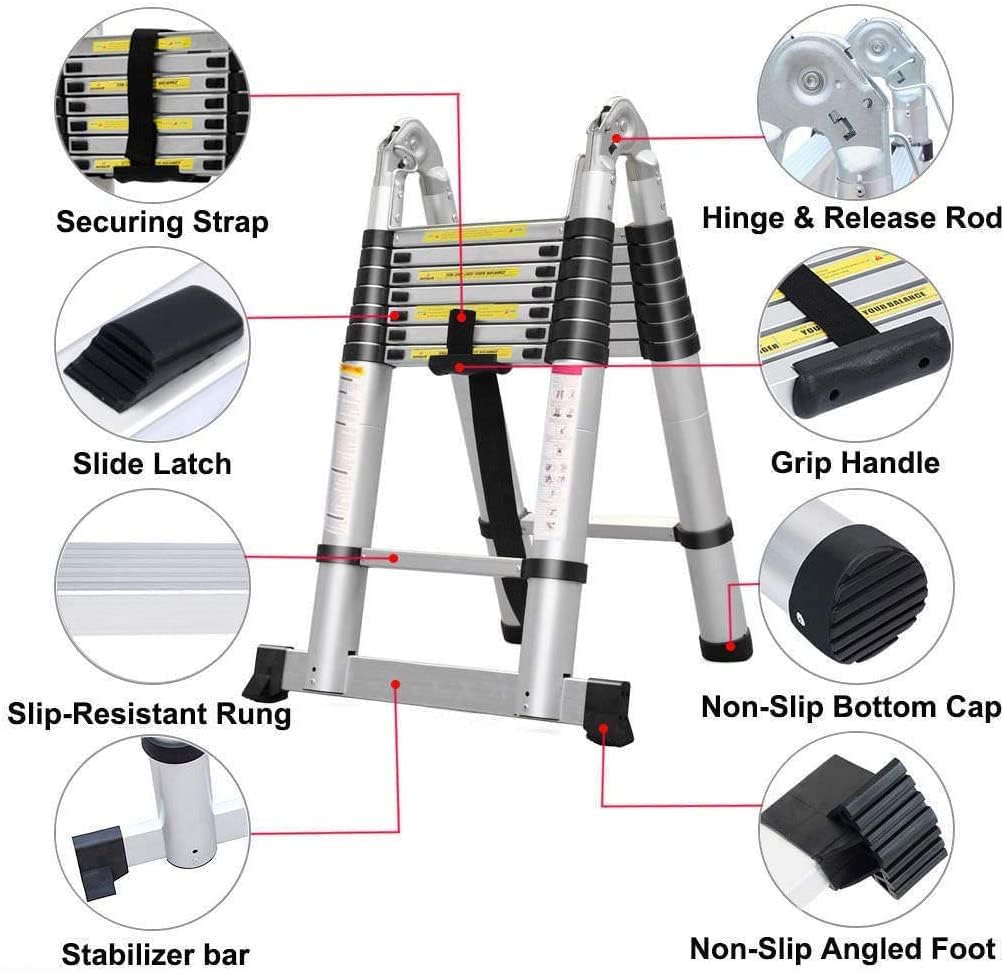
Image: Labeled diagram of the ladder's main components.
4. Setup and Extension
4.1 Unfolding the Ladder
- Place the folded ladder on a flat, stable surface.
- Release the securing strap.
- Gently pull the two sections apart to form an A-frame shape. Ensure the hinge mechanism locks securely into place.
4.2 Extending the Ladder (A-Frame or Straight)
To extend the ladder, always start from the bottom rung and work your way up.
- Ensure the ladder is stable on the ground.
- For each section, pull the rung upwards until the independent locking pins on both sides click into place. Visually confirm that both pins are fully engaged (locked position).
- Continue extending rungs one by one until the desired height is reached.
- Important: Never extend the ladder from the top down, as this can lead to improper locking and instability. All extended rungs must be fully locked.

Image: Unlocking the hinge for configuration adjustment.

Image: Independent rung locking mechanism. Ensure it is in the 'LOCK' position before use.
5. Operating Modes
This ladder can be used in two primary configurations:
5.1 A-Frame Ladder Mode
In A-frame mode, the ladder stands independently, forming an 'A' shape. This mode is ideal for tasks requiring a self-supporting ladder, such as indoor work or when a support surface is not available.
- Ensure the hinge is fully locked in the A-frame position.
- Extend rungs evenly on both sides to maintain balance.
- Do not extend one side significantly more than the other unless converting to a straight ladder.
5.2 Straight Extension Ladder Mode
To use as a straight extension ladder, fully extend one side of the A-frame, then carefully unlock the hinge and extend the other side to align with the first, forming a single, long ladder. This mode is suitable for leaning against a stable wall or structure.
- Ensure the ladder is placed at a safe angle (approximately 75 degrees from the horizontal).
- The top of the ladder should extend at least 3 feet (0.9 meters) above the landing surface.
- Secure the top and bottom of the ladder to prevent slipping.

Image: Ladder configurations: A-frame and straight extension.
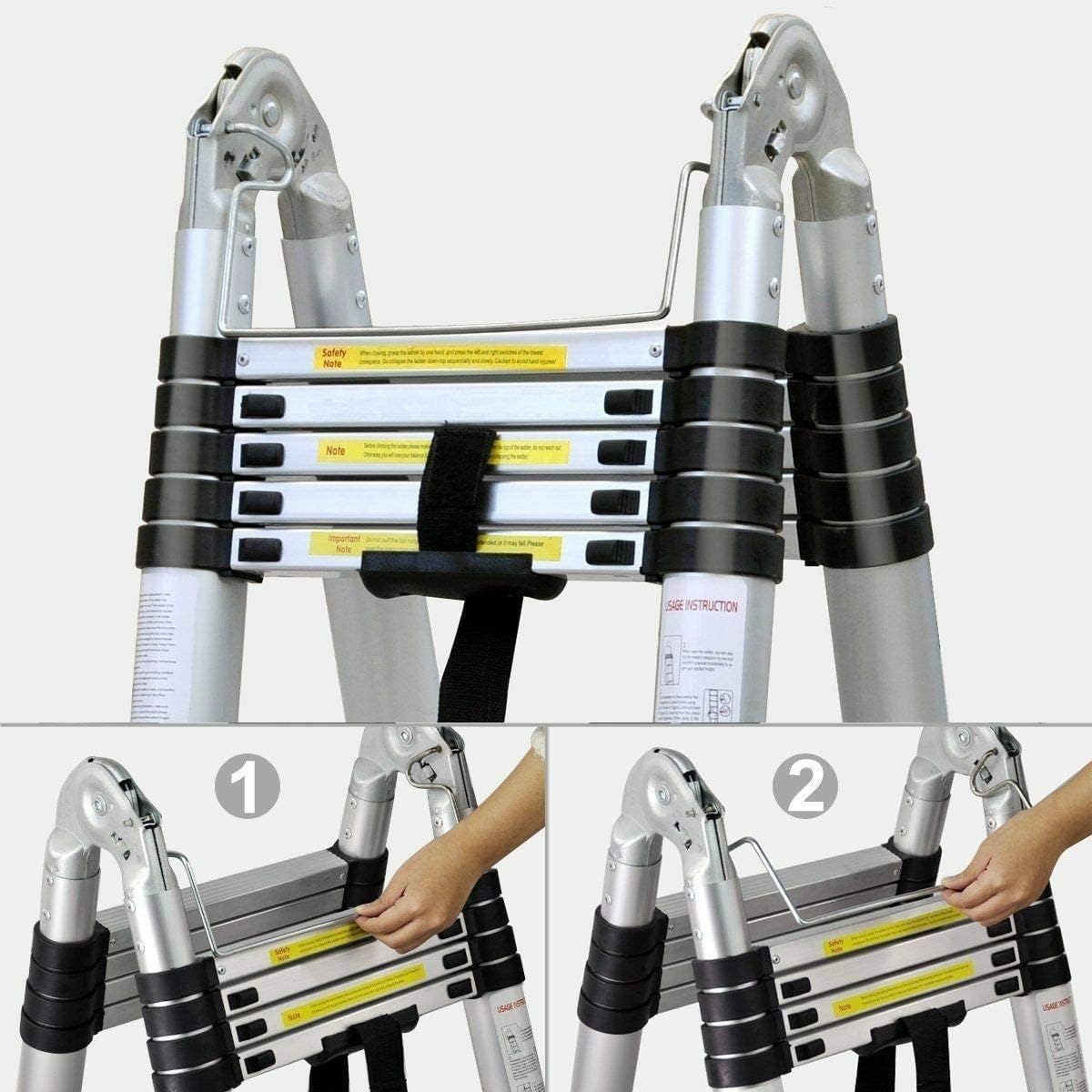
Image: Correct method for extending and retracting the ladder.
6. Retraction and Storage
6.1 Retracting the Ladder
To retract the ladder, always start from the top rung and work your way down.
- Ensure no one is on the ladder.
- Press the release buttons on the top rung simultaneously. The rung will slowly retract.
- Continue pressing the release buttons for each subsequent rung, allowing them to retract one by one.
- Caution: Keep hands and fingers clear of the retracting rungs to prevent pinching. The ladder features a deceleration design for safer retraction.
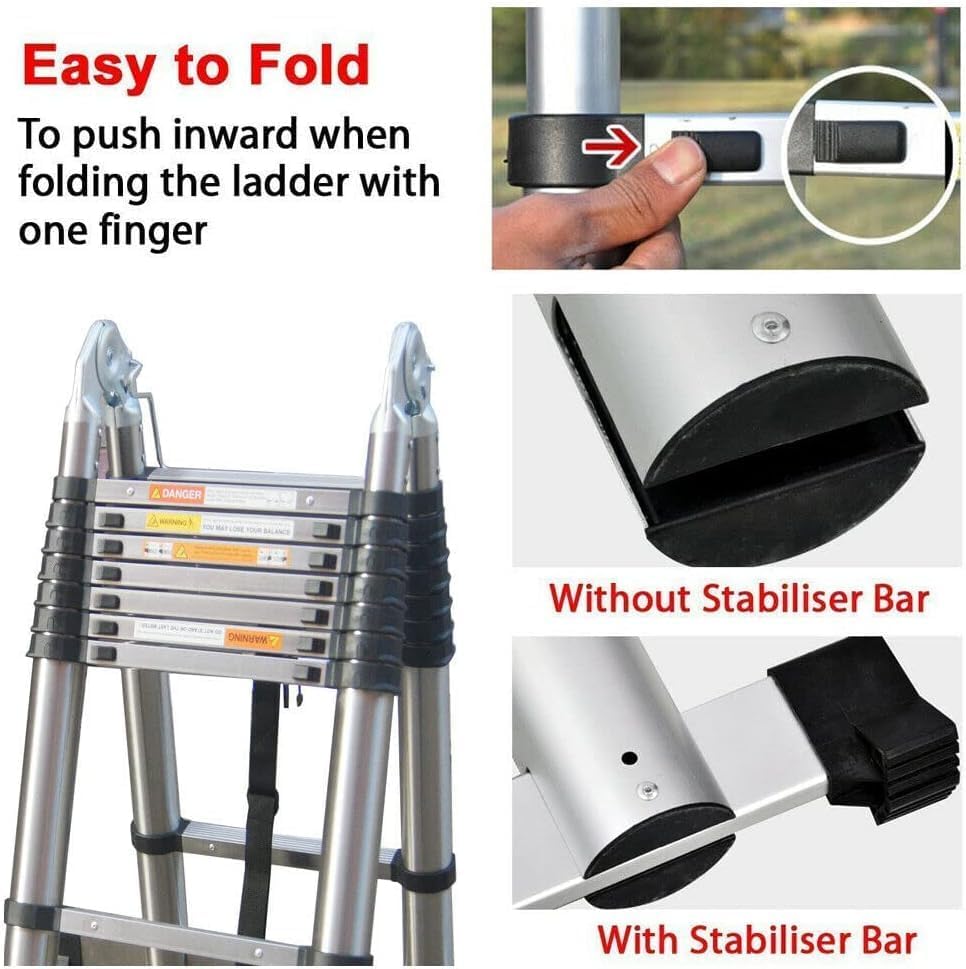
Image: Easy retraction mechanism.
6.2 Storing the Ladder
Once fully retracted, secure the ladder with the provided strap. Store the ladder in a dry, safe place, away from direct sunlight and extreme temperatures. Its compact size allows for storage under beds, in corners, storage cabinets, or car trunks.

Image: Compact storage options for the folded ladder.
7. Maintenance
Regular maintenance ensures the longevity and safe operation of your ladder.
- Cleaning: Wipe down the ladder with a damp cloth to remove dirt, grease, or debris. Avoid abrasive cleaners that could damage the aluminum finish.
- Inspection: Periodically check all rungs, locking mechanisms, hinges, and feet for wear, damage, or loose parts. Ensure the stabilizer bar is securely attached.
- Lubrication: If any moving parts feel stiff, apply a small amount of silicone-based lubricant to the joints and locking pins.
- Storage: Store the ladder in a clean, dry place to prevent corrosion and damage.
8. Troubleshooting
If you encounter issues with your ladder, refer to the following common problems and solutions:
| Problem | Possible Cause | Solution |
|---|---|---|
| Ladder rungs do not lock securely. | Rungs not fully extended; debris in locking mechanism. | Ensure each rung is pulled up until both locking pins click into place. Clean any debris from the locking mechanisms. |
| Difficulty retracting rungs. | Rungs are dirty or stiff; release buttons not fully pressed. | Clean rungs and apply lubricant if necessary. Ensure release buttons are fully depressed. Retract one rung at a time from the top. |
| Ladder feels unstable when extended. | Not all rungs are locked; uneven ground; improper angle (straight mode). | Verify all extended rungs are fully locked. Place on a firm, level surface. In straight mode, ensure a 75-degree angle and secure top/bottom. |
| Hinge does not lock in A-frame position. | Hinge mechanism obstructed or not fully opened. | Ensure the hinge is fully extended until it clicks into its locked position. Check for any obstructions. |
9. Specifications
| Feature | Detail |
|---|---|
| Material | Aluminum |
| Maximum Height | 16.5 FT (5M) |
| Load Capacity | 330 lbs (149.69 kg) |
| Number of Steps | 16 |
| Product Dimensions (Folded) | Approximately 26.38" x 33.86" x 6.3" (67cm x 86cm x 16cm) |
| Item Weight | 38.67 lbs (17.54 kg) |
| Special Features | A-type Dual Purpose, Portable, Stabilizer Bar, Independent Locking |
| Safety Standard | EN131 Approved |
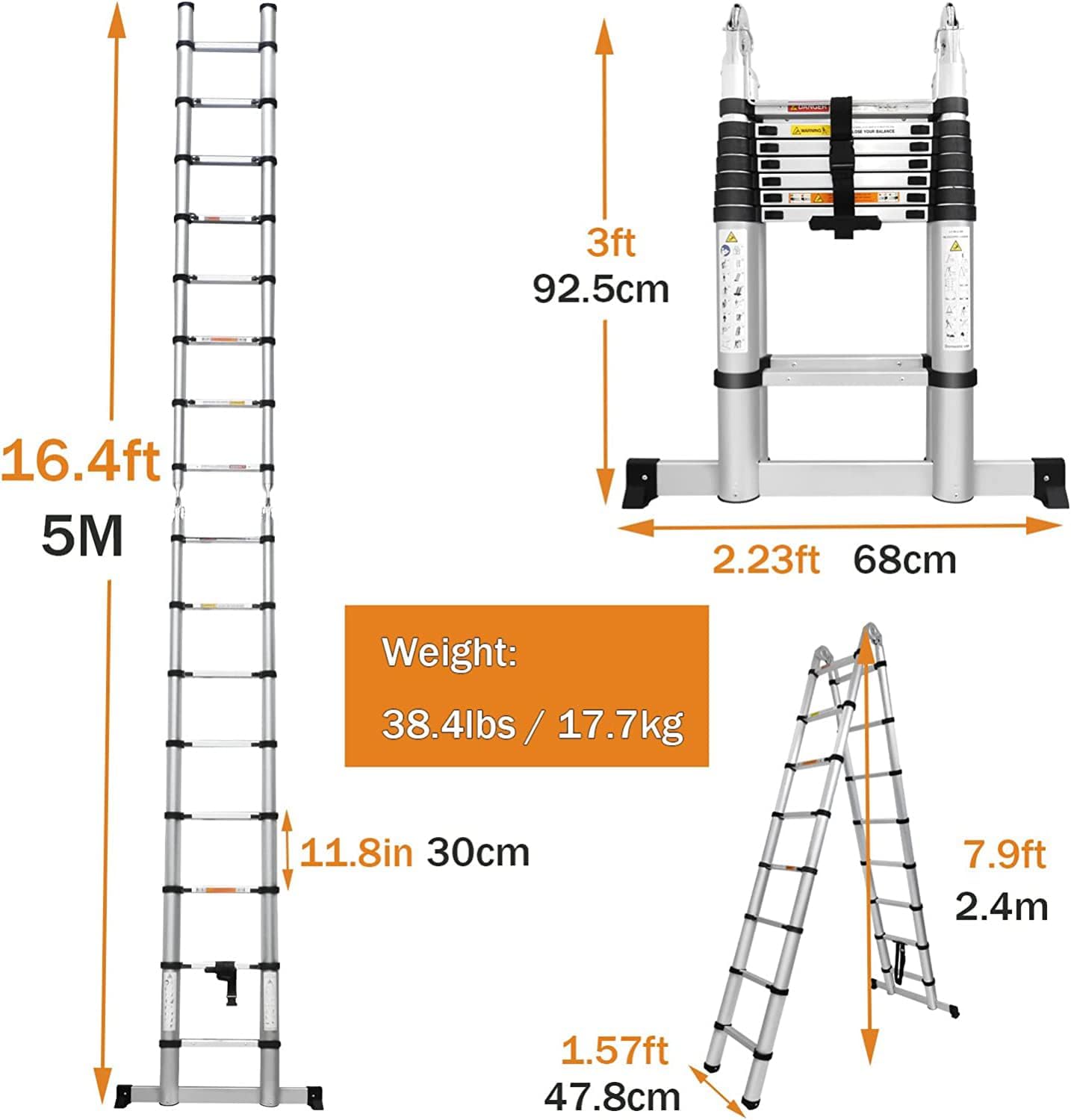
Image: Key dimensions of the ladder in various configurations.
10. Warranty and Support
For warranty information or technical support, please refer to the product packaging or contact EFAN customer service directly. Keep your purchase receipt as proof of purchase.