
SHEHDS DMX384
SHEHDS DMX Controller DMX384 Instruction Manual
Model: DMX384
1. Introduction
This manual provides detailed instructions for the proper setup, operation, and maintenance of your SHEHDS DMX384 DJ Controller. Please read this manual thoroughly before operating the device to ensure safe and efficient use. Retain this manual for future reference.
2. Safety Information
- Always connect the device to a grounded power outlet.
- Ensure the power supply voltage matches the device's requirements.
- Do not expose the device to rain or moisture.
- Avoid operating the device in extreme temperatures or high humidity.
- Do not open the casing; refer all servicing to qualified personnel.
- Keep the device away from flammable materials.
3. Product Overview
The SHEHDS DMX384 is an intelligent lighting controller designed for managing DMX-compatible stage lighting equipment. It features 384 control channels, allowing for comprehensive control over multiple fixtures.
3.1 Front Panel Controls
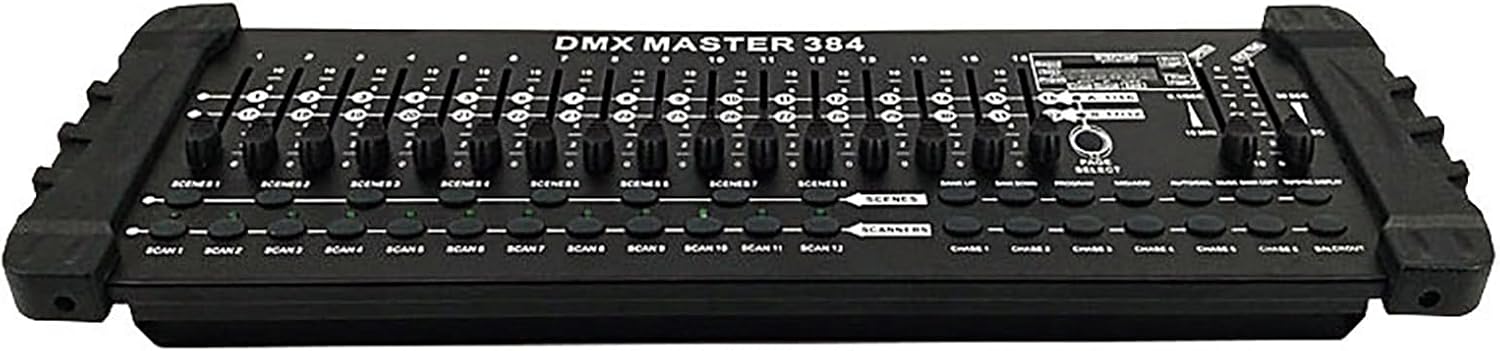
Figure 1: Front view of the SHEHDS DMX384 DJ Controller, displaying the array of faders and control buttons for various functions.
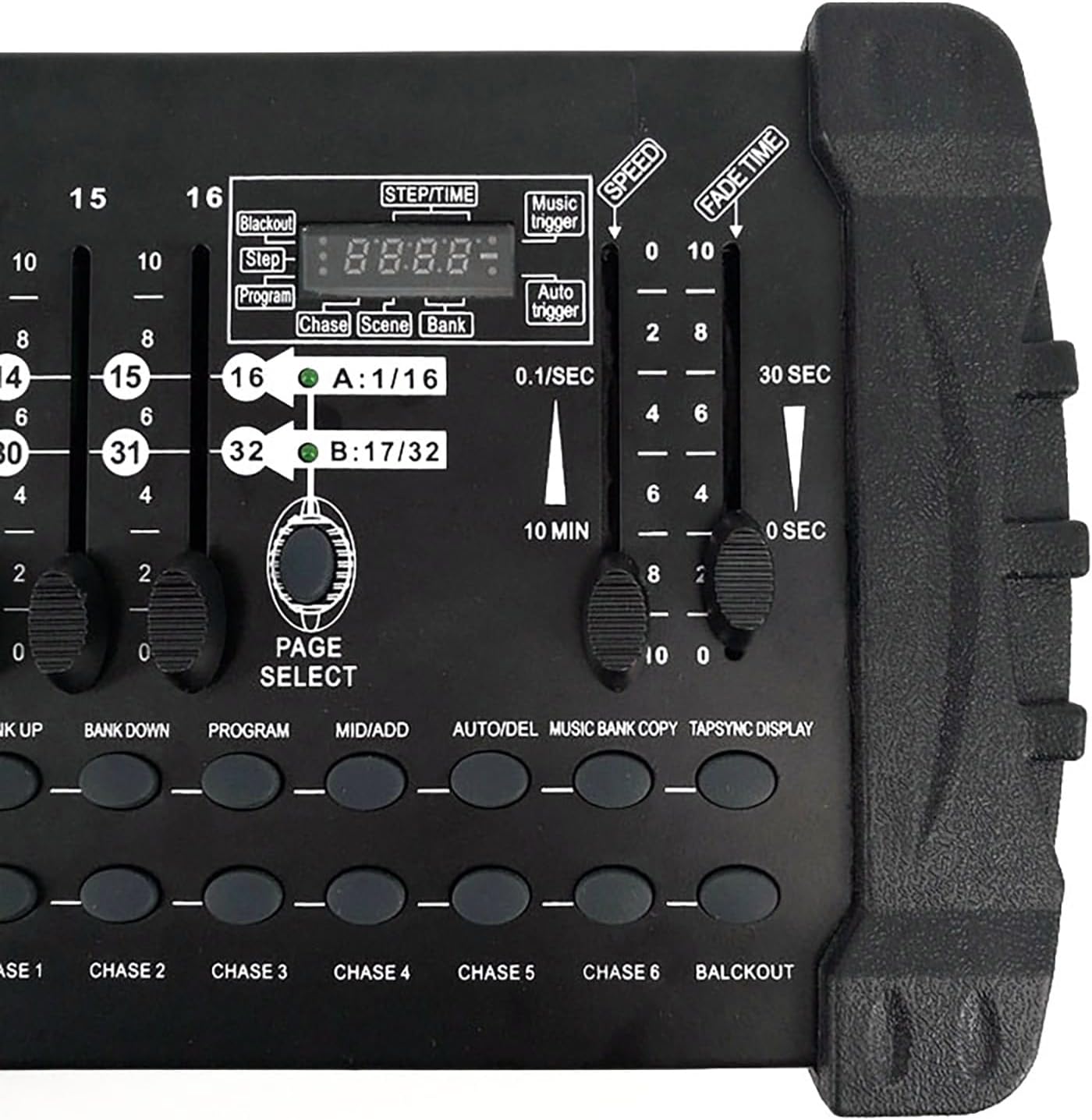
Figure 2: Close-up of the control panel, highlighting the LED digital display, channel faders, and function buttons for scene and program selection.
The front panel includes:
- Lighting Area: Controls for individual light fixtures.
- Channel Faders (1-16): Adjust DMX channel values.
- Time Speed Faders: Control fade time and speed for scenes and chases.
- Functional Area: Buttons for program, scene, and bank selection.
- Scene Keys: Activate stored scenes.
- Page Change Area: Navigate between different pages of channels (A/B).
- LCD Display: Shows current settings and values.
3.2 Rear Panel Connections

Figure 3: Rear panel of the DMX384 Controller, showing all connection ports.
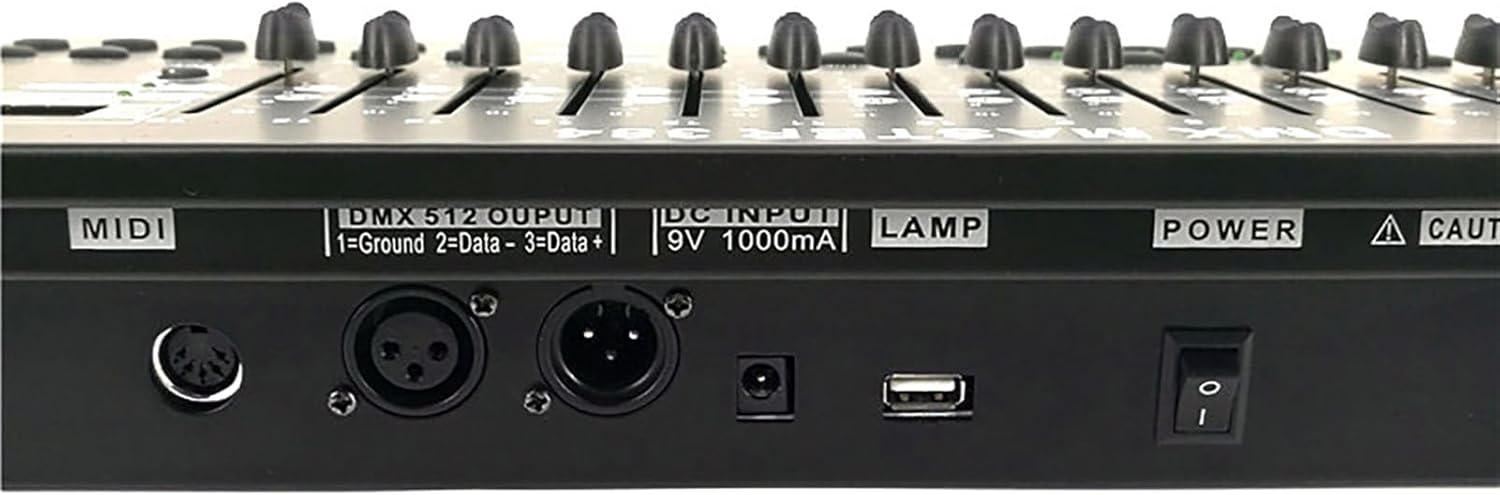
Figure 4: Detailed view of the DMX 512 output, DC input, and USB port on the rear panel.
The rear panel includes:
- MIDI In/Out: For MIDI control (if applicable).
- DMX 512 Output: Standard 3-pin XLR connector for DMX signal output.
- DC Input (9V 1000mA): Power input for the controller.
- USB Port: For potential firmware updates or data transfer (refer to specific software instructions).
- Power Switch: On/Off control for the device.
4. Setup
4.1 Unpacking

Figure 5: Contents of the SHEHDS DMX384 Controller package.
Carefully remove all components from the packaging. Verify that all items are present:
- SHEHDS DMX384 Controller
- Power Adapter (9V 1000mA)
- User Manual
4.2 Power Connection
- Connect the provided power adapter to the DC Input port on the rear panel of the DMX384 controller.
- Plug the power adapter into a suitable electrical outlet (9V 1000mA).
- Ensure the power switch on the rear panel is in the 'OFF' position before connecting.
4.3 DMX Connection
- Use a standard 3-pin DMX cable to connect the DMX 512 Output of the controller to the DMX Input of your first lighting fixture.
- For multiple fixtures, daisy-chain them by connecting the DMX Output of the first fixture to the DMX Input of the second, and so on.
- Ensure the last fixture in the chain has a DMX terminator connected to its DMX Output to prevent signal reflection.
5. Operating Instructions
The DMX384 controller provides 384 DMX channels, capable of controlling up to 12 intelligent computer lights, each with 32 channels. It supports 30 bar stacks with 8 scenes each, and 6 slots with up to 240 scenes. Scenes can be recorded with fading and sensitivity settings. The 16 sliders allow direct control of channels, and a built-in amplifier supports music mode operation.
5.1 Powering On and Initializing
- Flip the power switch on the rear panel to the 'ON' position.
- The LCD display will illuminate, indicating the controller is ready for operation.
5.2 Setting DMX Addresses
Before controlling your lighting fixtures, ensure each fixture has a unique DMX address set. Refer to your fixture's manual for specific instructions on setting its DMX address.
Note: After setting the DMX address on the controller, press the 'OK' key. The original DMX address will be retained even after shutting down and restarting the unit.
5.3 Basic Channel Control
- Select the desired scanner (fixture) using the 'SCANNER' buttons (SCAN 1-12).
- Use the 16 channel faders to adjust the DMX values for the selected fixture's channels. The LCD display will show the current channel values.
- Use the 'PAGE SELECT' button to switch between channel pages A (1-16) and B (17-32) if your fixture uses more than 16 channels.
5.4 Scene Programming
The controller allows you to program and store multiple scenes.
- Press the 'PROGRAM' button to enter programming mode.
- Select the desired scanner(s) and adjust their channels using the faders to create your desired lighting state.
- Press the 'MIDI/ADD' button to save the current lighting state.
- Select a 'SCENE' button (SCENE 1-8) to store the scene.
- Repeat for additional scenes.
- Exit programming mode by pressing the 'PROGRAM' button again.
5.5 Scene Playback
- Ensure the controller is not in programming mode.
- Press the desired 'SCENE' button to activate a stored scene.
- Use the 'FADE TIME' fader to adjust the transition speed between scenes.
- Use the 'SPEED' fader to adjust the speed of dynamic effects within a scene.
5.6 Chase Programming and Playback
Chases are sequences of scenes that play automatically.
- Press the 'PROGRAM' button.
- Press the 'CHASE' button (CHASE 1-6) to select a chase to program.
- Select and activate scenes in the desired order. Each activated scene will be added to the chase.
- Press 'MIDI/ADD' after each scene to add it to the chase.
- Exit programming mode by pressing the 'PROGRAM' button.
- To play a chase, select the desired 'CHASE' button.
5.7 Music Mode
The DMX384 features a built-in amplifier for music mode, allowing lighting to react to audio input.
- Connect an audio source to the controller's audio input (if available, refer to specific model features).
- Activate 'MUSIC TRIGGER' mode (refer to LCD display and function buttons).
- The lighting will now respond to the rhythm and intensity of the music.
6. Maintenance
- Cleaning: Use a soft, dry cloth to clean the exterior of the controller. Do not use abrasive cleaners or solvents.
- Storage: When not in use, store the controller in a dry, dust-free environment.
- Inspection: Periodically check all cables and connections for wear or damage.
7. Troubleshooting
| Problem | Possible Cause | Solution |
|---|---|---|
| Controller does not power on. | No power, faulty power adapter, power switch off. | Check power connection, ensure adapter is working, turn power switch ON. |
| Lights do not respond to controller. | Incorrect DMX addressing, faulty DMX cable, DMX terminator missing. | Verify DMX addresses on fixtures, check DMX cable integrity, ensure terminator is used on the last fixture. |
| Intermittent light flickering. | DMX signal interference, loose connections, faulty fixture. | Ensure DMX cables are properly shielded, check all connections, test fixtures individually. |
| Scenes/Chases not saving. | Not in programming mode, incorrect save procedure. | Ensure 'PROGRAM' button is active, follow scene/chase programming steps carefully. |
8. Specifications
- Model: DMX384
- Control Channels: 384 DMX channels
- Controllable Fixtures: 12 intelligent computer lights (up to 32 channels each)
- Scenes: 30 banks of 8 programmable scenes (240 total)
- Chases: 6 programmable chases (up to 240 steps each)
- Faders: 16 channel faders, 2 time speed faders
- Display: LED Digital Display
- Connectivity: 3-pin DMX output, DC power input, USB port
- Power Input: DC 9V 1000mA (Corded Electric)
- Material: Plastic (housing), Aluminum (internal components/heat sinks)
- Dimensions (L x W x H): 24.4" x 8.8" x 5.7" (61.98 cm x 22.35 cm x 14.48 cm)
- Weight: 6.19 pounds (2.81 kg)
- Mounting Type: Rack Mount (Note: Some users report non-standard 19" rack compatibility, verify before rack installation)
9. Warranty and Support
SHEHDS is committed to providing quality products and customer satisfaction.
- Replacement Policy: 1-Month Replacement for manufacturing defects.
- Warranty: 1-Year Limited Warranty from the date of purchase.
- Customer Service: For technical support, warranty claims, or general inquiries, please contact SHEHDS customer service through your retailer or the official SHEHDS website.
Ask a question about this manual
Ask about setup, troubleshooting, compatibility, parts, safety, or missing instructions. Manuals+ will review the question and use this page’s manual context to help answer it.