1. Product Overview
The YATOINTO Mini Hand Chain Hoist is a robust and reliable manual lifting device designed for various industrial and automotive applications. This 1/4 Ton (550 Lbs) capacity chain hoist features a 10-foot lift, constructed from premium alloy steel for durability and long-term performance. Its compact design and efficient braking system ensure safe and precise load handling.
Key features include a highly efficient, corrosion-protected brake system for instant load holding, heavy-duty alloy steel chains, and heat-treated, precisely machined components for smooth operation and minimal maintenance. The hoist is engineered for safety with double pawls and double guide rollers, and a unique curled edge hand chain cover to prevent noise and ensure smooth chain feeding.

Figure 1: YATOINTO 1/4 Ton Chain Hoist showing its main body, chain, and hooks from multiple angles.
2. Important Safety Instructions
Always read and understand this manual completely before operating the chain hoist. Failure to follow these instructions can result in serious injury or property damage.
- Never exceed the rated load capacity of 1/4 Ton (550 Lbs).
- Inspect the hoist, chain, and hooks for any damage or wear before each use. Do not use if damaged.
- Ensure the load is properly balanced and securely attached to the hook.
- Do not use the hoist for lifting people or loads over people.
- Keep hands and clothing clear of the chain and moving parts during operation.
- Operate the hoist smoothly; avoid sudden jerks or rapid movements.
- Ensure the mounting structure is capable of supporting the hoist and the maximum intended load.
- Do not modify the hoist in any way.
- Store the hoist in a clean, dry place when not in use.

Figure 2: Detail of the hoist's safety features, including the hook with safety buckle and the durable load chain.
3. Setup and Installation
- Unpacking: Carefully remove the hoist from its packaging. Inspect for any visible damage that may have occurred during shipping.
- Mounting Location: Select a secure overhead support structure (e.g., I-beam, trolley) that is rated to safely support the hoist's weight plus the maximum intended load.
- Attaching the Hoist: Securely attach the hoist's top hook to the chosen support. Ensure the safety latch on the hook is fully closed and engaged.
- Chain Inspection: Before first use, fully extend both the load chain and the hand chain. Check for any kinks, twists, or damaged links. The hand chain should feed smoothly.
- Test Lift: Perform a light test lift with a small, non-critical load to ensure all mechanisms (lifting, lowering, braking) function correctly.
4. Operating Instructions
4.1. Lifting a Load
- Attach the load securely to the bottom hook. Ensure the safety latch is closed.
- Stand clear of the load. Pull the hand chain downwards in a steady, continuous motion.
- The load will begin to lift. Continue pulling until the desired height is reached.
- Release the hand chain. The automatic brake system will engage, holding the load in position.
4.2. Lowering a Load
- To lower the load, gently pull the other side of the hand chain (the side that causes the load to descend).
- Control the descent speed by varying the pull on the hand chain.
- Once the load is at the desired position or on the ground, release the hand chain. The brake will re-engage.
4.3. Operational Safety Tips
- Always ensure the load is centered under the hoist to prevent swinging.
- Do not allow the load chain to become twisted or knotted.
- Avoid shock loading. Lift and lower loads smoothly.
- Never leave a suspended load unattended.
- If the hoist makes unusual noises or feels abnormal, stop operation immediately and inspect.

Figure 3: The YATOINTO chain hoist in an automotive garage, demonstrating its use for lifting heavy components like an engine.

Figure 4: Examples of common applications for the chain hoist, including lifting and holding pipes, maintaining turbines, and removing engines.
5. Maintenance and Care
5.1. Regular Inspection
- Before Each Use: Visually inspect the hoist for any signs of damage, cracks, deformation, or excessive wear on the housing, hooks, and chains. Check that safety latches on hooks operate freely and close fully.
- Monthly/Quarterly: For frequent use, perform a more thorough inspection. Check for chain stretch, worn sprockets, proper brake function (ensure it holds the load without slipping), and any loose fasteners.
- Load Chain: Inspect each link for nicks, gouges, twists, or elongation. Replace the chain if any damage is found.
- Hooks: Check for bending, twisting, or throat opening. Hooks should not be bent more than 10 degrees from the original plane.
5.2. Lubrication
- The internal gears and bearings are pre-lubricated. For optimal performance and longevity, periodically apply a light coat of machine oil to the load chain to prevent rust and ensure smooth operation.
- Do not over-lubricate, as this can attract dirt and debris.
5.3. Storage
When not in use, store the hoist in a clean, dry environment, protected from dust, moisture, and corrosive elements. Avoid storing it in direct sunlight or extreme temperatures.

Figure 5: An internal view of the chain hoist, highlighting the robust brake system and durable gears designed for reliable performance.
6. Troubleshooting Guide
| Problem | Possible Cause | Solution |
|---|---|---|
| Hoist will not lift load. | Load exceeds capacity; Load chain is jammed or twisted; Brake is stuck. | Reduce load; Inspect and untangle chain; Check brake mechanism for debris or damage. |
| Load slips or lowers unexpectedly. | Brake mechanism worn or dirty; Overload. | Inspect and clean brake components; Do not exceed rated capacity. If problem persists, discontinue use and seek professional service. |
| Hand chain is difficult to pull. | Load chain twisted or jammed; Lack of lubrication; Internal friction. | Check and untwist load chain; Lubricate load chain; Inspect internal components for wear. |
| Unusual noises during operation. | Worn gears or bearings; Lack of lubrication; Foreign object. | Stop operation immediately. Inspect for worn parts or foreign objects. Lubricate as needed. |
If you encounter problems not listed here or if solutions do not resolve the issue, contact YATOINTO customer support or a qualified technician.
7. Technical Specifications
| Specification | Value |
|---|---|
| Model Number | VD |
| Capacity | 1/4 Ton (550 Lbs) |
| Standard Lift Height | 10 Feet |
| Load Chain Diameter | 5mm |
| Headroom | 10.2 inches |
| Material | Industrial Grade Alloy Steel |
| Brake System | Highly efficient, corrosion protected |
| Overall Dimensions (approx.) | 20.6 x 14.3 x 13.79 cm (Parcel Dimensions) |
| Item Weight (approx.) | 4.18 kg |
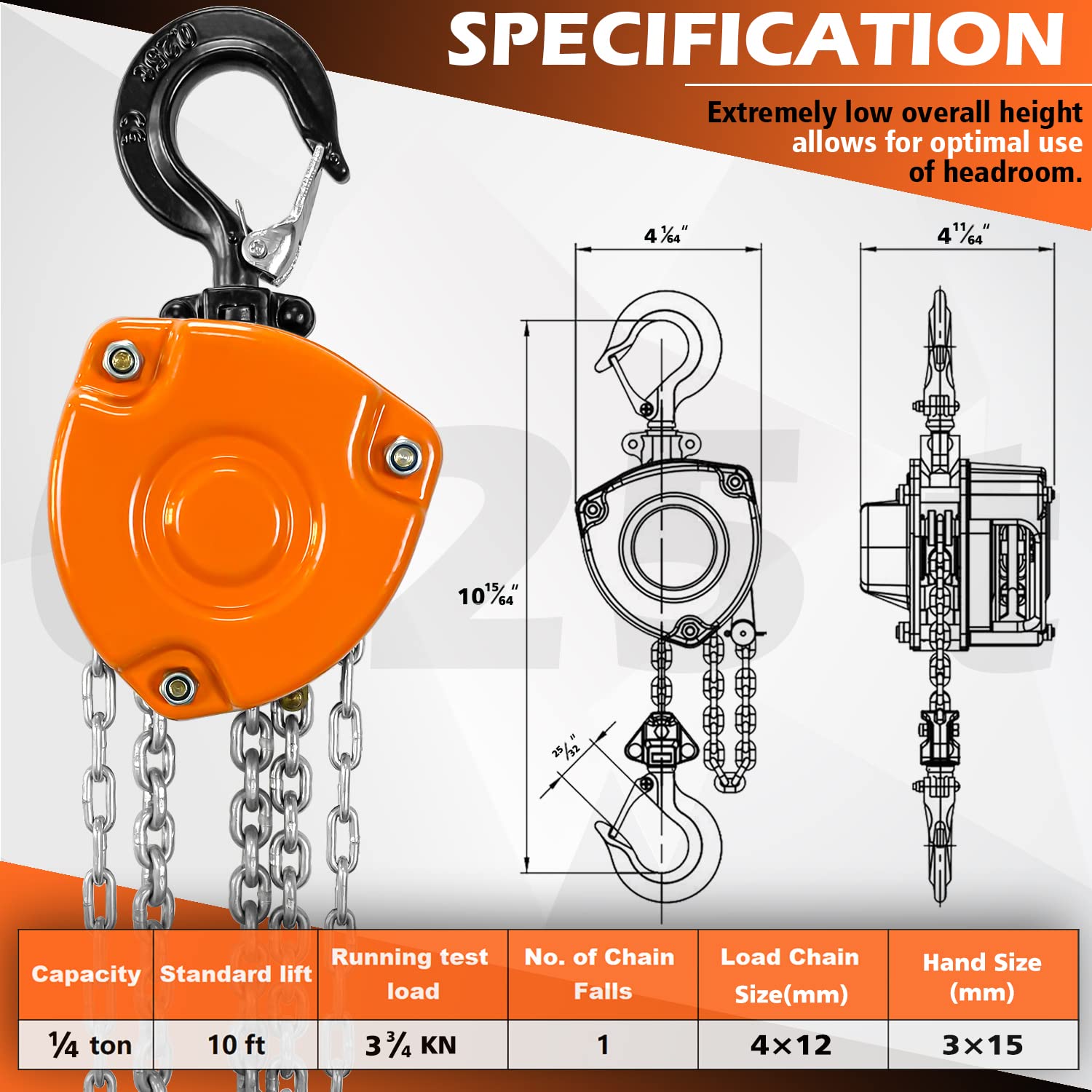
Figure 6: Detailed technical diagram illustrating the dimensions and key specifications of the YATOINTO chain hoist.
8. Warranty and Customer Support
For information regarding warranty coverage, claims, or technical support, please refer to the documentation included with your purchase or visit the official YATOINTO website. It is recommended to keep your purchase receipt as proof of purchase.
For direct inquiries, you may contact YATOINTO customer service through the contact information provided on their official channels.


