
1. Introduction
This manual provides essential instructions for the safe installation, operation, and maintenance of your APC by Schneider Electric Back-UPS 400VA (Model BV400XU). This Uninterruptible Power Supply (UPS) is designed to provide power protection for electronic equipment, safeguarding against power outages, surges, and spikes. Please read this manual thoroughly before installation and retain it for future reference.
2. Safety Instructions
DANGER: HAZARD OF ELECTRIC SHOCK, EXPLOSION, OR ARC FLASH
- Batteries may cause chemical hazard, electrical shock, and energy hazard. Refer to user manual for details of the maintenance, handling, and disposal requirements for batteries.
- Failure to follow these instructions will result in death or serious injury.
NOTICE: EQUIPMENT OPERATION HAZARD
- The output of this device is not purely sinusoidal. It has a nominal total voltage harmonic distortion of 45 percent, with the nominal value of the largest single voltage harmonic of 35 percent.
- Failure to follow these instructions can result in equipment damage.
Always adhere to local and national electrical codes. This UPS is for indoor use only. Do not operate the UPS in direct sunlight, in contact with fluids, or where there is excessive dust or humidity.
3. Package Contents
Verify that your package contains the following items:
- APC Back-UPS 400VA Unit (Model BV400XU)
- User Manual and Safety Information
If any items are missing or damaged, please contact your dealer or APC by Schneider Electric customer support.
4. Product Overview
The APC Back-UPS 400VA provides reliable power backup and surge protection in a compact, low-profile design suitable for various environments, including industrial settings. It features flexible mounting options.
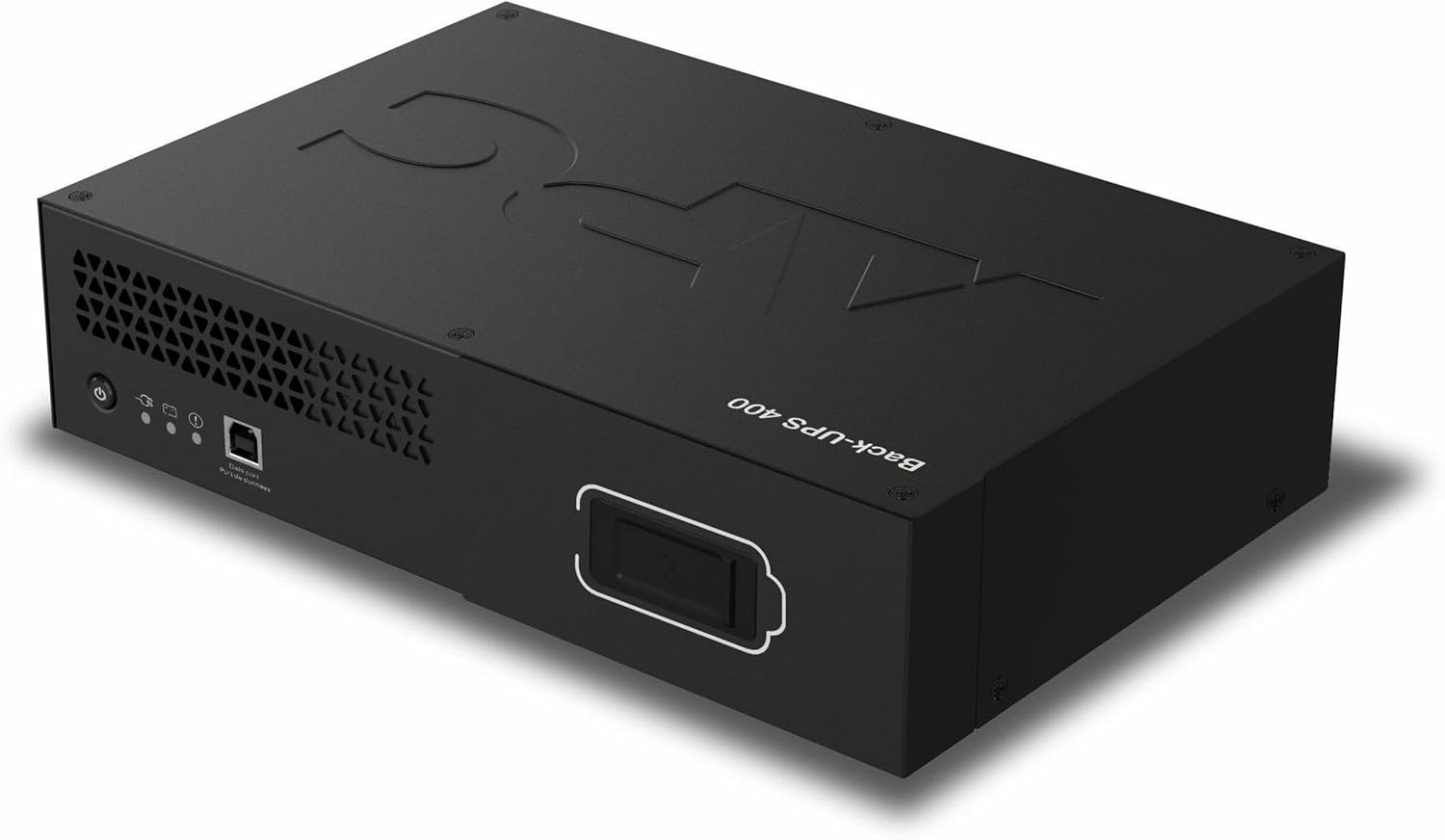
Figure 1: Front and top view of the APC Back-UPS 400VA unit. This image displays the compact, black casing of the UPS, highlighting its low-profile design. The APC logo is visible on the top surface, and the 'Back-UPS 400' model designation is printed on the side. Indicator lights and a USB port are visible on the front panel.

Figure 2: Rear panel of the APC Back-UPS 400VA. This image shows the input power cord, the circuit breaker button, and the battery backup + surge protection outlets. Labels for customer service and regulatory compliance are also visible.

Figure 3: Example of the APC Back-UPS 400VA mounted to a monitor arm. This image demonstrates the flexible mounting capability of the UPS, showing it attached to the back of a computer monitor via a VESA mount or similar bracket, illustrating its space-saving potential.
5. Setup
5.1 Initial Battery Connection
Before initial use, the internal battery must be connected. Carefully open the battery compartment, typically located on the underside or side of the unit. Connect the battery terminals as indicated by the labels. Ensure connections are secure. If you encounter any rattling or loose components during this step, inspect for any manufacturing anomalies and contact support if necessary.
5.2 Placement
Place the UPS in a location that is clean, dry, and away from heat sources. The low-profile design allows for flexible placement, including under desks, on shelves, or mounted to compatible surfaces (refer to Figure 3 for mounting example). Ensure adequate ventilation around the unit.
5.3 Connecting Equipment
- Plug your computer, monitor, and other critical electronic devices into the 'BATTERY BACKUP + SURGE PROTECTION' outlets on the rear of the UPS (refer to Figure 2).
- Do not plug laser printers or other high-current devices into the battery backup outlets, as this may overload the unit.
5.4 Power Connection
Plug the UPS power cord directly into a grounded two-pole, three-wire wall receptacle. Avoid using extension cords or surge strips with the UPS input. Allow the UPS to charge for at least 8 hours before connecting equipment to ensure full battery capacity.
6. Operating the UPS
6.1 Power On/Off
- To turn ON the UPS: Press the power button located on the front panel. The unit will emit a short beep, and the power indicator light will illuminate.
- To turn OFF the UPS: Press and hold the power button until the unit beeps and the power indicator light turns off.
6.2 Indicators
The front panel features LED indicators that provide status information:
- Solid Green: UPS is operating normally, providing utility power to connected equipment.
- Flashing Green (with audible alarm): UPS is operating on battery power.
- Solid Red (with audible alarm): Battery low or fault condition.
6.3 Battery Backup Operation
During a power outage or significant voltage fluctuation, the UPS will automatically switch to battery power, providing temporary power to connected devices. An audible alarm will sound, and the battery indicator will flash. This allows you time to save work and properly shut down equipment.
6.4 Surge Protection
The UPS also provides surge protection for all connected outlets, safeguarding your equipment from damaging power surges and spikes.
7. Maintenance
7.1 Battery Replacement
The battery in your UPS is a sealed lead-acid battery and is not user-serviceable for replacement. Battery life is typically 3-5 years, depending on usage and environmental conditions. When the battery needs replacement, the UPS will indicate this via an alarm or indicator light. Contact APC by Schneider Electric customer support for authorized battery replacement services.
7.2 Cleaning
To clean the exterior of the UPS, use a soft, dry cloth. Do not use liquid or aerosol cleaners. Ensure the unit is powered off and unplugged from the wall outlet before cleaning.
7.3 Storage
If storing the UPS for an extended period, ensure the battery is fully charged. Store the unit in a cool, dry location with the battery disconnected. Recharge the battery every three months to prevent permanent damage.
8. Troubleshooting
If the UPS is not operating correctly, consult the following table for common issues and solutions:
| Problem | Possible Cause | Solution |
|---|---|---|
| UPS does not turn on | Battery not connected; No utility power; UPS fault | Ensure battery is connected; Check wall outlet; Contact support |
| UPS beeps continuously | On battery power; Overload; Low battery | Save work and shut down; Reduce connected load; Allow battery to charge |
| UPS does not provide expected runtime | Battery not fully charged; Battery nearing end of life; Overload | Allow 8 hours for initial charge; Consider battery replacement; Reduce connected load |
| Circuit breaker tripped | Overload on outlets | Reduce connected load; Press the circuit breaker button on the rear panel to reset (refer to Figure 2) |
For issues not listed here or if problems persist, please contact APC by Schneider Electric customer support.
9. Specifications
| Feature | Specification |
|---|---|
| Model | BV400XU |
| Capacity | 400VA / 255W |
| Input Voltage | 120V AC |
| Output Voltage | 120V AC |
| Battery Type | Lead Acid |
| Product Dimensions (D x W x H) | 4.69 x 10.24 x 4.69 inches |
| Item Weight | 11.99 pounds |
| Color | Black |
10. Warranty and Support
APC by Schneider Electric products are backed by a limited warranty. For detailed warranty information, please refer to the warranty card included with your product or visit the official APC website. For technical support, troubleshooting assistance, or service inquiries, please visit www.apc.com or contact your local APC customer service representative.


