
1. Introduction
Thank you for choosing the Prity C W18 Wood Stove with Boiler. This fireplace insert is designed to provide efficient heating for your home, featuring an integrated boiler for central heating systems. It is constructed with a 2 mm thick steel sheet body and a 3 to 4 mm thick steel sheet top, ensuring durability and reliable performance. This manual provides essential information for the safe installation, operation, and maintenance of your appliance.

Image 1.1: Front view of the Prity C W18 Wood Stove with Boiler, showcasing its robust design and cast iron door.
2. Safety Instructions
Please read all safety instructions carefully before installation and operation. Failure to follow these instructions may result in property damage, personal injury, or death.
2.1 General Safety
- Always use dry wood as fuel. The permissible wood moisture content is 16 ± 4% according to EN 13240:2006.
- Never use flammable liquids to start or rekindle a fire.
- Ensure adequate ventilation in the room where the stove is installed.
- Keep children and pets away from the hot surfaces of the stove.
- Do not store combustible materials near the stove.
2.2 Clearances to Combustible Materials
Maintain the following minimum distances from combustible materials:
- Rear: 400 mm
- Sides (Left and Right): 400 mm
- Front (in the entire radiation area of the glass): 800 mm
- Ceiling: 800 mm
- Floor: 0 mm (if non-combustible material is used underneath, otherwise follow local regulations)
2.3 Boiler Safety
- The maximum working pressure of the water system connected to the boiler is 1.25 bar. Do not exceed this pressure.
- Ensure the central heating system is properly installed and maintained by a qualified professional.
- Never operate the stove if the boiler is empty or not properly connected to the central heating system.

Image 2.1: Declaration of Performance for Prity C W18, detailing compliance with EU regulations and safety standards.
3. Setup and Installation
The Prity C W18 is designed as a built-in fireplace insert. Installation should only be performed by a qualified and certified installer in accordance with all local and national building codes and regulations.
3.1 Unpacking and Inspection
- Carefully unpack the stove and inspect it for any damage that may have occurred during transit. Report any damage to your supplier immediately.
- Ensure all components, including the cast iron door and internal ash pan, are present and in good condition.
3.2 Location and Clearances
Refer to Section 2.2 for critical clearance requirements to combustible materials. The stove must be installed on a non-combustible floor or hearth that extends beyond the front and sides of the appliance as per local regulations.
3.3 Flue Connection
- The flue diameter required for this stove is 200 mm.
- Connect the stove to a suitable chimney or flue system that meets all relevant safety standards. Ensure a tight and secure connection to prevent smoke leakage.
- The chimney must be regularly inspected and cleaned.
3.4 Central Heating System Connection
- The integrated boiler requires connection to a central heating system. This connection must be performed by a qualified heating engineer.
- Ensure the system includes appropriate safety valves, expansion tanks, and circulation pumps to manage the water pressure and temperature.
- The boiler has a volume of 26 liters and is designed to operate at a maximum working pressure of 1.25 bar.
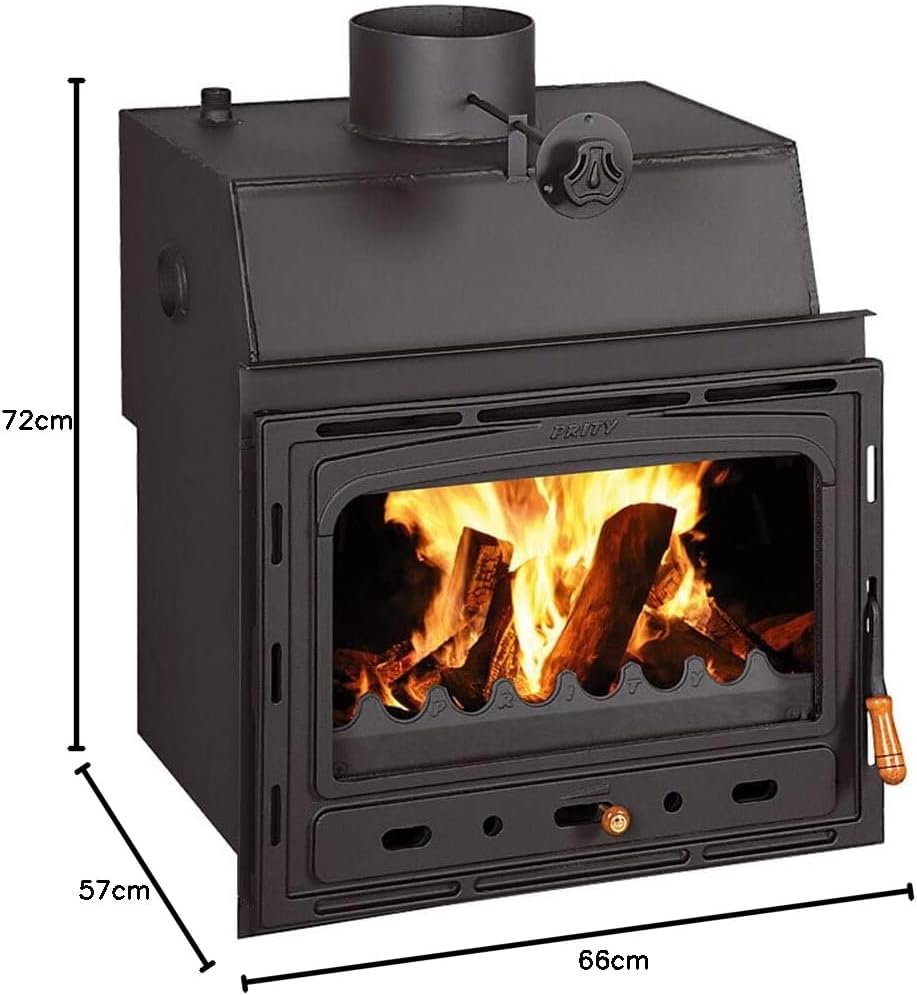
Image 3.1: Prity C W18 Wood Stove with key dimensions indicated, useful for installation planning.
4. Operating Instructions
Proper operation ensures efficient heating and prolongs the life of your stove.
4.1 Fuel
- Only use seasoned, dry wood as fuel. Wet or unseasoned wood will produce less heat, more smoke, and can lead to creosote buildup in the chimney.
- Do not burn trash, plastics, treated wood, or any other materials not specified for wood stoves.
4.2 Starting a Fire
- Open the air intake controls fully.
- Place crumpled paper or natural firelighters at the bottom of the combustion chamber.
- Stack small pieces of kindling on top of the firelighters.
- Light the firelighters and close the cast iron door once the kindling is burning well.
- Gradually add larger pieces of wood as the fire establishes.
4.3 Air Control
The stove is equipped with air intake controls to regulate the burn rate. Adjust these controls to achieve the desired heat output and maintain an efficient, clean burn. Fully open for starting and reloading, partially close for sustained burning.
4.4 Reloading
- When reloading, open the air controls fully for a few minutes before opening the door to prevent smoke spillage.
- Carefully open the cast iron door and add new logs.
- Close the door and adjust the air controls as needed.
5. Maintenance
Regular maintenance is crucial for the safe and efficient operation of your Prity C W18 wood stove.
5.1 Ash Removal
- The stove features an internal ash pan. Empty the ash pan regularly, ideally when the stove is cool.
- Always place hot ashes in a metal container with a tight-fitting lid, on a non-combustible surface, away from combustible materials.
5.2 Cleaning the Glass
If the glass becomes dirty, clean it with a specialized wood stove glass cleaner when the stove is completely cool. Do not use abrasive cleaners.
5.3 Chimney and Flue Cleaning
Have your chimney and flue system inspected and cleaned by a certified chimney sweep at least once a year, or more frequently if you burn wood continuously. This prevents creosote buildup and reduces the risk of chimney fires.
5.4 Boiler System Check
Periodically check the pressure gauge of your central heating system. Ensure the system is properly filled and bled of air. Consult your heating engineer for annual servicing of the boiler components.
6. Troubleshooting
This section provides solutions to common issues. For problems not listed here, contact a qualified technician.
6.1 Poor Draft / Smoke Spillage
- Cause: Cold chimney, blocked flue, insufficient air supply, or wet wood.
- Solution: Ensure flue is clear. Pre-heat chimney with crumpled paper. Open air controls fully. Use dry, seasoned wood. Check for blockages in the flue or chimney.
6.2 Low Heat Output
- Cause: Wet wood, insufficient air, or too small a fire.
- Solution: Use dry wood. Ensure air controls are open enough. Build a larger fire with more fuel.
6.3 Excessive Creosote Buildup
- Cause: Burning wet wood, operating with too little air (smoldering fire), or chimney too cold.
- Solution: Burn only dry wood. Ensure adequate air supply for a hot, clean burn. Have chimney inspected and cleaned regularly.
7. Technical Specifications
| Feature | Specification |
|---|---|
| Model | Prity C W18 |
| Overall Dimensions (W x D x H) | 660 x 570 x 720 mm |
| Combustion Chamber Dimensions (W x D x H) | 535 x 465 x 330 mm |
| Weight | 144 kg |
| Nominal Heat Output (Total) | 23.5 kW |
| Room Heating Output | 5.1 kW |
| Water Heating Output | 18.4 kW |
| Flue Diameter | 200 mm |
| Water Heater Volume | 26 liters |
| Heating Capacity (Area) | Approx. 131 m² |
| Heating Capacity (Volume) | Approx. 354 m³ |
| Material | Alloy Steel |
| Maximum Working Water Pressure | 1.25 bar |
| Energy Efficiency (Nominal Heat Output) | 78.3 % |
| Fuel Type | Wood (16 ± 4% moisture) |
| Installation Type | Built-in Fireplace Insert |

Image 7.1: Energy label for Prity C W18, indicating energy efficiency and heat output ratings.
8. Warranty and Support
For information regarding the warranty period and terms for your Prity C W18 Wood Stove with Boiler, please refer to the documentation provided at the time of purchase or contact your retailer. For technical support or service inquiries, please reach out to your authorized Prity dealer or the manufacturer directly.


