
1. Introduction and Safety Information
Thank you for choosing the Ocean 233L Silver Chest Freezer. This manual provides essential information for the safe and efficient operation, installation, and maintenance of your appliance. Please read this manual thoroughly before using the freezer and retain it for future reference.
Important Safety Instructions:
- Ensure the freezer is placed on a stable, level surface away from direct sunlight and heat sources.
- Do not block ventilation openings. Maintain adequate space around the appliance for proper air circulation.
- Connect the freezer to a grounded power outlet with the correct voltage as specified on the rating label.
- Do not use electrical appliances inside the freezer.
- Keep children away from the freezer, especially when the lid is open. The key lock feature should be used responsibly.
- In case of malfunction, disconnect the power supply immediately and contact qualified service personnel. Do not attempt to repair the appliance yourself.
- Before cleaning or maintenance, always unplug the freezer from the power outlet.
2. Product Overview
The Ocean 233L Silver Chest Freezer (Model NJ 31 TLLS A+ WFS) is designed for efficient and reliable food storage. It features a spacious interior, a convenient key lock, and a Wind Frost System (WFS) for enhanced performance.
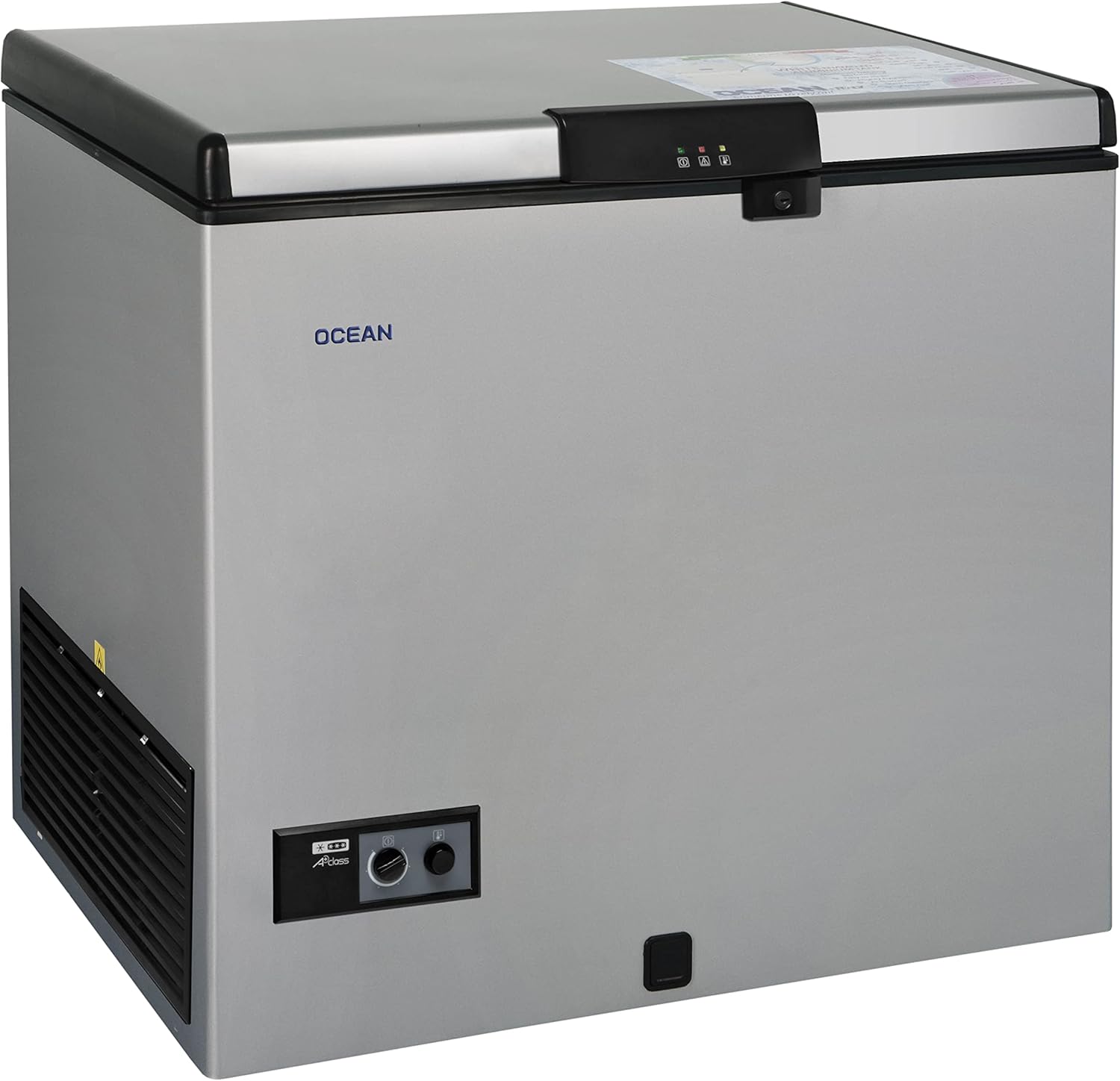
Figure 2.1: Front view of the Ocean 233L Silver Chest Freezer. This image displays the overall design of the freezer, including the silver exterior, top-opening lid, and the control panel located on the lower right side. The Ocean brand logo is visible on the upper left side of the front panel.
Key Features:
- Volume: 233 Liters
- Color: Silver
- Key Lock: For secure storage.
- WFS (Wind Frost System): Designed for no-frost performance.
- LED Light: Interior illumination.
- Energy Efficiency: A+ rating.
3. Setup
3.1 Unpacking
- Carefully remove all packaging materials, including tape and protective films.
- Inspect the freezer for any signs of damage during transit. Report any damage to your retailer immediately.
- Keep packaging materials out of reach of children.
3.2 Placement
- Choose a location with a firm, level floor capable of supporting the freezer's weight when fully loaded.
- Ensure adequate ventilation. Allow at least 10 cm (4 inches) of space around the sides and back of the freezer, and 30 cm (12 inches) above the lid for proper air circulation and heat dissipation.
- Avoid placing the freezer near heat sources such as ovens, radiators, or direct sunlight.
- The ambient temperature should be within the recommended operating range for the appliance (typically 10°C to 43°C).
3.3 Leveling
The freezer must be level to operate efficiently and prevent vibrations. Adjust the leveling feet at the bottom of the appliance if necessary.
3.4 Initial Power-On
- After placement, wait at least 2-4 hours before plugging the freezer into a power outlet. This allows the refrigerant to settle.
- Plug the freezer into a dedicated, grounded electrical outlet.
- Allow the freezer to run empty for 2-3 hours to reach the desired temperature before loading food.
4. Operating Instructions
4.1 Temperature Control
The temperature inside the freezer is controlled by a thermostat dial, typically located on the front or side panel. Rotate the dial to adjust the cooling intensity.
- "Min" / "1": Less cold setting, suitable for light loads or when ambient temperature is low.
- "Max" / "7": Coldest setting, ideal for quick freezing or heavy loads.
- Adjust the setting gradually and allow several hours for the temperature to stabilize before making further adjustments.
4.2 Key Lock Function
Your chest freezer is equipped with a key lock for added security. Insert the key into the lock mechanism on the lid and turn it to lock or unlock the freezer. Always remove the key after locking to prevent unauthorized access, especially by children.
4.3 LED Interior Light
The interior LED light illuminates automatically when the freezer lid is opened, providing visibility of the contents. This light is energy-efficient and does not require user intervention.
5. Maintenance
5.1 Cleaning
- Exterior: Wipe the exterior surfaces with a soft cloth dampened with mild detergent and water. Dry thoroughly.
- Interior: For interior cleaning, unplug the freezer and remove all food items. Use a solution of baking soda and warm water (two tablespoons of baking soda to one liter of water). Wipe down all surfaces, then rinse with clean water and dry thoroughly before plugging the freezer back in.
- Do not use abrasive cleaners, harsh chemicals, or sharp objects for cleaning, as these can damage the surfaces.
5.2 Defrosting (WFS - Wind Frost System)
Your Ocean Chest Freezer features a Wind Frost System (WFS) designed to minimize frost buildup, offering near no-frost performance. While this system significantly reduces the need for manual defrosting, occasional light frost may still occur, particularly with frequent lid openings or high humidity.
- If a thin layer of frost accumulates, it can often be removed by scraping gently with a plastic scraper.
- For heavier frost, a full defrost may be necessary. To perform a full defrost:
- Unplug the freezer from the power outlet.
- Remove all food items and store them in another freezer or cooler.
- Leave the lid open to allow the frost to melt naturally. Place towels at the bottom to absorb water, or use the drain plug if available.
- Once defrosted, clean and dry the interior thoroughly before plugging the freezer back in and reloading food.
- Do not use sharp metal objects or heating devices to speed up defrosting, as this can damage the freezer's interior and cooling system.
5.3 Power Outage
In case of a power outage, keep the freezer lid closed to maintain the internal temperature for as long as possible. Food can remain frozen for several hours depending on the ambient temperature and how full the freezer is.
6. Troubleshooting
Before contacting service, please check the following common issues and solutions:
| Problem | Possible Cause and Solution |
|---|---|
| Freezer does not operate. | Possible Cause: No power supply; power cord not properly plugged in; circuit breaker tripped. Solution: Check if the freezer is plugged in. Ensure the power cord is securely connected. Reset the circuit breaker or check the fuse. |
| Freezer is not cold enough. | Possible Cause: Temperature setting is too high; lid not closed properly; excessive lid openings; freezer overloaded; poor ventilation. Solution: Adjust the thermostat to a colder setting. Ensure the lid is fully closed and sealed. Minimize lid openings. Do not overload the freezer. Ensure adequate space around the freezer for air circulation. |
| Excessive noise. | Possible Cause: Freezer is not level; objects touching the back or sides; normal operating sounds. Solution: Level the freezer using the adjustable feet. Move the freezer away from walls or other objects. Gurgling or humming sounds are normal for refrigeration systems. |
| Frost buildup. | Possible Cause: Frequent lid openings; high humidity; lid seal not tight. Solution: Minimize lid openings. Ensure the lid seal is clean and intact. Perform a defrost as described in Section 5.2. |
If the problem persists after checking these points, please contact customer service for assistance.
7. Specifications
| Feature | Detail |
|---|---|
| Brand | Ocean |
| Model Number | NJ 31 TLLS A+ WFS |
| Type | Chest Freezer |
| Volume | 233 Liters |
| Color | Silver |
| Dimensions (W x D x H) | 70 x 88 x 87 cm |
| Item Weight | 37 Kilograms |
| Efficiency Rating | A+ |
| Installation Type | Freestanding |
| Door Hinges | Top |
| Special Features | Key lock, WFS (Wind Frost System), LED Light |
8. Warranty and Support
For warranty information, please refer to the warranty card included with your product or contact your retailer. Keep your proof of purchase for any warranty claims.
For technical support or service inquiries, please contact Ocean customer service through their official website or the contact details provided in your purchase documentation.

